Source Indoor Decor PVC Foam Board for signage, furniture, and displays
Compare 30 listings of Indoor Decor PVC Foam Board from verified Chinese manufacturers. Buyers can evaluate thickness, density, and fire ratings to select materials for office, hotel, and household applications.
Key considerations
Products List

PVC Foam Board, PVC Sheet, Build Material Indoor Decoration PVC Board
$1050.00 - $1500.00
MOQ: 10 Tons


8mm Wall Decoration Panel PVC Foam Board
$4.00 - $8.00
MOQ: 500 Square Meters
Linyi Xingda Aluminum & Plastic Decoration Material Co., Ltd.

Interior Home Wall Decoration PVC Foam Board PVC Wall Panels Building Materials
$4.00 - $8.00
MOQ: 500 Square Meters
Linyi Xingda Aluminum & Plastic Decoration Material Co., Ltd.


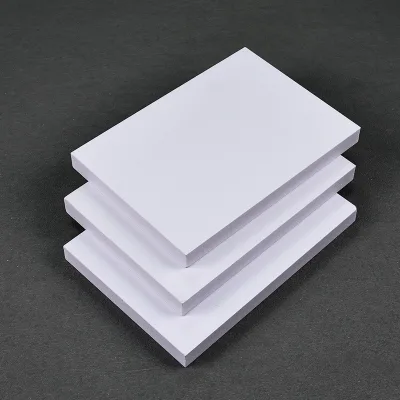
Comprehensive Sourcing Guide
Indoor Decor PVC Foam Board Sourcing Guide
Procuring indoor decor PVC foam boards requires a clear understanding of the material's unique balance between rigidity and lightweight handling, which distinguishes it from traditional wood or solid plastics. The observed market data indicates a diverse range of product configurations, from standard white plastic sheets to specialized celuka foam boards designed for specific architectural and display applications. Buyers must navigate a landscape where product attributes like density, thickness, and surface finishing vary significantly between suppliers, necessitating a rigorous verification process before committing to large orders.
The sourcing strategy should prioritize suppliers who can demonstrate consistent manufacturing capabilities across the observed thickness ranges of 3mm to 30mm and standard sheet dimensions such as 1220*2440mm. While some listings suggest a broad MOQ flexibility starting from single units, others indicate bulk requirements of 2 tons, creating a potential friction point for small-scale procurement. Understanding these commercial variances is essential for aligning inventory needs with supplier capacity, ensuring that the selected vendor can meet both immediate project demands and long-term supply chain stability without compromising on the material's structural integrity.
Product Scope and Observed Listing Signals
The product scope for indoor decor PVC foam boards encompasses a variety of forms, including rigid sheets, panels, and celuka foam boards, each serving distinct functional roles in office, hotel, and household environments. The observed listings highlight specific advantages such as being lead-free, lighter in weight, and resistant to termites, moisture, and corrosion, which are critical for maintaining indoor air quality and structural longevity. These materials are frequently marketed for their suitability in both indoor and outdoor settings, offering properties like sound insulation and fire retardancy that make them versatile for applications ranging from ceiling panels to display backpanels.
Buyers should carefully scrutinize the listed appearance and shape attributes, as the market presents options ranging from glossy surface finishes to non-sealed edges and rectangular shapes. The data reveals a spectrum of product standards, with some suppliers specifying exact dimensions like 9151830mm or 20503050mm, while others focus on thickness specifications or general quality claims. It is vital to distinguish between generic "white plastic sheets" and specialized "PVC Celuka Foam" products, as the latter often implies a closed-cell structure that provides superior dimensional stability and impact resistance for high-traffic decorative applications.
Technical Specifications to Verify
Technical verification must begin with the physical dimensions and mechanical properties, specifically confirming the thickness range and density values that align with the project's load-bearing and aesthetic requirements. The observed data points to a density range of 0.35 to 0.9, which directly influences the board's weight and rigidity, while thickness specifications vary from 3mm up to 30mm depending on the intended use. Buyers should request specific test data for tensile strength, noting that observed values can range around 3.6MPa, and verify the contraction percentage, which is critical for ensuring the material does not warp or shrink significantly after installation in varying humidity conditions.
Surface properties and chemical resistance are equally critical, requiring confirmation of water absorption rates and fire-retardant classifications to ensure safety compliance. The market data indicates water absorption figures ranging from 0.2% to 3.5%, a variance that significantly impacts the board's performance in moisture-prone areas like bathrooms or kitchens. Additionally, the refractory temperature and UL-94 Class a classification must be validated to confirm the material's ability to resist ignition and self-extinguish, ensuring that the selected PVC foam board meets the necessary safety standards for public spaces and commercial buildings.
Compliance and Safety Documentation
Compliance documentation is a non-negotiable aspect of sourcing, particularly regarding environmental safety and material toxicity, as indoor decor products directly affect occupant health. The observed listings mention certifications such as RoHS and ISO9001, which serve as indicators of a supplier's commitment to quality management and restriction of hazardous substances. Buyers must verify that the specific batch of PVC foam boards carries valid certification documents confirming the material is non-toxic and lead-free, as these attributes are essential for maintaining a safe indoor environment and meeting regulatory requirements in various jurisdictions.
Safety standards extend beyond material composition to include fire performance and structural integrity under stress. The data references fire-retardant properties and specific ceiling applications, implying that the product must meet rigorous fire safety codes for building materials. Procurement teams should demand test reports that explicitly validate the UL-94 Class a rating and any other relevant fire safety certifications, ensuring that the boards will not contribute to fire spread and will perform reliably in emergency scenarios. Without these documented proofs, the risk of non-compliance and potential liability increases significantly.
Cost Drivers and Commercial Terms
Cost drivers for PVC foam boards are heavily influenced by the raw material grade, thickness, and the complexity of the surface finishing process, such as glossy coatings or digital direct printing capabilities. The observed price range of 0.1 to 1500 USD reflects the vast difference between thin, standard sheets and thick, high-performance panels with specialized features like sound insulation or weatherproofing. Buyers should analyze the cost per unit area rather than just the total price, as thicker boards with higher density and superior mechanical properties will naturally command a premium but offer better long-term value through durability and reduced maintenance.
Commercial terms, including Minimum Order Quantity (MOQ) and packaging requirements, vary widely and can significantly impact the total landed cost. While some suppliers offer low MOQs starting at 1 unit, others require bulk purchases of 2 tons, which may necessitate consolidation of orders or negotiation for smaller batches. Packaging options range from standard export packing to custom solutions involving pallets, PP bags, or cartons, and these choices affect shipping efficiency and the risk of damage during transit. Understanding these terms is crucial for budgeting accurately and ensuring that the logistics chain can handle the specific packaging requirements of the selected product.
Supplier Qualification and Quality Control
Supplier qualification should focus on verifying the manufacturing origin and the consistency of their production processes, as the observed data points to origins in China, specifically in regions like Shandong and Guangzhou. Buyers must assess the supplier's ability to maintain consistent quality across different batches, particularly regarding the uniformity of thickness, density, and surface finish. The presence of a 30-year warranty on some products suggests a high level of confidence in the material's longevity, but this claim must be backed by a robust quality control system and a clear understanding of the warranty terms and conditions.
Quality control protocols must be established to ensure that the delivered goods match the agreed-upon specifications and performance claims. This includes verifying the physical attributes such as the shape, edge type, and color consistency, as well as testing for mechanical properties like flexural strength and impact resistance. Buyers should implement a pre-shipment inspection process to check for defects such as warping, surface imperfections, or incorrect dimensions, ensuring that the final product meets the rigorous standards required for indoor decor applications. A supplier with a proven track record of adhering to ISO9001 standards is more likely to deliver consistent quality.
Long-Term Procurement Checks
Long-term procurement success depends on establishing a reliable supply chain that can adapt to changing project requirements and market conditions. Buyers should monitor the supplier's ability to maintain consistent lead times and inventory levels, especially for specialized products like digital direct printing boards or custom-sized panels. The observed data suggests a wide range of product models and standards, indicating that a flexible supplier capable of handling diverse orders is essential for maintaining operational continuity and avoiding delays in project timelines.
Sustainability and end-of-life considerations are becoming increasingly important in the procurement of building materials, and the observed claim of 100% recyclability for certain PVC foam boards should be verified and integrated into the procurement strategy. Buyers should evaluate the supplier's commitment to environmental responsibility and their ability to provide documentation on the recyclability of the product. Additionally, maintaining a relationship with a supplier who offers a long-term warranty and responsive after-sales support ensures that any issues related to performance or durability can be addressed promptly, safeguarding the investment in the indoor decor project.
FAQs
What are the standard sizes for Indoor Decor PVC Foam Board?
Standard sizes include 1220*2440mm, 2050*3050mm, 915*1830mm, 1560*3050mm, and 2050*3050mm. These dimensions support various office and household applications. Customization is available to meet specific project requirements. The material is suitable for both indoor and outdoor use, ensuring versatility for different decor needs.
What thickness options are available for PVC celuka foam boards?
Thickness ranges from 3mm to 30mm, providing flexibility for diverse applications. This range supports uses in building, furniture, and UV printing displays. The boards offer good flexural strength and are highly impact-resistant. This variety allows buyers to select the optimal thickness for their specific structural or aesthetic requirements.
Is Indoor Decor PVC Foam Board waterproof and weatherproof?
Yes, the material is waterproof, weatherproof, and never rots. It is also termite resistant, moisture proof, and leakage proof. These properties make it suitable for both indoor and outdoor environments. The board ensures durability against environmental factors, maintaining its integrity and appearance over time without degradation from moisture exposure.
What certifications are associated with these PVC plastic sheets?
The products hold RoHS and ISO9001 certifications. These standards ensure quality and safety for applications like fireproof, soundproof, and moisture-proof ceilings. The material is also lead-free and non-toxic. These certifications verify compliance with international quality and environmental standards, providing assurance for commercial and residential sourcing decisions.
Can I customize the packaging for bulk orders of PVC foam board?
Yes, customization is available for packaging. Options include pallets, PP bags, cartons, PE bags, or standard export packing. Standard safety packing is also utilized. This flexibility ensures secure transport and storage. Buyers can choose packaging that best suits their logistics needs, whether for domestic distribution or international shipping requirements.
What is the minimum order quantity for Indoor Decor PVC Foam Board?
The minimum order quantity is typically 2 tons. However, observed MOQs range from 1 to 15000 units depending on the supplier. This flexibility accommodates various business scales. Buyers should verify specific MOQ requirements with manufacturers. The product is available in standard sizes, allowing for efficient bulk procurement and inventory management.
What are the key advantages of using PVC celuka foam for decor?
Key advantages include being lightweight, fire-retardant, and digitally direct printable. The board offers sound insulation and corrosion resistance. It is also 100% recyclable and has a 30-year warranty. These features make it ideal for office supplies, hotel decor, and public spaces, combining functionality with aesthetic versatility and long-term value.