Source Indoor Commercial Playground Equipment for Parks, Schools, Malls
Source Indoor Commercial Playground Equipment from verified Chinese manufacturers. Compare 28 listings featuring customizable sizes, CE certifications, and rotational molding technology suitable for amusement parks, schools, and shopping malls; compare the available evidence and request quotations based on your requirements.
Key considerations
Products List


Professional Children Commercial Indoor Playground Equipment Sale
$90.00 - $180.00
MOQ: 10 Square Meters


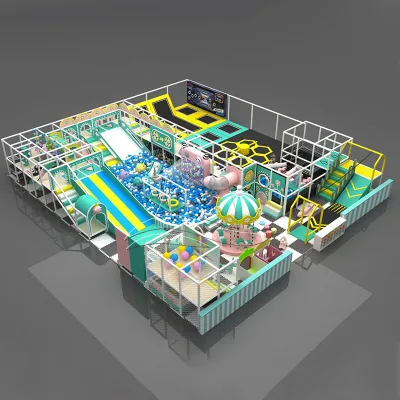
Commercial Colorful Children Play Soft Play Indoor Playground Equipment
$3000.00 - $3600.00
MOQ: 1 Pieces

Commercial Entertainment Center Customized Kids Indoor Playground Equipment
$3000.00 - $3600.00
MOQ: 1 Pieces

Commercial Indoor Amusement Park Play Theme Structure Equipment Playground
$4200.00 - $5000.00
MOQ: 1 Pieces


Durable & Safe Indoor Theme Park Children Playground Equipment for Indoor Playground
$100.00 - $150.00
MOQ: 1 Square Meters


Kids Indoor Playground Equipment, Kids Playground Equipment for Sales
$1000.00 - $1800.00
MOQ: 1 Pieces

Kids Indoor Playground Equipment with Soft Play Set and Professional Guide
$110.00 - $180.00
MOQ: 30 Square meter
Comprehensive Sourcing Guide
Indoor Commercial Playground Equipment Sourcing Guide
Procuring Indoor Commercial Playground Equipment requires a strategic approach that balances aesthetic appeal with rigorous safety engineering. Buyers must first define the operational environment, noting that observed listings frequently specify indoor usage for amusement parks and family entertainment centers. The target demographic typically spans children aged three to twelve years, though some units accommodate users up to fourteen years old. Understanding this age range is critical for selecting appropriate structural heights and jumping capacities, ensuring the equipment meets the physical capabilities of the intended audience while maintaining a safe play environment.
The supply chain for these structures is heavily concentrated in specific manufacturing hubs, with Zhejiang and Wenzhou in China emerging as primary origins for these goods. Suppliers often offer customized dimensions, allowing operators to fit unique spatial constraints within their facilities. Common configurations include multi-floor structures, such as five-story designs, which maximize vertical play space. Buyers should verify that the chosen model aligns with their specific floor plan, as dimensions can vary significantly from standard sizes to highly customized layouts, impacting both installation logistics and overall capacity.
Product Scope and Observed Listing Signals
Market listings reveal a diverse range of product models, such as VS1-200226-1450A-32 and HD19B-039A, indicating a broad catalog of available solutions. These units are predominantly constructed from plastic materials using rotational molding technology, a process that ensures durability and seamless surfaces suitable for high-traffic commercial use. The observed price range spans from fifty to fifty thousand USD, reflecting the variance in complexity, size, and customization levels. Buyers must carefully evaluate whether the listed price includes installation services, shipping, or additional accessories, as these factors significantly influence the total cost of ownership.
Minimum order quantities (MOQ) typically range from one to thirty units, offering flexibility for both small-scale installations and large-scale commercial projects. Packaging methods vary, with some suppliers using cotton and PP film for protection, while others adhere to sea shipping standards to prevent damage during transit. The condition of the equipment is consistently listed as new, and warranties often cover one year, providing a baseline for post-purchase support. Buyers should confirm if the packaging includes detailed installation manuals, as self-installation can be complex for multi-floor structures requiring precise assembly.
Technical Specifications to Verify
Dimensional accuracy is paramount when sourcing indoor playgrounds, as observed listings show sizes ranging from compact units like 700255320cm to expansive structures exceeding 20002000780cm. The maximum jumping weight capacity is often specified as greater than or equal to 100kg, ensuring the equipment can withstand the dynamic loads of active children. Buyers must verify the structural integrity of multi-floor designs, which may include five distinct levels of play areas. It is essential to confirm that the chosen model’s footprint fits within the designated indoor space, accounting for necessary clearance zones around the perimeter for safety.
Customization options are widely available, allowing operators to tailor colors and designs to their brand identity or thematic requirements. Some suppliers offer the ability to change colors according to specific requests, enhancing the visual appeal of the facility. The allowable passenger capacity is another critical technical specification, with some units designed to accommodate between twenty-five and seventy children simultaneously. Buyers should assess the ventilation and lighting requirements for these large structures, ensuring that the indoor environment remains comfortable and safe for prolonged use by large groups of children.
Compliance and Safety Documentation
Safety certifications are a non-negotiable aspect of procurement, with CE marking frequently observed on product listings. Additional standards such as ISO, TUV, and GS are also mentioned, indicating a commitment to international quality and safety benchmarks. Buyers must request valid certification documents from suppliers to verify that the equipment meets the regulatory requirements of their specific market. While some background standards like ASTM F1487 or EN 1176 are noted in industry contexts, buyers should confirm which specific standards apply to their jurisdiction and ensure the supplier’s documentation aligns with these local regulations.
The production standards cited, such as ISO9001:2000, suggest a structured quality management system within the manufacturing facility. However, buyers should not assume that all listed products automatically satisfy every mentioned standard without explicit verification. It is crucial to inquire about the testing procedures used to validate the structural integrity and material safety of the playground equipment. Suppliers should provide test reports or third-party verification for critical components, ensuring that the equipment is safe for children and compliant with all relevant safety codes before shipment.
Cost Drivers and Commercial Terms
The total cost of Indoor Commercial Playground Equipment is influenced by several key factors, including the size, complexity, and customization level of the structure. Larger dimensions, such as those exceeding sixteen feet in length, naturally incur higher material and manufacturing costs. Customization options, such as unique color schemes or specialized structural features, can also increase the price. Buyers should request detailed quotations that break down costs for the base structure, accessories, and any additional customization fees to avoid unexpected expenses during the procurement process.
Shipping and installation are significant components of the commercial terms, particularly for large items originating from China. Sea shipping is a common method, but buyers must clarify who is responsible for freight costs, insurance, and customs duties. Installation services may be included or offered separately, with some suppliers providing installation manuals for self-assembly. Buyers should negotiate clear terms regarding warranty coverage, which typically lasts one year, and understand the process for claiming repairs or replacements for defective parts.
Supplier Qualification and Quality Control
Verifying the supplier’s manufacturing capabilities is essential to ensure consistent quality and timely delivery. Suppliers from Zhejiang and Wenzhou, China, often have established production lines for rotational molding and plastic fabrication. Buyers should request evidence of the supplier’s production capacity and experience in manufacturing indoor playgrounds for commercial clients. Checking references or case studies can provide insight into the supplier’s reliability and the performance of their equipment in real-world settings. It is also advisable to inquire about the supplier’s quality control processes during production to identify potential defects early.
Communication and responsiveness are critical indicators of a supplier’s professionalism. Buyers should assess how quickly and clearly the supplier responds to inquiries regarding specifications, certifications, and shipping logistics. A reliable supplier will provide comprehensive documentation, including product catalogs, technical drawings, and compliance certificates. Establishing a clear line of communication helps in resolving any issues that may arise during the ordering and installation phases. Buyers should also confirm the supplier’s after-sales support structure to ensure assistance is available if problems occur post-installation.
Long-Term Procurement Checks
Ongoing maintenance and durability are key considerations for the long-term success of an indoor commercial playground. Buyers should inquire about the recommended maintenance procedures for the plastic and structural components to extend the lifespan of the equipment. Understanding the availability of spare parts is crucial, as damaged components need to be replaced promptly to maintain safety and operational continuity. Suppliers should provide a list of available spare parts and their lead times to help buyers plan for potential repairs.
Regular inspections and updates to safety protocols are necessary to comply with evolving regulations and industry best practices. Buyers should stay informed about any changes in safety standards that may affect their existing equipment. Establishing a relationship with the supplier for future upgrades or expansions can streamline the procurement process for additional units. By focusing on long-term value and support, buyers can ensure that their indoor commercial playground remains a safe, engaging, and profitable asset for their business.
FAQs
What certifications do the indoor playgrounds have?
The equipment carries CE and ISOTUV certifications. Some models also meet TUV, GS, and ISO9001:2000 standards. These certifications ensure safety compliance for children aged three to twelve years using the Indoor Commercial Playground Equipment.
Can the size of the playground be customized?
Yes, the size can be customized to fit specific requirements. Available dimensions include 2000 by 2000 by 780 cm or 1580 by 1750 by 330 cm. Customization is available for various Indoor Commercial Playground Equipment models to suit different venue needs.
Which age group is suitable for this equipment?
The equipment is designed for children between three and twelve years old. Some models accommodate users from three to fourteen years old. This ensures safe and appropriate play experiences for the target age group using Indoor Commercial Playground Equipment.
How is the product packed for shipping?
Products are packed using cotton with PP film or bubble bags with PP film. Some items use sea shipping standard packaging to ensure safety during transit. This packing method protects the new Indoor Commercial Playground Equipment from damage before installation.
What is the maximum jumping weight capacity?
The maximum jumping weight capacity is at least 100 kg per user. This specification ensures durability for active children. The equipment supports multiple users simultaneously, making it suitable for high-traffic Indoor Commercial Playground Equipment installations in amusement parks.
Can the color of the playground be changed?
Yes, the color can be changed according to your specific request. Manufacturers offer design options to match your branding or theme. This customization applies to the Indoor Commercial Playground Equipment to create a unique and engaging environment for children.