Source Indoor Growing System for Medicinal Plants and Vegetable
Find and compare 30 Indoor Growing System for Medicinal Plants and Vegetable options from verified suppliers. These units feature multi-layer structures, customizable levels, and materials like steel or ABS for efficient vertical farming applications.
Key considerations
Products List

Vertical Aeroponic System Indoor Growing Systems for Vegetables and Medical Plants
$300.00 - $500.00
MOQ: 10 Square Meters

Reinfa Farmaero: User-Friendly Indoor Growing System for All Growers
$500.00 - $800.00
MOQ: 10 Square Meters

Reinfa Farmaero: Optimized Indoor Farm System for High-Quality Crop Growth
$500.00 - $800.00
MOQ: 10 Square Meters


Indoor Smart Home Garden Organic Hydroponics Growing Systems for Vegetables
$648.50 - $958.50
MOQ: 1 Pieces

Home Garden Hydroponics Indoor Growing Systems for Vegetables and Herbs
$648.50 - $958.50
MOQ: 1 Pieces


Soilless Culture System Indoor Hydroponics Growing Machine for Medical Plants
$648.50 - $958.50
MOQ: 1 Pieces
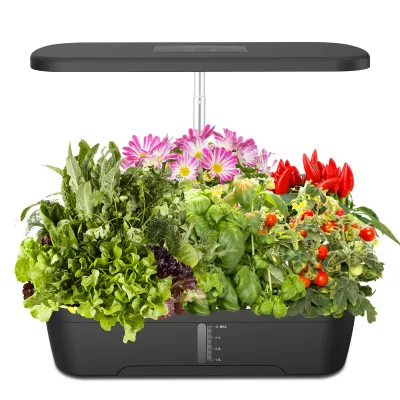


Hydroponic Greenhouse Growing Systems Indoor Greenhouse for Plant Growth Indoor Grow Rack
$60.00 - $75.00
MOQ: 30 Square Meters


Hydroponic Greenhouse Hydroponics System Indoor Growing System with Grow Light
$1.60 - $2.50
MOQ: 1000 Meters


Hydroponic Tower System with 60L Tank for Indoor Greenhouse Vegetable Growing
$168.00 - $218.00
MOQ: 1 pieces


Small Indoor Hydroponic Growing Systems Hydroponic Growing System for Greenhouse
$68.00 - $118.00
MOQ: 1 Sets

Comprehensive Sourcing Guide
Strategic Sourcing Guide for Indoor Growing Systems for Medicinal Plants and Vegetables
Understanding the Technical Landscape of Vertical Aeroponic Solutions
When sourcing an indoor growing system specifically designed for medicinal plants and vegetables, buyers must first distinguish between general hydroponic setups and advanced vertical aeroponic systems. The core keyword "Indoor Growing System for Medicinal Plants and Vegetable" points toward a highly specialized category where space efficiency and nutrient delivery precision are paramount. Based on current market observations, the most prominent configuration for this application is the vertical aeroponic system. Unlike traditional soil-based or water-based hydroponics, aeroponic systems suspend plant roots in the air and mist them with a nutrient solution, a method that significantly accelerates growth rates and reduces water consumption.
The technical architecture of these systems often features a multi-layer structure, typically ranging from two to three levels, though customization is available to meet specific facility constraints. This vertical stacking is critical for maximizing yield per square foot, a primary concern for indoor cultivation facilities. The structural integrity of these units relies on a combination of materials, including steel, stainless steel, aluminum, and ABS plastic. The choice of material is not merely aesthetic; it dictates the system's resistance to corrosion, which is essential in the high-humidity environments required for growing medicinal herbs and leafy vegetables. Stainless steel components are particularly valuable for contact points with nutrient solutions to prevent contamination, while ABS plastic offers durability for structural frames and reservoirs.
Buyers should note that the "Model No." for these systems often varies by manufacturer, with designations such as FAM2-4 or FAM/FAS appearing in the market. These model numbers often correlate with specific dimensions and capacity. For instance, some configurations are designed with a footprint of approximately 400100150cm, while others may be scaled for larger production greenhouses with lengths ranging from 60 to 200 meters. The versatility of the design allows for adaptation to different cultivation methods, including single-layer setups or complex multi-layer arrangements. The system's function is explicitly defined as growing medicinal plants and vegetables, but the underlying technology is also suitable for aquaculture, flowers, and fruit, indicating a high degree of modularity.
Evaluating Structural Specifications and Environmental Adaptability
The physical specifications of an indoor growing system are the first line of defense against operational failure. When evaluating a potential supplier, the buyer must scrutinize the "Structure" attribute, which is frequently described as "Multi-Layer." This design choice directly impacts the airflow dynamics and light distribution within the facility. A well-engineered multi-layer system ensures that the misting mechanism reaches all root zones effectively, preventing dry spots that could stunt the growth of sensitive medicinal plants.
Color and coating are also critical technical specifications. The observed market offers systems in white and green, with options for custom colors. White surfaces are often preferred for their ability to reflect light, thereby enhancing photosynthesis efficiency in indoor environments where artificial lighting is the primary light source. Conversely, green coatings may be selected for aesthetic integration or specific light absorption properties. The "Roofing Shape" of associated greenhouse structures, if the system is part of a larger enclosure, is often arched, which aids in structural stability and water runoff, though indoor units may be freestanding.
The "Cover Material" and "Frame Material" are vital for systems that bridge the gap between indoor and controlled outdoor environments. For greenhouse-integrated units, the frame is typically constructed from hot galvanized steel to ensure longevity against moisture and chemical exposure. The covering material is often a PE/Po film, which boasts a light transmittance rate of more than 90%. This high transmittance is essential for maximizing the efficiency of supplemental grow lights. However, for purely indoor units, the focus shifts to the internal materials like PVC and metal, which must be non-toxic and resistant to the nutrient solutions used.
Heating methods are another specification to verify. Many standard systems are listed as "Unheated," relying on the ambient temperature of the indoor facility or supplemental heating units not included in the base package. Buyers must determine if the supplier's system includes integrated heating elements or if they need to source separate climate control equipment. The "Span" of the structure is often described as "Multi," indicating flexibility in width and length to fit various room dimensions. This customization capability is a key differentiator, allowing facilities to optimize their layout for specific crop cycles.
Navigating Compliance, Certification, and Quality Standards
In the realm of medicinal plant cultivation, compliance and quality assurance are not optional; they are prerequisites for market entry. While specific certification names are not universally standardized across all suppliers, the "Quality" attribute is frequently marketed as "High Quality." Buyers must interpret this claim by demanding evidence of adherence to international standards. The "prod_standard" for these systems often references dimensions like 44, 48, or 5*8, which may relate to the spacing of growing columns or the modular unit sizes. However, these are dimensional standards rather than safety certifications.
For medicinal plants, the system must comply with Good Agricultural Practices (GAP) and potentially Good Manufacturing Practices (GMP) if the output is intended for pharmaceutical processing. The materials used, such as stainless steel and food-grade ABS, should be verified to ensure they do not leach harmful substances into the nutrient solution. The "Department" classification often points to "Plastic Greenhouse" or general "Agriculture," but for indoor medicinal use, the focus should be on the purity of the materials and the sterility of the system design.
Buyers should verify the "prod_packing" standards, which are typically listed as "Standard Export Packing" or "Seaworthy Packing." This ensures that the delicate components, such as misting nozzles and sensors, arrive undamaged. The "Product Name" may vary, with terms like "Hydroponics System" or "Aeroponic Growing System" used interchangeably, but the buyer must ensure the specific technology matches the intended application. The "Application Field" is broadly "Agriculture," but the specific use case for "Growing Medicinal Plants/Vegetable" requires a system that minimizes cross-contamination risks.
It is crucial to avoid assuming that a product labeled "High Quality" automatically meets regulatory requirements for medicinal cultivation. Buyers should request documentation regarding material safety data sheets (MSDS) and any relevant third-party testing results. The "Mechanization" level is often described as "Simple Planting Machine," which implies a system that requires manual intervention for planting and harvesting but automates the misting process. This balance of automation and manual control can be a compliance factor, as it allows for human oversight of the crop health, which is often required for medicinal plant certification.
Cost Drivers and Procurement Economics
The pricing of indoor growing systems is influenced by a complex interplay of factors, including material costs, customization levels, and the scale of the order. The observed price range in the market is extensive, spanning from $1.45 to $958.50. This wide disparity indicates that the "MOQ" (Minimum Order Quantity) plays a significant role in the final unit cost. The "MOQ" for these systems can range from 1 set to 1000 sets, with lower quantities often commanding a higher per-unit price due to the fixed costs of production and logistics.
The "Material" composition is a primary cost driver. Systems constructed with high-grade stainless steel and aluminum will naturally be more expensive than those using standard steel and PVC. The "Customization" availability is another major factor. While standard models may be available at lower price points, customizing the "Levels" to 2-3 or altering the "Color" and "Size" will increase the manufacturing cost. The "Standard Export Packing" and "Seaworthy Packing" requirements also add to the logistics cost, particularly for international buyers.
Buyers must also consider the "Lead Time" and "Place of Origin." Most systems originate from Foshan, Guangdong, China, a major manufacturing hub for agricultural equipment. The proximity to ports in this region can influence shipping costs and lead times. The "Product Name" and "Model No." (e.g., FAM2-4) can also affect pricing, as newer or more specialized models may carry a premium. The "Advantage" of "Easy Construction" can reduce installation costs, which is a hidden economic factor that buyers should evaluate.
When negotiating, buyers should focus on the "MOQ" flexibility. A supplier offering an MOQ of 1 set may be more suitable for pilot projects or small-scale medicinal cultivation, whereas a supplier requiring 1000 sets is better suited for large-scale commercial operations. The "N.W." (Net Weight) of the package, often around 50kgs for a single unit, impacts shipping freight costs. Buyers should calculate the total landed cost, including duties and freight, rather than focusing solely on the FOB price.
Typical Applications and Operational Versatility
The versatility of these indoor growing systems makes them suitable for a wide range of applications beyond just medicinal plants. The "Suitable" category includes aquaculture, flowers, fruit, mixed farming, and vegetables. This adaptability is a significant advantage for buyers who may wish to diversify their crop portfolio or pivot their production based on market demand. The "Usage" attribute explicitly mentions "Indoor Grow," "Garden Farm Irrigation Lawn," and "Production Greenhouse," highlighting the system's ability to function in various environments.
For medicinal plants, the controlled environment provided by the aeroponic system is ideal. The precise nutrient delivery ensures consistent growth and potency, which are critical for pharmaceutical-grade herbs. The "Cultivation Method" is listed as "Vertical Farm," which is particularly effective for leafy greens and herbs that require high light intensity and air circulation. The "Function" of growing medicinal plants and vegetables is supported by the system's ability to maintain optimal humidity and temperature levels, which are essential for preventing mold and pests.
The "Application Field" of "Agriculture" encompasses both commercial and research applications. Universities and research institutions often use these systems for studying plant physiology and developing new cultivation techniques. The "Department" classification of "Plastic Greenhouse" suggests that these systems can be integrated into larger greenhouse structures, providing a hybrid solution that combines the benefits of indoor control with the scalability of outdoor farming.
Buyers should also consider the "Light Transmittance Rate" of the system's components. A rate of more than 90% is desirable for maximizing the efficiency of artificial lighting, which is the primary light source in indoor facilities. This high transmittance ensures that the energy invested in lighting is effectively utilized by the plants, reducing operational costs. The "Heating Method" being "Unheated" in many standard models means that buyers may need to invest in separate climate control systems, which should be factored into the overall operational budget.
Supplier Evaluation and Long-Term Procurement Considerations
Selecting the right supplier is critical for the long-term success of an indoor growing operation. Buyers should evaluate suppliers based on their "Customization" capabilities, as the ability to tailor the "Levels" and "Color" to specific needs is a strong indicator of a responsive and capable manufacturer. The "Place of Origin" being Foshan, Guangdong, suggests a mature supply chain, but buyers should still verify the supplier's track record and production capacity.
The "Quality" attribute of "High Quality" should be validated through references and case studies. Buyers should ask for examples of previous installations for medicinal plant cultivation to ensure the supplier understands the specific requirements of this niche. The "Product Name" and "Model No." should be consistent across all documentation to avoid confusion during the ordering process. The "Standard Export Packing" and "Seaworthy Packing" are essential for ensuring that the equipment arrives in perfect condition, especially for international shipments.
Long-term procurement considerations include the availability of spare parts and technical support. The "Mechanization" level of "Simple Planting Machine" implies that the system may require regular maintenance and manual adjustments. Buyers should ensure that the supplier provides a comprehensive maintenance guide and has a network of technicians available for troubleshooting. The "Advantage" of "Easy Construction" is beneficial for initial setup, but the long-term durability of the materials, such as the "Frame Material" and "Cover Material," is equally important.
Buyers should also consider the scalability of the system. The "Size" options, ranging from 400100150cm to larger custom dimensions, allow for future expansion. The "Standard" options like 44/48/5*8 provide a modular approach that can be easily replicated as the operation grows. The "Department" and "Span" attributes suggest that the system can be adapted to different facility layouts, making it a flexible investment for the future.
In conclusion, sourcing an indoor growing system for medicinal plants and vegetables requires a careful balance of technical specifications, compliance checks, and economic considerations. By focusing on the multi-layer structure, material quality, and customization options, buyers can identify suppliers that offer reliable and efficient solutions. The extensive price range and MOQ flexibility allow for a tailored approach that fits the specific needs of the operation, whether it is a small pilot project or a large-scale commercial facility.
FAQs
How many levels does the indoor growing system typically have?
The system typically features 2 to 3 levels, though customization is available to meet specific facility constraints. This multi-layer structure maximizes yield per square foot for indoor cultivation of medicinal plants and vegetables.
What materials are used to construct the vertical aeroponic system?
Construction utilizes steel, stainless steel, aluminum, and ABS plastic to ensure durability and corrosion resistance. Stainless steel is preferred for nutrient contact points to prevent contamination in high-humidity environments.
Can the system be customized for specific indoor growing requirements?
Yes, customization is available for levels, colors, and dimensions to fit various indoor grow spaces. Buyers can request specific configurations to optimize light reflection and structural integrity for their unique facility layout.
What is the minimum order quantity for purchasing this system?
The minimum order quantity starts at 1 set, allowing for pilot projects or small-scale cultivation. Larger orders may reduce per-unit costs, but the low entry threshold supports diverse operational scales.
Where are these indoor growing systems manufactured and shipped from?
These systems originate from Foshan, Guangdong, China, a major manufacturing hub for agricultural equipment. Products are packed in standard export or seaworthy packaging to ensure safe international delivery.
What is the price range for indoor growing systems for medicinal plants?
The observed price range spans from 1.45 to 958.5 USD depending on specifications and order volume. Pricing varies based on material quality, customization levels, and the specific model number selected by the buyer.