Source Indoor HDTV Signal Amplifier for Home TV, Hotel TV, Kitchen TV
Compare 30 indoor HDTV signal amplifier options from verified Chinese manufacturers. These devices support frequency ranges up to 862 MHz and offer gain adjustments for home, hotel, and kitchen TV applications; compare the available evidence and request quotations based on your requirements.
Key considerations
Products List


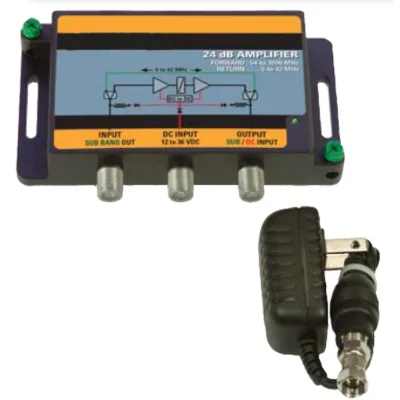


$1900.00 - $2400.00
MOQ: 1 Pieces


Comprehensive Sourcing Guide
Indoor HD TV Signal Amplifier Sourcing Guide
Procuring indoor HD TV signal amplifiers requires distinguishing between general signal boosters and specialized CATV equipment designed for specific frequency bands. The observed market data indicates a wide range of models, from the DT-HA-8200R-220V to the SHJ-TA9504, each tailored for different installation environments like home, hotel, or kitchen settings. Buyers must carefully align their specific frequency needs, such as the 47-862 MHz range, with the amplifier's forward path capabilities to ensure optimal signal distribution without interference.
Commercial listings reveal significant variation in technical performance, with gain adjustments ranging from 15dB to 50dB and noise figures varying between 6dB and 7dB. This variance directly impacts the clarity of high-definition broadcasts, particularly in areas with weak initial signal strength. Sourcing decisions should prioritize units that explicitly state their frequency response and gain control features, ensuring the selected device can handle the specific load of multiple televisions without introducing excessive noise or signal distortion.
Product Scope and Observed Listing Signals
The current market for indoor HD TV signal amplifiers encompasses a diverse array of products, including house amplifiers and specific CATV equipment models like the HPR-3T40 series. Listings frequently highlight usage scenarios ranging from indoor residential setups to commercial applications in hotels and bathrooms, suggesting a need for versatile units that can operate in varied environmental conditions. Buyers should verify that the product's physical dimensions and power consumption ratings, such as the 3va/~198-250V specification, match their existing infrastructure and space constraints.
Observed listing signals indicate that packaging and origin are critical logistical factors, with many units originating from Hangzhou or Shenzhen in China and shipped in single-piece cartons. The presence of models with specific frequency ranges, such as 1.8 GHz or 47-862 MHz, necessitates a clear understanding of the target broadcast spectrum before placing an order. Procurement teams must scrutinize the "Forward Path" and "Return Path" specifications to ensure the amplifier supports the necessary two-way communication required for modern interactive TV services.
Technical Specifications to Verify
When evaluating technical specifications, the frequency response and gain characteristics are paramount for maintaining signal integrity across the entire HD spectrum. Buyers should verify that the selected amplifier maintains a frequency response within ±0.5dB or better, as deviations can lead to uneven signal levels across different channels. The noise figure is another critical metric, with observed values ranging from less than 6dB to less than 7dB; lower noise figures are essential for preserving the quality of high-definition video and audio signals.
Power supply requirements and impedance matching must also be rigorously checked to prevent equipment failure or signal loss. Most observed units operate on AC 230V with a tolerance of ±10V and feature a 75-ohm impedance, which is standard for coaxial cable systems. Additionally, the operating temperature range, typically spanning from -20°C to +50°C, ensures reliability in diverse climates, while gain control features allow for fine-tuning the output level to prevent overdriving downstream devices.
Compliance and Safety Documentation
Compliance with international safety and environmental standards is a non-negotiable aspect of sourcing electronic amplifiers for commercial or residential use. The observed product data confirms that many units adhere to ISO 9001, CE, and RoHS standards, which validate the manufacturer's commitment to quality management and the restriction of hazardous substances. Buyers should request specific certification documents to ensure that the equipment meets the regulatory requirements of their target market, particularly regarding electromagnetic compatibility and electrical safety.
Safety documentation must also address the physical construction and material safety of the amplifier, including the cabinet color and build quality suitable for indoor or outdoor installation. While some listings mention specific dimensions like 107×148×53mm, the structural integrity and fire safety ratings are equally important for long-term reliability. Procurement teams should verify that the supplier provides a comprehensive compliance dossier, including test reports that confirm the device operates safely within the specified voltage and temperature ranges.
Cost Drivers and Commercial Terms
The cost of indoor HD TV signal amplifiers is influenced by a complex mix of technical specifications, including gain levels, frequency range, and build quality. Observed price ranges span from $0.45 to $2400, reflecting the disparity between basic signal boosters and high-performance CATV equipment with advanced features like wide-screen compatibility and high output power. Buyers must balance their budget against the specific performance requirements, avoiding the temptation to select the lowest-priced option if it compromises critical signal quality metrics.
Commercial terms, including minimum order quantities (MOQ) and lead times, vary significantly across the supplier base, with MOQs ranging from 1 to 1000 units. The packaging format, typically one piece per carton box, affects shipping costs and handling efficiency, particularly for large-scale deployments. Procurement strategies should account for these logistical variables, negotiating favorable terms that align with the project timeline and inventory management capabilities while ensuring the supplier can meet the required volume without compromising quality.
Supplier Qualification and Quality Control
Supplier qualification is critical when sourcing electronic components that require precise calibration and consistent performance. Buyers should prioritize manufacturers with a proven track record in producing CATV equipment, as evidenced by their adherence to ISO 9001 and SGS standards. The origin of the product, often listed as Hangzhou or Shenzhen, provides insight into the manufacturing ecosystem, but it is essential to verify the supplier's specific quality control processes to ensure that every unit meets the stated specifications.
Quality control measures must extend beyond the initial production run to include ongoing monitoring of product consistency and reliability. Suppliers should demonstrate their ability to maintain tight tolerances on critical parameters like noise figure and frequency response, ensuring that the delivered units perform as advertised. Procurement teams should request samples for independent testing and establish clear communication channels for addressing any quality issues that may arise during the deployment phase.
Long-Term Procurement Checks
Long-term procurement success depends on establishing a robust relationship with suppliers who can provide consistent support and product availability. Buyers should verify the supplier's capacity to maintain inventory levels and manage lead times effectively, ensuring that replacement units are available when needed for system maintenance or expansion. The ability to customize products, as indicated by the "Customization: Available" attribute, is also a valuable asset for adapting amplifiers to unique installation requirements.
Regular performance audits and feedback loops are essential for maintaining high standards over the lifecycle of the procurement contract. Buyers should monitor the operational performance of the installed amplifiers, tracking metrics like signal stability and power consumption to identify any potential issues early. By maintaining a proactive approach to supplier management and quality assurance, organizations can ensure the continued reliability and efficiency of their indoor HD TV signal distribution networks.
FAQs
What is the frequency range for indoor hd tv signal amplifiers?
The frequency range typically spans 47 to 862 MHz for the forward path and 5 to 30 or 65 MHz for the return path. This ensures compatibility with standard CATV equipment and digital cable signals. The wide bandwidth supports high-definition television reception across various regional broadcasting standards without signal degradation.
How much gain does an Indoor HD TV Signal Amplifier provide?
Gain levels vary by model, with options offering 15 dB, 20 dB, 34 dB, or 50 dB of amplification. Higher gain models like the DT-HA-8820 provide 34 dB forward gain, while others may reach 50 dB. Selecting the appropriate gain prevents signal overload and ensures optimal picture quality for your specific setup.
Can indoor hd tv signal amplifiers be customized for specific needs?
Yes, customization is available for many Indoor HD TV Signal Amplifier models. Buyers can request specific configurations to match their unique installation requirements. This flexibility allows for tailored solutions that integrate seamlessly with existing home or commercial television infrastructure, ensuring reliable performance across different environments and signal conditions.
What certifications are required for indoor hd tv signal amplifiers?
Reputable indoor hd tv signal amplifiers typically hold ISO, RoHS, and CE certifications. These standards ensure the devices meet international safety and environmental regulations. Compliance with ISO 9001 quality management systems further guarantees consistent manufacturing quality, providing buyers with confidence in the reliability and safety of the electronic components used.
What is the typical power consumption of these amplifiers?
Power consumption is generally low, around 3 VA, operating on AC 198-250V at 50Hz. This efficient design minimizes energy usage while maintaining strong signal amplification. The low power draw makes these devices suitable for continuous operation in homes or hotels without significantly impacting electricity bills or requiring specialized power supplies.
Where are indoor hd tv signal amplifiers typically manufactured?
These devices are commonly manufactured in regions like Hangzhou, Zhejiang Province, and Shenzhen, China. These locations are known for robust electronics manufacturing ecosystems. Buyers can source products directly from these origins, ensuring access to established supply chains and competitive pricing while maintaining high standards for production quality and component reliability.