Source Indoor Garment Display Rack for Living Room, Hotel, and Store
Compare 30 Indoor Garment Display Rack options featuring metal construction, tree shapes, and floor-mounted designs. Buyers can evaluate sizes, customization, and certifications like SGS and ISO9001-2000 for living rooms, hotels, and retail stores.
Key considerations
Products List


Comprehensive Sourcing Guide
Strategic Sourcing Guide for Indoor Garment Display Racks
Understanding Technical Specifications and Structural Integrity
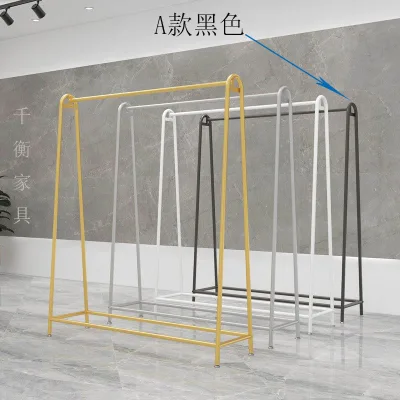
When sourcing indoor garment display racks, buyers must first establish a clear understanding of the technical specifications that define product suitability. The market offers a diverse array of configurations, ranging from floor-mounted units to specialized L-stands designed for specific retail environments. A critical observation in current product listings indicates that the primary material composition for these units is metal, providing the necessary durability for high-traffic commercial spaces. The structural design often adheres to a "Tree" shape or utilizes a "Truss" build method, which is distinct from simple connect-based assemblies. This distinction is vital for buyers assessing load-bearing capacity and visual aesthetics.
Dimensions vary significantly across different models, with specific listings noting sizes such as 120cm in height, 80cm in width, and 45cm in depth. However, other product entries highlight "Customized Size" or "Any Size Available" as standard offerings, suggesting that buyers should not assume a fixed dimension but rather verify the maximum and minimum constraints with the supplier. The weight of these units is a crucial factor for logistics and floor stability; observed data points to weights reaching up to 150kg for certain heavy-duty models, while others may be lighter depending on the material thickness and structural design.
The mobility of the rack is another defining technical attribute. Most observed units are classified as "Fixed" and "Unfolded" in their operational state, indicating they are designed for permanent or semi-permanent installation rather than frequent relocation. Some models are described as "Folded," which may imply a collapsible design for storage or shipping efficiency, though the operational state is typically "Open." The build method, whether "Connect" or "Truss," directly influences the assembly process and the final rigidity of the display. Buyers should verify whether the unit is designed for countertop or flooring installation, as this determines the necessary anchoring requirements and floor space allocation.
Compliance, Certification, and Safety Standards
Ensuring that indoor garment display racks meet international safety and quality standards is a non-negotiable aspect of B2B procurement. While many suppliers claim adherence to rigorous protocols, buyers must independently verify these claims against the specific certifications held by the manufacturer. In the current market, high-confidence data points to the presence of SGS certification and ISO9001-2000 standards for certain product lines. These certifications indicate that the manufacturer has undergone third-party testing for quality management systems and product safety.
It is important to distinguish between observed certifications and general industry standards. While ISO9001 is frequently cited in broader contexts, the specific version ISO9001-2000 is the one explicitly linked to the observed product data. Buyers should not assume that all suppliers possess ISO14001, ISO45001, or ISO50001 certifications unless explicitly confirmed in the supplier's documentation. Similarly, while FSC certification is a common benchmark for sustainable forestry, it is not present in the high-confidence facts for these metal-based racks, and its relevance may be limited unless the product incorporates significant wood or MDF components, which some listings do mention.
The "SGS" standard is also referenced as a product standard in several listings, suggesting that the physical product itself has been tested against specific criteria. For buyers, this means requesting the actual test reports associated with the SGS certification rather than accepting a generic claim. The "Antitheft" attribute is another compliance consideration; observed data indicates that many standard racks are "Not Antitheft," meaning they do not include integrated locking mechanisms or security features. If theft prevention is a priority for the buyer's specific application, such as a high-value boutique, this attribute must be explicitly negotiated as a customization or a separate security add-on.
Cost Drivers and Pricing Variables
The pricing structure for indoor garment display racks is influenced by a complex interplay of material costs, customization levels, and logistical factors. The observed price range in the market spans from $8.99 to $205 USD, a wide variance that reflects the difference between basic, off-the-shelf units and highly customized, large-scale installations. The primary cost driver is the level of customization. Products listed with "Customized Logo," "Offer Design and Drawing Artwork," and "Customized Size" command higher price points due to the additional engineering, tooling, and labor required.
Material selection plays a significant role in cost determination. While metal is the dominant material, the grade of steel, the thickness of the tubing, and the finish quality (e.g., powder coating, plating) directly impact the unit price. The "Feature" attributes such as "Waterproof" or "Recycled" content also influence costs. Waterproofing requires specific treatments to prevent corrosion, which adds to the manufacturing expense. Similarly, using recycled materials may involve different supply chain logistics or processing costs compared to virgin materials.
The Minimum Order Quantity (MOQ) is another critical cost factor. The observed MOQ range is between 5 and 200 units. Ordering at the lower end of this spectrum may result in a higher per-unit cost due to the fixed costs of setup and production runs. Conversely, ordering near the 200-unit threshold may unlock volume discounts, though the buyer must consider storage and cash flow implications. Packaging requirements also affect the final landed cost. Listings mention "Bubble Bag, Foam Pad and Five Layers Master Carton" for some models, while others use simple "Carton" or "Carton, MDF" packaging. More robust packaging increases material costs but reduces the risk of damage during transit, which is a significant consideration for international shipping.
Typical Applications and Usage Scenarios
Indoor garment display racks are versatile tools designed to serve a wide array of commercial and residential applications. The observed usage data highlights their suitability for "Living Room," "Bedding Room," "Hotel," "Display," and "Storage" environments. In a retail context, these racks are specifically tailored for "Clothing" and "Garment Boutique Shop Furniture," making them ideal for fashion retail stores, specialty shops, and supermarkets. The "Modern" style and "Floor-Type" design align well with contemporary interior aesthetics found in high-end boutiques and exhibition shows.
The versatility of these units extends beyond clothing. Some listings indicate they can be used for "Ornaments" and "Display Products," suggesting their adaptability for home decor, museums, or corporate lobbies. The "Indoor" display place specification confirms that these units are not intended for outdoor exposure, despite some claims of "Waterproof" features, which likely refer to resistance to humidity or minor spills rather than direct weather exposure. The "Serviceability" is noted as "Common Use," implying that the racks are designed for general-purpose applications rather than specialized industrial environments.
For buyers planning to deploy these racks in "Exhibition Show," "Speciality Stores," or "Office" settings, the "Fixed" mobility and "Tree" or "Truss" structures provide the necessary stability for high-traffic areas. The "New Type" development status of some models suggests that buyers may have access to innovative designs that optimize space and visual appeal. Whether used in a "Dining Room," "Study," or "Bar," the ability to customize the color and size allows these racks to blend seamlessly into diverse interior design schemes.
Supplier Evaluation and Origin Verification
Evaluating suppliers requires a rigorous approach to verifying their location, production capabilities, and reliability. The high-confidence data identifies "Xiamen Fujian China" and "Fujian Xiamen" as the primary origins for these products. This concentration in a specific region suggests a mature supply chain ecosystem with specialized manufacturers. Buyers should verify that the supplier's registered address matches the production facility location to ensure transparency.
When assessing supplier credibility, buyers should look for evidence of the "Customization" capabilities mentioned in the product attributes. The ability to offer "Design and Drawing Artwork" and "Customized Logo" indicates a supplier with in-house engineering and design teams, rather than a simple trading company. The "Condition" of the products is listed as "New," which is standard, but buyers should confirm that the "Development" status refers to a "New Type" rather than a discontinued or obsolete model.
The "Build Method" and "Structure" (e.g., "Rack," "Truss") are indicators of the supplier's technical expertise. A supplier offering "Truss" methods likely has more advanced fabrication capabilities than one offering only basic "Connect" methods. Buyers should request photos or videos of the assembly process to verify the quality of the connections and the stability of the structure. Additionally, the "Product Packing" details, such as the use of "Five Layers Master Carton" or "MDF," provide insight into the supplier's attention to detail and commitment to protecting the product during shipping.
Quality Control and Long-Term Procurement Considerations
Implementing a robust quality control (QC) strategy is essential for mitigating risks associated with bulk procurement. Given the "Weight" of up to 150kg for some units, buyers must ensure that the structural integrity is maintained throughout the product's lifecycle. QC checks should focus on the weld quality, the stability of the "Floor Mounted" base, and the durability of the "Waterproof" coating. The "Folded" vs. "Unfolded" state should be tested to ensure that the mechanism does not degrade over time, particularly for units that may need to be reconfigured.
Long-term procurement considerations involve the availability of spare parts and the scalability of the order. Since the "Customized" nature of many units means they are not off-the-shelf items, buyers should establish clear agreements regarding lead times and production capacity. The "MOQ" range of 5 to 200 suggests that suppliers are flexible, but buyers should negotiate terms that allow for incremental ordering without compromising the unit price. The "Serviceability" as "Common Use" implies that the products are designed for longevity, but regular maintenance checks are recommended to ensure continued performance.
Buyers should also consider the environmental impact of their procurement. While "Recycled" features are observed in some listings, the primary material is metal, which is inherently recyclable. However, the "MDF" components mentioned in some packaging or product descriptions may have different sustainability profiles. Buyers seeking to align with corporate sustainability goals should request detailed information on the material sourcing and end-of-life disposal options for the racks.
Comparative Analysis of Product Attributes
To facilitate informed decision-making, the following table summarizes key attributes observed across different product models, highlighting the variations buyers may encounter.
| Attribute | Model AD-130714 | Model AD-1430 | Model AD-GSF-8844 | Model MDS-036 |
|---|---|---|---|---|
| Material | Metal | Metal | Metal | Metal |
| Shape/Style | Tree | Truss | Modern | Modern |
| Size | 120cm(H)*80cm(W)*45(D) | Customized Size | Any Size Available | Customized Size |
| Weight | 150kg | Not Specified | Not Specified | Not Specified |
| Mobility | Fixed | Fixed | Fixed | Fixed |
| Installation | Floor Mounted | Floor Mounted | Floor Mounted | Floor Mounted |
| Customization | Available | Available | Available | Available |
| Logo | Customized Logo | Customized Logo | Customized Logo | Customized Logo |
| Origin | Xiamen Fujian China | Fujian Xiamen | Fujian Xiamen | Fujian Xiamen |
| Certification | SGS, ISO9001-2000 | SGS | SGS | SGS |
| Usage | Living Room, Hotel | Living Room | Exhibition, Retail | Ornaments |
| Packing | Bubble Bag, 5-Layer Carton | Carton | Carton, MDF | Carton |
This comparison underscores the importance of verifying specific attributes against the buyer's unique requirements. While the core material and origin remain consistent, the size flexibility, packaging, and specific usage scenarios vary significantly. Buyers should use this data as a baseline for their RFQ (Request for Quotation) process, ensuring that the final selected product aligns with their operational needs and budget constraints. By focusing on these verified facts and avoiding assumptions about unlisted attributes, buyers can navigate the complex landscape of Indoor Garment Display Rack procurement with confidence and precision.
FAQs
What certifications do indoor garment display racks typically hold?
High-confidence listings indicate products often hold SGS certification and ISO9001-2000 standards. Buyers should verify specific test reports rather than assuming all units meet these criteria, as some suppliers may only claim general compliance without documented proof.
Can buyers customize the size and logo of these racks?
Yes, customization is available for both size and logo on many models. Suppliers offer design and drawing artwork services, allowing for specific dimensions like 120cm height or unique branding, though this typically increases the unit price compared to standard sizes.
Which materials are used to construct indoor garment display racks?
The primary material observed for these units is metal, ensuring durability for high-traffic commercial spaces. Some listings also mention MDF components for specific packaging or structural parts, but the core frame remains metal-based for stability and load-bearing capacity.
How much does an Indoor Garment Display Rack cost?
The observed price range spans from 8.99 to 205 USD depending on the model and customization level. Basic units cost less, while those with custom logos, specific sizes, or waterproof features command higher prices due to added engineering and material costs.
What is the minimum order quantity for these display racks?
The minimum order quantity ranges from 5 to 200 units based on the supplier and product type. Ordering near the lower limit may result in higher per-unit costs, while larger orders near 200 units might unlock volume discounts but require more storage capacity.
Where are these indoor garment display racks manufactured?
High-confidence data identifies Xiamen Fujian China as the primary origin for these products. Buyers should verify that the supplier's registered address matches this production facility location to ensure transparency and confirm the supply chain integrity for their specific order.
Are these racks suitable for hotel and retail store use?
Yes, these racks are suitable for hotels, retail stores, living rooms, and exhibition shows. Their modern floor-type design and fixed mobility make them ideal for displaying clothing and ornaments in high-traffic commercial environments or home settings requiring stable storage solutions.