Source Indoor Outdoor RF Hybrid Combiner for Telephone, Mobile, Server
Find and compare 30 listings for Indoor Outdoor RF Hybrid Combiner units suitable for telephone, mobile phone, and server applications. Buyers can review specifications like frequency ranges, certifications, and packing options to select the right component for their network infrastructure needs.
Key considerations
Products List


3dB Hybrid Coupler 698-3800MHz 5g RF Wideband Hybrid Combiner 2X2 RF Combiner
$25.00 - $55.00
MOQ: 1 Pieces

China Hybrid Combiner Price 400-2700MHz RF Wideband Hybrid Coupler 4X4 Combiner
$150.00 - $300.00
MOQ: 1 Pieces

Topwave Combiner 698-2700MHz RF Wideband Hybrid Combiner 4.3-10 Female 4X4 Hybrid Coupler
$150.00 - $300.00
MOQ: 1 Pieces

698-4000MHz Wideband RF 4X4 Hybrid Combiner Matrix Hybrid Coupler Manufacturer
$150.00 - $300.00
MOQ: 1 Pieces

800-2700MHz 5-Way Multiplexer RF Quad-Band Combiner 4X1 Hybrid Combiner
$150.00 - $450.00
MOQ: 1 Pieces

China Hybrid Combiner 698-2700MHz RF 4X4 Hybrid Coupler 4.3-10 Female Type
$150.00 - $300.00
MOQ: 1 Pieces

Hybrid Combiner 70MHz-2700MHz RF Triplexer Multiband Combiner Power Combiner
$100.00 - $150.00
MOQ: 1 Pieces


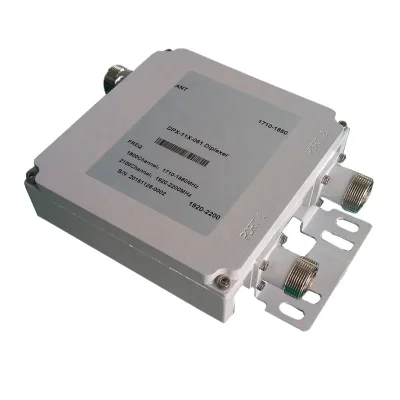

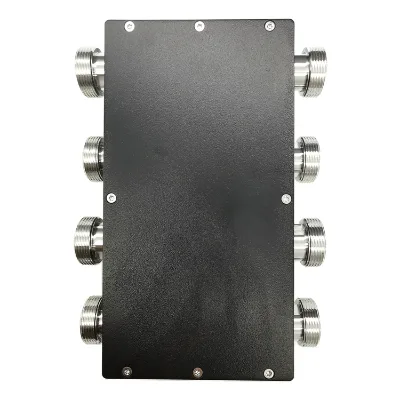
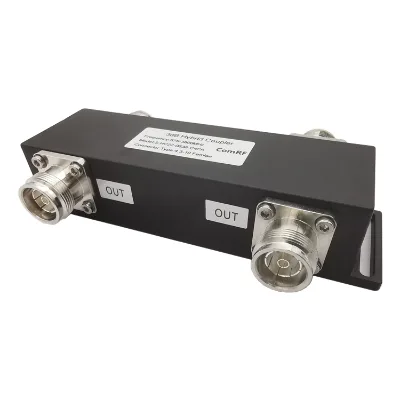
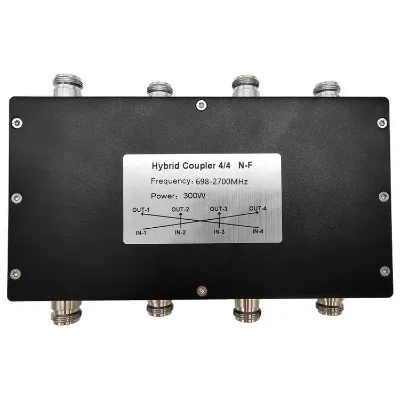
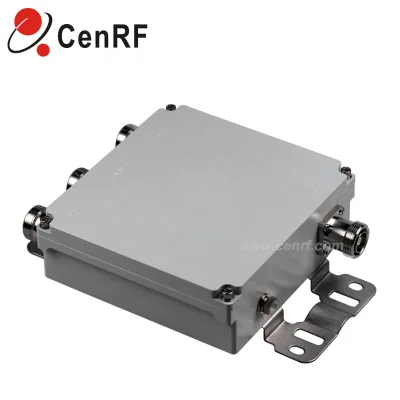
RF Low PIM Low VSWR Three Band combiner for Base Station Combiner Triplexer
$400.00 - $900.00
MOQ: 2 Minimum


Comprehensive Sourcing Guide
Strategic Sourcing Guide for Indoor Outdoor RF Hybrid Combiner Solutions
Procuring indoor and outdoor RF hybrid combiners requires a rigorous approach that balances technical performance with supply chain reliability. These components are critical infrastructure elements used to merge multiple radio frequency signals into a single transmission path, optimizing spectrum usage and reducing the need for redundant cabling in complex wireless environments. Buyers must navigate a market where product specifications vary significantly based on intended deployment, frequency coverage, and environmental durability. This guide outlines the essential factors for evaluating potential suppliers and selecting the correct hardware, grounded in observable product attributes and industry standards.
Technical Specifications and Frequency Performance
The primary differentiator for any RF hybrid combiner is its frequency range and power handling capabilities. When evaluating potential units, buyers must verify the specific operational bandwidth to ensure compatibility with existing network infrastructure. Observed product data indicates a wide spectrum of capabilities, with some units designed for the 70MHz to 2700MHz range, while others cover the 698MHz to 3800MHz band. A third category of equipment is noted for the 350MHz to 520MHz range. These variations dictate the suitability of a combiner for specific applications, such as mobile communications, television broadcasting, or specialized industrial telemetry.
Beyond frequency, the physical construction and thermal characteristics are paramount. High-performance units often utilize solid-state technology to ensure signal integrity without the mechanical wear associated with older components. The material composition is another critical specification; aluminum is a standard material for the housing of outdoor units due to its corrosion resistance and thermal conductivity. For indoor or specific insulation applications, hybrid insulation materials may be specified, with thermal ratings such as Y90 indicating the maximum operating temperature tolerance. Buyers should also examine the physical dimensions, which can range from compact units measuring approximately 140x120x43mm to larger assemblies reaching 194x100x55.2mm. The choice of dimensions directly impacts installation feasibility in confined equipment racks or outdoor enclosures.
Compliance and Certification Verification
In the telecommunications and industrial sectors, regulatory compliance is non-negotiable. When sourcing RF hybrid combiners, buyers must demand evidence of international certifications that validate safety, environmental, and electromagnetic compatibility standards. The market data highlights that reputable products typically carry ISO, RoHS, and CE certifications. ISO certification, particularly ISO 9001, suggests a supplier's adherence to quality management systems, ensuring consistent manufacturing processes. RoHS compliance confirms that the device is free from hazardous substances, which is a legal requirement for electronics sold in many global markets. CE marking indicates conformity with health, safety, and environmental protection standards for products sold within the European Economic Area.
It is essential to distinguish between general certifications and specific product testing results. While ISO 9001 is a recognized standard for quality management, buyers should not assume that every listed product automatically satisfies all potential local regulatory requirements without specific verification. The presence of these certifications should be treated as a baseline requirement rather than a guarantee of performance in every specific use case. Buyers must request current, valid certificates for the specific model numbers they intend to purchase, as certification status can vary between product lines and manufacturing batches.
Cost Drivers and Procurement Economics
The pricing structure for RF hybrid combiners is influenced by several variables, including the complexity of the frequency range, the materials used, and the level of customization required. The observed market data shows a price range spanning from 1 to 900 USD, reflecting the diversity of products from basic passive components to advanced, high-power, or highly customized units. Several factors drive these costs. First, the frequency range is a major cost driver; units covering broader spectrums like 698MHz to 3800MHz often command higher prices than those with narrower bands. Second, the material composition, such as the use of aluminum versus standard plastics, affects the unit cost. Third, customization options significantly impact the final price. Products marked as "Customization Available" allow for tailored dimensions, connectors, or frequency tuning, which incurs additional engineering and tooling costs.
Minimum Order Quantity (MOQ) is another critical economic factor. The market data indicates an MOQ range of 1 to 500 units. For small-scale projects or pilot deployments, suppliers offering an MOQ of 1 set are preferable, allowing for low-risk testing. However, for large-scale infrastructure rollouts, buyers may negotiate lower per-unit costs by meeting higher volume thresholds. Packaging also plays a role in logistics costs; options range from standard export packing cartons to wooden cases, which are necessary for heavy or fragile high-value equipment. Buyers should calculate the total cost of ownership, including shipping and packaging, rather than focusing solely on the unit price.
Typical Applications and Deployment Scenarios
RF hybrid combiners are versatile components deployed across a wide array of sectors. The primary usage categories identified include telephone networks, mobile phone infrastructure, server farms, and workstations. In mobile phone networks, these combiners are essential for aggregating signals from multiple base stations or sectors, allowing for efficient spectrum utilization in both indoor and outdoor environments. The support for GSM networks is a specific attribute noted in the data, indicating suitability for legacy and current mobile communication standards.
For server and workstation environments, the reliability of the combiner is crucial to maintaining uninterrupted data transmission. The "Insulation Sleeve & Tube" classification suggests applications where electrical isolation and thermal protection are required, possibly in high-voltage or high-heat industrial settings. The "Data" information content attribute points to use cases in data centers where signal integrity is paramount. Whether the application is for a small office or a large-scale cellular tower, the selection of the combiner must align with the specific network topology and environmental conditions. Indoor units may prioritize compactness and aesthetic integration, while outdoor units must withstand harsh weather conditions, necessitating robust aluminum housings and high thermal ratings.
Supplier Evaluation and Product Attributes
Evaluating a supplier requires a deep dive into their product attributes and manufacturing capabilities. Buyers should look for suppliers who offer a diverse range of model numbers, such as the AT series (e.g., AT050202030627DF) and the TPW series (e.g., TPW-3HC-6938-DF), as this indicates a broad technical capability. The "Feibo" brand is one example of a manufacturer in this space, but buyers should not limit their search to a single name. Instead, they should verify the supplier's ability to provide the specific model numbers that match their technical requirements.
The origin of the product is a significant factor in supply chain stability. The majority of the observed products originate from China, with specific mentions of Guangdong as a place of origin. This region is a global hub for electronics manufacturing, offering access to a robust supply chain. However, buyers must verify the specific factory location and capacity to ensure they can meet their volume requirements. The condition of the products is listed as "New," which is a standard expectation, but buyers should confirm that "New" implies factory-sealed and unused inventory. Additionally, the availability of customization is a key differentiator; suppliers that offer "Carton or as Per Customer Requirement" packing demonstrate flexibility that can be crucial for specialized logistics needs.
Quality Control and Long-Term Procurement
Ensuring long-term reliability requires a robust quality control strategy. Buyers should implement a verification process that includes checking the "Standard" specifications, such as the precise dimensions (e.g., 184x42x44mm) and material grades. The "Standard Export Packing Cartons" and "Wooden Case" options suggest that suppliers understand the need for protective packaging during transit, which is a proxy for their attention to detail. For long-term procurement, buyers should consider the "Order Quantity Requirement" of 1 set, which allows for initial testing before committing to larger volumes.
Maintenance and lifecycle management are also critical. The "Hybrid Insulation" chemistry and "Y90" thermal rating are specific attributes that suggest the product is designed for longevity in demanding environments. Buyers should request documentation on the expected lifespan of the components and the availability of spare parts. The "Customization Available" attribute implies that suppliers can adapt products to changing network requirements, which is valuable for future-proofing infrastructure. Finally, buyers should establish clear communication channels with suppliers to ensure that any changes in product specifications or certifications are communicated promptly, maintaining the integrity of the supply chain over time.
Comparative Analysis of Product Attributes
To facilitate decision-making, buyers can utilize the following comparison of key attributes observed in the market. This table highlights the diversity in specifications and helps in matching the right product to the specific application needs.
| Attribute Category | Observation 1 | Observation 2 | Observation 3 |
|---|---|---|---|
| Frequency Range | 70MHz - 2700MHz | 698MHz - 3800MHz | 350MHz - 520MHz |
| Material Standard | Aluminum | Hybrid Insulation | Customized |
| Certification | ISO, RoHS, CE | ISO9001 | ISO |
| Packaging | Carton | Wooden Case | Boxing |
| Condition | New | New | New |
| Origin | China | Guangdong, China | China |
| Type | Wireless, Solid State | Insulation Sleeve & Tube | Wireless |
This comparison underscores the necessity of precise specification matching. A buyer seeking a high-frequency outdoor unit must prioritize the 698MHz-3800MHz range and aluminum construction, while a buyer for a specialized indoor insulation application might focus on the hybrid insulation materials and specific thermal ratings. By systematically evaluating these attributes against project requirements, buyers can mitigate the risk of procurement errors and ensure the successful deployment of their RF infrastructure.
FAQs
What certifications do indoor outdoor rf hybrid combiners typically have?
These units typically carry ISO, RoHS, and CE certifications to ensure safety and environmental compliance. Some models also feature ISO9001 certification for quality management. Buyers must verify that specific certificates apply to the exact model numbers they intend to purchase.
Which frequency ranges are available for these combiners?
Available frequency ranges include 70MHz to 2700MHz, 698MHz to 3800MHz, and 350MHz to 520MHz. The specific range depends on the model, such as the SWTPC702700 or SWT4CB6983800. Selecting the correct range is critical for compatibility with existing network infrastructure.
Can I find suppliers offering customization for these products?
Yes, customization is available for many models, allowing for tailored dimensions or frequency tuning. Suppliers may offer packing options like wooden cases or cartons as per customer requirements. This flexibility helps adapt the hardware to specific installation needs and logistics constraints.
How do I verify the physical dimensions of the combiners?
Physical dimensions vary by model, with examples ranging from 140x120x43mm to 194x100x55.2mm. Some units are specified as 184x42x44mm or 148x73x29.5mm. Buyers should check the standard specifications for the specific model to ensure it fits their equipment racks or enclosures.
What is the typical minimum order quantity for these items?
The minimum order quantity ranges from 1 set to 500 units depending on the supplier. Some products require an order quantity of just 1 set, which is ideal for pilot deployments. Larger infrastructure rollouts may require meeting higher volume thresholds to secure better pricing.
Where are these products typically manufactured?
Most products originate from China, with specific mentions of Guangdong as a place of origin. This region is a global hub for electronics manufacturing, offering a robust supply chain. Buyers should verify the specific factory location to ensure supply chain stability and capacity.