Source Indoor Outdoor Golden Trumpet Tree for decoration
Explore 30 listings for the Indoor Outdoor Golden Trumpet Tree to compare customization, material, and pricing options. Buyers can evaluate factory-direct offers with low MOQs and varied sizes for home, school, or event settings.
Key considerations
Products List


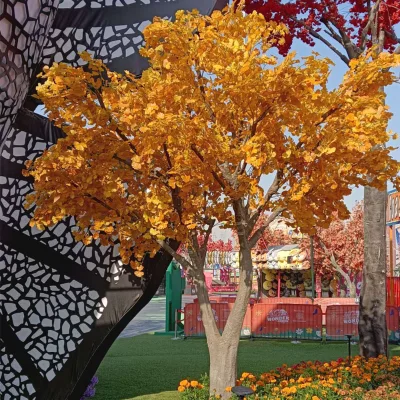

Natural Plants Landscape Trees Tabebuia Rosea Trees Pink Trumpet Tree for Sale
$1.00 - $199.00
MOQ: 2 Pieces


Landscape Trees Golden Trumpet Tree (Handroanthus chrysotrichus) for Sale
$59.00 - $199.00
MOQ: 2 Pieces

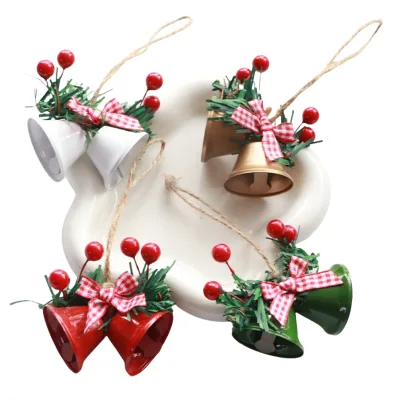

$835.16 - $1442.30
MOQ: 3 Meters


Large Indoor Artificial Maple Tree for Decoration Trees Fiberglass Golden Leaves Tree
$260.00 - $280.00
MOQ: 1 Meters






Wholesale Export Trumpet Vine Ornamental Flowering Climber Premium Quality
$1.00 - $500.00
MOQ: 100 Pieces
Comprehensive Sourcing Guide
Strategic Sourcing Guide for Indoor and Outdoor Golden Trumpet Tree Procurement
Sourcing artificial botanical elements for commercial and residential environments requires a nuanced understanding of material composition, environmental durability, and supply chain reliability. When the specific requirement is an indoor and outdoor golden trumpet tree, buyers must navigate a market where product attributes vary significantly between manufacturers. The following guide synthesizes available product data and industry standards to provide a disciplined framework for procurement. This analysis focuses on verifying technical specifications, assessing material integrity, and establishing quality control protocols to ensure the final product meets the rigorous demands of both interior and exterior applications.
Technical Specifications and Material Composition
The foundation of any successful procurement for artificial trees lies in the precise definition of material composition and physical dimensions. For a golden trumpet tree intended for dual indoor and outdoor use, the material selection is critical to withstand varying environmental conditions. Based on observed market data, high-quality artificial trees often utilize a composite structure. The trunk and branch framework may consist of a steel frame combined with fiberglass bark to ensure structural stability and a realistic texture. The foliage, which gives the tree its "golden" characteristic, is frequently manufactured using PE (polyethylene) or fabric materials. PE is generally preferred for outdoor applications due to its resistance to UV degradation and weathering, while fabric leaves may offer a softer, more natural drape but require specific care for outdoor longevity.
The color profile is a primary specification. While the core keyword specifies "golden," product listings indicate a broader palette including pink, golden, white, light pink, and red. Buyers must explicitly confirm that the "golden" hue is consistent with their design requirements, as variations in dye lots or material batches can lead to color discrepancies. Furthermore, the size specifications are often customizable. Standard height ranges observed in the market include 100cm, 120cm, 140cm, 160cm, 180cm, and 200cm. However, many suppliers offer custom-made sizes to fit specific architectural constraints. The placement of the tree is typically designed for the floor, though wall-mounted or balcony applications are also noted in broader product descriptions.
| Specification Category | Observed Attributes | Verification Requirement |
|---|---|---|
| Material | Steel frame, fiberglass bark, PE or fabric leaf | Confirm PE usage for outdoor UV resistance |
| Color Options | Pink, Golden, White, Light Pink, Red | Request physical color swatches for "Golden" |
| Height Standards | 100cm to 200cm (6 steps) | Verify custom size tolerances if standard not met |
| Placement | Floor, Indoor/Outdoor | Confirm base stability for outdoor wind loads |
| Leaf Type | Natural branch, PE or fabric | Inspect for realistic texture and touch |
Compliance, Certification, and Safety Standards
Safety and compliance are non-negotiable when sourcing products for public spaces, commercial venues, or residential areas where fire safety is a concern. A critical observation in the product data is the conflicting information regarding fire resistance. Some product attributes list the item as "Non-fire Retardant," while other advanced specifications claim the product is "Fire Retardant" and "UV-Resistant." This discrepancy highlights the necessity for rigorous due diligence. Buyers cannot assume a product is fire-safe based on a general listing; they must request specific test reports or certification documents that verify the fire retardant status of the specific model being purchased.
In the context of international trade, certifications such as REACH are often referenced in background data, but specific certification status for individual products should not be assumed without verification. For outdoor use, the product must demonstrate resistance to ultraviolet (UV) radiation to prevent fading and material brittleness. The "Advantage" section of product listings frequently mentions "Anti-UV" and "UV-Resistant" properties, but these are claims that must be validated against independent testing standards. Buyers should explicitly ask suppliers to provide data sheets confirming the UV resistance rating and the fire retardant classification of the specific golden trumpet tree model. Without these documents, the risk of product failure in an outdoor environment or non-compliance with local building codes is significant.
Cost Drivers and Pricing Dynamics
The pricing of artificial trees is influenced by several variables, including material quality, customization level, and order volume. The observed price range in the market is extensive, spanning from $0.30 to $1,442.30 USD. This wide variance indicates that the market includes both low-cost, mass-produced items and high-end, custom-engineered botanicals. The lower end of the spectrum likely corresponds to smaller units, fabric-based leaves, or minimal customization, while the higher end reflects larger trees with steel frames, fiberglass trunks, and advanced UV-resistant treatments.
Minimum Order Quantity (MOQ) is another significant cost driver. While some suppliers offer low MOQs starting at 1 unit, others require orders of 40 pieces or more, with some reaching up to 1,440 units. The "Factory Direct Sale" advantage often cited by suppliers suggests that bypassing intermediaries can reduce costs, but this is contingent on meeting the supplier's volume requirements. Buyers must balance the unit price against the total order value. For a project requiring a single large tree, the high unit cost may be justified, whereas a landscaping project requiring dozens of trees might benefit from negotiating a lower unit price through a higher MOQ. Additionally, packaging costs, such as the use of steel frames, cartons, or foil bags, can impact the final landed cost, especially for international shipping where volume and weight are critical factors.
Typical Applications and Usage Scenarios
The versatility of the golden trumpet tree makes it suitable for a diverse range of applications. Product specifications list usage in indoor and outdoor settings, including homes, schools, offices, parties, weddings, shops, and holiday decorations. The "Occasion" data points to specific events such as Christmas, anniversaries, and Thanksgiving, suggesting the tree is often used for seasonal or celebratory decor. For outdoor applications, the tree is frequently placed in gardens, on balconies, or as part of permanent landscape features. The "Application" field also mentions "Gardeners" and "festival decoration," indicating its utility in both professional landscaping and temporary event setups.
The "Placement" attribute specifies floor placement, which is standard for large artificial trees. However, the "Application" data also includes "indoor & outdoor wall decoration," suggesting that smaller variants or specific mounting options may be available. For commercial spaces like hotels or shopping malls, the tree serves as a focal point, providing a natural aesthetic without the maintenance requirements of live plants. The "Shelf Life" of 6 to 12 months is a critical consideration for inventory management, particularly for seasonal items. Buyers must ensure that the product's durability aligns with the intended lifespan of the installation. If the tree is intended for permanent outdoor display, the 6-12 month shelf life claim may refer to the packaging or initial freshness rather than the structural integrity of the materials.
Supplier Evaluation and Lead Time Management
Selecting the right supplier involves more than just comparing prices; it requires evaluating their production capabilities, logistics, and communication. The "Advantage" section frequently mentions "Low MOQ" and "Reasonable Prices," but these are general claims. Buyers should verify the supplier's origin, which is often listed as China, specifically Guangdong. This region is a known hub for artificial plant manufacturing, offering a wide range of options but also requiring careful vetting to ensure quality consistency.
Lead time is a critical factor in procurement planning. The observed data indicates a lead time of "Within 3 Days for Sample" and "10-30 Days for Mass Order." This timeline is relatively standard for the industry but can vary based on order complexity and customization. For custom-made sizes or specific color requirements, the lead time may extend beyond the 30-day window. Buyers should include buffer time in their project schedules to account for potential delays. Additionally, the "Storage Method" listed as "Frozen" is unusual for artificial plants and may indicate a specific preservation technique for the materials or a data entry error. Buyers should clarify this with the supplier to ensure proper handling and storage during transit and warehousing.
Quality Control and Long-Term Procurement Considerations
Ensuring long-term satisfaction with the product requires a robust quality control (QC) strategy. The "Feature" list includes "Eco-Friendly," "Durable," "High Quality," and "Realistic," but these are subjective claims. To validate these attributes, buyers should implement a multi-stage QC process. This includes inspecting the raw materials for UV resistance, checking the structural integrity of the steel frame and fiberglass bark, and verifying the colorfastness of the leaves. The "Surface Treatment" of printing should be examined for consistency and durability, especially for outdoor use where exposure to rain and sun can cause fading or peeling.
For long-term procurement, buyers should consider the "Storage Method" and "Packaging" details. The use of "Carton" and "Foil Bag" packaging suggests a need for moisture protection, which is essential for maintaining the quality of the materials during storage. The "Small Package" size of 500g and the "Standard" of 1kg indicate that the product may be sold in various weight configurations, which affects shipping costs and handling. Buyers should also verify the "Germination Rate" and "Purity" if the product is marketed as having botanical elements, although these metrics are more relevant to live plants. For artificial trees, the focus should remain on the physical durability and aesthetic consistency.
Finally, buyers must be aware of the "Kind" and "Plant Type" classifications. The product is listed as "Trees" and "Flowers," with a specific "Product Name" of "Artificial Cherry Blossom Tree." This suggests that the "Golden Trumpet Tree" may be a specific variation or a mislabeled item in some listings. Buyers must ensure that the product they receive matches the visual and structural expectations of a golden trumpet tree, not a cherry blossom. Clear communication with the supplier regarding the specific species and visual characteristics is essential to avoid receiving the wrong product. By adhering to these verification steps, buyers can mitigate risks and secure high-quality artificial trees that meet their specific indoor and outdoor requirements.
FAQs
What materials are used for the trunk and leaves?
The trunk typically uses a steel frame with fiberglass bark, while leaves are made of PE or fabric. This combination ensures structural stability and a realistic natural touch for both indoor and outdoor placements.
Can these trees be customized for specific sizes?
Yes, custom-made sizes are available to fit specific architectural constraints. Standard heights range from 100cm to 200cm, but buyers can request dimensions outside this range to meet unique design requirements.
How long does it take to receive a sample?
Samples can be produced within 3 days for immediate review. Mass orders generally require 10 to 30 days for production and delivery, depending on the complexity and volume of the customization requested.
Are the leaves resistant to UV radiation for outdoor use?
Many models feature UV-resistant properties to prevent fading in outdoor environments. However, buyers must verify specific test reports as some listings indicate non-fire retardant or varying durability levels depending on the material.
What is the minimum order quantity for purchasing?
The minimum order quantity is typically 40 pieces, though some suppliers may accept orders as low as 1 unit. Higher volumes often unlock factory direct pricing and more favorable shipping terms for bulk projects.
Where are these artificial trees manufactured?
These products originate primarily from Guangdong, China, a known hub for artificial plant manufacturing. Buyers should verify the specific factory location to ensure quality consistency and accurate lead time estimates for their region.