Source Industrial Dust Collection Grinding Workbench for welding, polishing, and cutting
Explore 30 options for the Industrial Dust Collection Grinding Workbench designed for welding, polishing, and cutting applications. Buyers can compare specifications including motor power, air volume, and filtration area to find the right equipment for their facility.
Key considerations
Products List


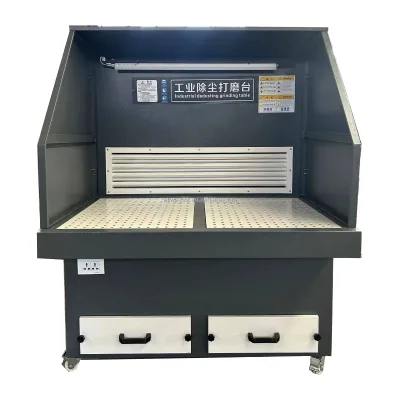
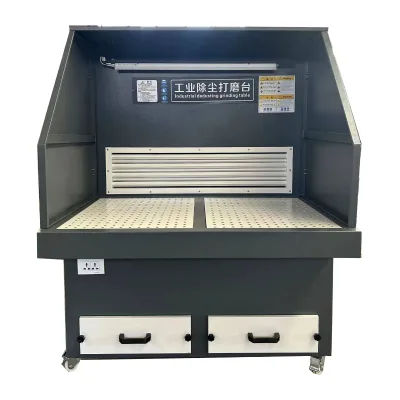
Customized Dimension Industrial Grinding Workbench for Metal Treatment Industry
$1529.87 - $1937.83
MOQ: 1 sets
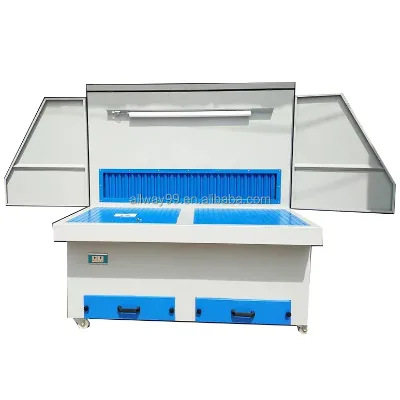
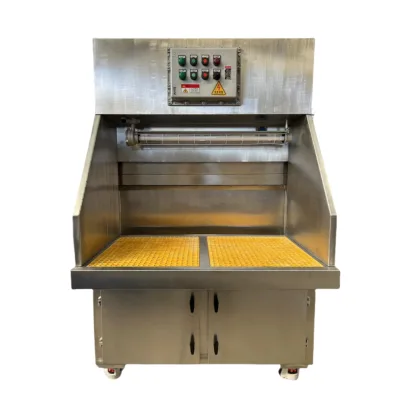
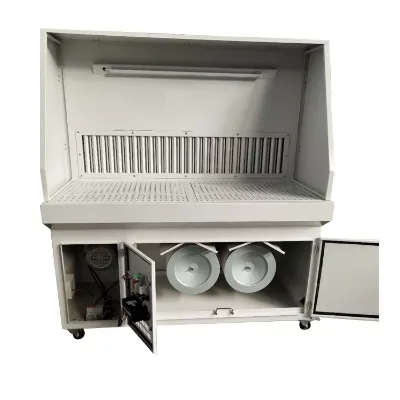


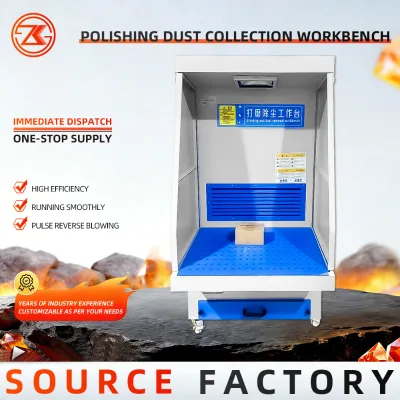

Woodworking Sanding Polishing Table 12kw Industrial Dust Collection Workbench
$3350.00 - $11000.00
MOQ: 1 Pieces
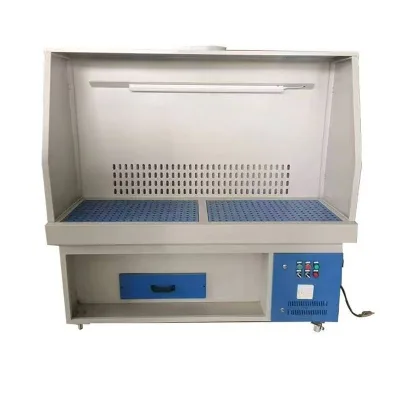
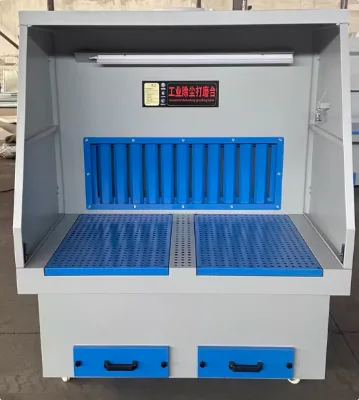


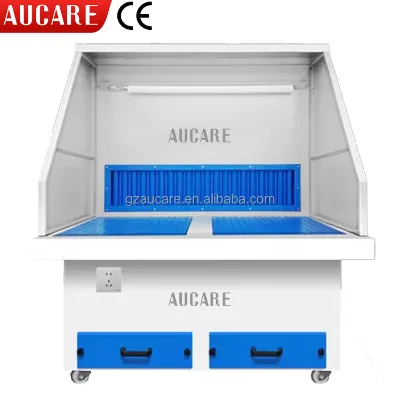
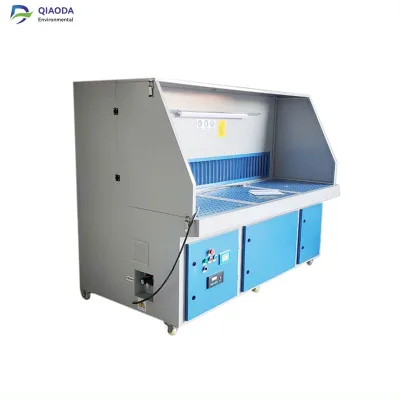
Comprehensive Sourcing Guide
Strategic Sourcing Guide for Industrial Dust Collection Grinding Workbenches
Understanding Core Technical Specifications and Configuration
When sourcing an Industrial Dust Collection Grinding Workbench, the primary objective is to align the equipment's physical and operational capabilities with the specific demands of the manufacturing environment. The market presents a diverse array of configurations, ranging from horizontal to vertical installation methods, each dictated by the spatial constraints and workflow of the facility. Buyers must carefully evaluate the installation method, as the observed data indicates that products are available in both horizontal and vertical orientations. The choice between these configurations often depends on the height of the workbench and the specific trajectory of the dust generated during grinding or welding operations.
A critical technical parameter is the air volume capacity, which determines the efficiency of the dust extraction system. Current market offerings demonstrate a range of air volumes, typically spanning from 2000 m³/H to 5000 m³/H. For high-volume operations involving multiple grinding stations, units capable of 6000 m³/H may be necessary to maintain air quality standards. The filtration mechanism is equally vital; the observed product attributes highlight the use of filter cartridges, with quantities varying from 2 to 6 units per standard unit, or up to 32 specific cartridges in larger electrostatic precipitator models. The medium material used for filtration is another decisive factor, with options including metal fiber and chemical synthetic fiber. Metal fiber is often preferred for high-temperature applications such as welding, while synthetic fibers may offer superior efficiency for fine particulate matter in polishing tasks.
The motor specifications serve as the heart of the dust collection system, directly influencing suction power and energy consumption. Buyers should expect to find motor power ratings ranging from 2.2 kW to 5.5 kW, with some configurations offering dual motors (2.2 kW x 2) for enhanced performance. The brand of the motor is a significant quality indicator, with prominent manufacturers such as Siemens, Dongyuan, and Wannan appearing in product listings. Furthermore, the voltage requirements must be verified against the facility's power infrastructure. While 380V 3-phase is a common standard, some suppliers offer customization for 110V or 220V single-phase systems, ensuring compatibility with diverse electrical grids.
Compliance, Certification, and Regulatory Standards
Navigating the regulatory landscape is a non-negotiable aspect of sourcing industrial dust collection equipment. Compliance ensures that the machinery meets international safety and environmental standards, reducing liability and ensuring worker safety. The most frequently observed certifications in the current market are ISO and CE. The CE marking indicates conformity with health, safety, and environmental protection standards for products sold within the European Economic Area, while ISO certification suggests adherence to international management system standards. However, buyers must treat these certifications as observations of specific listings rather than universal guarantees for all products in a category.
Beyond general certifications, specific product standards and dimensions play a crucial role in compliance and integration. For instance, certain models adhere to specific dimensional standards, such as L900W1260H1450mm, which dictates the physical footprint and ensures the unit fits within designated workspaces. Other models may follow model-specific standards like YBY-DM800 or DB2000, which often correlate with internal engineering specifications and performance benchmarks. The HS code 8421392990 is a standard classification for industrial dust collectors, which is essential for accurate customs declaration and tariff calculation during international shipping.
It is imperative for buyers to verify that the supplier can provide valid, up-to-date certification documents that correspond to the specific model being purchased. Relying on generic claims without verifying the certificate against the specific product serial number or model can lead to compliance failures. Additionally, the application of the equipment, whether for polishing, grinding, welding, or cutting, must align with the intended use case to ensure that the filtration efficiency meets the necessary occupational health and safety regulations for the specific type of particulate matter generated.
Cost Drivers and Pricing Structure Analysis
The pricing of industrial dust collection grinding workbenches is influenced by a complex interplay of factors, including motor power, filtration area, material quality, and customization levels. The observed price range in the market spans from 300 USD to 11,000 USD, reflecting the vast difference between basic manual units and fully automated, high-capacity systems. The lower end of the spectrum typically corresponds to smaller units with lower air volume capacities and fewer filter cartridges, while the upper end encompasses systems with advanced automation, larger filtration areas, and premium motor brands.
One of the primary cost drivers is the customization level. While some products are listed as non-customized, others offer significant customization options. Customization often involves tailoring the dimensions, voltage, motor power, or filtration media to specific operational needs, which inevitably increases the unit cost. The type of operation, whether automatic or semiautomatic, also impacts the price, as automated systems require more sophisticated control logic and sensors.
Packaging and shipping logistics represent another significant component of the total cost of ownership. Products are typically shipped in plywood packing or wooden cases, with options for air freight or sea freight. The standard shipping container size, such as a 1x20'GP, affects the number of units that can be shipped per container, thereby influencing the per-unit freight cost. Buyers should also consider the after-sales service costs, particularly if the equipment requires overseas engineering support. While some suppliers offer engineers available to service machinery overseas, these services may incur additional travel and labor expenses that should be factored into the long-term budget.
Typical Applications and Operational Context
Industrial dust collection grinding workbenches are designed to address specific operational challenges across various manufacturing sectors. The primary applications include polishing, grinding, welding, and cutting, each generating distinct types of particulate matter that require tailored filtration solutions. For welding operations, the workbench must handle high-temperature fumes and larger metal particles, often necessitating metal fiber filters and robust construction. In contrast, polishing and grinding of non-ferrous metals or composites may generate finer dust, requiring chemical synthetic fiber filters with higher efficiency ratings.
The keyword "Dust Removal Workbench" encompasses a wide range of configurations, from mobile units to fixed installations. Mobile dust removal workbenches offer flexibility, allowing them to be moved between different workstations or production lines, which is ideal for job shops or facilities with variable production schedules. Fixed workbenches, often designed with horizontal or vertical installation methods, provide a permanent solution for high-volume, dedicated production lines. The air volume capacity must be matched to the intensity of the operation; for example, a workbench with an air volume of 2000 m³/H may suffice for light polishing, whereas heavy-duty grinding might require a unit capable of 5000 m³/H or more.
The operation type, whether automatic or semiautomatic, also dictates the workflow integration. Automatic systems are designed for continuous operation with minimal human intervention, making them suitable for high-throughput environments. Semiautomatic systems may require operator input for certain functions, offering a balance between control and efficiency. Understanding the specific application is crucial for selecting the right model, as a mismatch between the workbench's capabilities and the operational demands can lead to reduced efficiency, increased maintenance costs, and potential safety hazards.
Supplier Evaluation and Quality Assurance Protocols
Evaluating suppliers requires a rigorous approach that goes beyond price comparison. Buyers should prioritize suppliers who demonstrate transparency in their product specifications and provide verifiable documentation. The presence of certifications like ISO and CE is a positive indicator, but it must be confirmed that these certifications apply to the specific model being purchased. Additionally, the origin of the product, often listed as China or specific regions like Dongguan City, Guangdong Province, should be considered in the context of the supplier's reputation and track record.
Quality assurance protocols should be established to ensure that the delivered equipment meets the agreed-upon specifications. This includes verifying the motor brand, filter cartridge quantity, and air volume capacity against the purchase order. The warranty period, typically 12 months in the observed market, is a critical factor in supplier evaluation. A longer warranty period may indicate the supplier's confidence in the product's durability and quality. Furthermore, the availability of after-sales service, including overseas engineering support, is a key differentiator. Buyers should assess the supplier's ability to provide timely technical support and spare parts to minimize downtime.
The packing method, such as plywood packing or wooden cases, also serves as an indicator of the supplier's attention to detail. Proper packaging ensures that the equipment arrives in good condition, reducing the risk of damage during transit. Buyers should also inquire about the testing procedures used by the supplier to validate the performance of the dust collection systems before shipment. While specific test results may not always be publicly available, a reputable supplier should be able to provide a summary of the testing protocols and quality control measures employed.
Long-Term Procurement and Lifecycle Management
Procuring an Industrial Dust Collection Grinding Workbench is a long-term investment that requires careful consideration of lifecycle management. The initial purchase price is only one component of the total cost of ownership; ongoing maintenance, filter replacement, and energy consumption must also be factored into the decision-making process. The motor power and air volume capacity directly influence energy costs, with higher power motors consuming more electricity. Buyers should evaluate the energy efficiency of the system and consider the long-term operational costs associated with different motor ratings.
Filter replacement is another critical aspect of lifecycle management. The number and type of filter cartridges, such as the 325*500 mm dimensions observed in some models, determine the frequency and cost of maintenance. Buyers should ensure that the supplier provides a steady supply of replacement filters and that the filtration media is compatible with the specific dust types generated in their facility. The warranty period, typically 12 months, provides a safety net for initial defects, but buyers should also consider the availability of extended warranty options or service contracts for long-term protection.
The customization options available, such as the ability to adjust the installation method or voltage, can extend the lifespan and adaptability of the equipment. As production needs evolve, the ability to upgrade or modify the workbench can prevent the need for premature replacement. Additionally, the standard shipping container size and packing method should be considered in the context of the facility's logistics capabilities. A well-planned procurement strategy that accounts for these long-term factors will ensure that the Industrial Dust Collection Grinding Workbench remains a reliable and efficient asset for years to come.
FAQs
What installation methods are available for these workbenches?
Available installation methods include both horizontal and vertical orientations. Buyers must select the configuration that matches their facility's spatial constraints and workflow requirements for optimal dust extraction efficiency.
Which motor brands are commonly used in these units?
Common motor brands include Siemens, Dongyuan, and Wannan. These motors typically offer power ratings ranging from 2.2 kW to 5.5 kW to ensure adequate suction power for various industrial applications.
Can the equipment be customized for specific needs?
Customization is available for certain models to tailor dimensions, voltage, or filtration media. However, some units are listed as non-customized, so buyers must verify the specific model's flexibility before ordering.
What certifications do these industrial dust collectors typically hold?
Products often carry ISO and CE certifications to meet international safety and environmental standards. Buyers should verify that these documents correspond to the specific model being purchased rather than assuming universal coverage.
How is the air volume capacity defined for these systems?
Air volume capacity typically ranges from 2000 m³/H to 5000 m³/H, with some models reaching 6000 m³/H. The correct capacity depends on the intensity of the grinding, welding, or polishing operations performed.
What warranty period is standard for this equipment?
The standard warranty period is 12 months for most units. This coverage ensures protection against defects, though buyers should confirm if after-sales service includes overseas engineering support for extended maintenance needs.
Which filter cartridge quantities are available for these collectors?
Filter cartridge quantities vary from 2 to 6 units per standard unit, with larger models holding up to 32 cartridges. The quantity depends on the filtration area and the specific model size selected.