Source Industrial Dual Band WiFi Router for SOHO, Enterprise, Outdoor
Source an Industrial Dual Band WiFi Router from 30 verified listings. Buyers can compare specifications like 4G LTE support, PoE, and modular ports for SOHO, enterprise, and outdoor applications.
Key considerations
Products List


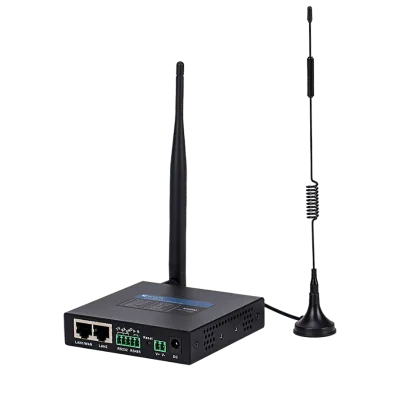
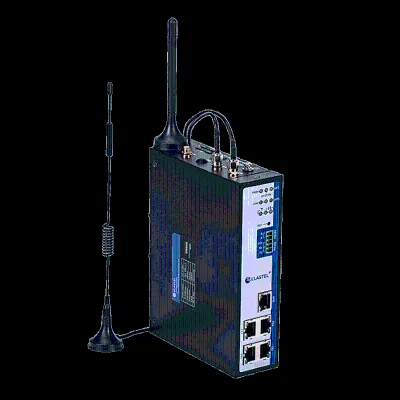


Industrial Wireless WiFi Router with SIM &SD Slot Support 2.4G/5.8g Frequency
$50.00 - $100.00
MOQ: 1 Pieces


Comprehensive Sourcing Guide
Strategic Sourcing Guide for Industrial Dual Band WiFi Routers
Understanding Core Technical Architectures and Performance Profiles
When sourcing an industrial dual-band WiFi router, the primary objective is to distinguish between devices designed for high-throughput enterprise backbones and those optimized for rugged, remote connectivity. The market presents a diverse array of architectural choices, ranging from crossbar systems to single bus master-slave CPU configurations. A crossbar system architecture typically offers superior internal data path efficiency, allowing multiple ports to communicate simultaneously without contention. This is critical for applications requiring non-line speed routing capabilities where packet processing must remain robust under variable loads. Conversely, single bus master-slave CPU architectures are often found in cost-optimized industrial units where the processing demand is moderate but reliability remains paramount.
Performance classification is another vital differentiator. Buyers must verify whether the device operates as a line-rate router or a non-line speed router. A line-rate router ensures that the physical interface speed is fully utilized, which is essential for high-density data environments. In contrast, non-line speed routers may introduce latency or throughput bottlenecks under heavy traffic, making them suitable only for specific SOHO (Small Office/Home Office) or low-bandwidth industrial telemetry applications. The port structure further dictates flexibility; modular port structures allow for the expansion of connectivity options, whereas fixed port configurations, such as those with a specific 1-Way WAN and 4-Way LAN setup, offer a streamlined solution for predefined network topologies.
The physical interface configuration is equally significant. While some industrial units feature a single WAN and single LAN port configuration, others provide more extensive connectivity with up to four LAN ports. The inclusion of a terminal serial port, specifically an RS232 serial port, is a hallmark of industrial-grade equipment, enabling direct connection to legacy machinery, PLCs, or diagnostic tools. Furthermore, the network access capabilities define the router's utility in cellular environments. Support for APN (Access Point Name) and VPDN (Virtual Private Dial-up Network) is standard for industrial cellular routers, ensuring secure and authenticated data transmission over mobile networks. The authentication protocols supported, such as CHAP, PAP, MS-CHAP, and MS-CHAPv2, must align with the security policies of the target network infrastructure.
Compliance, Certification, and Environmental Standards
In the industrial sector, regulatory compliance is not merely a formality but a prerequisite for deployment in various global markets. The certification landscape for industrial dual-band WiFi routers is extensive, covering electromagnetic compatibility, environmental safety, and radio frequency standards. Buyers should verify that the product carries a comprehensive suite of certifications, including CE (Conformité Européenne), RoHS (Restriction of Hazardous Substances), and FCC (Federal Communications Commission). Additional regional certifications such as UKCA, UL, TUV, Anatel, RU, and ETL may be required depending on the specific deployment location. These certifications validate that the device meets strict safety and emission standards, reducing the risk of regulatory fines or deployment rejection.
Beyond electrical safety, the physical construction of the router must withstand harsh industrial environments. The case material is a critical indicator of durability; metal cases are preferred for their ability to dissipate heat and provide electromagnetic shielding. The physical dimensions of the unit also play a role in installation feasibility. Standardized form factors, such as those measuring approximately 92mm by 89mm by 25mm or larger industrial enclosures around 200mm by 125mm by 190mm, dictate the available mounting space. Buyers must ensure the selected unit fits within the designated enclosure or mounting bracket without compromising airflow or cable management.
Environmental resilience is further enhanced by the antenna configuration. Industrial routers often feature built-in antennas to minimize the risk of physical damage, which is common in high-vibration or outdoor settings. However, some applications may require external antennas for enhanced signal penetration. The support for multiple GNSS systems, including Galileo, GPS, Beidou, and Glonass, is a sophisticated feature that ensures precise location tracking, which is vital for asset tracking and logistics applications. The device's ability to operate in dual-path WiFi modes, supporting both WiFi4 and WiFi6 standards, ensures backward compatibility while offering the throughput and efficiency of modern wireless protocols.
Cost Drivers and Total Cost of Ownership Analysis
The pricing structure for industrial dual-band WiFi routers is influenced by a complex interplay of factors, including performance class, certification breadth, and customization capabilities. The observed market range for these devices spans from approximately $6 to $399, reflecting the vast difference between basic connectivity modules and fully featured, ruggedized industrial gateways. Several key drivers contribute to this variance. First, the performance tier is a primary cost factor; line-rate routers with advanced CPU architectures command a premium over non-line speed models. Second, the breadth of certifications adds to the cost, as obtaining and maintaining multiple international approvals requires significant investment in testing and compliance engineering.
Customization is another significant cost driver. While many suppliers offer standard configurations, the availability of customization options allows buyers to tailor the device to specific network requirements, such as unique firmware, specific port configurations, or specialized power inputs. However, customization often incurs additional tooling or engineering fees. The power supply requirements also impact cost; units supporting a wide voltage range, such as 5-40V or even 5-60V options, often require more robust power management circuitry than those limited to a fixed DC 12V input.
The Minimum Order Quantity (MOQ) is a critical financial consideration for procurement planning. The market exhibits a wide MOQ range, from as low as 1 unit for prototyping or small-scale deployment to 1000 units for large-scale industrial rollouts. High MOQs can significantly reduce the per-unit cost but increase the initial capital outlay and inventory risk. Buyers must balance the need for volume discounts against their cash flow constraints and projected deployment timelines. Additionally, the packaging type, whether standard boxes or specialized color boxes, can influence shipping costs and the perceived value of the product in the final market.
Typical Application Scenarios and Deployment Environments
Industrial dual-band WiFi routers are deployed in a wide array of scenarios, each with unique connectivity and environmental demands. The primary application domains include SOHO environments, large-scale enterprise networks, and outdoor industrial installations. In SOHO settings, the focus is often on cost-effective, easy-to-deploy solutions with basic security features. These routers typically utilize a single bus architecture and may not require the extensive certification suite needed for enterprise-grade deployments.
For enterprise applications, the requirements shift towards high availability, advanced security, and robust management capabilities. Line-rate routers with crossbar architectures are preferred here to handle the high volume of data traffic generated by multiple users and devices. These units often support a wide range of VPN protocols, including IPsec, OpenVPN, ZeroTier, PPTP, L2TP, and GRE, ensuring secure remote access and site-to-site connectivity. The management interface is also crucial; enterprise buyers look for support for various management protocols such as E-Lins NMS, Web interfaces, SMS, SSH, Telnet, Command Line, and SNMP to facilitate centralized monitoring and configuration.
Outdoor and remote deployments present the most challenging requirements. These environments demand routers with ruggedized metal casings, wide operating voltage ranges, and support for pole mount, desktop, wall mount, and DIN-rail installations. The inclusion of PoE (Power over Ethernet) support simplifies cabling and power delivery in remote locations. The ability to support dual-band WiFi (WiFi4 and WiFi6) ensures that these routers can serve a mix of legacy and modern devices while maintaining high throughput. The integration of multiple GNSS systems further enhances their utility in logistics and asset tracking, where precise location data is essential.
Supplier Evaluation and Quality Assurance Protocols
Selecting a reliable supplier for industrial dual-band WiFi routers requires a rigorous evaluation process that goes beyond price comparisons. Buyers should prioritize suppliers with a proven track record in the industrial sector, particularly those with manufacturing bases in key technology hubs like Shenzhen, China. The origin of the product can provide insights into the supply chain maturity and the availability of skilled engineering talent. However, the location of the manufacturing facility should not be the sole determinant; the supplier's quality control processes and adherence to international standards are equally important.
Quality assurance should be verified through the supplier's certification portfolio. A comprehensive list of certifications, including CE, RoHS, UL, and FCC, indicates a commitment to meeting global safety and performance standards. Buyers should also request test results and performance data to validate claims regarding throughput, latency, and environmental resilience. The ability to provide samples for pre-deployment testing is a strong indicator of supplier confidence in their product quality. Additionally, the supplier's willingness to offer customization and support for specific network requirements demonstrates a partnership-oriented approach rather than a transactional one.
The management and support capabilities of the supplier are also critical. A supplier that offers a robust suite of management tools, including remote monitoring and configuration via various protocols, adds significant value to the procurement. The availability of technical support, including documentation, firmware updates, and troubleshooting assistance, ensures that the deployed routers remain operational throughout their lifecycle. Buyers should also consider the supplier's lead times and production capacity to ensure they can meet the project's timeline requirements.
Long-Term Procurement Considerations and Lifecycle Management
Long-term procurement of industrial dual-band WiFi routers involves more than just the initial purchase; it requires a strategic approach to lifecycle management. The durability of the device, indicated by its metal casing and robust internal components, is a key factor in determining its operational lifespan. Buyers should assess the thermal management capabilities of the router, as overheating is a common failure mode in industrial environments. The power supply design, particularly the support for wide voltage ranges, ensures that the device can operate reliably even in locations with unstable power grids.
Firmware updates and security patches are essential for maintaining the integrity of the network over time. Suppliers that provide a clear roadmap for firmware updates and support for long-term security protocols, such as advanced VPN encryption, are preferable. The modularity of the router's port structure can also extend its useful life, allowing for upgrades or adaptations as network requirements evolve. Buyers should also consider the availability of spare parts and the supplier's policy on end-of-life support to ensure a smooth transition when the device eventually needs replacement.
Finally, the scalability of the procurement strategy is crucial. As the network grows, the ability to deploy additional units with consistent performance and management capabilities is vital. Suppliers that offer bulk pricing tiers and streamlined logistics for large orders can help reduce the complexity of scaling the deployment. By focusing on these long-term considerations, buyers can ensure that their investment in industrial dual-band WiFi routers delivers sustained value and reliability over the life of the project.
Comparative Analysis of Key Product Attributes
To facilitate informed decision-making, the following table summarizes key attributes observed in the industrial dual-band WiFi router market, highlighting the variations in architecture, performance, and physical specifications.
| Attribute Category | Observation A | Observation B | Observation C |
|---|---|---|---|
| Architecture | Crossbar System | Single Bus Master-slave CPU | Modular Port Structure |
| Performance Class | Non Line Speed Router | Line-Rate Router | High Throughput (WiFi6) |
| WAN/LAN Ports | 1-Way WAN, 4-Way LAN | 1 x WAN, 1 x LAN | Variable (Modular) |
| Power Input | 5-40V (Option 5-60V) | DC 12V/1.5A | Wide Range Support |
| Antenna Type | Internal (Built-in) | External | Dual-Path (WiFi4 & WiFi6) |
| Certifications | CE, RoHS, UKCA, UL, TUV | CE, RoHS, ISO | FCC, ETL, Anatel |
| GNSS Support | Galileo, GPS, Beidou, Glonass | Standard GPS | Multi-Constellation |
| Installation | Pole, Desktop, Wall, DIN-rail | Desktop, Wall Mount | Flexible Mounting Options |
| VPN Protocols | IPsec, OpenVPN, PPTP, L2TP | Standard IPsec | GRE, ZeroTier Support |
| Management | E-Lins NMS, Web, SNMP | Web, SSH, Telnet | Command, SMS, SNMP |
This comparison underscores the diversity of options available to buyers. While some units prioritize high performance and advanced security features, others focus on cost-efficiency and ease of deployment. The choice ultimately depends on the specific requirements of the application, balancing technical capabilities with budgetary constraints and long-term operational goals. By carefully evaluating these attributes, procurement professionals can select the most suitable industrial dual-band WiFi router for their specific needs.
FAQs
What certifications do industrial dual band wifi routers typically hold?
These devices typically hold certifications such as CE, RoHS, FCC, UL, and TUV. Buyers should verify specific regional approvals like UKCA or Anatel based on their deployment location to ensure regulatory compliance.
Which power options are available for outdoor industrial routers?
Outdoor units often support wide voltage ranges like 5-40V or 5-60V options. Some models also include PoE support to simplify power delivery in remote or rugged installation environments.
How can I identify routers with modular port structures?
Look for products explicitly listing a modular port structure in their specifications. This feature allows for flexible connectivity expansion compared to fixed configurations like the 1-Way WAN and 4-Way LAN setups.
Can these routers support multiple GNSS systems for tracking?
Yes, many industrial models support Galileo, GPS, Beidou, and Glonass simultaneously. This multi-system capability ensures precise location tracking essential for logistics and asset management applications.
What is the typical price range for industrial dual band wifi routers?
The observed market price range spans from 6 to 399 USD. Costs vary significantly based on performance class, certification breadth, and whether the unit is a line-rate or non-line speed router.
Which VPN protocols are supported by enterprise-grade routers?
Enterprise units commonly support IPsec, OpenVPN, ZeroTier, PPTP, L2TP, and GRE. These protocols enable secure remote access and site-to-site connectivity for complex network infrastructures.
What installation methods are supported for rugged outdoor units?
Rugged units support pole mount, desktop, wall mount, and DIN-rail installation methods. The metal case material provides necessary durability and heat dissipation for harsh industrial environments.