Source Industrial Square Air Impact Socket for Automotive Repair, Heavy Machinery, and Assembly Lines
Compare 30 verified listings for the Industrial Square Air Impact Socket designed for automotive repair, heavy machinery maintenance, and assembly lines. Buyers can evaluate specifications like Cr-Mo material, black phosphate treatment, and customization options from suppliers in China.
Key considerations
Products List


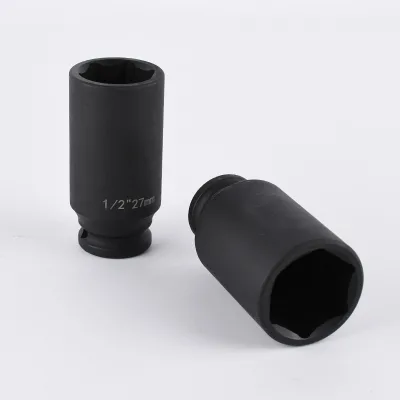


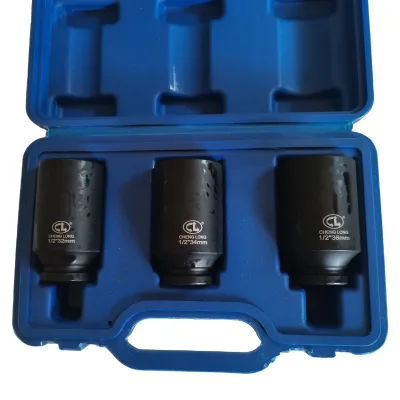


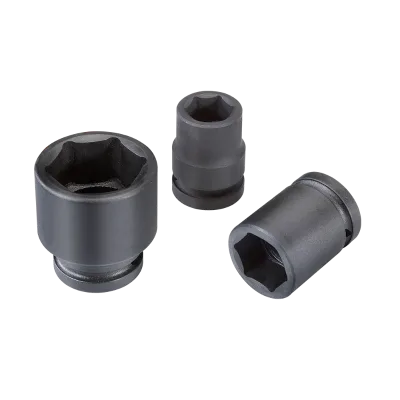

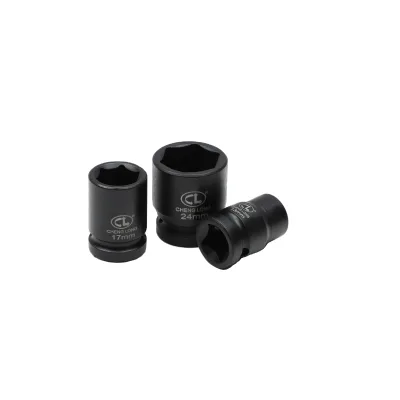
8-24mm Automotive 1/2" Pneumatic Socket Set 10-Piece Heavy Duty Air Sockets
$7.58 - $8.18
MOQ: 50 Pieces
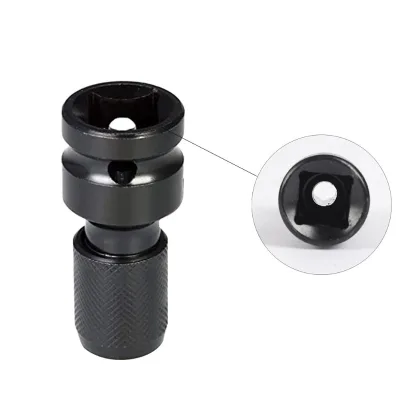
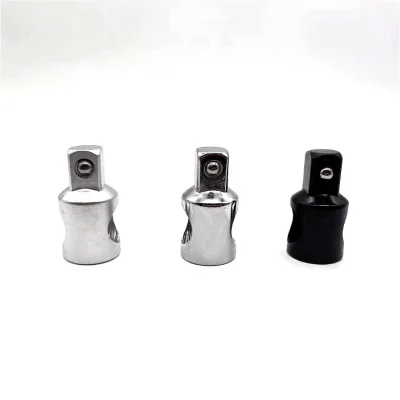


Comprehensive Sourcing Guide
Strategic Sourcing Guide for Industrial Square Air Impact Sockets
Procuring industrial square air impact sockets requires a disciplined approach that balances technical precision with supply chain reliability. These tools are critical components in heavy-duty maintenance environments, where the failure of a single socket can halt production lines or compromise safety. The following guide synthesizes available market data and technical requirements to assist procurement professionals in evaluating potential suppliers and products without relying on unverified claims.
Technical Specifications and Material Composition
The foundation of a reliable Industrial Square Air Impact Socket lies in its material composition and dimensional accuracy. Based on observed product attributes, high-performance sockets are frequently manufactured from Cr-Mo (Chromium-Molybdenum) steel. This alloy is preferred for its ability to withstand the high torque and shock loads inherent in pneumatic impact applications. The material grade is often described as "Professional Level" or "Industrial," indicating a metallurgical standard suitable for rigorous daily use rather than light-duty consumer applications.
When evaluating specifications, buyers must verify the drive size and socket type. Market observations indicate a prevalence of 1/2-inch drive sizes, which serve as the industry standard for medium-to-heavy impact wrenches. The socket type is typically identified as "Ratcheting Sockets" or standard hexagonal sockets designed to fit specific bolt heads. The physical dimensions are critical; observed listings reference sizes such as 50mm and 75mm, alongside specific model numbers like 19900022 and 13780011. These model numbers often encode the drive size and the specific hexagonal opening dimension, serving as the primary identifier for compatibility.
The surface treatment of the socket is another vital technical parameter. To prevent corrosion and reduce friction during high-speed rotation, products are frequently treated with Black Phosphate. This coating provides a durable, non-slip surface that is essential for maintaining grip in oily or wet industrial environments. Additionally, the working style of the associated pneumatic tools is noted as "Rotary Type," which implies a continuous rotational force rather than a reciprocating motion, necessitating sockets with high fatigue resistance.
Compliance and Certification Verification
In the industrial sector, compliance is not merely a formality but a prerequisite for liability management and operational safety. Procurement teams must rigorously verify the certification status of any potential supplier. Observed data highlights several key certifications that should be present on product documentation and packaging. These include CE (Conformité Européenne), which indicates compliance with European health, safety, and environmental protection standards. Other observed certifications include GS (Geprüfte Sicherheit), CCC (China Compulsory Certification), and RoHS (Restriction of Hazardous Substances).
Furthermore, the presence of ISOCE certification suggests adherence to specific international quality management protocols, although buyers should confirm the exact scope of this certification. Standard compliance is equally important; observed listings reference DIN (Deutsches Institut für Normung), ANSI (American National Standards Institute), and JIS (Japanese Industrial Standards). The specific standard "3/4''" is also noted in some contexts, likely referring to drive size compatibility or a specific manufacturing standard.
Buyers should not assume that all listed products automatically satisfy every certification. Instead, the procurement process must include a request for valid, current certificates from the supplier. The verification process should confirm that the specific batch of sockets being ordered matches the certification claims. For instance, if a supplier claims RoHS compliance, the buyer must ensure the materials used in the Cr-Mo alloy and the Black Phosphate coating do not contain restricted hazardous substances.
Cost Drivers and Pricing Dynamics
Understanding the cost structure of industrial square air impact sockets is essential for budgeting and negotiation. The observed price range in the market spans from $0.25 to $350 USD. This wide variance is not indicative of quality differences alone but reflects the scope of the purchase. A unit price of $0.25 likely corresponds to a single socket or a small component, whereas a price of $350 may represent a complete set, a specialized high-torque model, or a bulk order with specific customization.
Several factors drive the final cost. First, the material grade plays a significant role; "Professional Level" Cr-Mo steel commands a higher price than standard carbon steel. Second, customization options, such as specific model numbers or unique packaging, add to the unit cost. The observed "Customization: Available" attribute suggests that buyers can request tailored specifications, which inherently increases production complexity and cost.
Minimum Order Quantity (MOQ) is another critical cost driver. The observed MOQ range is 1 to 2000 units. Purchasing at the lower end of this spectrum (e.g., 1 unit) typically incurs a higher per-unit cost due to setup and handling fees. Conversely, ordering at the higher end (e.g., 2000 units) may unlock volume discounts but requires significant capital outlay and storage capacity. Buyers must balance their immediate inventory needs against the potential savings from bulk purchasing. Additionally, the "Selling Units" attribute indicates that some suppliers offer single items, while others may require bulk purchases, influencing the total cost of ownership.
Typical Applications and Operational Context
Industrial square air impact sockets are designed for demanding environments where efficiency and durability are paramount. The observed applications for these tools include Automotive Repair, Heavy Machinery Maintenance, Construction Sites, and Assembly Lines. In automotive repair, the high torque output of pneumatic impact wrenches requires sockets that can handle sudden, intense loads without shattering. The "Impact Mechanism: Twin Hammer" noted in some product attributes suggests a specific type of internal mechanism designed to deliver powerful, repetitive blows, which necessitates robust socket construction.
In heavy machinery maintenance and construction sites, the tools are often exposed to harsh conditions, including dust, moisture, and extreme temperatures. The "Black Phosphate" surface treatment and "Cr-Mo" material are specifically chosen to resist corrosion and wear in these environments. The "Degree of Automation: Automatic" attribute implies that these sockets are integrated into automated assembly lines or robotic systems, where precision and reliability are non-negotiable. Any failure in such a system can lead to significant downtime and production losses.
The "Pneumatic Drill Range: Construction Machinery" further underscores the heavy-duty nature of these applications. Sockets used in this context must maintain their structural integrity under continuous operation. The "Handle Type: Straight Handle" and "Working Style: Rotary Type" are design choices that optimize ergonomics and power transfer for operators working in confined or awkward spaces.
Supplier Evaluation and Origin Analysis
Evaluating suppliers requires a focus on geographic origin and manufacturing capabilities. The observed product origins are primarily Shandong, China, and Zhejiang, China. These regions are known for their robust manufacturing infrastructure and specialization in hand tools and automotive equipment. However, the specific location of the factory is less important than the supplier's ability to demonstrate consistent quality and adherence to standards.
Buyers should prioritize suppliers who offer "Odm" (Original Design Manufacturer) support, as indicated by the "customized support: Odm" attribute. This capability suggests that the supplier has the engineering resources to adapt products to specific client needs, which is valuable for large-scale procurement. The "Condition: New" and "Customized: Customized" attributes indicate that suppliers are expected to deliver brand-new, tailored products rather than refurbished or generic items.
When assessing suppliers, procurement teams should verify the "prod_packing" specifications. Observed data mentions "Carton" and "Carton Box" as standard packaging. Proper packaging is essential to prevent damage during transit, especially for precision tools. The "Single package size: XX cm" attribute highlights the need to verify dimensions for logistics planning. Additionally, the "N.W.: 1.9kgs" (Net Weight) provides a baseline for shipping cost calculations, though actual weights may vary by model.
Quality Control and Long-Term Procurement
Ensuring long-term value requires a robust quality control strategy. Buyers should not rely solely on the "Quality Grade: Professional Level" claim but must implement their own verification processes. This includes requesting test results for torque resistance, fatigue life, and material hardness. The "Standard: GB" (Guobiao) reference indicates that some products adhere to Chinese national standards, which buyers should cross-reference with international standards like DIN or ANSI to ensure compatibility.
The "Number of Piece: 22" attribute suggests that some products are sold in sets, which can be beneficial for inventory management. However, buyers must verify that all pieces in a set meet the same quality standards. The "Folded: Unfolded" attribute, while seemingly minor, indicates that some tools may have collapsible or adjustable features, requiring careful inspection to ensure mechanical integrity.
For long-term procurement, establishing a relationship with suppliers who offer "Customization" and "Odm" support is advantageous. This allows for the development of proprietary tooling that can reduce wear and tear on specific machinery. Buyers should also consider the "Lead Time" and "MOQ" constraints when planning inventory. With an MOQ range of 1 to 2000, flexibility is key; buyers should negotiate terms that allow for smaller, more frequent orders if storage space is limited, or larger orders if cost efficiency is the priority.
Comparison of Key Product Attributes
To facilitate decision-making, the following table summarizes the key attributes observed in the market data, helping buyers compare potential options.
| Attribute Category | Observed Value / Range | Procurement Implication |
|---|---|---|
| Material | Cr-Mo, Industrial Grade | Ensures high torque resistance and durability. |
| Surface Treatment | Black Phosphate | Provides corrosion resistance and grip. |
| Certifications | CE, GS, CCC, RoHS, ISOCE | Verifies safety and environmental compliance. |
| Standards | DIN, ANSI, JIS, GB, 3/4'' | Ensures dimensional compatibility and quality. |
| Drive Size | 1/2 inch, 3/4'' | Determines compatibility with impact wrenches. |
| MOQ Range | 1 - 2000 Units | Influences inventory strategy and unit cost. |
| Price Range | $0.25 - $350 USD | Reflects single unit vs. set/bulk pricing. |
| Origin | Shandong, Zhejiang, China | Indicates manufacturing hub and logistics. |
| Packaging | Carton, Carton Box | Affects protection during shipping. |
| Customization | Available, Odm Support | Allows for tailored specifications. |
By adhering to these guidelines and verifying the specific attributes against the supplied data, procurement professionals can make informed decisions that ensure the acquisition of high-quality industrial square air impact sockets. The focus must remain on evidence-based evaluation, avoiding assumptions about unverified claims, and prioritizing suppliers who can demonstrate consistent adherence to the observed technical and compliance standards.
FAQs
What material is used for industrial square air impact sockets?
These sockets are typically manufactured from Cr-Mo steel to withstand high torque. This alloy provides the necessary durability for heavy machinery maintenance and automotive repair applications where shock loads are common.
Which certifications should I verify for these industrial sockets?
You should verify that products hold CE, GS, CCC, and RoHS certifications. These documents confirm compliance with safety and environmental standards required for international trade and operational liability management.
Can I request customization for specific socket specifications?
Yes, customization is available for tailored model numbers and packaging requirements. Suppliers often support ODM services to adapt products for specific assembly lines or heavy machinery maintenance needs.
What is the typical drive size for these impact sockets?
The most common drive size observed is 1/2 inch, suitable for medium-to-heavy impact wrenches. Some listings also reference 3/4 inch standards for larger industrial applications requiring higher torque capacity.
How are these sockets treated to prevent corrosion?
Products are frequently treated with Black Phosphate to prevent corrosion and reduce friction. This coating ensures a durable, non-slip surface essential for maintaining grip in oily or wet industrial environments.
What is the minimum order quantity for these industrial tools?
The minimum order quantity ranges from 1 to 2000 units depending on the supplier. Lower quantities incur higher per-unit costs, while bulk orders may unlock volume discounts for large-scale procurement.
Where are these industrial sockets typically manufactured?
Manufacturing origins are primarily located in Shandong and Zhejiang, China. These regions offer robust infrastructure for producing professional level tools that meet international standards like DIN and ANSI.