Source Industrial Vision Lens for Machine Vision, Semiconductor, and Medical Imaging
Find and compare 30 Industrial Vision Lens options tailored for machine vision, semiconductor inspection, and medical applications. Evaluate specifications such as focal length, aperture, and transmittance to select the right optical glass components for your imaging needs.
Key considerations
Products List


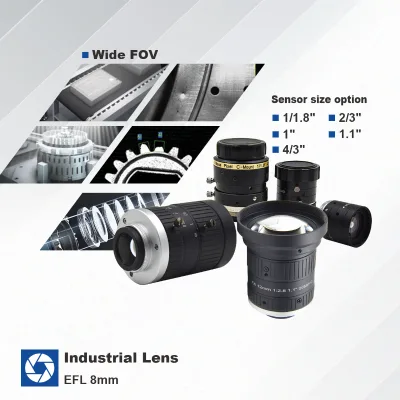
Mss-8612e-20 Precision Imaging Lens for Industrial Vision Applications
$1809.00 - $1859.00
MOQ: 1 sets


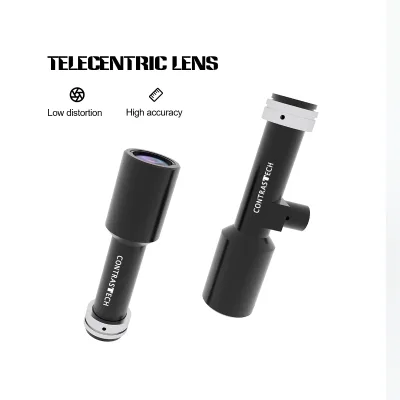
Telecentric Lenses for Machine Vision Precise Dimension and Defect Inspection
$1.00 - $100.00
MOQ: 1 Pieces




Comprehensive Sourcing Guide
Industrial Vision Lens Sourcing Guide
Selecting the right Industrial Vision Lens is a critical decision that directly impacts the accuracy, speed, and reliability of automated inspection systems. Unlike consumer optics, industrial lenses must maintain precise geometric fidelity and high transmittance under rigorous operational conditions. Buyers must navigate a complex landscape of specifications, from focal length and aperture to mount type and sensor compatibility, to ensure the optical component integrates seamlessly with existing machine vision hardware. This guide provides a structured approach to evaluating suppliers and products based on observed market signals and technical requirements.
The procurement process begins with a clear definition of the application environment, whether it involves semiconductor inspection, general machine vision, or specialized medical imaging. The supplied data indicates a diverse range of usage scenarios, including photography, lighting, and industrial inspection, which necessitates a flexible sourcing strategy. Buyers should prioritize suppliers who offer customization options, as off-the-shelf solutions may not meet the specific field-of-view or working distance requirements of unique production lines. Understanding the balance between standardized components and bespoke optical designs is essential for optimizing both performance and total cost of ownership.
Product Scope and Observed Listing Signals
The current market for industrial vision lenses exhibits a wide variance in pricing and minimum order quantities, reflecting the diversity of product tiers available. Observed listing prices range from approximately $0.20 to $1,859 USD, indicating that buyers can find entry-level components for simple tasks as well as high-precision optics for critical applications. Similarly, minimum order quantities (MOQs) vary significantly, ranging from single units to 500 pieces, which allows for both prototyping and large-scale deployment. This variability suggests that buyers should not assume a direct correlation between price and quality without verifying specific technical attributes, as some high-cost items may be specialized assemblies rather than simple lenses.
Product models and specifications found in listings highlight the importance of identifying the exact optical configuration required. For instance, models such as MSS-8612E-20 and MSS-0330 represent single-lens convex designs made from optical glass with clear coatings. These components often boast transmittance rates exceeding 95%, a crucial metric for ensuring sufficient light reaches the sensor in low-light industrial environments. Other listings, such as those for model SWD, specify physical dimensions like 1.1 inches, while others like AOOF-2026-060807 emphasize customized standards. Buyers must carefully cross-reference these model numbers with their system requirements, as generic descriptions can obscure critical differences in optical performance and mechanical fit.
Technical Specifications to Verify
Focal length and aperture are the primary determinants of a lens’s field of view and light-gathering capability. In the observed data, focal lengths such as 50mm and 8mm are explicitly listed, catering to different working distances and magnification needs. The aperture range, specified as F=1:2.816 for certain models and F=11.416 for others, dictates the depth of field and exposure control. Buyers must verify whether the lens offers manual or automatic aperture control, as manual locking structures provide stability in fixed-position inspections, while variable apertures offer flexibility for varying lighting conditions. Ensuring the aperture mechanism is robust and repeatable is vital for maintaining consistent image quality over time.
Mount compatibility and sensor interface are non-negotiable technical constraints that must be validated before purchase. The C-Mount interface is a standard connection for many industrial cameras, as seen in the Mindvision Mv-Ld-50-10m-B-B model, which also specifies a filter thread size of M27 P=0.5. Additionally, the back focus distance, listed as 17.526mm for this specific lens, must match the camera’s flange focal distance to ensure sharp focus across the entire image plane. Buyers should also check the target sensor size, such as 2/3", to ensure the lens’s image circle adequately covers the sensor without vignetting. Mismatches in these mechanical specifications can lead to costly returns and production delays.
Compliance and Safety Documentation
Certification status serves as a baseline indicator of a supplier’s adherence to international quality and safety standards. Several products in the market are listed with CE, ISO, and RoHS certifications, signaling compliance with European health, safety, and environmental protection standards. The presence of these certifications is particularly important for buyers operating in regulated industries such as medical imaging or semiconductor manufacturing, where component traceability and material safety are mandatory. Buyers should request valid certification documents and verify their authenticity, as the mere presence of a logo on a product page does not guarantee current compliance or scope coverage.
Material composition and packaging standards also contribute to the overall safety and integrity of the procurement. The use of optical glass for lens elements is a common and trusted material choice, offering durability and high transmittance. However, buyers should be aware that some listings may specify non-customized or standard packing, while others offer export-standard or carton packaging. For fragile optical components, proper packaging is critical to prevent damage during transit. The single gross weight of components, such as 0.075 Kg for specific lenses, helps in calculating shipping costs and handling requirements, ensuring that logistics planning aligns with the physical properties of the goods.
Cost Drivers and Commercial Terms
The total cost of an Industrial Vision Lens is influenced by factors beyond the unit price, including customization fees, tooling costs, and volume discounts. Listings indicate that customization is available for many products, allowing for tailored optical solutions, but this often comes at a premium. Buyers should clarify whether the quoted price includes design services, prototype testing, or mass production setup. In contrast, non-customized or standard models may offer lower unit costs and faster lead times, making them suitable for high-volume, low-variability applications. Understanding the cost structure helps buyers make informed decisions about when to invest in bespoke optics versus using off-the-shelf components.
Packaging details and logistical considerations also impact the commercial terms of the purchase. Products are described with packaging details such as "1PC/PP Bag in a Carton" or "Standard Packing," which affect handling efficiency and protection. The single package size, listed as 22x17x10cm or 22x17x8cm for certain lenses, provides essential data for warehouse planning and freight calculation. Buyers should negotiate clear terms regarding who bears the risk of loss during transit and whether insurance is included. Additionally, the origin of the products, primarily China, including specific regions like Fuzhou Fujian and Guangdong, may influence shipping times and tariff implications, which should be factored into the overall procurement budget.
Supplier Qualification and Quality Control
Supplier qualification requires a thorough assessment of their manufacturing capabilities and quality assurance processes. The availability of OEM and ODM support suggests that some suppliers have the infrastructure to produce custom lenses according to buyer specifications. Buyers should inquire about the supplier’s experience in producing lenses for specific applications, such as machine vision or semiconductor inspection, to gauge their technical expertise. Requesting samples for preliminary testing is a prudent step to verify optical performance, such as aberration rates, which are listed as less than 0.1% for some models. This empirical validation is crucial before committing to large orders.
Quality control measures should be explicitly defined in the purchase agreement. While certifications like ISO 9001 are mentioned in background knowledge, buyers must verify if the supplier’s specific production lines adhere to these standards. Inspection protocols should include checks for surface defects, coating uniformity, and mechanical tolerances. The single gross weight and package dimensions can also serve as indirect indicators of consistency; significant variations in these metrics across batches may signal quality control issues. Establishing clear acceptance criteria and rejection procedures ensures that only lenses meeting the required optical and mechanical standards are integrated into the production line.
Long-Term Procurement Checks
Long-term procurement success depends on the supplier’s ability to provide consistent quality and support over time. Buyers should monitor the stability of product specifications, such as focal length, aperture, and mount type, to ensure that replacement parts are interchangeable. Changes in model numbers or packaging standards, as seen in the diverse listings, may indicate product revisions or supply chain shifts that could affect compatibility. Maintaining open communication with suppliers regarding product lifecycle updates helps buyers anticipate changes and plan for inventory management accordingly.
Sustainability and regulatory compliance are increasingly important factors in long-term sourcing strategies. As environmental regulations evolve, suppliers must adapt their materials and processes to remain compliant. Buyers should periodically review the certification status of their suppliers to ensure ongoing adherence to standards like RoHS and CE. Additionally, evaluating the supplier’s responsiveness to technical support requests and warranty claims is essential for minimizing downtime in production environments. A reliable supplier relationship is built on transparency, consistent performance, and a shared commitment to quality and compliance.
FAQs
What certifications do industrial vision lenses typically have?
Many industrial vision lenses carry CE, ISO, and RoHS certifications to ensure safety and compliance. Some specific models also meet additional standards like 5KG or 4KG weight specifications depending on the manufacturer and application requirements.
Can I find customized industrial vision lenses for machine vision?
Yes, customized industrial vision lenses are available for applications like machine vision and semiconductor inspection. Suppliers often offer OEM and ODM support to tailor focal lengths, apertures, and mounting interfaces to specific project needs.
What is the typical transmittance rate for optical glass lenses?
High-quality optical glass lenses often feature a transmittance rate greater than 95% to ensure clear image capture. This high efficiency is critical for applications requiring precise light transmission in photography, medical, and lighting systems.
Which focal lengths are available for industrial vision cameras?
Industrial vision lenses come in various focal lengths such as 8mm and 50mm to suit different field of view requirements. These options allow users to select the optimal lens for specific target sizes and working distances.
How are industrial vision lenses packaged for export?
Industrial vision lenses are typically packed in cartons or standard export packaging to ensure safe transport. Some specific items are individually bagged in PP bags before being placed in cartons to prevent damage during shipping.
What is the minimum object distance for these lenses?
The minimum object distance for certain industrial vision lenses is 0.3 meters, allowing for close-up inspection tasks. This specification is vital for applications requiring detailed imaging of small objects at short ranges.
Where are these industrial vision lenses manufactured?
These industrial vision lenses are manufactured in China, with specific origins noted in regions like Fuzhou, Fujian, and Guangdong. This location provides access to a robust supply chain for optical components and manufacturing.