Source Inflatable Mattress for Hotel, Orthopedics, and Anti-Bedsore Care
Find 30 verified listings for the Inflatable Mattress designed for hotel use, orthopedic support, and anti-decubitus care. Compare specifications including PVC material, electric power, and CE certifications to select the right supplier for your needs.
Key considerations
Products List


Air Mattress Camping Inflatable Mattress with Electric Pump Air Bed Inflatable Bed
$15.23 - $16.86
MOQ: 1000 Pieces

Inflatable Air Mattress with Convenient Built-in Pump for Quick Setup Air Mattress
$38.87 - $43.08
MOQ: 300 Pieces

High Quality Air Mattress Inflatable Air Bed for Trip Outdoor Inflatable Bed
$31.52 - $34.92
MOQ: 300 Pieces

Air Bed Mattress Inflatable King Size Folding Portable Waterproof Mattress
$10.11 - $21.54
MOQ: 1 Pieces

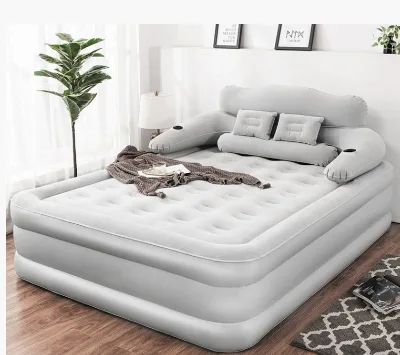


Outdoor Inflatable Mattress Camping Travel Portable Inflatable Outdoor Supplies
$8.93 - $17.91
MOQ: 3000 Pieces


China Manufacturer Air Mattress Inflatable Mattress Air Bed Mat Sleeping Pad
$10.00 - $30.00
MOQ: 500 Pieces


Comprehensive Sourcing Guide
Strategic Sourcing Guide for Inflatable Mattress Procurement
The global market for inflatable mattresses has evolved significantly, moving beyond simple recreational camping gear to encompass specialized medical, therapeutic, and hospitality applications. For B2B procurement professionals, sourcing these products requires a nuanced understanding of material science, regulatory compliance, and supply chain logistics. The current landscape presents a diverse array of options, ranging from basic air beds to sophisticated anti-decubitus systems designed for long-term patient care. This guide synthesizes available market data to provide a structured approach for evaluating suppliers, verifying product specifications, and mitigating procurement risks.
Technical Specifications and Material Composition
When evaluating inflatable mattresses, the primary technical differentiator lies in the material composition and structural design. The market data indicates a prevalent use of PVC (Polyvinyl Chloride) as the base material, specifically noted as "Taiwan Nanny PVC" with a thickness of 0.3mm. This specific material designation suggests a focus on durability and flexibility, which are critical for products intended for repeated inflation and deflation cycles. The thickness of 0.3mm is a standard metric for ensuring puncture resistance while maintaining the necessary softness for user comfort.
Structural integrity is often defined by the internal architecture of the mattress. Observations highlight a configuration of "130 Bubbles" or air chambers, which serve to distribute weight evenly and prevent pressure points. This design is particularly relevant for products categorized under "Orthopedics" and "Anti-Decubitus / Anti-Bedsore" applications. The presence of "Full Flaps" and a "Silver Coated Feet" switch mechanism suggests advanced control systems designed to manage air pressure precisely.
Pressure management is another critical technical specification. The observed pressure range for these units is between 50-110mmHg. This range is essential for therapeutic efficacy, ensuring that the mattress provides adequate support without causing tissue damage. The power supply for these units is typically electric-powered, with a low power consumption profile of 7W, making them suitable for continuous operation in hospital or hotel settings. The dimensions of the standard product are often cited as 2000mm x 900mm, with a specific model size of 200907cm, catering to standard adult body dimensions.
Compliance, Certification, and Regulatory Standards
Navigating the regulatory landscape is a non-negotiable aspect of B2B procurement, especially for products used in medical or hospitality environments. The supplied data points to a robust certification framework, with "CE," "RoHS," "ISO," and "FDA" appearing frequently as required credentials. The presence of "CE/FDA/ISO" certification indicates that the products meet European safety standards, restrict hazardous substances, and adhere to international quality management systems.
For medical-grade inflatable mattresses, the "FDA" certification is particularly significant, as it validates the product for use in healthcare settings where patient safety is paramount. The "RoHS" compliance ensures that the manufacturing process does not involve restricted hazardous materials, which is a growing requirement for exports to the European Union and other regulated markets. Additionally, the "ISO" certification suggests that the manufacturer maintains a consistent quality management system, which is vital for bulk orders where consistency across batches is expected.
Buyers must verify that the specific model they intend to purchase carries these certifications. While the data lists "CE,RoHS,ISO" and "FDA,ISOCE" as observed attributes, procurement contracts should explicitly require valid, current certificates for the specific batch being delivered. The warranty periods also serve as an indirect indicator of compliance confidence, with observed terms ranging from 12 months to 12 years, and specific air pump warranties of 18 months. These warranty structures imply a manufacturer's confidence in the product's longevity and adherence to safety standards.
Cost Drivers and Pricing Dynamics
The pricing structure for inflatable mattresses is influenced by a complex interplay of material costs, manufacturing complexity, and order volume. The observed price range in the market spans from $0.99 to $800 USD. This wide disparity reflects the difference between basic recreational models and high-end medical or therapeutic units. The lower end of the spectrum likely corresponds to simple, single-chamber mattresses with minimal features, while the upper end encompasses advanced systems with electric pumps, multiple pressure zones, and specialized medical certifications.
Minimum Order Quantity (MOQ) is a significant cost driver. The observed MOQ range is between 1 and 3000 units. For small buyers or those testing a new product line, an MOQ of 1 allows for sample acquisition and market validation. However, for established procurement needs, higher volumes often unlock better unit pricing. The data indicates an OEM (Original Equipment Manufacturer) threshold of 1000 PCS, suggesting that branding and customization services become available at this volume.
Packaging also impacts the final landed cost. Products are observed in various packaging formats, including "Carton," "Color Box," and "Box Packing." The color box dimensions are noted as 281718cm, and the quantity per carton is typically 6 PCS. Efficient packaging is crucial for logistics, as the quantity per 20-foot container is observed to be 3228 PCS. Buyers should calculate the cost per cubic meter to optimize shipping expenses, as the volume of the product relative to its weight can significantly affect freight charges.
Typical Applications and Usage Scenarios
The versatility of inflatable mattresses allows them to serve multiple sectors, each with distinct requirements. The primary application identified is in the "Hotel" industry, where these mattresses provide temporary sleeping solutions for guests. In this context, the "Indoor" usage site and "Soft" hardness are key attributes for ensuring guest comfort. The "Adult" age group specification confirms that these units are designed for standard adult dimensions.
Beyond hospitality, the data heavily emphasizes medical and therapeutic applications. The "Anti-Decubitus / Anti-Bedsore" function is a critical feature for long-term care facilities. The "Using Site" attributes list specific body areas such as "Abdomen, Head, Waist, Shoulder&Neck, Back, Skeleton, Joint, Hip," indicating a comprehensive approach to pressure relief. This makes the product suitable for patients with limited mobility who are at risk of developing pressure ulcers.
The "Folding" attribute suggests portability, which is beneficial for home care scenarios or mobile medical units. The "Alternating" pressure feature, specifically "Ab Alternating," is a sophisticated mechanism designed to shift pressure points periodically, further reducing the risk of bedsores. The "Function" of "Improve Blood Circulation" aligns with these therapeutic goals, highlighting the product's role in patient recovery and comfort.
Supplier Evaluation and Operational Capabilities
Selecting the right supplier requires a thorough assessment of their operational capabilities and production standards. The data indicates that the origin of these products is primarily "Jiangsu" and "China," regions known for their manufacturing infrastructure. Buyers should verify the supplier's ability to meet the "100% Fullly Inspection" standard, which suggests a rigorous quality control process before shipment.
Customization is a key differentiator in the supplier evaluation process. The "Customization: Available" and "Customized: Customized" attributes indicate that suppliers can tailor products to specific buyer requirements. This may include branding, specific color schemes, or modifications to the air chamber layout. The "OEM: 1000PCS" threshold confirms that suppliers are equipped to handle branded orders, provided the order volume meets the minimum requirement.
Lead times and production capacity are critical for supply chain planning. While specific lead times are not explicitly stated in the data, the "12 Months" and "12 Years" warranty periods suggest a long-term commitment to product reliability. Buyers should inquire about the supplier's capacity to handle the "Qty / 20 Feet Container: 3228 PCS" volume to ensure they can meet large-scale demand without delays. The "Switch: Silver Coated Feet" and "Accessories: Glue, Patch, Hose" details also indicate that suppliers should provide comprehensive support packages, including repair kits and necessary components for maintenance.
Quality Control and Long-Term Procurement Considerations
Ensuring consistent quality over the lifecycle of the procurement relationship is essential. The "100% Fullly Inspection" attribute serves as a baseline for quality assurance, but buyers should also implement their own incoming quality control checks. This includes verifying the "Material Thickness" of 0.3mm and the integrity of the "130 Bubbles" structure. The "Warranty: 12 Months" and "Air Pump: CE with 18 Months Warranty" provide a safety net for buyers, but understanding the terms of these warranties is crucial for managing long-term costs.
Long-term procurement considerations also involve the durability of the product. The "Condition: New" and "Hardness: Soft" attributes suggest that the products are designed for immediate use, but the "Taiwan Nanny PVC" material implies a focus on longevity. Buyers should assess the supplier's track record for product failures and their response to warranty claims. The "Power Supply: Electric-Powered" nature of the units means that the longevity of the electrical components is as important as the durability of the PVC material.
Finally, the "Using Ambient: Indoor" specification limits the application scope, and buyers must ensure that their procurement strategy aligns with this constraint. For outdoor or harsh environments, different specifications would be required. By adhering to these technical and operational guidelines, buyers can secure a reliable supply of inflatable mattresses that meet their specific functional and regulatory needs.
Comparative Analysis of Product Attributes
To facilitate decision-making, the following table summarizes the key attributes observed in the market data, highlighting the variations that buyers should consider during the sourcing process.
| Attribute Category | Observed Specification | Relevance to Procurement |
|---|---|---|
| Material | Taiwan Nanny PVC 0.3mm | Indicates puncture resistance and flexibility; critical for durability. |
| Structure | 130 Bubbles, Full Flaps | Determines pressure distribution and comfort; essential for medical use. |
| Certification | CE, RoHS, ISO, FDA | Mandatory for market access and safety compliance in medical/hospital sectors. |
| Dimensions | 2000mm x 900mm; 200907cm | Ensures compatibility with standard beds and patient sizes. |
| Power | Electric-Powered, 7W | Low energy consumption suitable for continuous operation. |
| Warranty | 12 Months to 12 Years | Indicates manufacturer confidence; varies by product tier. |
| Packaging | Carton, Color Box (6 PCS/CTN) | Affects shipping volume and cost efficiency. |
| Application | Hotel, Anti-Decubitus, Orthopedics | Defines the target market and required features (e.g., alternating pressure). |
| Customization | Available (OEM 1000 PCS) | Allows for branding and specific design modifications at scale. |
| Origin | Jiangsu, China | Suggests established manufacturing hubs with specific logistical advantages. |
By carefully analyzing these attributes and understanding the underlying technical and regulatory requirements, procurement professionals can make informed decisions that balance cost, quality, and compliance. The Inflatable Mattress market offers a wide range of solutions, but success lies in matching the specific product specifications to the intended application and ensuring that the supplier can consistently deliver on these promises.
FAQs
What certifications do inflatable mattresses typically have?
Products typically hold CE, RoHS, ISO, and FDA certifications. These credentials ensure compliance with European safety standards and international quality management systems required for medical and hospitality use.
How thick is the PVC material used in these mattresses?
The material thickness is specified as 0.3mm Taiwan Nanny PVC. This dimension ensures puncture resistance while maintaining the softness required for user comfort in therapeutic applications.
Which pressure range is standard for alternating air mattresses?
The standard pressure range operates between 50 and 110mmHg. This range is essential for therapeutic efficacy, ensuring adequate support without causing tissue damage to patients.
Can I customize the Inflatable Mattress for my brand?
Customization is available for orders meeting the OEM threshold of 1000 pieces. Suppliers can tailor branding and specifications provided the minimum order quantity is met.
What is the warranty period for the air pump?
The air pump comes with a specific warranty of 18 months. The mattress itself generally carries a warranty of 12 months, indicating manufacturer confidence in product longevity.
How many units fit in a 20-foot container?
A 20-foot container can hold 3228 pieces of the product. This capacity helps buyers calculate shipping efficiency and optimize logistics costs for bulk procurement.