Source Insulated Glass Garage Door for Homes, Warehouses, and Shops
Compare 25 Insulated Glass Garage Door options featuring aluminum alloy and steel materials with varying thicknesses and motor specifications. Buyers can evaluate sliding and rolling styles with remote control opening types for diverse industrial and residential needs.
Key considerations
Products List

Insulated Tempered Glass Garage Door with Plexiglass Garage Doors
$128.00 - $148.00
MOQ: 5 Square Meters


Elegant Insulated Garage Door with Premium Glass Sectional Design
$15.00 - $20.00
MOQ: 1 Square Meters


Premium Insulated Black Garage Door for Energy Efficiency
$80.00 - $120.00
MOQ: 20 Square Meters
Hunan Lianxin Chi Tai Intelligent Doors And Windows Co., Ltd.

Premium Transparent Glass Garage Door with Safety Features
$100.00 - $160.00
MOQ: 7 Square Meters
Hunan Lianxin Chi Tai Intelligent Doors And Windows Co., Ltd.

Premium Automatic Glass Garage Door with Safety Sensor
$100.00 - $160.00
MOQ: 7 Square Meters
Hunan Lianxin Chi Tai Intelligent Doors And Windows Co., Ltd.

Premium Custom Glass Garage Door with Safe Power Supply
$100.00 - $160.00
MOQ: 7 Square Meters
Hunan Lianxin Chi Tai Intelligent Doors And Windows Co., Ltd.

Modern Transparent Glass Garage Door with Safety Sensor
$100.00 - $160.00
MOQ: 7 Square Meters
Hunan Lianxin Chi Tai Intelligent Doors And Windows Co., Ltd.

Elegant Premium Glass Garage Doors with Infrared Safety Sensor
$100.00 - $160.00
MOQ: 7 Square Meters
Hunan Lianxin Chi Tai Intelligent Doors And Windows Co., Ltd.

Modern New Aluminum Frosted Glass Garage Door Black Glass Automatic Garage Door
$1200.00 - $1800.00
MOQ: 1 Sets


Prima Aluminum Garage Doors Aluminum Plates and Glass Doors for Garage
$1399.00 - $1599.00
MOQ: 1 Pieces


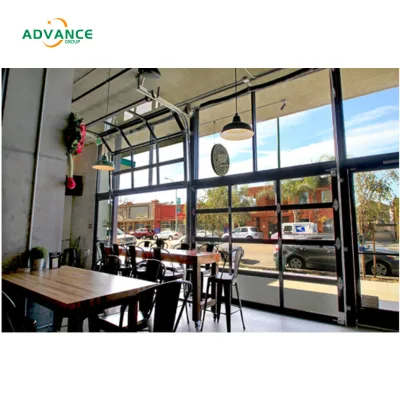
Comprehensive Sourcing Guide
Insulated Glass Garage Door Sourcing Guide
The market for insulated glass garage doors presents a diverse range of configurations, from modern residential sliding systems to heavy-duty industrial lifting doors. Buyers must distinguish between products designed for aesthetic integration in interior wall environments and those engineered for high-torque industrial applications. The observed product landscape includes sliding doors with remote control capabilities and rolling opening styles, indicating that the term "garage door" encompasses a broad spectrum of mechanical operations and structural requirements.
Procurement decisions should be grounded in the specific material composition and finishing processes observed in current listings. While some units feature aluminum alloy construction with square or linear panel patterns, others utilize steel with varying metal thicknesses ranging from 0.3mm to 0.6mm. Understanding these material distinctions is critical, as the choice between aluminum and steel directly impacts the door's weight, corrosion resistance, and suitability for different environmental conditions.
Product Scope and Observed Listing Signals
Buyers should first verify the specific door panel pattern and thickness to ensure alignment with their architectural or functional needs. Listings indicate available panel patterns such as square and linear designs, with thickness options spanning from 40mm to 80mm, including specific 50mm variants. This variation suggests that insulation performance and structural rigidity are not uniform across all offerings, requiring careful selection based on the intended thermal and acoustic isolation requirements.
The opening mechanism and control systems vary significantly between residential and industrial segments, necessitating a clear definition of the required operation type. Some products are equipped with remote control opening types and specialized motors, while others feature rolling opening styles or industrial lifting mechanisms with specific speed parameters. It is essential to confirm whether the motor shaft length and output torque, such as the observed 1000N or 1200N capacities, match the load requirements of the specific installation site.
Technical Specifications to Verify
Verification of the glass type and frame profile is a primary technical step for ensuring safety and energy efficiency. Available options include 5mm glass or tempered or PC glass, which must be matched to the specific security and impact resistance needs of the facility. Additionally, the aluminum profile series, such as the 60 Series observed in industrial contexts, dictates the structural integrity of the frame and its compatibility with the chosen glazing system.
Motor and mechanical component specifications require rigorous validation to prevent premature failure under operational stress. Buyers must check the motor shaft dimensions, such as the 3m or 4.2m lengths noted in listings, and confirm the torsion spring shaft diameter, which is specified as 25.4mm in certain industrial models. The density of the door panel foam material, observed at 48kg/M3 +/-2kg/M3, is another critical metric that directly influences the thermal insulation value and overall weight of the door assembly.
Compliance and Safety Documentation
Documentation regarding material certifications and alloy grades is essential for verifying the chemical and physical safety of the door components. Some listings reference specific alloying ingredients and grades, such as the 1000 Series, alongside certifications like CE, ISO, CIQ, RoHS, and TUV. Procurement teams must request proof of these certifications to ensure that the aluminum or steel materials meet international safety and environmental standards before finalizing any purchase.
Safety standards for the mechanical operation of the door must be confirmed through the provided product standards and origin documentation. While some products list specific standard dimensions like 16*7 or 6m, others indicate that standards are optional, requiring the buyer to define the necessary compliance framework. It is vital to ensure that the product origin, whether from Guangdong, Jieyang, or Changsha, aligns with the regulatory requirements of the destination market for industrial or residential installations.
Cost Drivers and Commercial Terms
The price range for insulated glass garage doors is highly variable, reflecting differences in material quality, customization options, and mechanical complexity. Observed listing prices span from $2.8 to $1800, a disparity driven by factors such as the inclusion of remote control systems, specialized motors, and the thickness of the insulation foam. Buyers should analyze the cost per unit against the specific technical specifications to avoid overpaying for features that may not be necessary for their application.
Commercial terms, including minimum order quantities and packaging requirements, significantly influence the total cost of ownership and logistics planning. The observed MOQ ranges from 1 set to 1000 units, offering flexibility for small-scale projects while accommodating bulk industrial orders. Packaging methods vary from wood boxes and plastic packaging to unfumigated wooden crates fixed with steel straps, and these choices must be evaluated for their impact on shipping costs and the protection of the door during transit.
Supplier Qualification and Quality Control
Supplier qualification should be assessed based on the consistency of product attributes and the clarity of their manufacturing specifications. The presence of detailed product models, such as GS-GD-12, HJ123, or sk575, indicates a level of standardization that can facilitate quality control and replacement part availability. Buyers should prioritize suppliers who provide clear documentation on the production process, including surface finishing stages and the specific alloying ingredients used in their manufacturing.
Quality control protocols must address the variability in product origins and the specific design styles offered. With products originating from multiple locations including Guangdong, Jieyang, and Changsha, buyers should verify that the supplier maintains consistent quality control across different manufacturing sites. The design style, ranging from modern to industrial, should be matched with the supplier's ability to deliver the required customization, ensuring that the final product meets the exact aesthetic and functional expectations of the project.
Long-Term Procurement Checks
Long-term procurement success depends on verifying the service life and maintenance requirements of the installed door systems. Some listings explicitly state a lifespan of 10 years for sliding doors, which serves as a benchmark for durability expectations. Buyers should inquire about the maintenance schedule for the special motors and torsion springs to ensure that the door remains operational and safe throughout its intended service life.
Future scalability and compatibility with existing infrastructure are critical considerations for ongoing procurement strategies. The observed sliding speed of 0.25-0.3m and the specific use environment of interior walls suggest that these doors are designed for controlled settings. Procurement teams should evaluate whether the chosen model can be easily integrated with future automation systems or expanded to cover larger openings without requiring a complete system overhaul.
FAQs
What materials are used for insulated garage door panels?
Insulated garage door panels are typically constructed from aluminum alloy or steel. The core often utilizes foam material with a density of 48kg/M3 +/-2kg/M3 for thermal efficiency. Panel thicknesses vary, including options like 40mm, 50mm, and 60mm, ensuring structural integrity and thermal performance for various climate conditions.
Can insulated garage doors be customized for specific designs?
Yes, customization is available for insulated garage doors to meet specific design requirements. Buyers can select from modern design styles and various door panel patterns, such as square or linear. Additionally, opening types can be configured with remote control functionality, allowing for tailored aesthetic and operational preferences.
What is the typical output torque for industrial lifting motors?
Industrial lifting motors for these doors generally provide an output torque of 1000N to 1200N. This capacity ensures reliable operation for heavy-duty sliding or rolling applications. The motors are often specialized for industrial doors, paired with torsion spring shafts made of 45# steel with a 25.4mm diameter for durability.
How thick are the standard insulated door panels?
Standard insulated door panels come in various thicknesses, including 40mm, 43mm, 50mm, 60mm, 75mm, and 80mm. A common specification is a 50mm thickness, which balances insulation performance with structural strength. The metal skin thickness typically ranges from 0.3mm to 0.6mm, depending on the material grade.
What certifications are associated with these door products?
These door products may carry certifications such as CE, ISO, CIQ, RoHS, and TUV. These standards ensure compliance with international quality and safety regulations. Buyers should verify specific certification requirements with suppliers, as availability can vary by manufacturer and product model, ensuring the doors meet local regulatory standards.
What is the expected service life of these sliding doors?
The expected service life of these sliding doors is approximately 10 years. This lifespan is supported by the use of durable materials like aluminum alloy and specialized industrial motors. Proper installation and maintenance, including the use of appropriate packing like wooden crates, help ensure the door operates reliably over its intended lifespan.