Source Sunlight Readable Outdoor LED Screen for Billboards, Stadiums, and Retail
Find 30 models of Sunlight Readable Outdoor LED Screen with pixel pitches from 3.91mm to 10mm. Compare brightness levels over 6000 nits, IP ratings, and cabinet materials for advertising and stage performance applications; compare the available evidence and request quotations based on your requirements.
Key considerations
Products List


Outdoor Front Service Advertising LED Panel Display Screen for Shopping Mall
$500.00 - $2800.00
MOQ: 1 Square Meters


Outdoor P6.67 Waterproof LED Display Screen for Commercial Advertising
$400.00 - $450.00
MOQ: 1 Pieces

P5 High Quality Outdoor Programmable LED Screen for Advertising
$250.00 - $1300.00
MOQ: 1 Square Meters

Waterproof and Durable Multi-Layer Protection Outdoor LED Screen
$356.00 - $872.00
MOQ: 1 Square Meters


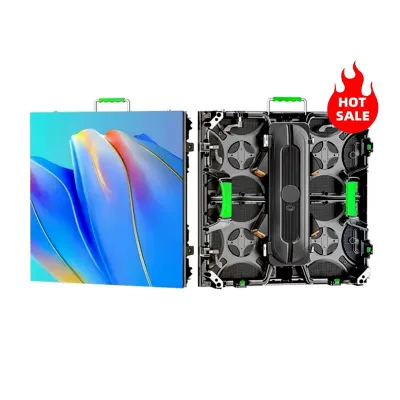


High Brightness Quality Warranty Outdoor Fixed Installation LED Display Outdoor LED Screen
$430.00 - $620.00
MOQ: 1 Square Meters

$430.00 - $620.00
MOQ: 1 Square Meters

Full Color Outdoor Waterproof IP 65 Advertising LED Display Screen
$200.00 - $291.00
MOQ: 1 Square Meters

High Refresh Rate Outdoor Fixed Installation Waterproof LED Display Screen for Advertising
$430.00 - $620.00
MOQ: 1 Square Meters


P3.91 Outdoor LED Fixed Display Screen Waterproof IP65 High Brightness
$430.00 - $620.00
MOQ: 1 Square Meters


Waterproof & Durability & Long Service Life Outdoor Transparent LED Screen for Outdoor Advertising
$697.00 - $822.00
MOQ: 1 Square Meters

$697.00 - $822.00
MOQ: 1 Square Meters

High Protection & High Permeability Outdoor Waterproof Transparent LED Screen for Office Building
$697.00 - $822.00
MOQ: 1 Square Meters

Outdoor LED Display Screen with High Brightness Wide Viewing Angle for Museum
$533.00 - $710.00
MOQ: 1 Square Meters

$697.00 - $822.00
MOQ: 1 Square Meters

Comprehensive Sourcing Guide
Sunlight Readable Outdoor LED Screen Sourcing Guide
Procuring outdoor LED displays requires balancing high brightness with energy efficiency and structural integrity. Buyers must prioritize panels that maintain visibility under direct sunlight while operating within safe thermal limits. The core challenge lies in selecting modules that offer sufficient luminance without compromising the refresh rate or color accuracy needed for professional advertising and stage performance applications.
This guide focuses on verifying critical technical parameters such as pixel pitch, scanning mode, and IP ratings. It also addresses the importance of certified power supplies and driver ICs that ensure stable operation in variable environmental conditions. Understanding these specifications helps procurement teams avoid common pitfalls related to image ghosting, uneven brightness, and premature component failure in outdoor installations.
Product Scope and Observed Listing Signals
The market offers a diverse range of indoor and outdoor LED video displays with varying pixel pitches and cabinet standards. Observed listings include models with pixel pitches of 4.81mm, 3.91mm, 6.67mm, and 10mm, catering to different viewing distances and resolution requirements. Standard cabinet sizes such as 1000x1000mm, 960x960mm, and 500x1000mm are common, allowing for flexible modular assembly in large-scale video walls.
Applications span from outdoor advertising to stage performance, indicating a need for versatile display solutions. Some units feature full-color SMD 3-in-1 LED lamps with brightness levels exceeding 6500 nits, essential for sunlight readability. Others are optimized for indoor or semi-outdoor use with lower brightness and specific scanning modes like 1/16 or 1/2 scan, which affect power consumption and visual quality.
Technical Specifications to Verify
Brightness is the primary factor for outdoor readability, with high-end models offering over 6500 nits to combat glare. Buyers should verify the LED type, such as SMD 3-in-1 or Epistar chips, which influence color consistency and longevity. The refresh rate is equally critical, with values above 3840Hz ensuring smooth video playback and eliminating flicker in camera recordings, which is vital for broadcast-quality stage performances.
Pixel pitch determines the optimal viewing distance, with smaller pitches like 3.91mm providing higher resolution for closer viewing. The scanning mode, whether 1/16 or 1/2 scan, impacts power consumption and brightness uniformity. Additionally, the driver IC, often constant current or Mbi series, must be compatible with the control system, such as Nova, to ensure accurate signal processing and stable image output across the entire display area.
Compliance and Safety Documentation
Certifications are mandatory for international trade and local regulatory compliance. Products should carry recognized marks such as CCC, CE, ETL, and RoHS, indicating adherence to safety and environmental standards. These certifications verify that the electrical components, including the power supply units and LED modules, meet rigorous testing protocols for electromagnetic compatibility and hazardous substance restrictions.
The IP rating is crucial for outdoor durability, with some models offering IP65 protection against dust and water jets. Buyers must confirm the ingress protection level to ensure the display can withstand rain, humidity, and temperature fluctuations. Additionally, the voltage range, typically AC110-240V or AC220-240V, should match the local power infrastructure to prevent damage and ensure efficient operation without the need for additional transformers.
Cost Drivers and Commercial Terms
Power consumption is a significant operational cost, with average usage ranging from 350W to 600W per square meter. High-brightness outdoor panels consume more energy, so buyers should evaluate the ratio of brightness to power draw to optimize long-term electricity expenses. The choice of power supply, such as 5V 60A units, also affects efficiency and heat dissipation, influencing the overall lifecycle cost of the installation.
Minimum order quantities and packaging methods impact logistics and initial investment. MOQs typically range from 1 to 10 units, allowing for flexible procurement of pilot installations or large-scale projects. Packaging in plywood cases ensures safe transit, but buyers must account for shipping volume and weight, which can vary based on cabinet materials like aluminum or steel, affecting freight costs and handling requirements.
Supplier Qualification and Quality Control
Supplier verification should include checks on manufacturing capabilities and quality assurance processes. Buyers must ensure that the supplier provides detailed product specifications, including pixel configuration (1R, 1G, 1B) and contrast ratios, to confirm that the product meets the intended application standards. Consistency in component sourcing, such as using specific driver ICs and LED lamps, is vital for maintaining uniform performance across all modules.
Quality control extends to the structural integrity of the cabinets and the reliability of the electronic components. Buyers should request test reports or certification documents that validate the display’s performance under stress conditions. Additionally, verifying the supplier’s ability to provide customization options allows for tailored solutions that fit specific spatial constraints or branding requirements, ensuring a seamless integration into the final installation environment.
Long-Term Procurement Checks
After-sales support and warranty terms are critical for maintaining display performance over time. Buyers should confirm the availability of spare parts, such as replacement LED modules, power supplies, and receiver cards, to minimize downtime in case of failure. A clear warranty policy that covers both hardware and labor ensures that the investment is protected against manufacturing defects and early component degradation.
Regular maintenance and monitoring systems should be considered to extend the lifespan of the LED screen. Buyers should inquire about the expected lifespan of the LEDs and the ease of accessing internal components for cleaning or repair. Establishing a relationship with a reliable supplier for ongoing technical support and firmware updates ensures that the display remains operational and up-to-date throughout its service life.
FAQs
What certifications do these outdoor LED screens have?
These screens carry CCC, CE, ETL, and RoHS certifications for safety and compliance. They are designed for advertising applications with full color capabilities and high brightness levels exceeding 6500 nits for sunlight readability.
Which pixel pitch options are available for outdoor use?
Available pixel pitches include 4.81mm, 3.91mm, and 10mm models. The 4.81mm version offers a refresh rate over 3840Hz, while the 10mm variant provides a density of 10000 dots per square meter for large viewing distances.
How bright are these displays for direct sunlight viewing?
Brightness levels range from 3000 to over 7000 nits depending on the specific model. The 4.81mm and 3.91mm units exceed 6000 nits, ensuring clear visibility in bright outdoor environments without screen washout.
Can I customize the cabinet material and size?
Customization is available for various cabinet materials including aluminum, steel, and alloy options. Standard sizes include 1000x1000mm and 960x960mm panels, with specific models like OX-P4.81 offering flexible configuration for different installation needs.
What is the power consumption for these LED modules?
Average power consumption varies by model, ranging from 350W to 600W per square meter. The 4.81mm model consumes 350W, while the 3.91mm version requires 600W, operating on AC110-240V voltage systems.
Which driver ICs are used in these displays?
Driver ICs include Constent Current and Mbi types depending on the specific product model. These components ensure stable performance with scanning modes like 1/16 scan or 1/2 scan for reliable image rendering.
What is the minimum order quantity for these screens?
The minimum order quantity ranges from 1 to 10 units based on the specific product configuration. Buyers can source these screens with flexible MOQs suitable for both small pilot projects and large-scale advertising installations.