Source Intelligent Uroflowmetry Equipment for Clinics, Hospitals, and Research Labs
Find 30 listings for Intelligent Uroflowmetry Equipment suitable for urology clinics, hospitals, and research facilities. Buyers can compare specifications such as voiding volume ranges, power supply requirements, and environmental operating conditions to select the right device for their needs.
Key considerations
Products List


Multi Parameter Automatic Intelligent Urine Flow Meter Medical Uroflowmeter
$1299.00 - $1999.00
MOQ: 1 Pieces


Sy-B169A Hospital Clinical Uroflowmetry Equipment Intelligent Uroflowmeter
$588.00 - $1188.00
MOQ: 1 Pieces
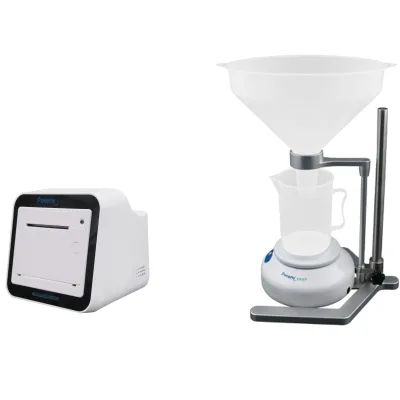


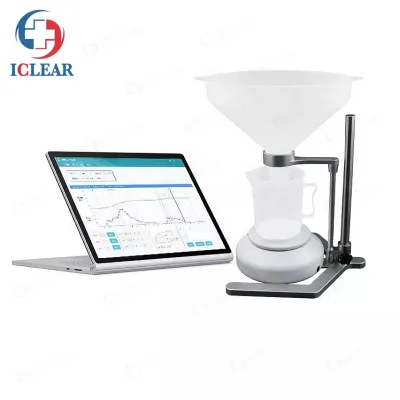


Uroflowmeters Potency Uroflowmetry Machine Quality Uroflowmetry System
$199.00 - $1399.00
MOQ: 1 Pieces

Wireless Urine Test Measurement Analyzer Uroflowmetry Machine Quality Uroflowmetry System
$99.00 - $1258.00
MOQ: 1 Pieces


Sy-B169A Uroflowmeter and Uroflowmetry Equipment Automated Urine Flow Analyzer
$500.00 - $1200.00
MOQ: 1 Sets

Sy-B169A Uroflowmetry Equipment Urine Measurement Machine Urine Flow Meter Uroflowmeter
$500.00 - $1200.00
MOQ: 1 Sets


Comprehensive Sourcing Guide
Strategic Sourcing Guide for Intelligent Uroflowmetry Equipment
Procuring Intelligent Uroflowmetry Equipment requires a disciplined approach that balances technical precision with regulatory compliance. Buyers in the medical device sector must navigate a landscape where specific performance metrics, such as voiding volume ranges and environmental tolerances, are critical for clinical accuracy. This guide outlines the essential factors for sourcing these diagnostic tools, ensuring that procurement decisions are grounded in verified product attributes and industry standards rather than speculative claims. The focus remains on identifying equipment that meets the rigorous demands of urological diagnostics while maintaining operational reliability in diverse clinical settings.
Technical Specifications and Performance Metrics
The core functionality of Intelligent Uroflowmetry Equipment lies in its ability to accurately measure urinary flow parameters. When evaluating potential units, buyers must scrutinize the specific measuring ranges and accuracy tolerances provided by the manufacturer. Observed specifications for high-quality units indicate a measuring range for voided volume spanning from 10ml to 1000ml, with some advanced models covering a broader spectrum of 0ml to 1000ml. This range is essential for capturing data across different patient demographics, from pediatric cases with lower volumes to adult patients with standard voiding patterns.
Flow measurement capabilities are equally critical. The equipment should support a flow rate range of approximately 50 L/Min to 900 L/Min, utilizing methods such as rotating wing wheels to ensure precise data capture. The accuracy of these measurements is paramount; reliable units typically boast a volume accuracy of ±3% or ±0.05L, whichever is greater. Furthermore, the system must handle the temporal aspect of voiding effectively. The waiting time for voiding is generally capped at 300 seconds, with a specific measuring range for voided time extending from 0s to 300s. Buyers should verify that the error margin for time measurement does not exceed ±5% to ensure the integrity of the diagnostic data.
Environmental stability is another technical pillar. The equipment must operate reliably within a temperature range of 5°C to 40°C and a relative humidity of up to 80%. These parameters define the operational envelope of the device, ensuring that it functions correctly in various hospital wards, clinics, or outpatient centers without degradation in performance. Power supply requirements typically align with standard a.C. 220V±10% (or ±22V) at 50Hz±1Hz, though some specifications may vary slightly. Verification of these electrical and environmental specifications is the first step in confirming that a unit is suitable for the intended clinical environment.
Regulatory Compliance and Certification Verification
In the medical device industry, compliance is not merely a formality but a prerequisite for market entry and clinical adoption. When sourcing Intelligent Uroflowmetry Equipment, buyers must rigorously verify the certification status of the product. The supplied data indicates that reputable units often carry ISO and CE certifications. Specifically, classifications such as "Physiological Functions of Diagnosis and Monitoring Equipment" and "Imaging Diagnostic Equipment" may appear, depending on the specific model and its intended use.
Buyers should look for explicit mentions of ISO standards, such as ISO 13485, which relates to quality management systems for medical devices. While specific certification documents must be requested from the supplier, the presence of CE marking is a strong indicator of compliance with European health, safety, and environmental protection standards. It is crucial to distinguish between general "Standard" classifications and specific regulatory approvals. The product origin, often listed as Guangzhou, China, or simply China, does not inherently determine compliance; rather, the specific certification labels attached to the model, such as MCL-961A or MCL-100, must be validated against current regulatory requirements in the buyer's target market.
Cost Drivers and Pricing Structures
Understanding the cost structure of uroflowmetry equipment is essential for budget planning. The observed price range for these devices spans significantly, from approximately 49 USD to 99,999 USD. This wide variance suggests that pricing is heavily influenced by the complexity of the technology, the brand reputation, and the inclusion of advanced software or connectivity features. Lower-priced units may offer basic flow measurement capabilities, while higher-end models likely include integrated data analysis, network connectivity, and enhanced durability.
The Minimum Order Quantity (MOQ) for these products is typically low, often observed as 1 unit, which facilitates procurement for smaller clinics or pilot programs. However, buyers should be aware that the "Standard Packing for Export" or "Export Carton Package" may influence shipping costs, especially for international orders. Additional cost drivers include the specific power supply requirements, which might necessitate local voltage adapters or transformers, and the inclusion of consumables or calibration tools. It is vital to request a detailed breakdown of costs to understand what is included in the base price versus what constitutes an optional add-on, such as extended warranties or specialized training.
Typical Clinical Applications and User Groups
Intelligent Uroflowmetry Equipment is designed primarily for the diagnosis and monitoring of lower urinary tract symptoms. The target user group for these devices is explicitly identified as "Middle-aged and Old" populations, reflecting the higher prevalence of urological issues in these demographics. The equipment is utilized to measure voided volume, flow rate, and voiding time, providing critical data for diagnosing conditions such as benign prostatic hyperplasia (BPH), bladder outlet obstruction, and neurogenic bladder dysfunction.
The versatility of these devices allows them to be deployed in various settings, including urology departments, general practice clinics, and rehabilitation centers. The ability to measure parameters like PEF (Peak Expiratory Flow) and FEV1 in some models suggests a potential overlap with respiratory diagnostics, although the primary function remains urinary flow measurement. The system's connectivity, often via RS-232 interfaces, enables seamless integration with hospital information systems, allowing for efficient data management and patient record keeping. Buyers should assess whether the specific model supports the workflow of their clinical team, particularly regarding ease of use and data interpretation capabilities.
Supplier Evaluation and Origin Considerations
When evaluating suppliers, buyers must look beyond the product specifications to the reliability and transparency of the vendor. The product origin is frequently listed as Guangzhou, China, a hub for medical device manufacturing. While this location indicates a potential supply chain advantage, it does not guarantee quality on its own. Buyers should verify the supplier's track record, focusing on their ability to provide consistent quality control and after-sales support.
Key evaluation criteria include the supplier's responsiveness to technical inquiries, their willingness to provide certification documentation, and their history of fulfilling orders with the stated lead times. The "Good Quality" and "Good Service" attributes observed in product listings are subjective and should be corroborated with third-party reviews or references from existing clients. Additionally, the availability of customization options is a significant factor; suppliers that offer tailored solutions can better meet the specific needs of a clinic or hospital. Buyers should prioritize suppliers who demonstrate a commitment to transparency regarding their manufacturing processes and quality assurance protocols.
Quality Control and Long-Term Procurement Strategy
Ensuring the long-term reliability of uroflowmetry equipment requires a robust quality control strategy. Buyers should insist on detailed test results and performance data before finalizing a purchase. The "Standard" classification of the product implies adherence to baseline manufacturing norms, but specific performance claims, such as the accuracy of the voided time measurement, must be validated through independent testing or certification.
Long-term procurement considerations include the availability of spare parts, the cost of maintenance, and the lifespan of the equipment. The "Standard Packing for Export" suggests that the units are designed for durability during transit, but the internal components must also withstand the rigors of daily clinical use. Buyers should negotiate service level agreements that cover calibration, software updates, and repair services. Furthermore, the environmental specifications, such as the operating temperature and humidity ranges, should be matched to the actual conditions of the installation site to prevent premature equipment failure. By focusing on these long-term factors, buyers can ensure that their investment in Intelligent Uroflowmetry Equipment yields consistent clinical value over time.
Comparative Analysis of Key Specifications
To facilitate informed decision-making, the following table summarizes the key technical specifications observed in the market for Intelligent Uroflowmetry Equipment. This comparison highlights the variability in ranges and standards, assisting buyers in identifying the most suitable model for their specific needs.
| Specification Parameter | Observed Range / Value | Notes for Verification |
|---|---|---|
| Voided Volume Range | 10ml ~ 1000ml / 0ml ~ 1000ml | Verify minimum detectable volume for pediatric use. |
| Voided Time Range | 0s ~ 300s | Check error margin (typically ≤±5%). |
| Flow Rate Range | 50 L/Min ~ 900 L/Min | Confirm measurement method (e.g., Rotating Wing Wheel). |
| Volume Accuracy | ±3% or ±0.05L | Determine which threshold applies to your volume range. |
| Power Supply | a.C. 220V±10% / ±22V, 50Hz | Ensure compatibility with local grid standards. |
| Operating Temperature | 5°C ~ 40°C | Match with clinic environmental controls. |
| Relative Humidity | ≤80% | Critical for equipment longevity in humid climates. |
| Certifications | CE, ISO | Request specific certificate numbers for validation. |
| Connectivity | RS-232 | Verify software compatibility with existing systems. |
| Target Group | Middle-aged and Old | Assess suitability for specific patient demographics. |
This structured approach to sourcing ensures that buyers can navigate the complexities of the uroflowmetry market with confidence. By prioritizing verified specifications, robust certifications, and reliable supplier partnerships, medical professionals can secure equipment that enhances diagnostic accuracy and improves patient outcomes. The integration of these factors into the procurement process creates a foundation for sustainable, high-quality healthcare delivery.
FAQs
What is the voided volume range for this equipment?
The measuring range for voided volume spans from 10ml to 1000ml, with some models covering 0ml to 1000ml. This range accommodates different patient demographics from pediatric cases to adult patients requiring standard voiding pattern data.
Can the device operate in varying environmental conditions?
Yes, the equipment functions reliably within a temperature range of 5°C to 40°C and relative humidity up to 80%. These parameters ensure operational stability in diverse clinical settings like hospital wards or outpatient centers.
Which certifications are available for these uroflowmetry units?
Reputable units often carry CE and ISO certifications, including classifications for physiological functions and imaging diagnostics. Buyers should verify specific certificate numbers to ensure compliance with regulatory requirements in their target markets.
How is the power supply configured for this equipment?
The power supply typically requires a.C. 220V±10% at 50Hz±1Hz, though some specifications may vary slightly. Verification of these electrical requirements is essential to confirm compatibility with the local grid standards of the installation site.
What is the maximum waiting time for voiding measurement?
The waiting time for voiding is generally capped at 300 seconds, with a measuring range extending from 0s to 300s. Buyers should verify that the error margin for time measurement does not exceed ±5% to ensure data integrity.
Where are these products typically manufactured?
The product origin is frequently listed as Guangzhou, China, indicating a hub for medical device manufacturing. While this location suggests supply chain advantages, buyers must verify the supplier's track record for consistent quality control and after-sales support.
Is customization available for these medical devices?
Customization is available for these units, allowing suppliers to offer tailored solutions for specific clinic needs. Buyers should prioritize vendors who demonstrate a commitment to transparency regarding their manufacturing processes and quality assurance protocols.