Source Interlocked Flame Retardant Gym Mats for home fitness, playgrounds, and karate
Compare 30 listings of Interlocked Flame Retardant Gym Mats featuring waterproof and soundproof properties. Buyers can evaluate shock absorption rates, hardness, and customization options for home gyms, playgrounds, and karate training.
Key considerations
Products List


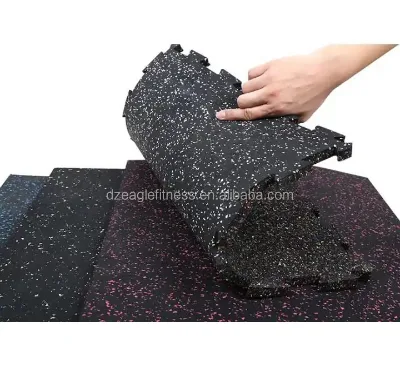


Interlocking Rubber Mat for Gym Fitness Exercise High Density Rubber Mat Flooring
$13.50 - $15.10
MOQ: 200 Square Meters


Cross Fit Rubber Floor Mat Interlock Durable Rubber Floor Gym Mat Anti Fatigue Mat
$8.00 - $20.00
MOQ: 1000 Pieces

Comprehensive Sourcing Guide
Strategic Sourcing Guide for Interlocked Flame Retardant Gym Mats
Procuring interlocked gym mats requires a rigorous evaluation of technical performance, material composition, and supplier reliability. The market for these products is vast, with variations in density, shock absorption, and fire safety ratings that directly impact safety and longevity. Buyers must navigate a landscape where product attributes are often presented as observations rather than universal guarantees. This guide outlines the critical factors for sourcing Interlocked Flame Retardant Gym Mats, focusing on verified specifications, compliance verification, and long-term value assessment.
Technical Specifications and Material Composition
The foundation of a high-quality interlocked mat lies in its raw material and structural design. The supplied data indicates that the primary raw material for many interlocking options is a blend of EVA (Ethylene-Vinyl Acetate) and PE (Polyethylene). This combination is favored for its balance of cushioning, durability, and cost-effectiveness. When evaluating technical specifications, buyers should look for specific density ranges, as this dictates the mat's load-bearing capacity and resistance to permanent deformation. Observed density values in the market range from 60 to 150 kg/Cbm, with specific models citing densities of 85 kg/Cbm and 100 kg/Cbm. A higher density generally correlates with better durability and a longer service life, particularly in high-traffic commercial environments.
Hardness is another critical parameter that influences user comfort and safety. The Shore C scale is the standard measurement for foam hardness. Available data points to a hardness range of 30-35 Shore C and 32-36 Degree Shore C. These ranges suggest a medium-firm feel, suitable for activities requiring stability, such as yoga or martial arts, while still providing adequate cushioning for impact absorption. The interlocking mechanism itself is a key technical feature. The "Interlocking" design allows for flexible floor configurations, enabling buyers to cover irregular spaces or create temporary workout zones. Some models offer specific designs such as Leaf, Five Lines, Straw, or Cross patterns, which can affect the friction factor and the visual aesthetic of the facility.
Shock absorption is a paramount safety metric for gym mats. The data reveals shock absorption rates varying between >45% and >53%, with some products claiming rates exceeding 50%. This variation highlights the importance of verifying the specific model's performance rather than assuming all interlocked mats meet a uniform standard. Vertical deformation is also a measurable attribute, with observed values around 2.3mm, indicating the mat's ability to return to its original shape after compression. For applications involving heavy equipment or high-impact exercises, verifying these metrics against the intended load is essential to prevent floor damage and ensure user safety.
Compliance, Certification, and Fire Safety Verification
The core keyword includes "flame retardant," yet the provided product facts do not explicitly list fire safety test results or specific flame retardant certifications for every item. Instead, the data mentions "Eco Friendly" status and "Environmental Protection Level" attributes. In the context of gym mats, flame retardancy is often a regulatory requirement for commercial installations, particularly in public spaces, schools, and fitness centers. Buyers must understand that the presence of "Eco Friendly" claims does not automatically equate to compliance with specific fire safety standards.
While the supplied context lists general standards such as EN1177, ISO9001, and ASTM C1028-89, these are noted as low-confidence background information. Therefore, a buyer cannot assert that a specific product batch meets these standards without direct verification from the supplier. The ASTM C1028-89 standard, for instance, relates to the coefficient of friction, which is relevant for slip resistance but distinct from fire safety. Similarly, EN1177 is a European standard for playground equipment impact attenuation, which may be relevant for shock absorption but does not define flame retardancy.
To ensure compliance, buyers should request specific test reports for flame spread and smoke density. Common international standards for flame retardancy include UL 94, ASTM E84, or EN 13501-1. The absence of explicit certification data in the product listing means the procurement team must treat the "flame retardant" claim as a requirement to be validated, not a guaranteed feature. Verification should involve asking the supplier for third-party laboratory test results that specifically address the fire performance of the EVA/PE blend used in the mats. Additionally, checking for "Wkf Approved" status, as seen in some product data, can be a positive indicator, but the specific scope of this approval must be clarified to ensure it covers fire safety.
Cost Drivers and Pricing Structure Analysis
Understanding the cost drivers for interlocked gym mats is essential for budgeting and negotiating. The observed price range in the market spans from $0.16 to $25 per unit, a significant variance that reflects differences in material density, thickness, and manufacturing complexity. The primary cost drivers include the raw material composition (EVA vs. PE ratios), the density of the foam, and the thickness of the mat. Thicker mats, such as those with a 2cm thickness, naturally cost more due to the increased material volume. Similarly, higher density mats (e.g., 100 kg/Cbm vs. 60 kg/Cbm) command higher prices due to the superior durability and performance they offer.
Packaging and logistics also influence the final cost. The data indicates various packing methods, including "Shrink Bag + Export Carton," "4PCS/Set," and "10PCS/Bag." Efficient packaging reduces shipping volume and potential damage, which can lower the landed cost. However, specialized packaging for export may add to the unit price. Buyers should analyze the cost per square meter rather than per piece to make accurate comparisons, as mat sizes vary significantly. Standard sizes observed include 3030cm, 5050cm, 6060cm, and larger formats like 1m1m or 40"x40". The 24"x24" and 40"x40" sizes are common for interlocking tiles, while larger panels are often used for continuous flooring.
Minimum Order Quantity (MOQ) is another critical cost factor. The observed MOQ range is between 20 and 1000 pieces, with specific models requiring 200, 400, or even 1000 pieces. Higher MOQs often result in lower unit prices due to economies of scale. For smaller projects or trial orders, buyers may need to accept higher unit costs or negotiate with suppliers who offer flexible MOQs. The "OEM Custom" availability suggests that customization, such as specific colors or logos, may incur additional setup costs or require higher MOQs to be economically viable.
Typical Applications and Usage Scenarios
Interlocked gym mats are versatile and suitable for a wide range of applications, both indoor and outdoor. The product data explicitly lists "Indoor" and "Outdoor" usage, indicating that the materials are designed to withstand varying environmental conditions. However, the specific application dictates the required performance characteristics. For home gyms and home fitness centers, the focus is often on comfort, noise reduction, and ease of installation. The "Application" field in the data mentions "Home Gym," "Home Fitness," and "Playground," confirming their suitability for residential and recreational settings.
In commercial and institutional settings, the requirements shift towards durability, safety, and compliance. The data highlights applications in "Karate" and general "Playground" use, where shock absorption and slip resistance are critical. For martial arts and high-impact sports, mats with higher shock absorption rates (>50%) and appropriate hardness (30-36 Shore C) are necessary to prevent injuries. The "Waterproof" and "Soundproof" features are particularly valuable in multi-purpose facilities where noise control and moisture resistance are priorities. These features make the mats ideal for indoor pools, dance studios, and multi-use community centers.
The "Installation Ways" attribute shows both "Fixed" and "Movable" options. Fixed installations are suitable for permanent flooring solutions in commercial gyms, while movable mats offer flexibility for temporary events or multi-purpose rooms. The interlocking design supports both scenarios, allowing for easy assembly and disassembly. Buyers should consider the specific needs of their facility when selecting the installation method. For example, a school gymnasium might prefer fixed mats for stability, while a community center might opt for movable mats to accommodate different activities.
Supplier Evaluation and Quality Control Protocols
Evaluating suppliers requires a systematic approach to ensure product consistency and reliability. The origin of the products is listed as "Shandong, China" and generally "China," indicating a concentration of manufacturing in this region. While this provides insight into the supply chain, buyers should not assume uniform quality across all suppliers from this location. Instead, they should conduct thorough due diligence, focusing on the supplier's quality control processes and production capabilities.
Key evaluation criteria include the supplier's ability to provide detailed product specifications, test reports, and compliance documentation. The "OEM Custom" and "Customization" attributes suggest that suppliers should be capable of tailoring products to specific buyer requirements. Buyers should verify the supplier's capacity to maintain consistent quality across batches, especially when ordering large quantities. The "Durable Years" attribute, ranging from 3 to 5 years, is a claim that should be backed by warranty terms and historical performance data.
Quality control should extend beyond the initial order. Buyers should implement a sampling protocol to verify that the received goods match the agreed-upon specifications. This includes checking the density, hardness, shock absorption rate, and dimensions of the mats. The "Weight" attribute, ranging from 0.3kg to 2.2kgs per piece, provides a quick check for density consistency. A significant deviation in weight from the expected value could indicate issues with material composition or manufacturing defects. Additionally, buyers should inspect the interlocking mechanism for fit and finish, ensuring that the mats lock securely and do not separate under normal use.
Long-Term Procurement and Maintenance Considerations
Long-term procurement involves more than just the initial purchase; it encompasses maintenance, replacement cycles, and total cost of ownership. The "Durable Years" claim of 3 to 5 years suggests a moderate lifespan, but actual durability depends on usage intensity and maintenance practices. Buyers should consider the environmental factors affecting the mats, such as UV exposure for outdoor use, which can degrade EVA and PE materials over time. The "Waterproof" feature helps mitigate moisture-related damage, but regular cleaning is still necessary to prevent the buildup of dirt and bacteria.
Maintenance costs should be factored into the procurement decision. Mats that are easy to clean and resistant to staining will reduce long-term maintenance expenses. The "Anti-Static" feature is beneficial in environments where static electricity could be a concern, such as areas with sensitive electronic equipment. However, buyers should verify the longevity of this feature, as it may diminish over time with heavy use.
When planning for replacement, buyers should consider the modularity of the interlocking system. If a section of the floor is damaged, the ability to replace individual tiles without replacing the entire floor is a significant advantage. This modularity reduces waste and lowers the cost of repairs. Additionally, buyers should maintain a relationship with the supplier to ensure the availability of replacement parts and consistent product quality over time. The "Eco Friendly" attribute may also play a role in long-term sustainability goals, as environmentally responsible materials are increasingly valued in corporate procurement strategies.
Comparative Analysis of Key Product Attributes
To facilitate decision-making, the following table summarizes the key attributes observed in the product data, highlighting the variations that buyers must consider during the sourcing process.
| Attribute | Observed Range/Values | Significance for Procurement |
|---|---|---|
| Raw Material | EVA PE | Determines flexibility, durability, and cost. |
| Density | 60-150 kg/Cbm (e.g., 85, 100) | Higher density offers better load bearing and longevity. |
| Hardness | 30-36 Shore C | Affects comfort and stability for different activities. |
| Shock Absorption | >45% to >53% | Critical for injury prevention in high-impact sports. |
| Thickness | 2cm (and others) | Thicker mats provide more cushioning but cost more. |
| Size | 30x30cm to 1x1m | Determines coverage area and installation complexity. |
| Installation | Fixed, Movable | Influences flexibility and suitability for temporary vs. permanent use. |
| Features | Waterproof, Soundproof, Anti-Static | Adds value for specific environmental and safety needs. |
| MOQ | 20 to 1000 Pieces | Impacts initial investment and inventory management. |
| Origin | Shandong, China | Indicates manufacturing hub; requires supplier verification. |
This comparative analysis underscores the need for buyers to align their specific requirements with the available product attributes. By carefully evaluating these factors, buyers can make informed decisions that balance performance, cost, and safety in the procurement of Interlocked Flame Retardant Gym Mats.
FAQs
What are the available interlocked flame retardant gym mat sizes?
Standard sizes include 30x30cm, 50x50cm, 60x60cm, and 1m by 1m. Some models also offer 24x24 inch or 40x40 inch dimensions to suit various installation needs.
Can these mats be used for both indoor and outdoor applications?
Yes, the mats are designed for both indoor and outdoor usage. They feature waterproof and soundproof properties to withstand varying environmental conditions effectively.
What is the typical shock absorption rate for these gym mats?
The shock absorption rate varies by model, ranging from greater than 45% to over 53%. Specific products may also achieve rates exceeding 50% for enhanced safety.
Which raw materials are used to manufacture these interlocking mats?
The primary raw materials are a blend of EVA and PE. This combination provides a balance of cushioning, durability, and cost-effectiveness for various fitness applications.
How long do these durable gym mats typically last?
The mats are rated for a service life of 3 to 5 years. Actual longevity depends on usage intensity and adherence to proper maintenance protocols.
What customization options are available for these gym mats?
Customization is available for designs such as leaf, five lines, straw, or cross patterns. Buyers can also request specific colors or logos through OEM services.
What is the minimum order quantity for purchasing these mats?
Minimum order quantities range from 20 to 1000 pieces depending on the specific model. Some models require 200 or 400 pieces as a baseline for orders.