Source Internal and External Polishing Machine for Auto, Aerospace, and Medical
Explore 30 listings for the Internal and External Polishing Machine designed for precision surface and cylindrical grinding. Buyers can compare specifications like spindle speed, workpiece dimensions, and automation levels to find suitable suppliers.
Key considerations
Products List

High Precision Surface Grinding Machine M1463 External and Internal Grinding Machine
$20000.00 - $50000.00
MOQ: 1 Pieces

Versatile External Grinding Machine for Taper and Straight Surface Grinding
$7877.00 - $72000.00
MOQ: 1 sets

Internal External Cylindrical Grinding Machine for Large Shafts and Holes
$10000.00 - $86600.00
MOQ: 1 sets

High Rigidity CNC External Grinding Machine for Long Term Accuracy Stability
$10000.00 - $75800.00
MOQ: 1 sets


Multi-Functional Universal Grinding Machine for Internal and External Parts
$1980.00 - $2100.00
MOQ: 1 Pieces

Affordable China-Made Internal and External Grinding Machine Solutions
$15400.00 - $15700.00
MOQ: 1 set

Versatile Deburring and Polishing Machine for Smooth Surface Finishing
$7900.00 - $12000.00
MOQ: 1 Sets

Precision Single Side Grinding and Polishing Machine for Ceramic
$8000.00 - $10000.00
MOQ: 1 Pieces
Dongguan KIZI Precision Lapping Mechanical Manufacture Co., Ltd.


Advanced CNC Internal Grinding Machine for Exceptional Surface Finish
$100000.00 - $150000.00
MOQ: 1 Pieces


High-Precision CNC Internal Grinding Machine for Superior Finishes
$100000.00 - $150000.00
MOQ: 1 Pieces


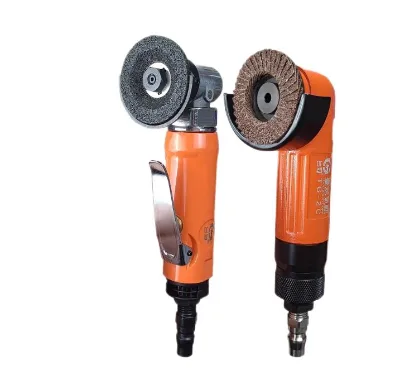


Deburring Polishing, Deburring Manufacturer Automatic Deburring Machine
$32000.00 - $35000.00
MOQ: 1 Sets
Comprehensive Sourcing Guide
Strategic Sourcing Guide for Internal and External Polishing and Grinding Equipment
Procuring industrial machinery for internal and external surface finishing requires a disciplined approach that balances technical capability with supply chain reliability. The market for these machines, often categorized under surface grinding and cylindrical grinding, presents a wide spectrum of configurations ranging from semiautomatic to fully manual operations. Buyers must navigate a complex landscape where product attributes, such as precision levels, motor power, and workpiece dimensions, vary significantly between models. This guide provides a structured framework for evaluating potential suppliers and selecting equipment that aligns with specific manufacturing requirements, utilizing observed market data to inform decision-making without relying on unverified claims.
Technical Specifications and Operational Capabilities
The foundation of any successful procurement lies in a precise understanding of the machine's technical specifications. When searching for internal and external polishing or grinding solutions, buyers should focus on the machine's ability to handle specific workpiece geometries and tolerances. The observed market data indicates a strong presence of surface grinding machines and universal cylindrical grinders, each serving distinct operational needs. For instance, surface grinding machines are often designed for high-precision flat surface finishing, with observed models featuring a center height of 270mm and a maximum ground diameter ranging from 25mm to 500mm. In contrast, cylindrical grinding units, such as those identified by model designations like M1332 or M1432H, are engineered for rotational symmetry and internal bore finishing.
Key technical parameters to verify include the maximum weight of the workpiece, which can range from 150kg to 1500kg depending on the machine class. A machine with a center height of 180mm and a center taper of Mt5 suggests a configuration suitable for smaller to medium-sized components, whereas larger industrial units may support significantly heavier loads. The grinding wheel specifications are equally critical; observed data points to wheel peripheral velocities of 35m/s and wheel dimensions such as 500mm in outer diameter. Buyers must ensure that the machine's spindle speed, which can reach up to 10,000 or 15,000 R/Min, matches the requirements of the abrasive materials being used, typically grinding wheels. Furthermore, the roughness and roundness capabilities define the final quality of the part; observed specifications cite roughness values as low as Ra 0.2 and roundness tolerances around 3μm, which are essential for high-precision applications.
Compliance, Certification, and Regulatory Standards
In the global machinery market, compliance with international standards is a non-negotiable aspect of supplier evaluation. While specific certification statuses can vary by manufacturer, the presence of recognized certifications such as ISO and CE is a common indicator of adherence to safety and quality protocols. Observed product listings frequently mention ISO CE and ISO RoHS certifications, suggesting that reputable suppliers in this sector prioritize regulatory compliance. However, buyers should not assume that every listed product automatically satisfies these standards without verification. It is imperative to request current, valid certification documents directly from the supplier before finalizing a purchase.
Beyond certifications, the physical standards of the machine itself must be scrutinized. Dimensional standards, such as those potentially referencing 426020002050mm for large units, indicate the footprint and spatial requirements for installation. Buyers must verify that the machine's physical dimensions align with their facility's layout and load-bearing capacities. Additionally, the origin of the machine, often cited as China or specifically Shanghai, China, provides context regarding manufacturing ecosystems but does not inherently guarantee quality. The buyer's responsibility is to validate that the machine meets the specific safety and performance standards required for their local jurisdiction, regardless of the stated origin.
Cost Drivers and Pricing Structures
Understanding the cost drivers for industrial grinding and polishing equipment is essential for budgeting and financial planning. The observed price range in the market is exceptionally broad, spanning from $38 to $150,000 USD. This vast disparity reflects differences in machine complexity, automation levels, precision capabilities, and included features. Lower-priced units may be manual or semiautomatic models with basic specifications, while high-end units featuring artificial controlling modes, high precision, and advanced motor configurations command premium prices.
The minimum order quantity (MOQ) is another significant factor influencing total procurement costs. Market observations show an MOQ range of 1 to 10 units, offering flexibility for both single-unit purchases and bulk acquisitions. Buyers should be aware that the unit price often decreases as the order quantity increases, but the initial investment for a single high-specification machine can be substantial. Other cost drivers include the type of packaging, such as plywood cases or factory ordinary packaging, which affects shipping and handling expenses. Additionally, the warranty terms for core components, often observed as one year, should be factored into the long-term cost of ownership, as extended warranties or service contracts may incur additional fees.
Typical Applications and Industry Use Cases
The versatility of internal and external polishing machines makes them suitable for a diverse array of industrial applications. Surface grinding machines, characterized by their ability to process curve objects and achieve high precision, are commonly utilized in the automotive, aerospace, and tool-and-die industries. These machines are ideal for finishing flat surfaces on engine blocks, transmission gears, and precision tooling. The observed capability to handle workpieces with a maximum length of 320mm or up to 3000mm depending on the model highlights their adaptability to different production scales.
Cylindrical grinders, identified by keywords such as "Universal Cylindrical Grinder," are specifically designed for external and internal diameter grinding. These machines are critical in the manufacturing of shafts, bearings, and hydraulic cylinders. The ability to achieve a roughness of Ra 0.2 and a roundness of 3μm ensures that components meet the stringent tolerances required in high-performance engineering. The swiveling angle of the table, observed at 3° for some models or 90° for others, allows for complex grinding operations, including tapered surfaces. Buyers should match the machine's processing object capabilities, such as curve processing, with their specific product requirements to ensure optimal performance.
Supplier Evaluation and Quality Assurance
Evaluating suppliers requires a rigorous assessment of their track record, product consistency, and after-sales support. When reviewing potential vendors, buyers should look for evidence of customization availability, as this indicates a supplier's willingness to tailor machines to specific client needs. The condition of the product, typically listed as "New," should be confirmed through detailed inspection reports or factory audits. It is also crucial to verify the controlling mode of the machine; while some units are manual, others feature artificial control systems that enhance repeatability and reduce operator error.
Quality assurance processes should be a central part of the supplier evaluation. Buyers must request detailed test results and performance data to validate claims regarding precision, motor power, and dimensional accuracy. For example, verifying that the work head motor power is indeed 1.5kw or that the wheel head motor power is 7.5kw is essential for ensuring the machine can handle the intended workload. Additionally, the packaging method, whether plywood case or factory ordinary packaging, should be assessed for its ability to protect the equipment during transit. A reliable supplier will provide comprehensive documentation, including installation manuals, maintenance schedules, and spare parts lists, to support the machine throughout its lifecycle.
Long-Term Procurement and Maintenance Considerations
Sourcing industrial machinery is a long-term investment that extends beyond the initial purchase. Buyers should consider the availability of spare parts, the ease of maintenance, and the overall durability of the equipment. The warranty of core components, often observed as one year, serves as a baseline for manufacturer confidence, but buyers should negotiate extended coverage for critical parts like spindles and motors. The weight of the machine, ranging from 4800kg to 7500kg, necessitates careful planning for foundation installation and logistics, which can impact long-term operational costs.
Furthermore, the operational parameters, such as the longitudinal speed range of the table (0.1-3mm/Min) and the quill manually travel (30mm), should be evaluated for their impact on production efficiency. Machines with adjustable speeds and travel ranges offer greater flexibility, allowing them to adapt to changing production demands. Buyers should also consider the energy consumption of the machine, as indicated by the motor power ratings, to estimate ongoing operational expenses. Finally, the lead time for delivery and the supplier's ability to provide timely technical support are critical factors that can influence the overall success of the procurement project. By addressing these long-term considerations, buyers can ensure a sustainable and efficient integration of new grinding and polishing equipment into their manufacturing processes.
Comparative Analysis of Machine Configurations
To facilitate informed decision-making, it is helpful to compare different machine configurations based on key attributes. The following table summarizes the observed variations in specifications, helping buyers identify the most suitable option for their needs.
| Feature | Surface Grinding Configuration | Cylindrical Grinding Configuration |
|---|---|---|
| Primary Application | Flat surface finishing, curve processing | External/internal diameter grinding |
| Max. Workpiece Weight | Up to 1500kg | Up to 150kg (varies by model) |
| Center Height | 270mm | 180mm |
| Max. Ground Diameter | 25-500mm | 8-320mm |
| Roughness Capability | Ra 0.2 | Ra 0.2 |
| Motor Power | 1.5kw (Work Head) | 7.5kw (Wheel Head), 1.1kw (Internal) |
| Precision Level | High Precision | High Precision |
| Control Mode | Artificial / Manual | Manual / Artificial |
| Typical Model | M1463 Ext | M1332x1000/1500, M1432H |
This comparison highlights that while both machine types offer high precision and similar roughness capabilities, their specific dimensions, power requirements, and workpiece handling capacities differ significantly. Selecting the right configuration depends on the specific geometry and volume of the parts being produced.
Final Procurement Recommendations
In conclusion, sourcing internal and external polishing and grinding machines requires a meticulous approach that prioritizes technical alignment, regulatory compliance, and long-term value. Buyers should leverage the observed market data to set realistic expectations regarding specifications, pricing, and performance. By rigorously verifying certifications, inspecting technical parameters, and evaluating supplier reliability, organizations can mitigate risks and secure equipment that enhances their manufacturing capabilities. The broad range of available options, from semiautomatic to fully automated systems, offers opportunities for tailored solutions that meet diverse industrial needs. Ultimately, a disciplined procurement strategy ensures that the selected machinery delivers the precision, efficiency, and durability required for modern production environments.
FAQs
What certifications do internal and external polishing machines typically have?
Many units carry ISO CE and ISO RoHS certifications as observed in the market. Buyers should verify current documents directly from the supplier before purchase since not every listed product automatically satisfies these standards without confirmation.
Which machine types are available for high precision grinding operations?
Surface grinding machines and universal cylindrical grinders are commonly available for high precision tasks. These units often feature artificial controlling modes or manual operations depending on the specific model configuration and intended application requirements.
How much does a high precision surface grinding machine cost?
Prices for these machines range widely from 38 to 150000 USD based on complexity and features. The final cost depends on factors like automation level, precision capabilities, and specific motor power configurations included in the unit.
Can I find machines with customization options available?
Yes, customization is available for many industrial grinding and polishing units in the current market. Buyers should explicitly request tailored configurations from suppliers to ensure the machine meets specific manufacturing requirements and operational needs.
What is the maximum workpiece weight capacity for these grinders?
Maximum workpiece weights vary significantly, ranging from 150kg to 1500kg depending on the machine class. Larger industrial units typically support heavier loads while smaller models are designed for components up to 150kg.
Where are these machines primarily manufactured and shipped from?
Most observed units originate from China, with specific production hubs located in Shanghai. Buyers must validate that the machine meets local safety standards regardless of the stated origin or manufacturing ecosystem context.