Source Internal Combustion Forklift for Warehousing, Logistics, and Construction
Compare 30 Internal Combustion Forklift units with diesel or LPG engines, lifting heights up to 5 meters, and load capacities from 1 to 5 tons. These machines feature adjustable cabs and various mast types for diverse industrial needs.
Key considerations
Products List

123cm 24 Month /2 Years Gmforklift Container Internal Combustion Forklift
$5500.00 - $7000.00
MOQ: 1 Pieces

Diesel Engine Gmforklift Container Internal Combustion Forklift Fork Lift
$5500.00 - $7000.00
MOQ: 1 Pieces


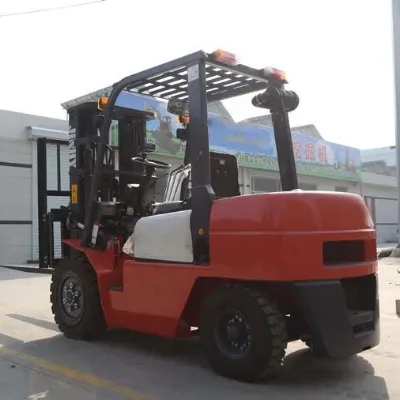

Heavy Load Transport Machine Diesel Forklift Internal Combustion Forklift Truck
$7110.00 - $7900.00
MOQ: 1 Pieces

China Heavy Duty Diesel Forklift Trucks 45t Internal Combustion Forklift
$264000.00 - $2760000.00
MOQ: 1 Pieces

China Heavy Duty Diesel Forklift Trucks 42t Internal Combustion Forklift
$254000.00 - $260000.00
MOQ: 1 Pieces

China Heavy Duty Diesel Forklift Trucks 15t Internal Combustion Forklift
$64000.00 - $70000.00
MOQ: 1 Pieces

China Heavy Duty Diesel Forklift Trucks 33t Internal Combustion Forklift
$214000.00 - $220000.00
MOQ: 1 Pieces

China Heavy Duty Diesel Forklift Trucks 18t Internal Combustion Forklift
$74000.00 - $80000.00
MOQ: 1 Pieces


Durable Internal Combustion Forklift for Heavy-Duty Warehouse Operations
$2999.00 - $20000.00
MOQ: 1 Pieces


3 Ton Internal Combustion Forklift Diesel Forklift for Farm Construction Site
$5600.00 - $5800.00
MOQ: 1 Pieces
Comprehensive Sourcing Guide
Internal Combustion Forklift Sourcing Guide
When evaluating internal combustion forklifts for industrial deployment, buyers must first distinguish between the specific fuel types and powertrain configurations available in the current market. The observed product landscape includes units powered by diesel engines as well as those utilizing LPG gas engines, each presenting distinct operational profiles regarding fuel availability, emissions, and maintenance requirements. Diesel models are frequently highlighted for their robust power output and suitability for heavy-duty outdoor applications, while LPG variants offer cleaner combustion characteristics often preferred for indoor or mixed-use environments where ventilation is a primary concern.
Procurement decisions should also account for the variability in lift height and load capacity, which directly influence the suitability of a unit for specific warehouse or yard layouts. The market data indicates a lift height range spanning from 3000mm to 5000mm, with load capacities typically falling between 1 ton and 5 tons, allowing for flexibility in handling diverse cargo weights. Buyers must align these technical parameters with their specific operational needs, ensuring that the selected forklift can safely manage the maximum anticipated load at the required stacking height without compromising stability or efficiency.
Product Scope and Observed Listing Signals
The product scope for internal combustion forklifts encompasses a wide array of mast configurations and transmission types designed to optimize performance in various operational scenarios. Listings frequently feature full free masts, duplex masts, and triplex masts, each offering different trade-offs between maximum lift height and overall vehicle height when the mast is lowered. Additionally, transmission options vary between mechanical and hydraulic systems, requiring buyers to assess which drive mechanism best suits their terrain conditions and the frequency of load handling required in their specific facility.
Color and customization options serve as significant signals for brand identity and operational safety within a facility. While standard listings often display an orange-red finish to enhance visibility, many suppliers offer customized color schemes to match corporate branding or specific site safety protocols. The availability of customization extends beyond aesthetics to include adjustable cab locations, allowing operators to tailor the machine to their ergonomic preferences, although some models may feature fixed cab positions that limit this flexibility.
Technical Specifications to Verify
Buyers must rigorously verify the physical dimensions and structural integrity of the forklift to ensure compatibility with their facility's infrastructure. Critical measurements include the overall width, which is observed at approximately 123cm, and the vehicle length without forks, typically around 2710mm. These dimensions are vital for determining aisle width requirements and maneuverability in tight spaces, while the minimum turning radius of 2440mm provides a key indicator of the machine's agility in confined operational zones.
Performance metrics such as lifting speed, ground speed, and braking distance are essential for evaluating the operational efficiency and safety of the equipment. The observed data suggests a lifting speed of up to 400mm per second under full load, with a descent rate of 420mm per second, ensuring rapid and controlled load handling. Furthermore, the maximum traction under full load is recorded at 21000N, and the maximum braking distance is noted at 2.5m, figures that must be cross-referenced with the specific safety protocols and floor conditions of the intended work environment.
Compliance and Safety Documentation
Ensuring that the forklift meets relevant safety standards is a non-negotiable aspect of the procurement process, particularly regarding structural integrity and operational safety. The product listings reference specific standards such as 3763/2693X1225X2090 and 3305kg, which likely pertain to weight classifications and dimensional compliance, though buyers should verify the exact nature of these standards against local regulatory requirements. Documentation should explicitly confirm that the vehicle adheres to the safety norms of the destination country, covering aspects like stability, visibility, and emergency stop functionality.
Safety features such as the top guard height and minimum ground clearance are critical for protecting the operator and navigating uneven terrain. The observed top guard height of 2145mm and a minimum ground clearance of 155mm indicate the machine's ability to provide overhead protection while maintaining sufficient clearance for obstacles. Buyers should request detailed safety manuals and inspection reports that validate these dimensions and confirm that the forklift is equipped with necessary safety interlocks and warning systems to prevent accidents during operation.
Cost Drivers and Commercial Terms
The pricing for internal combustion forklifts varies significantly based on the load capacity, lift height, and specific engine configuration, with observed ranges spanning from 1900 to 2,760,000 USD. This wide disparity reflects the difference between entry-level models and high-specification units with advanced features, such as customizable lift heights or specialized transmission systems. Buyers must carefully analyze the total cost of ownership, including fuel consumption, maintenance intervals, and the potential cost of customization, rather than focusing solely on the initial purchase price.
Commercial terms regarding packaging and shipping are equally important for managing logistics costs and ensuring the equipment arrives in optimal condition. The standard packaging is described as container-based or meeting international shipping standards, with single package sizes often listed as 100x100x100 cm. These details influence freight costs and handling requirements, and buyers should clarify whether the quoted price includes international shipping or if these costs are to be managed separately by the logistics team.
Supplier Qualification and Quality Control
Supplier qualification should be grounded in the verification of their production capabilities and quality assurance processes, particularly regarding the origin and manufacturing standards of the equipment. The observed data indicates that these forklifts originate from China, specifically from the Shandong region, and are associated with brands such as China Coal Group. Buyers should request evidence of the supplier's production capacity, including video outgoing-inspection services, to gain confidence in the manufacturing quality before committing to a purchase.
Quality control measures must extend beyond the final inspection to include the verification of core components and the overall build quality of the forklift. The listings mention core components that are categorized as "other," necessitating a detailed inquiry into the specific brands and origins of critical parts like the engine, transmission, and hydraulic systems. Ensuring that these components meet international quality benchmarks is essential for minimizing downtime and extending the operational lifespan of the forklift in demanding industrial environments.
Long-Term Procurement Checks
Establishing a long-term procurement strategy requires a focus on the availability of spare parts and the supplier's commitment to after-sales support. The customization options available, such as adjustable cab locations and specific color schemes, suggest that the supplier is capable of tailoring products to specific needs, but buyers must confirm the long-term availability of parts for these customized configurations. A robust supply chain for spare parts is crucial for maintaining operational continuity and minimizing the impact of unexpected breakdowns.
Finally, buyers should implement a schedule for regular performance reviews and maintenance checks to ensure the forklift continues to meet safety and efficiency standards over time. The observed specifications, such as the maximum lifting height of 4 meters (customizable) and the weight of 3500 kg, provide a baseline for expected performance, but regular audits are necessary to detect wear and tear. By maintaining a proactive approach to maintenance and performance monitoring, organizations can maximize the return on their investment and ensure the continued safety of their workforce.
FAQs
What load capacity options are available for these forklifts?
The available load capacity ranges from 1 ton to 5 tons, with specific models rated for 2 to 5 tons. This flexibility allows buyers to select the exact lifting power needed for their warehouse operations. The standard load center is 500mm, ensuring stable handling of various pallet sizes and weights during daily material transport tasks.
Can the forklift mast be customized for different lifting heights?
Yes, the mast configuration is fully customizable to meet specific warehouse requirements. Options include full free mast, duplex mast, and triplex mast designs. The maximum lifting height can reach up to 4 meters or be adjusted further based on custom requests, allowing for efficient use of vertical storage space in high-bay facilities.
What fuel types are supported by the engine options?
The forklifts support multiple fuel types, including diesel and LPG gas engines. Diesel models offer robust power for heavy-duty outdoor or industrial use, while LPG options provide cleaner operation for indoor environments. Both engine types are designed for high operating efficiency and reliable performance under continuous load conditions.
What are the key physical dimensions of the forklift?
The overall size is approximately 3757mm in length, 1226mm in width, and 2125mm in height. The fork size measures 1220mm by 122mm by 45mm, with a standard fork length of 1220mm. The minimum turning radius is 2440mm, ensuring maneuverability in tight aisles while maintaining a ground clearance of 155mm.
Is customization available for the forklift color and specifications?
Customization is available for both color and technical specifications. The standard color is orange-red, but buyers can request customized colors to match their fleet branding. Additionally, features like the cab location and mast type can be adjusted to suit specific operational needs, ensuring the equipment integrates seamlessly into existing workflows.
How is the forklift packaged for international shipping?
The forklift is packaged using international shipping standard packaging to ensure safe transit. The single package size is approximately 100cm by 100cm by 100cm, facilitating efficient container loading. This robust packaging protects the machinery from damage during long-distance transport, ensuring the product arrives in new condition ready for immediate deployment.