Source IP Multi-Site DMR Repeater for Firefighting, Transportation, Emergency
Find 30 verified IP Multi-Site DMR Repeater options for firefighting, transportation, and emergency applications. Compare specifications including frequency ranges, power output, and channel capacity from manufacturers in China to select the right signal repeater for your infrastructure needs.
Key considerations
Products List


50W IP Multi-Site Connection Dmr Repeater Bf-Tr8500 for Radio Transceiver
$1325.00 - $1693.00
MOQ: 5 Pieces

Cheaper Price 50W High Power IP Dmr Connect Two Way Radio Wireless Repeater
$1325.00 - $1693.00
MOQ: 5 Pieces

Supports IP Networking 50W Digital Professional Dmr Repeater for Airports
$1325.00 - $1693.00
MOQ: 5 Pieces

Featured Product Dmr Repeater 50W for Trunking III System Two Way Radio
$2385.00 - $3048.00
MOQ: 5 Pieces


high throughput MIMO communications 1.2 5.8GHz datalink image repeater
$4000.00 - $5500.00
MOQ: 2 Pieces


Unmanned systems telemetry command control link S L band datalink video repeater
$5000.00 - $7000.00
MOQ: 2 Pieces
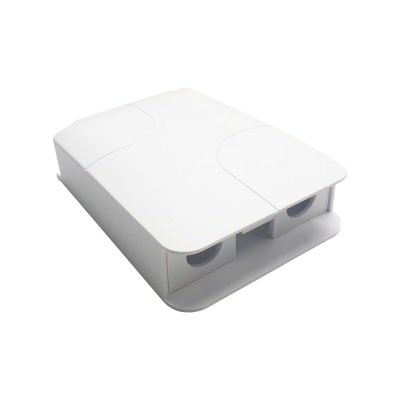
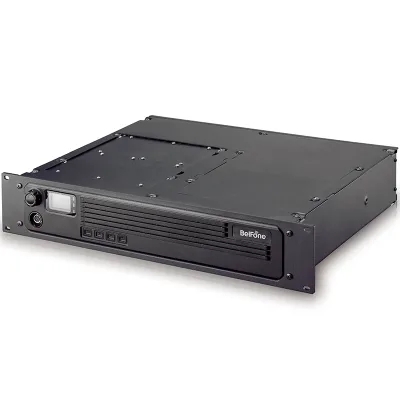


Portable Dmr Tier III Repeater with Android and IP Connection Features
$800.00 - $880.00
MOQ: 10 Pieces


Tyt Dmr Tier III Android Poc Repeater with Multi-Frequency Support IP68 Waterproof
$800.00 - $880.00
MOQ: 10 Pieces

IP Connection Repeater 45W Whole Country Communication Station MD7500 AIS Roaming
$900.00 - $980.00
MOQ: 10 Pieces


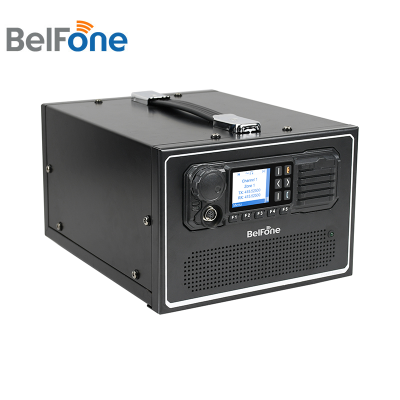


Comprehensive Sourcing Guide
Strategic Sourcing Guide for IP Multi-Site DMR Repeaters
Procuring an IP multi-site Digital Mobile Radio (DMR) repeater system requires a rigorous approach that balances technical interoperability with supply chain reliability. These systems serve as the backbone for critical communication networks in large-scale environments, enabling seamless voice and data transmission across multiple geographic locations. The market presents a wide array of configurations, from standard wireless repeaters to complex optical fiber-based signal distribution units. Buyers must navigate a landscape where specifications vary significantly between models, such as the TR8500 and BF-TR900 series, to ensure the selected hardware meets the specific operational demands of their organization. This guide outlines the critical factors for evaluating these systems, focusing on technical performance, compliance, and long-term procurement strategy.
Technical Architecture and Frequency Performance
The core functionality of an IP multi-site DMR repeater relies on its ability to manage frequency ranges and transmission mediums effectively. When evaluating potential units, buyers must first verify the supported frequency bands, as these dictate the system's applicability in different regions and regulatory environments. Observed market data indicates a diverse range of frequency capabilities. Some units operate within the VHF band, covering ranges such as 136-156 MHz, 150-174 MHz, and extending up to 370-390 MHz. Other configurations offer broader UHF coverage, including 350-390 MHz, 400-470 MHz, and 450-520 MHz. Specific models may support dual-band operations, such as VHF 136-174 MHz combined with UHF 350-390 MHz or 400-480 MHz.
The transmission medium is another critical technical differentiator. While many repeaters function as standard wireless units, some advanced systems utilize optical fiber as the transmission medium to reduce signal loss over long distances. This distinction is vital for multi-site deployments where the repeater must be physically separated from the base station. The physical form factor also varies; some units are designed as 2U/19-inch rack-mountable devices, while others are compact, weighing as little as 6.9 kg or as much as 14 kg. Buyers should verify the working voltage requirements, as systems may support DC 13.8V (±15%), AC 110V, or AC 220V, with some offering optional voltage configurations to match local power infrastructure.
Performance metrics such as frequency stability and channel capacity are equally important. High-stability units typically maintain a frequency stability of ±0.5ppm, ensuring consistent signal quality without drift. Channel capacity can range from 99 channels to 512 channels, with some systems supporting up to 32 zones for complex network segmentation. The channel spacing is often standardized at 12.5kHz, which optimizes spectrum efficiency. Additionally, the RF output power is a key specification; observed ranges include continuous power outputs from 5W to 50W, with some models offering selectable high (25W) and low (10W) power modes to manage interference and battery life.
Compliance, Certification, and Regulatory Standards
In the B2B procurement of communication equipment, compliance with international and regional standards is non-negotiable. Buyers must verify that the product possesses the necessary certifications to operate legally in their target markets. Common certifications observed in the market include CE, RoHS, and ISO. Some suppliers may also provide GS certification, indicating compliance with German safety standards. The presence of these certifications should be confirmed through valid documentation rather than assumed based on product descriptions.
The standardization of the product is another area requiring scrutiny. While many units adhere to a "Standard" classification, specific physical dimensions and rack-mounting standards must be verified. For instance, some units conform to a standard size of 485mm (L) x 375mm (W) x 90mm (H), while others are designed as 2U/19-inch rack units. Buyers should ensure that the physical standard matches their existing infrastructure, such as server racks or control room cabinets.
Furthermore, environmental and safety standards must be considered. The presence or absence of lightning protection is a critical safety feature, particularly for outdoor or remote installations. Market observations show a split between units "With Lightning Protection" and those "Without Lightning Protection." Procurement teams must assess the local weather conditions and network topology to determine if this feature is mandatory. Additionally, the product origin, often listed as China or specific provinces like Fujian, may influence the supply chain's resilience and the applicability of certain trade agreements or import regulations.
Cost Drivers and Pricing Variables
The pricing of IP multi-site DMR repeaters is influenced by a complex matrix of technical specifications, customization options, and supply chain factors. The observed price range in the market is vast, spanning from $1 to $100,000. This wide disparity is not indicative of quality alone but reflects differences in power output, frequency band complexity, transmission medium, and included features. High-power units with 50W output and optical fiber capabilities will naturally command a higher price point compared to lower-power, wireless-only repeaters.
Customization is a significant cost driver. Many suppliers offer "Available" customization services, including OEM options for custom logos and packaging. These bespoke requirements often incur additional costs and may extend the lead time. The Minimum Order Quantity (MOQ) also plays a role in the total cost of ownership. Observed MOQs range from 1 unit to 200 units. Buyers purchasing small quantities may face a higher per-unit cost, whereas bulk orders of 200 units might benefit from volume discounts.
Other cost factors include the complexity of the packing and shipping. Units are typically shipped in cartons or standard carton box packaging, but the weight of the unit (ranging from 6.9kg to 14kg) impacts freight costs. Buyers should also consider the long-term operational costs, such as power consumption. Units with a current draw of less than 9A or those with variable power output settings may offer energy savings over the device's lifecycle. It is essential to request a detailed breakdown of costs, including any hidden fees for certifications, customization, or expedited shipping, to avoid budget overruns.
Typical Applications and Deployment Scenarios
The versatility of IP multi-site DMR repeaters allows them to be deployed across a wide spectrum of industries. The applications observed in the market include firefighting, transportation, emergency response, and construction. In these high-stakes environments, reliable communication is paramount. For example, in firefighting and emergency scenarios, the repeater must provide robust coverage in challenging terrains and ensure that first responders can coordinate effectively. The ability to handle multiple zones and high channel counts (up to 512) is particularly beneficial for large-scale emergency operations.
Commercial and industrial applications are equally common. The equipment is frequently utilized in shopping malls, logistics centers, airports, and docks. In logistics and airport environments, the repeater facilitates real-time tracking and communication between ground staff and management. The specific frequency range required for these applications depends on local regulations; for instance, UHF bands are often preferred for their better penetration through building structures.
The choice of transmission medium also influences the application. Wireless repeaters are suitable for smaller, localized deployments, while optical fiber-based signal repeaters are ideal for large campuses or multi-building complexes where signal integrity over long distances is critical. Buyers should match the application requirements with the technical specifications, ensuring that the selected unit can handle the specific environmental conditions, such as the need for lightning protection in outdoor dock or airport settings.
Supplier Evaluation and Quality Assurance
Evaluating suppliers for IP multi-site DMR repeaters requires a focus on reliability, transparency, and technical support. Buyers should verify the supplier's ability to provide products that meet the observed specifications, such as the specific models like TR8500 or BF-TR900. It is crucial to confirm that the product condition is "New" and that the customization options are genuine and well-documented.
Quality control is a primary concern. Buyers should request evidence of quality assurance processes, including test results for key performance indicators like adjacent channel power (≤60dB) and digital sensitivity (3% Ber: 0.35 UV). The audio power output, typically around 3W, should also be verified to ensure clear communication. Additionally, the antenna impedance should be confirmed as 50Ω or 50 Ohm to ensure compatibility with standard antenna systems.
When assessing suppliers, buyers should look for those who provide comprehensive documentation regarding the product's origin, such as the specific province of manufacture (e.g., Fujian). This information can help in understanding the manufacturing capabilities and the supply chain's stability. Suppliers should also be transparent about their lead times and ability to meet the observed MOQ ranges. A reliable supplier will offer clear communication channels and technical support to assist with installation and troubleshooting, ensuring that the system performs as expected in the field.
Long-Term Procurement and Lifecycle Management
Sourcing IP multi-site DMR repeaters is not a one-time transaction but a long-term commitment. Buyers must consider the lifecycle management of the equipment, including maintenance, upgrades, and eventual replacement. The availability of spare parts and the supplier's ability to support the product over its lifespan are critical factors. Products with standard certifications and widely accepted specifications are generally easier to maintain and upgrade.
The modularity of the system is another consideration. Units with standard dimensions and rack-mounting capabilities allow for easier integration into future network expansions. Buyers should also evaluate the power consumption and thermal management of the units to ensure they can operate efficiently over long periods. The weight of the unit, ranging from 6.9kg to 14kg, may impact the physical installation and maintenance logistics, especially in remote or hard-to-reach locations.
Finally, buyers should plan for the scalability of the system. As the organization grows, the repeater network may need to expand to cover new areas or support more users. The ability to add channels, zones, and new repeaters without replacing the entire system is a significant advantage. By focusing on these long-term considerations, buyers can ensure that their investment in IP multi-site DMR repeaters remains valuable and effective for years to come.
Comparative Specification Overview
To assist in the decision-making process, the following table summarizes key technical specifications observed across different models. This comparison highlights the variability in performance and physical attributes that buyers must evaluate against their specific requirements.
| Specification | Model A (e.g., TR8500) | Model B (e.g., BF-TR900) | Model C (Optical Fiber) |
|---|---|---|---|
| Frequency Range | VHF: 136-174MHz; UHF: 350-390/400-470/450-520MHz | VHF: 136-174MHz; UHF: 400-480 MHz | VHF: 136-156 MHz; 150-174 MHz; 340-370 MHz |
| Power Output | 5-50W (Continuous) | 50W | High (25W); Low (10W) |
| Weight | 9.7kg | 6.9kg | 14kg |
| Channels | 99 | 512 | 99 |
| Zones | N/A | 32 | N/A |
| Lightning Protection | Without | With | N/A |
| Transmission Medium | Wireless | Wireless | Optical Fiber |
| Voltage | DC13.8V (±15%) | DC 13.8V; AC: 110 or 220V | DC13.8V |
| Certifications | CE, ISO, RoHS | RoHS, CE, ISO, GS | CE |
This overview underscores the importance of matching specific technical needs with the correct model. Buyers should use this data as a starting point for deeper technical discussions with suppliers, ensuring that the final selection aligns perfectly with their operational goals and regulatory requirements.
FAQs
What certifications do ip multi site dmr repeaters typically have?
Common certifications include CE, RoHS, ISO, and GS. Buyers must verify specific documentation for each unit, as some models list ISO, GS, RoHS, and CE together while others may only show CE or RoHS depending on the manufacturer.
Which frequency ranges are supported by these repeaters?
Supported ranges vary by model, covering VHF 136-174 MHz and UHF bands like 350-390 MHz or 400-480 MHz. Some units also support extended ranges up to 520 MHz, so buyers should check the specific model datasheet for their region.
Can these repeaters operate with optical fiber transmission?
Yes, some advanced models utilize optical fiber as the transmission medium for long-distance signal distribution. Other units function as standard wireless repeaters, so the specific transmission medium must be confirmed based on the deployment architecture.
What is the typical power output for these devices?
Power output ranges from 5W to 50W continuous, with some models offering selectable high and low modes. Specific units may provide 50W output or adjustable settings like 25W high and 10W low to manage interference and power consumption.
How many channels and zones can the system support?
Channel capacity ranges from 99 to 512 channels, with some systems supporting up to 32 zones. This allows for complex network segmentation in large-scale environments like airports or logistics centers requiring extensive coverage.
What are the standard physical dimensions for these units?
Dimensions vary, with some units measuring 485mm by 375mm by 90mm and others designed as 2U 19-inch rack mounts. Buyers should verify the physical standard to ensure compatibility with existing server racks or control room cabinets.
Is lightning protection included in all models?
No, lightning protection is not standard across all models; some units include it while others do not. Buyers must assess local weather conditions and network topology to determine if this safety feature is mandatory for their specific installation.