Source IP56 Wired Sound and Light Alarm for Factories, Warehouses, and Construction Sites
Find 30 verified options for the IP56 Wired Sound and Light Alarm suitable for industrial safety applications. Buyers can compare specifications such as alarm volume, power supply, and transmission modes from suppliers in China.
Key considerations
Products List


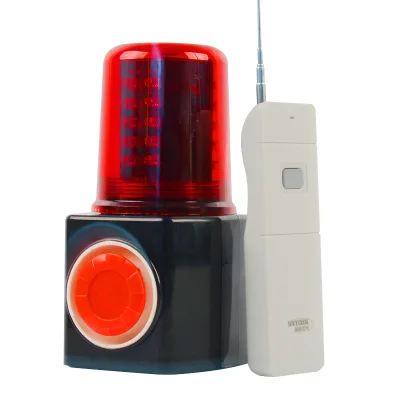
Factory Speaker Siren Warning Beacons Lights Explosion-Proof Sounder Alarm Lamps
$20.00 - $22.00
MOQ: 1 Pieces



Comprehensive Sourcing Guide
Strategic Sourcing Guide for IP56 Wired Sound and Light Alarms
Procuring industrial safety equipment requires a disciplined approach that balances technical performance with regulatory compliance. When searching for an IP56 Wired Sound and Light Alarm, buyers must navigate a complex landscape of specifications, certifications, and supply chain variables. The core keyword implies a device designed for harsh environments, utilizing a wired connection for signal transmission, and offering both audible and visual alerts. This guide synthesizes observed market data and technical attributes to provide a framework for evaluating potential suppliers and products without relying on unverified claims.
Technical Specifications and Operational Parameters
The foundation of a successful procurement decision lies in understanding the specific technical attributes of the device. In the current market, wired sound and light alarms often operate on distinct working principles, such as electromechanical or electro-optical systems. For a device labeled as "wired," the transmission mode is explicitly defined as cable-based, ensuring a stable signal path that is less susceptible to wireless interference or battery depletion. This is a critical differentiator for industrial applications where reliability is paramount.
Power consumption and supply voltage are equally vital. Observed data indicates that wired units may operate on varying power levels, ranging from 3W to 10W, with some models supporting standard 220V inputs while others may utilize lower voltage DC supplies like 3V. Buyers must verify the specific power requirements of their facility's infrastructure before selecting a unit. The physical construction is another key area; materials such as ABS plastic are common, providing a balance of durability and cost-effectiveness. Dimensions also vary, with specific models observed at 67x47mm or larger cylindrical forms around 60x70mm, influencing mounting options and space requirements.
The alarm volume is a primary performance metric. High-confidence observations suggest that effective units within this category achieve an alarm volume of at least 90dB to 100dB within a 1-meter radius. This ensures that the auditory signal cuts through ambient industrial noise. Furthermore, the IP rating is a non-negotiable specification for environmental resistance. While the search term specifies IP56, market listings show variations including IP65 and IP66. An IP56 rating indicates protection against dust ingress (limited) and powerful water jets, making it suitable for outdoor or wet indoor environments. However, buyers should confirm the exact IP class of the specific model, as some listed products claim IP65 or IP66, which offer higher levels of dust and water protection.
Compliance and Certification Verification
Navigating the certification landscape is essential for ensuring that the purchased equipment meets international safety standards. The supplied data highlights several recurring certifications, including CE, ISO, RoHS, and CCC. The CE mark is frequently cited, often in conjunction with specific standards like EN14604 for smoke detectors or general safety directives. For buyers operating in the European market, verifying that the CE certification aligns with relevant directives is mandatory. Similarly, the RoHS certification indicates compliance with restrictions on hazardous substances, a standard requirement for electronic components sold globally.
The CCC (China Compulsory Certification) is another critical mark observed in the data, particularly for products originating from China. This certification is often required for goods entering the Chinese market or for specific industrial applications within the region. Buyers should not assume that a generic CE mark covers all regional requirements; specific product types, such as smoke alarms, may require adherence to standards like EN54-23 or EN54-13. While these standards appear in background data, they should be treated as benchmarks for verification rather than guaranteed attributes of every listed product.
When evaluating a supplier, request the specific certificate documents for the exact model number being purchased. The data shows that some models carry certificates like "CE En14604," while others list "CE,CCC." This variation underscores the importance of matching the certification to the specific application. For instance, a unit intended for a high-risk industrial zone may require more rigorous testing than one for a general office environment. Always cross-reference the listed certification with the product's intended use case to avoid compliance gaps.
Cost Drivers and Pricing Dynamics
Understanding the cost structure of wired sound and light alarms helps buyers budget effectively and negotiate better terms. The observed price range in the market is extensive, spanning from $0.95 to $4,285. This wide disparity is not indicative of a single product type but rather reflects differences in capacity, complexity, and intended application. A unit priced at the lower end of the spectrum is likely a basic component or a smaller capacity device, whereas the higher end may represent industrial-grade systems with advanced features, higher power ratings, or specialized certifications.
Several factors drive these costs. First, the material composition plays a significant role; units constructed with high-grade ABS or metal housings typically command a premium over those with standard plastic casings. Second, the power rating and voltage requirements influence the internal component costs. A 10W unit operating at 220V will generally cost more than a 3W DC unit due to the robustness of the power supply components. Third, the level of customization available affects pricing. Products offering custom features, such as specific mounting brackets or tailored alarm tones, often carry a higher price tag.
Minimum Order Quantity (MOQ) is another critical cost driver. The observed MOQ range is between 1 and 5,000 units. Buyers seeking small quantities can access suppliers with low MOQs, but they may face higher per-unit costs. Conversely, large-scale procurement can leverage economies of scale, potentially reducing the unit price significantly. However, high MOQs may require significant capital outlay and storage capacity. Buyers must balance their immediate needs with long-term inventory strategies to optimize total cost of ownership.
Typical Applications and Environmental Suitability
The versatility of wired sound and light alarms makes them suitable for a wide array of applications. The data indicates that these devices are designed for both indoor and outdoor use, making them ideal for environments where weather resistance is a concern. The IP56 rating, combined with the wired transmission mode, suggests suitability for industrial facilities, warehouses, and outdoor perimeter security systems. In these settings, the reliability of a wired connection ensures that the alarm system remains operational even during power fluctuations or wireless signal interference.
Specific applications include smoke detection in industrial zones, where the combination of sound and light alerts is crucial for rapid evacuation. The observed "Photoelectric Smoke Style" and "Electromechanical" working principles suggest that these alarms can be integrated into broader fire safety systems. Additionally, the "Industry Alarm" classification points to their use in manufacturing plants, chemical processing facilities, and logistics centers. The ability to function in both indoor and outdoor environments allows for seamless integration across different zones of a facility.
When selecting a unit for a specific application, buyers should consider the ambient conditions. For example, in areas with high humidity or exposure to water jets, the IP rating must be verified to ensure it meets or exceeds the environmental demands. Similarly, the alarm volume must be sufficient to be heard over the specific noise levels of the environment. A 90dB alarm might be adequate for a quiet office but insufficient for a noisy factory floor, where a 100dB or higher unit is necessary.
Supplier Evaluation and Quality Control
Evaluating suppliers requires a rigorous assessment of their capabilities and track record. The data reveals that products originate from various locations, including Zhejiang, Nanjing, and general regions in China. While the country of origin is a known factor, the specific city or province can provide insights into the local industrial ecosystem and supply chain maturity. Buyers should prioritize suppliers who demonstrate transparency in their manufacturing processes and provide clear documentation for their products.
Quality control is paramount when sourcing safety-critical equipment. Buyers should inquire about the supplier's quality assurance protocols, including testing procedures for IP ratings, alarm volume, and electrical safety. The presence of certifications like CE and RoHS is a positive indicator, but it should be supplemented with requests for third-party test reports. Additionally, the warranty period is a key metric; observed data shows a standard 1-year warranty, which serves as a baseline for buyer expectations. Suppliers offering extended warranties may demonstrate greater confidence in their product durability.
Packaging and logistics are also part of the quality evaluation. Products are typically packed in cartons or color boxes/blister packs. The condition of the packaging upon arrival can reflect the supplier's attention to detail and care during transit. Buyers should specify packaging requirements in their purchase orders to ensure that the units arrive in pristine condition, especially for sensitive electronic components.
Long-Term Procurement Considerations
Sourcing decisions should extend beyond the initial purchase to consider long-term maintenance and support. The availability of spare parts and the ease of replacement are critical factors. For wired systems, the longevity of the cabling and the durability of the connectors are essential. Buyers should verify that the supplier offers technical support for installation and troubleshooting, as wired systems often require professional setup.
Customization options can also play a role in long-term procurement. The availability of customization allows buyers to tailor the alarm to specific operational needs, such as unique mounting configurations or specific color codes (e.g., Red or Yellow). This flexibility can extend the useful life of the product by allowing it to adapt to changing facility requirements.
Finally, buyers should monitor the product lifecycle and obsolescence risks. Given the wide range of models and specifications, it is important to select a product that is likely to remain in production for a reasonable period. This ensures that replacement units will be available if the original model is discontinued. By focusing on suppliers with a stable product portfolio and a commitment to quality, buyers can secure a reliable supply chain for their safety infrastructure.
Comparative Analysis of Key Product Attributes
To assist in the decision-making process, the following table summarizes the key attributes observed in the market for wired sound and light alarms. This comparison highlights the variability in specifications that buyers must evaluate against their specific requirements.
| Attribute | Observed Range/Options | Key Consideration for Buyers |
|---|---|---|
| Transmission Mode | Wired (Cable) | Ensures stable signal; verify cable length and type. |
| IP Rating | IP56, IP65, IP66 | Match to environmental exposure (dust/water). |
| Alarm Volume | ≥90dB to ≥100dB (1m) | Ensure sufficient volume for ambient noise levels. |
| Power Supply | DC3V, 220V, 3W-10W | Verify compatibility with facility power infrastructure. |
| Working Principle | Electromechanical, Electro-Optical | Select based on detection technology needs. |
| Certifications | CE, ISO, RoHS, CCC, EN14604 | Confirm specific certifications for target market. |
| Material | ABS | Check for durability and resistance to chemicals. |
| Origin | Zhejiang, Nanjing, China | Assess logistics and supply chain reliability. |
| Warranty | 1 Year (Standard) | Negotiate terms for extended coverage if needed. |
This table serves as a checklist for buyers to ensure that all critical parameters are addressed during the sourcing process. By systematically evaluating each attribute against the specific needs of the application, buyers can make informed decisions that prioritize safety, compliance, and operational efficiency.
FAQs
What certifications do ip56 wired sound and light alarms typically have?
These alarms commonly carry CE, ISO, RoHS, and CCC certifications. Specific models may also hold EN14604 for smoke detection applications, ensuring compliance with international safety and environmental standards.
How does the transmission mode affect the alarm reliability?
Wired models use cable-based transmission to ensure stable signal paths without wireless interference. This electromechanical or electro-optical design prevents battery depletion issues common in wireless units.
Which alarm volume levels are available for industrial environments?
Effective units achieve alarm volumes of at least 90dB to 100dB within a one-meter radius. This ensures the auditory signal cuts through ambient industrial noise for effective evacuation warnings.
Can these alarms be customized for specific mounting needs?
Customization is available for various industrial requirements including specific mounting configurations or color codes like red and yellow. Buyers can request tailored features to fit unique facility operational needs.
What power supply options are supported by these devices?
Power requirements vary, with some models operating on DC3V while others support 220V inputs. Power consumption ranges from 3W to 10W depending on the specific model and application complexity.
Which materials are used to construct the alarm housing?
Housings are typically constructed from durable ABS plastic to balance cost and durability. This material provides the necessary protection for both indoor and outdoor applications in harsh environments.
What is the standard warranty period for these industrial alarms?
The standard warranty period observed for these units is one year. This baseline coverage protects against manufacturing defects and ensures supplier accountability for product durability.