Source IP65 Indoor Outdoor RF Diplexer for Mobile, Server, Workstation
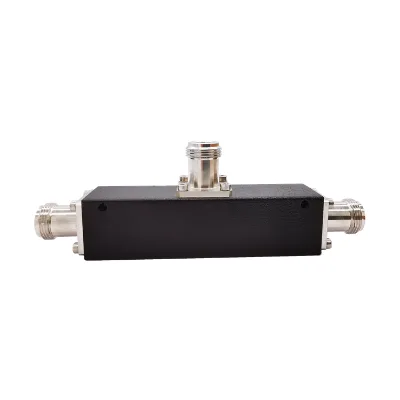
Find and compare 30 RF diplexer units designed for indoor and outdoor IP65 applications. These devices support GSM and Ethernet networks with frequencies ranging from 698MHz to 2700MHz, suitable for mobile phones, servers, and workstations.
Key considerations
Products List


Factory 380-960MHz /1710-2700MHz RF Low Pim Duplexer Diplexer for Radio System
$80.00 - $180.00
MOQ: 1 Pieces

VHF UHF Diplexer 135-520/690-2700MHz RF Low Pim Duplexer Dual-Band Combiner N Female Type
$180.00 - $240.00
MOQ: 1 Pieces


3 Way Diplexer RF Low Insertion Loss Low Vswr Low Pim (IM3) Triplexer Combiner
$300.00 - $350.00
MOQ: 100 Pieces

5 Way in 2 Way out RF Diplexer Combiner with Low Insertion Loss Low Vswr Low Pim (IM3)
$170.00 - $200.00
MOQ: 99 Pieces


694-862MHz 880-960MHz RF Passive SMA Cavity Diplexer Combiner for Indoor Use
$182.00 - $185.00
MOQ: 100 Pieces

1710-1880MHz 2300-2700MHz IP67 Dual Band Diplexer Combiner with DIN Female Connector
$50.00 - $100.00
MOQ: 1 Pieces

763-775MHz 793-805MHz Dual Band Diplexer 2 Way Combiner with N Female Connector
$80.00 - $100.00
MOQ: 100 Pieces

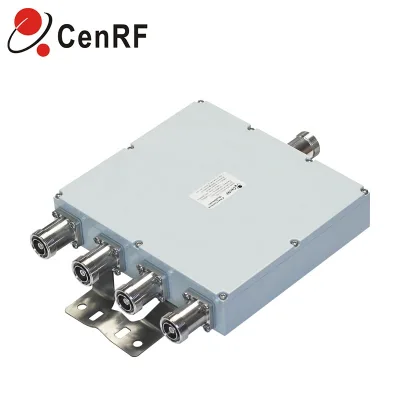
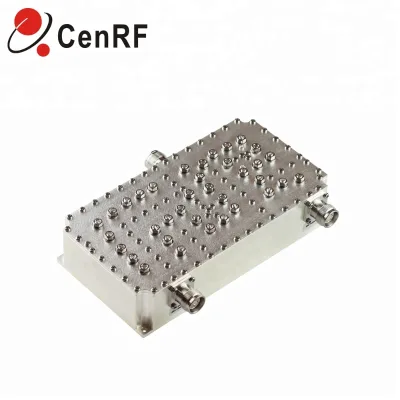
RF indoor GSM WCDMA 2 Way Combiner mobile signal booster diplexer with SMA Female
$243.28 - $821.05
MOQ: 10 Minimum
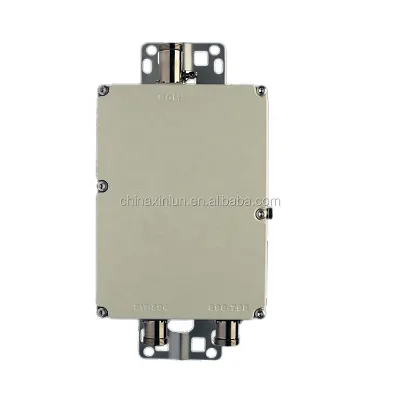


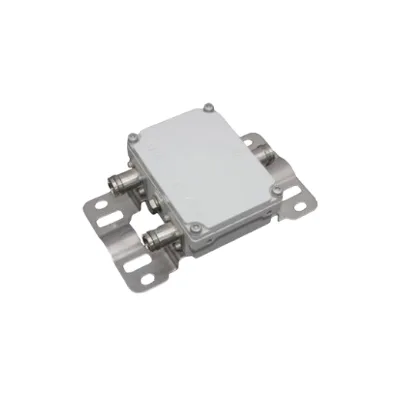


Comprehensive Sourcing Guide
Strategic Sourcing Guide for IP65 Indoor Outdoor RF Diplexers
Selecting the right RF diplexer for environments requiring both indoor and outdoor deployment demands a rigorous understanding of technical specifications, environmental resilience, and supply chain reliability. The core keyword "IP65 Indoor Outdoor RF Diplexer" points to a specific class of passive RF components designed to separate or combine frequency bands while maintaining a high degree of protection against dust and water jets. For procurement professionals, the challenge lies in navigating a market where product attributes vary significantly between manufacturers, and where the distinction between a standard indoor unit and a ruggedized outdoor solution is critical for system longevity. This guide synthesizes available product data and industry standards to provide a disciplined framework for evaluating potential suppliers and specifications without relying on unverified claims.
Technical Specifications and Frequency Performance
The primary function of an RF diplexer is to allow multiple signals to share a single transmission line by separating them based on frequency. When sourcing an IP65-rated unit, the buyer must first verify the frequency range to ensure compatibility with the intended network infrastructure. Observed market data indicates that diplexers often operate within specific bands such as 698-2170MHz, 87-240MHz, 380-470MHz, or broader ranges like 1710-1880MHz, 1920-2170MHz, and 2300-2700MHz. The specific application dictates which band is required; for instance, mobile phone and DAS (Distributed Antenna System) applications frequently utilize the 1710-2170MHz and 2300-2690MHz ranges.
Beyond frequency, insertion loss and return loss are critical performance metrics. A high-quality diplexer should exhibit low insertion loss, with observed values ranging from 0.25dB to 0.5dB, ensuring minimal signal degradation. Return loss is equally important for impedance matching; a standard benchmark for these components is 20dB, which indicates a good reflection coefficient. Furthermore, the impedance is typically standardized at 50 ohms (or 50ω), which is essential for compatibility with standard RF cabling and equipment.
Power handling capabilities define the thermal limits of the device. Procurement documents highlight units capable of handling 200W continuously, with some models supporting peak power up to 1000W. This distinction between average and peak power is vital for systems that experience signal bursts. Additionally, isolation levels, often cited around 45dB, determine how well the diplexer prevents interference between the separated ports. For high-performance applications, Passive Intermodulation (PIM) is a key consideration; observed specifications indicate PIM levels as low as -153dBc at 2*43dBm, which is crucial for maintaining signal integrity in dense cellular environments.
Environmental Ratings and Physical Construction
The "IP65" designation is a specific Ingress Protection rating that guarantees the device is dust-tight and protected against water jets from any direction. This makes the component suitable for outdoor installation where it may be exposed to rain, snow, or cleaning procedures, while also allowing for indoor use in harsh industrial settings. The physical construction must support this rating, often involving robust housing materials and sealed connectors.
The operating temperature range is another non-negotiable specification for outdoor units. Reliable products are engineered to function within an ambient range of -20℃ to +60℃. This wide span ensures performance stability during extreme winter conditions or in direct sunlight during summer months. Relative humidity tolerance is also specified, typically ranging from 5% to 95%, which accommodates various climatic zones without risking internal corrosion or component failure.
Physical dimensions and weight are practical constraints for installation. Some units are compact, while others, such as double units, may weigh up to 2.5kg. The standard dimensions for certain models are noted as 140x120x90mm (without connectors), though buyers must verify if these dimensions include the connectors in the final delivery. The interface types, such as 4.3-10 F, DIN-F, or DIN F, must match the existing cabling infrastructure. Color options like grey, red, or black, or customized finishes, may be available for aesthetic integration or specific site requirements.
Compliance, Certification, and Quality Standards
In the B2B procurement of RF components, compliance with international standards is a prerequisite for ensuring safety and interoperability. The supply chain for these devices often originates from manufacturing hubs in China, specifically Guangdong province, where a concentration of specialized RF component producers exists. To mitigate risk, buyers should verify that suppliers hold recognized certifications. Observed data confirms the presence of ISO, RoHS, and CE certifications among available products.
ISO certification generally implies adherence to quality management systems, ensuring consistent manufacturing processes. RoHS (Restriction of Hazardous Substances) compliance is critical for environmental safety and regulatory acceptance in many global markets, ensuring the device does not contain lead, mercury, or other restricted materials. CE marking indicates conformity with health, safety, and environmental protection standards for products sold within the European Economic Area. While some background information mentions ISO9001, the primary verified certification in the product data is ISO. Buyers should request current certification documents to validate that the specific batch of goods being purchased meets these standards, as certification status can vary by production run.
Cost Drivers and Procurement Parameters
The cost of an IP65 indoor/outdoor RF diplexer is influenced by several factors, including frequency range, power handling, and customization requirements. The observed price range in the market is extensive, spanning from $0.35 to $100,000. This vast disparity suggests that the lower end of the spectrum may represent simple, low-power components or bulk pricing for basic models, while the higher end likely reflects high-power, custom-engineered solutions with advanced PIM performance and complex frequency configurations.
Minimum Order Quantity (MOQ) is another significant cost driver. The observed MOQ range is 1 to 1000 units. For small-scale pilots or replacement projects, suppliers offering an MOQ of 1 are essential. However, for large-scale infrastructure deployments, negotiating a higher volume order can significantly reduce the unit cost. Customization is a key feature in this category, with many suppliers offering OEM/ODM services. Customization options may include specific frequency tuning, connector types, color, and branding, which can impact both the unit price and the lead time.
The production model numbers, such as TPW-DP-1721-DF, TPW-DP-3827-41F-155, and HL-1727/2327-427701, serve as unique identifiers for specific configurations. Buyers should use these model numbers to ensure exact specification matching rather than relying on generic descriptions. Packaging is also a factor; standard export packing cartons or palletizing options are common, and the choice of packaging can affect shipping costs and product safety during transit.
Typical Applications and Network Integration
RF diplexers are integral to various communication infrastructures. The primary usage scenarios include mobile phone networks, server farms, workstations, and computer systems. In the context of telecommunications, these devices are frequently deployed in IBS (Indoor Broadcasting Systems), DAS (Distributed Antenna Systems), and PDAS (Private DAS) projects. The capability to deliver overall projects for these systems is a value-add offered by some suppliers, indicating a higher level of technical support and integration expertise.
The support network compatibility is another critical factor. While many units are designed for GSM networks, others support Ethernet-based data transmission. The information content handled by these devices is primarily data, facilitating the separation of uplink and downlink signals or different frequency bands for voice and data services. The application environment can be indoor, outdoor, or both, with the IP65 rating specifically enabling outdoor durability. This versatility allows a single product line to serve multiple deployment scenarios, from urban cell sites to rural base stations and indoor enterprise coverage.
Supplier Evaluation and Quality Control
Evaluating a supplier for RF diplexers requires a focus on their support network, production capabilities, and quality control measures. Buyers should verify the supplier's ability to provide OEM/ODM services, as this indicates flexibility in meeting specific project requirements. The presence of a support network for GSM or Ethernet suggests the supplier has experience with the relevant communication protocols.
Quality control should be a central part of the evaluation process. Buyers must ensure that the products are in "New" condition and that the manufacturing process adheres to the stated standards. The operating temperature and humidity ranges should be tested to confirm the device's resilience. Additionally, the supplier's ability to provide detailed data tables for standards and specifications is crucial for engineering validation.
When assessing suppliers, look for those who provide clear documentation on their production models and interfaces. The ability to deliver a complete project for IBS/DAS/PDAS indicates a comprehensive understanding of the system requirements, not just the component itself. Buyers should also consider the lead time and the reliability of the supply chain, especially for custom orders which may require longer production cycles.
Long-Term Procurement Considerations
Sourcing IP65 indoor/outdoor RF diplexers is not merely a transactional activity but a strategic decision that impacts the long-term performance of the communication network. The durability of the component, defined by its IP65 rating and operating temperature range, ensures that the initial investment yields a long service life with minimal maintenance. The power handling capabilities, including the distinction between average and peak power, ensure that the system can handle varying load conditions without failure.
Customization options allow for future-proofing the infrastructure. As network technologies evolve, the ability to specify different frequency bands or interface types becomes increasingly valuable. Suppliers that offer a wide range of model numbers and customization capabilities are better positioned to support these future needs.
Finally, the certification status of the product remains a critical long-term consideration. Compliance with ISO, RoHS, and CE standards ensures that the equipment meets global regulatory requirements, reducing the risk of legal or operational issues. By prioritizing suppliers with verified certifications and a track record of quality, buyers can secure a reliable supply chain that supports the stability and efficiency of their RF infrastructure for years to come.
FAQs
What frequency ranges do these diplexers support?
These diplexers support multiple frequency bands including 698-2170MHz, 87-240MHz, and 380-470MHz. Specific models also cover 1710-1880MHz, 1920-2170MHz, and 2300-2700MHz for mobile and server applications.
Can the devices handle high power levels?
Yes, the units can handle 200W average power and up to 1000W peak power. This capability ensures reliability in systems with signal bursts while maintaining stable performance.
What certifications are available for these products?
Available certifications include ISO, RoHS, and CE marks. These confirm compliance with quality management systems and environmental safety standards for global deployment.
How is the IP65 rating defined for these units?
The IP65 rating ensures the device is dust-tight and protected against water jets from any direction. This makes them suitable for both indoor harsh environments and outdoor exposure.
What is the operating temperature range?
The operating temperature range spans from -20℃ to +60℃. This wide range allows stable function in extreme winter conditions or direct summer sunlight.
Is customization available for these RF diplexers?
Customization is available for frequency tuning, connector types, and color options. Suppliers offer OEM and ODM services to meet specific project requirements.
What are the standard impedance and return loss values?
The standard impedance is 50 ohms with a return loss of 20dB. These values ensure proper impedance matching and minimal signal reflection in the system.