Source IP65 Solar Insulation Piercing Connector for Automotive, LED, Power
Compare 30 verified options for the IP65 Solar Insulation Piercing Connector designed for automotive, data communication, and solar power system applications. Buyers can evaluate rated voltages, materials, and customization services from Chinese manufacturers offering ODM and OEM support.
Key considerations
Products List
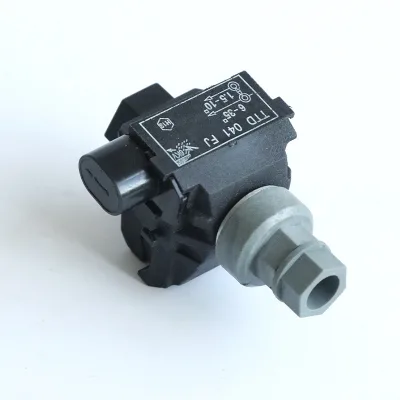


Low Voltage Insulated Piercing Connectors for Reliable Electrical Connections
$0.56 - $1.20
MOQ: 2000 Pieces


Comprehensive Sourcing Guide
Strategic Sourcing Guide for IP65 Solar Insulation Piercing Connectors
Understanding the Technical Architecture and Material Composition
When sourcing insulation piercing connectors (IPCs) for solar power systems, the primary objective is to ensure a reliable, low-resistance electrical connection without the need to strip the conductor insulation. The core functionality relies on a mechanism where sharp teeth penetrate the insulation to make direct contact with the conductor. Based on available product data, the critical material composition for these components typically involves a plastic body reinforced with conductive elements. The raw materials frequently cited include a plastic body, often formulated from PA66 or PA+CU (Polyamide 66 with Copper), which provides the necessary mechanical strength and thermal stability required for outdoor environments.
The conductive teeth are the most vital functional element. The supplied facts indicate that these teeth are manufactured from materials such as aluminum, copper, or brass. The contact material is specifically noted as copper in several high-confidence observations, which is essential for minimizing voltage drop and preventing corrosion at the connection point. The finish applied to these metal components is often Hot-Dip Galvanized (HDG), a process that significantly enhances resistance to environmental degradation. This is particularly relevant for solar applications where connectors are exposed to UV radiation, moisture, and temperature fluctuations. The maximum voltage rating observed in the dataset ranges from 120 V up to 1 kV, with some specifications noting a maximum voltage of less than 10 kV. Buyers must verify that the specific unit selected aligns with the system voltage of their solar installation, as the 120 V rating may be insufficient for certain commercial solar arrays, while the 1 kV rating is more standard for residential and utility-scale DC strings.
Compliance, Certification, and Standard Verification
Navigating the regulatory landscape for electrical components requires rigorous verification of standards and certifications. The provided data highlights a mix of standards, including GB (Chinese National Standards), ANSI, NF, and references to Non-GB specifications. While general background knowledge suggests standards like IEC 62852 or EN 62852 are relevant for insulation piercing connectors, the supplied facts do not explicitly confirm that every listed product meets these specific international standards. Therefore, buyers must treat the "Standard: As Request" or "Standard: GB" attributes as starting points for inquiry rather than guaranteed compliance.
Certification status is another critical area for due diligence. The dataset mentions Management certifications such as ISO and specific product certifications like CE. However, the presence of "CE" in the low-confidence background section alongside the explicit "Certification: CE, ISO" in the high-confidence section suggests that while some suppliers may hold these, they are not universal across all product listings. For solar projects, which often require strict adherence to safety and performance regulations, buyers should not assume that a product listing with "CE" in a general description automatically meets the specific regional requirements of their target market. It is imperative to request valid, current test reports and certificates of conformity from the supplier. The HS code 7616991090 is consistently associated with these aluminum/copper articles, which aids in customs classification but does not substitute for technical compliance verification.
Cost Drivers and Pricing Dynamics
The pricing structure for insulation piercing connectors is influenced by several variable factors, including material costs, customization levels, and order volume. The observed price range in the market data spans from $0.10 to $9.55 USD. This wide disparity indicates that the unit price is not fixed but is highly dependent on the specific configuration, such as the rated current, the number of pins (e.g., 2P), and the specific model series (e.g., JJC Series, IPC-68, TTD151F). The rated current specifications vary significantly, listing values such as 1.5 A, 2 A, 3 A, 4 A, 5 A, 6 A, and 10 A. Higher current ratings generally command higher prices due to the increased volume of conductive material required and the more robust mechanical design needed to handle higher loads.
Minimum Order Quantity (MOQ) is another significant cost driver. The observed MOQ range extends from 1 unit to 2,000 units. For buyers testing a new design or requiring small batches for pilot projects, suppliers accepting small orders are essential. However, to achieve the lower end of the price spectrum, buyers may need to negotiate higher volumes. Payment terms are also a factor in the total cost of ownership; the standard term observed is T/T with 30% prepayment and 70% balance against the Bill of Lading (B/L). This structure protects the buyer from full financial exposure before shipment but requires capital availability for the initial deposit. Additionally, the availability of Free of Charge (FOC) samples allows buyers to validate quality before committing to a bulk purchase, effectively reducing the risk of costly procurement errors.
Typical Applications and Performance Requirements
Insulation piercing connectors are designed for a diverse range of applications, extending beyond just solar power systems. The documented usage includes Automotive, Data Communication, LED Lighting, Electrical, Power, and Solar Power Systems. In the context of solar energy, these connectors are primarily used for wire connections in DC strings, module interconnections, and junction boxes. The specific application of "Solar Power System" is explicitly listed, confirming the relevance of these components to renewable energy infrastructure.
The performance requirements for solar applications are stringent. The connectors must maintain a stable connection despite thermal expansion and contraction caused by daily and seasonal temperature cycles. The piercing depth, observed to be between 2.5 mm and 3.5 mm, is a critical dimension that ensures the teeth penetrate the insulation to reach the conductor without damaging the conductor strands. If the piercing depth is too shallow, the connection resistance will be high, leading to overheating. If it is too deep, the conductor may be damaged, leading to premature failure. The "Organic insulation" chemistry mentioned in the data suggests the use of polymers that resist degradation, which is vital for the long-term integrity of the connection in harsh outdoor environments. The "Line Fittings" usage category further reinforces their role in connecting conductors in overhead or underground lines where mechanical stress is a concern.
Supplier Evaluation and Customization Capabilities
Selecting the right supplier involves evaluating their technical capabilities, production processes, and flexibility. The data indicates that ODM (Original Design Manufacturer) and OEM (Original Equipment Manufacturer) services are available, with "ODM: Support" explicitly noted. This suggests that suppliers are willing to collaborate on design modifications, which is valuable for buyers with specific engineering requirements. The "Customization: Available" attribute further supports this, allowing for tailored solutions regarding branding (e.g., "HE" as a trademark) and packaging.
Production processes vary among suppliers, with "Injection Molding" and "Welding" listed as possible techniques. Injection molding is standard for the plastic body, ensuring consistent dimensions and high-volume efficiency. Welding may be used for assembling the metal components. The place of origin is consistently listed as China, with specific mentions of Qingdao as a production hub. While this provides a geographical context, buyers should verify the specific factory location to assess logistics and supply chain risks. Packaging options are flexible, ranging from bulk packing to palletized, carton, or Ply-Wooden Case configurations. The choice of packaging can impact the shipping cost and the protection of the goods during transit. Buyers should ensure that the packaging meets the requirements for their specific shipping method and destination.
Quality Control and Long-Term Procurement Strategy
Ensuring long-term reliability requires a robust quality control strategy. The "Management certifications: ISO" mentioned in the data provides a baseline assurance of the supplier's quality management systems, but it does not guarantee that every individual batch of connectors meets the required performance standards. Buyers must implement their own incoming quality control (IQC) procedures. This includes verifying the material composition (PA66 vs. PA+CU), checking the finish (HDG), and testing the electrical resistance and mechanical pull-out strength of the connectors.
The "Small Orders: Accepted" attribute is beneficial for initial procurement phases, allowing buyers to test the market and the product quality without a massive financial commitment. However, for long-term procurement, establishing a consistent supply chain is crucial. The "Sample: available, FOC" policy is a strong indicator of supplier confidence and should be utilized to validate the product before scaling up. Buyers should also consider the "Model Number" consistency; the data lists various models like N-327, IPC 4116120, and ipc-29. Ensuring that the supplier can maintain the consistency of the model specifications over time is vital for the maintenance and repair of solar installations.
| Feature | Observation from Data | Procurement Implication |
|---|---|---|
| Material | PA66, PA+CU, Copper Teeth | Verify material grade for UV and thermal resistance. |
| Voltage Rating | 120 V, 1 kV, <10 kV | Match rating to system voltage; 1 kV is safer for solar. |
| Current Rating | 1.5 A to 10 A | Select based on wire gauge and system load. |
| Certification | ISO, CE (variable) | Request specific test reports; do not assume compliance. |
| MOQ | 1 to 2,000 units | Negotiate based on volume; leverage small order flexibility. |
| Origin | China (Qingdao) | Assess logistics and lead times from specific port. |
In conclusion, sourcing IP65 solar insulation piercing connectors requires a balanced approach that considers technical specifications, regulatory compliance, and supplier flexibility. By rigorously verifying the material composition, voltage ratings, and certification status, buyers can mitigate the risks associated with electrical failures in solar power systems. The availability of customization and ODM services offers opportunities to tailor products to specific project needs, while the wide range of pricing and MOQs allows for scalable procurement strategies. Ultimately, the success of the procurement process depends on thorough due diligence and a clear understanding of the product's intended application within the broader solar energy ecosystem.
FAQs
What materials are used for the body and teeth?
The body is made of PA66 or PA+CU plastic, while the teeth use copper, aluminum, or brass. This combination ensures durability and low resistance for reliable electrical connections in solar systems.
Can I find suppliers with ISO management certification?
Yes, some listed products explicitly state ISO management certifications. Buyers should verify specific test reports to ensure compliance with project safety standards before placing bulk orders.
Which voltage ratings are available for these connectors?
Available ratings include 120 V, 1 kV, and maximum voltages under 10 kV. Select the 1 kV rating for most solar arrays to ensure safety and compatibility with system voltages.
How flexible are the minimum order quantities?
Minimum order quantities range from 1 to 2000 units depending on the supplier. Small orders are accepted for testing, while larger volumes may be required for lower pricing tiers.
Can I request custom branding or packaging options?
Customization is available for trademarks like HE and packaging types such as bulk, pallet, or wooden cases. Suppliers support ODM services to tailor products to specific project requirements.
What is the standard piercing depth for these clamps?
The piercing depth typically ranges from 2.5 to 3.5 mm to ensure the teeth penetrate insulation without damaging conductors. This dimension is critical for maintaining low contact resistance.
Are samples available before placing a bulk order?
Free of charge samples are available for most listed products. This allows buyers to validate quality and specifications before committing to larger purchase volumes under standard payment terms.