Find Commercial Adjustable Bread Slicer for Bakery, Deli, and Catering
Explore 30 Commercial Adjustable Bread Slicer options to compare blade configurations, power ratings, and dimensions. This guide helps buyers evaluate specifications for bakery, deli, and catering operations to select the right equipment for their production needs; compare the available evidence and request quotations based on your requirements.
Key considerations
Products List


Automatic Bread Machine Commercial of Toast and Bread Slicer for Baking Machine
$7500.00 - $9000.00
MOQ: 1 Pieces


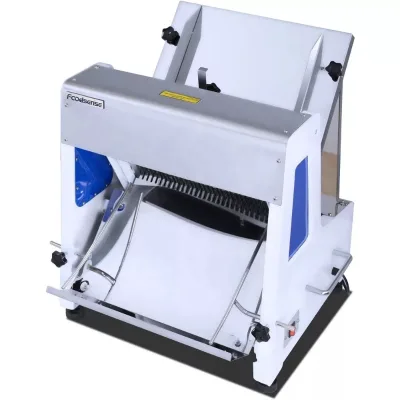


Efficient Continuous Toast Bread Slicer for Commercial Use in Bakeries
$4428.57 - $5508.32
MOQ: 1 Pieces


Comprehensive Sourcing Guide
Commercial Adjustable Bread Slicer Sourcing Guide
Sourcing a Commercial Adjustable Bread Slicer requires careful evaluation of mechanical precision, motor durability, and material hygiene. These machines are essential for bakeries, supermarkets, and food processing facilities that need consistent slice thickness for bread, pizza, cake, and biscuits. The core value lies in the ability to adjust blade spacing to meet specific product requirements, ensuring uniformity that enhances presentation and reduces waste. Buyers must prioritize equipment that balances high productivity with ease of operation, as downtime directly impacts throughput in high-volume environments.
The market offers various models, ranging from compact units to heavy-duty industrial slicers, each with distinct power ratings and physical dimensions. Observations indicate a wide range in specifications, with some units operating at low power for small batches while others utilize higher wattage motors for rapid slicing. Understanding the relationship between motor power, blade count, and slice thickness is critical for selecting the right machine. Procurement teams should focus on verifying the actual performance metrics against the supplier’s claims, ensuring the equipment meets the specific volume and quality standards of their production line.
Product Scope and Observed Listing Signals
The observed product landscape includes models such as the NKP-31, NKP-385, and TR31, each tailored to different operational scales. Some listings highlight a capacity of 10-25 toasts per minute, suitable for moderate throughput, while others emphasize high productivity features for larger volumes. The power sources are predominantly electric, with observed wattages ranging from 0.18 Kw to 1.5 Kw, indicating a spectrum from light-duty to robust industrial applications. Buyers should note that customization is available, allowing for specific adjustments in slice thickness and blade configuration to match unique product needs.
Physical attributes vary significantly across listings, with weights ranging from 42 kg to 250 kg, reflecting differences in construction materials and motor size. Dimensions also differ, with some units measuring approximately 650x660x780 mm, while others are larger to accommodate heavier-duty components. Packaging is typically provided in wooden cases or boxes to ensure safe transit, which is crucial for delicate mechanical parts. The presence of timing devices in some models suggests advanced control features, whereas others rely on manual operation. Procurement teams must align these physical and operational characteristics with their facility’s space constraints and workflow requirements.
Technical Specifications to Verify
Verifying the blade configuration is paramount, as the number of blades directly influences slicing efficiency and versatility. Listings indicate standards such as 25 or 31 blades, which allow for multiple slices in a single pass, significantly boosting productivity. The maximum slice thickness observed is 12 mm, but many suppliers offer customizable thickness options to accommodate various bread types and customer preferences. Buyers should confirm the exact blade material and hardness to ensure durability and resistance to corrosion, especially in humid bakery environments.
Motor power and voltage compatibility are critical technical checks to prevent operational failures. Observed power ratings include 0.25 Kw, 0.37 Kw, and 1.5 Kw, with voltages typically at 220V. It is essential to verify that the machine’s electrical requirements match the local power infrastructure to avoid the need for expensive transformers or rewiring. Additionally, the maximum toast length, observed at 380 mm, must be checked against the largest products in the production line. Ensuring these specifications align with actual production needs prevents bottlenecks and ensures consistent output quality.
Compliance and Safety Documentation
Food safety compliance is non-negotiable for commercial bread slicers, requiring materials that are safe for direct food contact. Stainless steel construction is a common feature, offering hygiene, ease of cleaning, and resistance to rust and corrosion. Buyers must verify that all food-contact surfaces meet relevant food-grade standards, ensuring no harmful substances leach into the product. The warranty period, often listed as one year, provides a baseline for manufacturer support, but buyers should inquire about extended coverage options for critical components like motors and blades.
Safety features are equally important to protect operators from injury during high-speed slicing operations. Machines should include protective guards, emergency stop buttons, and secure blade housing mechanisms. Documentation should confirm that the equipment complies with local electrical safety standards and machinery directives. Buyers should request detailed user manuals and safety guidelines from the supplier to ensure proper training for staff. Verifying these compliance aspects mitigates legal risks and ensures a safe working environment for employees.
Cost Drivers and Commercial Terms
The price range for commercial adjustable bread slicers is broad, observed between 250 and 9000 USD, driven by factors such as motor power, blade count, and build quality. Higher-priced models typically offer greater durability, advanced features like timing devices, and higher throughput capacities. Buyers should analyze the total cost of ownership, including energy consumption, maintenance requirements, and potential downtime costs, rather than focusing solely on the initial purchase price. Customization options may incur additional costs, so it is important to clarify these fees upfront.
Minimum order quantities (MOQ) are generally low, ranging from 1 to 10 units, making these machines accessible for small bakeries and large facilities alike. Supply ability varies, with some suppliers offering up to 3000 pieces per month, indicating robust manufacturing capacity. Buyers should negotiate clear terms regarding shipping, insurance, and import duties, especially when sourcing from international locations like Guangzhou, China. Understanding the commercial terms helps in budgeting accurately and avoiding unexpected expenses during the procurement process.
Supplier Qualification and Quality Control
Evaluating supplier credibility is essential to ensure reliable product quality and after-sales support. Buyers should verify the supplier’s manufacturing capabilities, including their production facilities and quality control processes. The place of origin, often Guangdong, China, is a known hub for food machinery, but due diligence is required to distinguish between reputable manufacturers and trading companies. Requesting references or case studies from existing clients can provide insights into the supplier’s reliability and product performance in real-world settings.
Quality control measures should include pre-shipment inspections to verify that the machine meets all specified technical and safety standards. Buyers should inquire about the testing procedures used by the supplier, such as load testing and electrical safety checks. Ensuring that the packaging is robust, typically in wooden cases, helps prevent damage during transit. Establishing a clear communication channel with the supplier for technical support and spare parts availability is crucial for long-term operational success.
Long-Term Procurement Checks
Long-term success depends on the availability of spare parts and technical support. Buyers should confirm the supplier’s inventory of critical components like blades, motors, and belts to minimize downtime during repairs. A clear warranty policy and responsive customer service team are vital for addressing any issues that arise post-purchase. Regular maintenance schedules should be established to keep the machine in optimal condition, extending its lifespan and maintaining slicing precision.
Monitoring the machine’s performance over time is essential to identify any deviations in slice thickness or speed. Buyers should keep detailed records of maintenance activities and any repairs performed to track the machine’s health. Periodic reviews of the supplier’s product updates or new models can help in planning future upgrades or replacements. By maintaining a proactive approach to procurement and maintenance, businesses can ensure consistent productivity and quality in their bread slicing operations.
FAQs
What power sources are available for commercial adjustable bread slicers?
Electric power is the standard source for these machines. Most models operate on 220V voltage with power ratings ranging from 0.18 Kw to 1.5kw. This ensures compatibility with standard industrial electrical systems while providing sufficient energy for consistent slicing performance across various bread types.
Can the slicing thickness be customized for specific products?
Yes, customization is available for slicing thickness. While some models offer fixed options like 12mm, others allow thickness to be set according to customer requirements. This flexibility ensures the machine meets precise specifications for different bakery products, including bread, pizza, cake, and biscuits.
What is the typical capacity of a commercial bread slicer?
Capacity varies by model, with some units processing 10-25 toasts per minute. Higher-end models may offer increased throughput to meet high-demand production lines. Buyers should select a capacity that aligns with their daily output requirements to ensure efficient workflow and consistent product quality.
Which materials are used in constructing commercial bread slicers?
Stainless steel is the primary material used for construction. This ensures durability, hygiene, and resistance to corrosion in food processing environments. The robust build supports easy operation and high efficiency, making it suitable for continuous use in commercial bakeries and industrial food production facilities.
How are commercial bread slicers typically packaged for shipping?
They are usually packed in wooden cases or wooden boxes. This protective packaging safeguards the machine during transit, preventing damage to sensitive components. The packaging dimensions and weight vary by model, so buyers should verify specific packing details to plan logistics and handling requirements effectively.
What warranty is provided for commercial bread slicer machines?
A one-year warranty is typically provided for these machines. This coverage protects buyers against manufacturing defects and ensures support for initial operational issues. Buyers should confirm specific warranty terms with suppliers to understand the scope of coverage and available after-sales service options for long-term reliability.