Source IQF Blanched Frozen Green Peas for Catering, Baking, and Processing
Explore 30 listings for IQF Blanched Frozen Green Peas suitable for cooking, baking, and food processing. Buyers can compare specifications like grade, packaging, and certifications to find the right supplier for their needs.
Key considerations
Products List




Comprehensive Sourcing Guide
Strategic Sourcing Guide for IQF Blanched Frozen Green Peas
The global demand for high-quality frozen vegetables has surged, driven by the need for consistent supply chains and year-round availability of nutritious produce. Among the most sought-after commodities in this sector is IQF (Individually Quick Frozen) blanched green peas. For B2B procurement professionals, sourcing this specific product requires a nuanced understanding of processing technologies, regulatory compliance, and logistical constraints. This guide provides a comprehensive framework for evaluating suppliers and selecting products that meet rigorous commercial and quality standards, based on verified industry facts and observable market data.
Understanding the Core Processing Technology: IQF and Blanching
The distinction between "IQF" and standard frozen peas is critical for product performance. IQF technology ensures that individual peas are frozen separately rather than in a solid block. This process preserves the texture, color, and nutritional value of the peas, allowing them to be poured or dispensed without thawing. The supplied data confirms that "IQF" is a primary processing attribute for this category, alongside "quick frozen" and "LQF" (Liquid Quick Freezing) variations. Buyers must verify that the supplier utilizes a blast freezer or fluidized bed system to achieve true IQF status, as this prevents clumping and ensures uniform freezing.
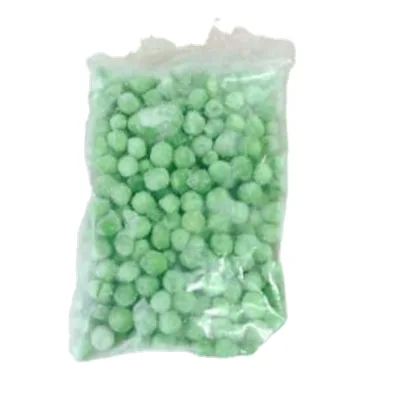
Equally important is the blanching step. Blanching involves briefly scalding the peas in hot water or steam before freezing. This process deactivates enzymes that would otherwise cause loss of flavor, color, and texture during storage. The provided facts indicate that "Blanched" is a confirmed attribute, with the product description explicitly mentioning "Blanched: Yes." Without proper blanching, the peas may develop off-flavors or become mushy upon cooking. Procurement teams should request process flow diagrams to confirm that blanching times and temperatures are strictly controlled to maintain the "fresh green" color and "ball" shape observed in high-grade samples.
Technical Specifications and Physical Attributes
When defining the technical requirements for a purchase order, precision is paramount. The physical characteristics of the peas determine their suitability for various end-use applications. Based on the available product data, the standard diameter for high-quality green peas falls within the 8-11mm range. This specification, noted as "Dia 8-11mm," is a key differentiator between premium and standard grades. Buyers should explicitly state this size requirement in their contracts to avoid receiving undersized or oversized peas that may not fit automated processing lines.
The visual and structural integrity of the product is also defined by specific attributes. The peas are described as having a "fresh green" color and a "ball" shape, with a maturity rating of "100%." These characteristics are essential for maintaining the aesthetic appeal of the final dish. Furthermore, the "Grade" is consistently listed as "A grade," indicating a selection of whole, unbroken peas free from defects. The "Style" is identified as "Whole," which is preferred for most culinary applications where the integrity of the individual pea is desired. Packaging dimensions are also a critical logistical factor; single package sizes are observed around 40x28.5x23.6 cm, with gross weights typically around 11.000 kg per unit. These metrics must be cross-referenced with container loading calculations to optimize shipping costs.
Compliance, Certifications, and Regulatory Standards
In the international food trade, compliance is non-negotiable. The supplied data highlights a robust set of certifications that reputable suppliers should possess. These include HACCP (Hazard Analysis and Critical Control Points), ISO (International Organization for Standardization), BRC (British Retail Consortium), Kosher, and Halal. The presence of these certifications indicates that the supplier adheres to strict food safety management systems and hygiene protocols. For buyers targeting specific markets, such as the United States or the European Union, verifying FDA compliance and BRC certification is particularly vital.
The origin of the product also plays a significant role in regulatory acceptance. The data consistently points to "Shandong, China" as the place of origin, with "China" listed as the broader country of origin. Shandong is a major agricultural hub known for its vegetable production. However, buyers must ensure that the specific facility holds valid certifications that are recognized by their local regulatory bodies. While some background information mentions ISO22000, this should be treated as a potential standard to verify rather than an automatic guarantee. Procurement teams should request current, valid certificates for all listed standards (HACCP, ISO, BRC, Kosher, Halal) and confirm that the facility address matches the place of origin declared on the commercial invoice.
Cost Drivers and Procurement Economics
The pricing of IQF blanched green peas is influenced by several dynamic factors. The observed price range in the market spans from $0.60 to $1,050 USD, a variance that reflects differences in packaging, volume, grade, and contract terms. This wide range underscores the importance of defining the exact scope of the purchase. A unit price of $0.60 likely corresponds to bulk industrial packaging (e.g., 10kg cartons) with a high volume commitment, whereas higher prices may reflect smaller retail-ready packs, specialized certifications, or premium grades.
Minimum Order Quantity (MOQ) is another significant cost driver. The data indicates an MOQ range of 1 to 10,000 units, with specific listings showing an MOQ of 1 Ton. For large-scale food processors, meeting a 1-ton threshold is standard, but smaller buyers may face challenges if the supplier's minimums are rigid. Payment terms also impact the financial structure of the deal, with "T/T" (Telegraphic Transfer) and "L/C" (Letter of Credit) being the standard methods observed. Buyers should negotiate payment terms that align with their cash flow, potentially leveraging L/C for large international shipments to mitigate risk. Additionally, the "Customization" attribute suggests that packaging and labeling can be tailored, which may incur additional costs but offers branding flexibility.
Typical Applications and End-Use Scenarios
The versatility of IQF blanched green peas makes them suitable for a wide array of food processing applications. The "Usage" field explicitly lists "Cooking, Baking, Food Processing, and Catering." In the food processing sector, these peas are a staple ingredient for frozen meals, soups, stews, and ready-to-eat dishes. Their "100% Maturity" and "A grade" status ensure consistency in cooking times and final texture, which is crucial for industrial production lines.
For the catering and restaurant industry, the IQF format offers significant operational advantages. Chefs can portion the peas directly from the frozen state, eliminating the need for thawing and reducing preparation time. The "Shelf Life" of over 12 months when stored below -18°C allows for extended inventory management without quality degradation. The product is also suitable for "Gift Packing" and "Mason Jar" applications, indicating potential for value-added retail products. The "Age" demographic listed as "Old-Aged, Children, Adults, Infants" highlights the product's suitability for baby food and geriatric nutrition, provided the texture and size are appropriate for the target consumer.
Supplier Evaluation and Quality Control Protocols
Selecting the right supplier requires a multi-faceted evaluation strategy. Beyond checking certifications, buyers should assess the supplier's cultivation methods. The data lists various types including "Common," "GMO," "Organic," "Greenhouse," "Open Air," and "Soil-Less Cultivation." The choice of cultivation type depends on the buyer's specific market requirements and sustainability goals. For instance, organic certification may be mandatory for certain retail channels, while open-air cultivation might be preferred for cost-sensitive bulk markets.
Quality control should be embedded in the procurement process. Buyers must verify the "Storage Temperature" is strictly maintained below -18°C throughout the supply chain. Any deviation can lead to ice crystal formation, thawing, and subsequent quality loss. The "Packaging" details, which include options like "Carton," "Plastic," "Bulk," "Can," "Drum," and "Vacuum Pack," must be selected based on the product's journey. For long-distance shipping, a combination of "Plastic&Carton" is often observed to provide structural integrity and moisture protection.
Long-Term Procurement Considerations
Sourcing frozen green peas is not a one-time transaction but a long-term partnership. Buyers should consider the "Customization" capabilities of the supplier, including the ability to adjust packaging sizes (e.g., 500g, 1kg, 2kg, 10kg) and labeling to meet evolving market trends. The "Single package size" and "Single gross weight" data provided serve as a baseline, but flexibility is key for adapting to different retail formats.
Furthermore, the "Brand Name" associated with the product, such as "Shiweiku," may be relevant for private label opportunities. Buyers looking to build their own brand should ensure the supplier is willing to support private labeling while maintaining the core quality attributes. The "Selling Units" being listed as "Single item" suggests that the supplier can accommodate both bulk and sample orders, facilitating the initial trial phase of a new partnership.
In conclusion, sourcing IQF Blanched Frozen Green Peas requires a balance of technical precision, regulatory diligence, and strategic planning. By focusing on the verified attributes of size, grade, processing method, and certification, buyers can secure a supply chain that delivers consistent quality and value. The wide range of packaging options and cultivation types available allows for tailored solutions that meet the diverse needs of the global food industry. As the market continues to evolve, maintaining a close relationship with suppliers who prioritize transparency and quality control will be the cornerstone of successful procurement.
FAQs
How are IQF Blanched Frozen Green Peas processed?
The peas undergo individually quick freezing to prevent clumping and preserve texture. They are also blanched to deactivate enzymes that cause flavor loss. This process ensures the product remains fresh green and maintains its ball shape during storage.
What certifications do these frozen green peas have?
Reputable suppliers provide HACCP, ISO, BRC, Kosher, and Halal certifications. These standards verify strict food safety management and hygiene protocols. Buyers should request current certificates to ensure compliance with international trade regulations before placing orders.
Which size specifications are available for these peas?
High-quality peas typically meet a diameter standard of 8 to 11 millimeters. This specific size range ensures suitability for automated processing lines. Buyers should specify this dimension in contracts to avoid receiving undersized or oversized product.
Can suppliers customize packaging for bulk orders?
Yes, customization is available for packaging sizes and labeling requirements. Options include 10kg cartons, bulk drums, or specific bag configurations like 1000g per bag. This flexibility allows buyers to tailor products for retail or industrial food processing needs.
What is the shelf life and storage requirement?
The product maintains quality for over 12 months when stored below -18 degrees Celsius. Strict temperature control is essential to prevent ice crystal formation and thawing. Deviations from this storage temperature can lead to significant quality degradation during transit.
What is the minimum order quantity for this product?
The minimum order quantity typically starts at 1 ton for bulk transactions. Some suppliers may accept lower quantities, but the standard range extends up to 10,000 units. Buyers should confirm specific MOQs as they vary by supplier and packaging type.
Where are these frozen green peas sourced from?
The primary place of origin is Shandong, China, a major agricultural hub. This region is known for consistent vegetable production and export capabilities. Buyers must verify that the specific facility address matches the origin declared on the commercial invoice.