Source IQF Freezing Commercial Blast Freezer for Food, Blood, Medicine
Source 30 verified options for the IQF Freezing Commercial Blast Freezer tailored for food, blood, and medicine processing. Compare specifications like cooling capacity, refrigerant types, and freezing speeds to find the right industrial solution for your facility.
Key considerations
Products List


High Efficiency Blast Freezer for Frozen Food Factory
$10000.00 - $50000.00
MOQ: 1 Pieces
Shandong Aonaer Refrigeration Science and Technology Co., Ltd.


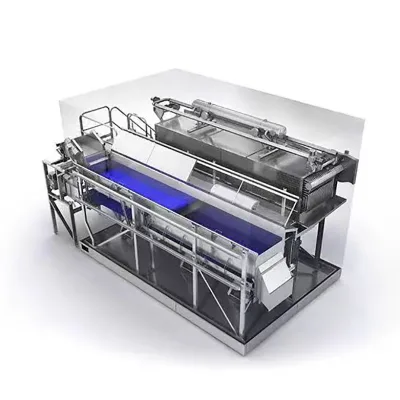


High Capacity Instant IQF Freezer Spiral Freezer for Freezing Product
$2000.00 - $100000.00
MOQ: 1 Sets


Professional IQF Quick-Freezing Machine Spiral Freezer for Frozen Fruit
$2000.00 - $100000.00
MOQ: 1 Sets


Comprehensive Sourcing Guide
IQF Freezing Commercial Blast Freezer Sourcing Guide
Selecting the right IQF (Individual Quick Freezing) or commercial blast freezer requires a careful balance of throughput capacity, energy efficiency, and product integrity. These systems are critical for preserving the texture, flavor, and nutritional value of sensitive goods by freezing them rapidly, preventing the formation of large ice crystals that damage cell structures. Buyers must distinguish between tunnel-type and spiral-type configurations, as each serves distinct spatial and production volume needs. The decision hinges on whether the facility prioritizes continuous high-volume output or flexible handling of varied product shapes and sizes.
Procurement of these units involves navigating a complex landscape of technical specifications, from refrigerant types to conveyor mechanics. The observed market offers a wide range of capacities, with cooling powers ranging from 55kW to 185kW and processing speeds varying significantly. Understanding these variables is essential for aligning equipment performance with actual production demands. Buyers should focus on verifying the specific operational parameters that match their product line, ensuring that the chosen freezer can handle peak loads without compromising food safety or quality standards.
Product Scope and Observed Listing Signals
The current market for IQF and blast freezers presents a diverse array of configurations tailored to different industrial needs. Listings indicate a strong presence of spiral-type quick freezers and tunnel-type variants, with some units featuring plate tunnel designs for ultra-fast freezing. The observed price range spans from $2,000 to $500,000, reflecting the vast difference between smaller, modular units and large-scale, fully assembled industrial systems. This wide variance underscores the importance of defining precise capacity requirements before engaging with suppliers, as the cost is heavily influenced by the scale of the machinery and the complexity of its refrigeration system.
Applications for these freezers are predominantly found in the food industry, with specific mentions of seafood, blood products, and general food processing. Some listings also note suitability for the petro-chemical industry, suggesting specialized industrial cooling applications beyond standard food preservation. The materials used are consistently high-grade, with Stainless Steel 304 being a common specification for both full stainless steel constructions and specific component materials. This material choice is critical for hygiene and durability, ensuring that the equipment can withstand harsh cleaning regimes and corrosive environments typical in food processing plants.
Technical Specifications to Verify
When evaluating technical specifications, buyers must prioritize cooling capacity and processing speed to ensure the equipment meets production targets. Observed data shows cooling capacities ranging from 55kW to 185kW, with processing capacities varying from 300kg/H to 1250kg/H, and some models supporting a broader range of 1000kg-5000kg. It is crucial to verify that the stated capacity aligns with the specific product being frozen, as different foods have different thermal properties and freezing requirements. Buyers should request detailed thermal load calculations from the supplier to confirm that the unit can handle the specific heat load of their product without overworking the compressor.
Refrigerant selection and air supply modes are equally critical technical factors that impact efficiency and product quality. Available refrigerants include Ammonia (R717), R22, R404A, and R507, each with distinct environmental and safety implications. Ammonia offers high efficiency but requires strict safety protocols, while fluorinated gases like R404A are common but subject to regulatory phase-downs. Air supply modes, such as vertical or horizontal air supply, determine how cold air interacts with the product on the conveyor. Buyers must ensure that the airflow pattern matches the product shape and packaging to achieve uniform freezing and prevent hot spots that could compromise quality.
Compliance and Safety Documentation
Compliance with international standards is a non-negotiable aspect of sourcing industrial freezing equipment. Many suppliers provide ISO certification, which serves as a baseline indicator of quality management systems and manufacturing consistency. However, buyers must go beyond general ISO certification to verify compliance with specific regional safety and environmental regulations. This includes checking for adherence to local electrical standards, such as the 380V or 220V voltage requirements observed in listings, and ensuring that the equipment meets local refrigerant handling and disposal laws.
Safety documentation should also cover the operational modes and control systems of the freezer. Automatic control systems are common, but buyers must verify that these systems include necessary safety interlocks and emergency stop mechanisms. For units using ammonia refrigerants, additional safety protocols and leak detection systems are mandatory. Buyers should request comprehensive operation and maintenance manuals that detail safety procedures, emergency shutdown protocols, and routine maintenance schedules. This documentation is essential for training staff and ensuring that the equipment is operated safely and efficiently throughout its lifecycle.
Cost Drivers and Commercial Terms
The cost of IQF and blast freezers is driven by several key factors, including cooling capacity, material quality, and customization options. Units with higher processing capacities and advanced features, such as variable belt speed control and internal driving modes, tend to be more expensive. The use of full stainless steel 304 construction adds to the cost but offers superior durability and hygiene compared to partial steel constructions. Buyers should also consider the packaging requirements, as units are often packed in fumigated wooden cases or standard wooden crates, which can impact shipping costs and handling procedures.
Commercial terms such as warranty and customization availability are significant considerations in the procurement process. Most suppliers offer a warranty period of 1-2 years, which provides a baseline level of protection against manufacturing defects. However, buyers should negotiate for extended warranty coverage or comprehensive service agreements to mitigate long-term maintenance costs. Customization is widely available, allowing buyers to tailor the equipment to their specific production line requirements. This includes customizing the size, voltage, and refrigerant type, but buyers must be aware that custom orders may have longer lead times and higher upfront costs.
Supplier Qualification and Quality Control
Supplier qualification is a critical step in ensuring the reliability and performance of the purchased equipment. Buyers should verify the supplier’s manufacturing capabilities, including their ability to produce assembled units and handle civil construction requirements if necessary. The observed listings indicate that many suppliers are based in China, which is a major hub for industrial freezer manufacturing. Buyers should conduct thorough due diligence on these suppliers, checking their production history, client references, and quality control processes to ensure they meet international standards.
Quality control measures should be implemented throughout the manufacturing and delivery process. Buyers should request detailed inspection reports and test results for the equipment before shipment. This includes verifying the structural integrity of the unit, the performance of the refrigeration system, and the functionality of the control systems. For custom orders, buyers should establish clear specifications and milestones to track progress and ensure that the final product meets their requirements. Regular communication with the supplier and periodic site visits, if feasible, can help identify and resolve potential issues early in the production process.
Long-Term Procurement Checks
Long-term procurement success depends on establishing a robust maintenance and support strategy for the IQF and blast freezer. Buyers should develop a comprehensive maintenance plan that includes routine cleaning, inspection of refrigerant levels, and checking of mechanical components like the conveyor belt and drive system. The variable belt speed control and automatic control systems require regular calibration to ensure optimal performance. Buyers should also identify local service providers or negotiate service contracts with the supplier to ensure timely support in case of breakdowns.
Energy efficiency and environmental impact are increasingly important factors in long-term procurement decisions. Buyers should monitor the energy consumption of the freezer and look for opportunities to optimize its operation. This includes selecting energy-efficient refrigerants and ensuring that the unit is properly insulated and maintained. As regulations around refrigerant use become stricter, buyers should plan for future upgrades or replacements that comply with evolving environmental standards. By focusing on long-term efficiency and compliance, buyers can reduce operational costs and ensure that their freezing equipment remains a valuable asset to their production process.
FAQs
What cooling capacities are available for these freezers?
Available cooling capacities range from 55kw to 185kw depending on the model. Specific units offer 125kw for medium throughput. These capacities support various production scales in food and petrochemical industries. Buyers should match capacity to their hourly processing needs for optimal efficiency.
Can the equipment be customized for specific factory needs?
Yes, customization is available for structure, size, and processing capacity. Models include spiral and tunnel types with variable belt speeds. The standard size is 24*2.3*2.7m, but custom dimensions are possible. This allows integration into existing factory layouts and specific freezing speed requirements.
Which refrigerants are used in these commercial freezers?
Refrigerants include Ammonia, R717, R22, R404A, R507, and R404. The choice depends on the specific model and application field. Ammonia is used in some high-efficiency units. Other models support multiple refrigerant options to meet regional environmental standards and operational preferences.
What is the processing capacity of the spiral type freezer?
The spiral type quick freezer has a processing capacity of 1250kg/H. It features an internal driving mode and vertical air supply. This high capacity suits large-scale food processing. The stainless steel mesh conveyor ensures uniform freezing for products like seafood and medicine.
What certifications do these freezing machines hold?
The equipment holds ISO certification, ensuring quality management standards. This applies to the manufacturing and assembly processes. Buyers in regulated industries like food and medicine benefit from this compliance. The certification supports trust in the product's reliability and safety for commercial use.
How is the equipment packaged for shipping?
Products are packed in wooden cases or fumigated wooden cases. This protects the machinery during international transport. The standard dimensions are 24*2.3*2.7m. Proper packaging ensures the unit arrives in new condition, ready for installation in factories or production facilities.