Source ISO 9001 Valve Hand Wheel for Casting, Industrial, and CNC applications
Find 30 listings for ISO 9001 Valve Hand Wheel designed for casting, industrial, and numerical control machine uses. Buyers can compare solid wheels with pneumatic options, custom sizes, and varying weights to match specific machinery needs.
Key considerations
Products List
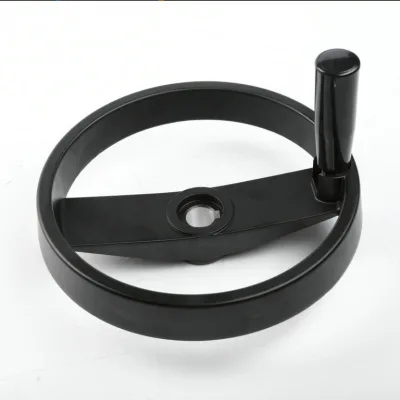
Best Selling China Casting Valve Handwheel
$13.00 - $18.00
MOQ: 1 sets
Shandong Zhongde Machine Tool Accessories Producing Co., Ltd.


Comprehensive Sourcing Guide
Strategic Sourcing Guide for ISO 9001 Compliant Valve Hand Wheels
Understanding the Product Category and Technical Variability
When sourcing a valve hand wheel, buyers must first navigate the complex landscape of product definitions, as the term often encompasses a wide array of mechanical components with distinct functional requirements. The core keyword "valve hand wheel" refers to a manual actuation device used to open, close, or regulate valves in industrial piping systems. However, the supplied product data reveals significant variability in how these items are categorized and specified. While the search intent focuses on ISO 9001 compliance, the actual product listings indicate a broader scope that includes general machine tool accessories, casting wheels, and specific items like gas cylinder valve handwheels.
The technical specifications observed in the market data highlight a lack of standardization across different listings. For instance, diameter sizes vary considerably, with observed specifications ranging from 12 inches to a broad range of 16-20 inches, and specific models noted as 14 inches. This variation suggests that a single "one-size-fits-all" approach to sourcing is ineffective. Buyers must verify the exact diameter and PCD (Pitch Circle Diameter) required for their specific valve application. The data shows PCD measurements such as 370mm and 395mm, which are critical for ensuring the hand wheel fits the valve stem flange correctly. Furthermore, the material composition is diverse, with listings citing "Plastics and metals" as the primary materials. This indicates that buyers need to distinguish between heavy-duty metal wheels suitable for high-pressure industrial environments and lighter plastic variants intended for less demanding applications.
The finishing processes also differ, with "Black" being a specific observed finish, likely indicating a painted or coated surface for corrosion resistance. The manufacturing process is identified as "Sand Casting" in some contexts, which is a traditional method for creating robust metal components. However, other listings suggest "Customized Support" for OEM and ODM, implying that many suppliers can produce bespoke designs rather than relying solely on standard castings. This variability necessitates a rigorous review of the technical drawing or CAD file provided by the buyer to ensure the supplier can meet the specific dimensional and material constraints of the project.
Compliance Verification and Certification Standards
A primary concern for buyers searching for "ISO 9001" compliant products is the verification of quality management systems. While the keyword explicitly mentions ISO 9001, the provided product facts list this standard under "Low-confidence background" and explicitly advise against using it for concrete claims. This distinction is crucial for procurement professionals. It means that while a supplier may claim ISO 9001 certification, this information cannot be taken as a verified fact based solely on the product listing description. Buyers must treat such claims as assertions that require independent verification.
The procurement strategy should involve requesting valid, current certificates from the supplier rather than relying on marketing text. The data indicates that "machinery test reports" are provided for some items, which serves as a tangible piece of evidence regarding product performance. Buyers should prioritize suppliers who can supply these test reports alongside their quality certifications. The presence of a "1 Year" warranty and "1year" after-warranty service suggests a standard level of commitment to product longevity, but this does not replace the need for formal quality audits.
Additionally, the data mentions "CE" certification under low-confidence background. Similar to ISO 9001, this should be treated as a claim requiring validation. In the context of valve hand wheels, compliance with international standards is often dictated by the end-use application, such as whether the valve is part of a pressure vessel or a fluid control system. The "Follow Order" standard noted in the product data implies that many manufacturers produce to specific customer requirements rather than adhering to a single universal standard. Therefore, the buyer's role is to define the required standard (e.g., ISO, ASME, or DIN) and verify that the supplier's quality management system supports the production of parts meeting those specific criteria.
Cost Drivers and Pricing Dynamics
The pricing structure for valve hand wheels is influenced by several dynamic factors, as evidenced by the observed price range of 0.1 to 389 USD. This wide disparity indicates that cost is not determined by a single variable but by a combination of material, size, customization, and order volume. The lower end of the price spectrum likely corresponds to small, standard plastic wheels or basic metal castings with minimal finishing. Conversely, the higher end of the range suggests complex, large-diameter metal wheels, possibly with specialized coatings, custom PCDs, or high-precision machining.
Material costs are a significant driver. The observation of "Plastics and metals" as materials suggests that a steel or cast iron wheel will inherently cost more than a polymer equivalent due to raw material expenses and the energy intensity of the sand casting process. The weight of the product also plays a role, with observed weights ranging from 0.5 kg to 50 kg. Heavier components require more material and potentially more robust packaging, such as "Carton Case and Wooden Case," which adds to the overall cost.
Order volume is another critical cost determinant. The observed Minimum Order Quantity (MOQ) ranges from 1 to 10,000 units. Suppliers offering an MOQ of 1 are likely catering to prototyping or emergency replacement needs, which often carries a premium per unit. In contrast, bulk orders of 10,000 units would benefit from economies of scale in the sand casting and finishing processes. The "Small Orders: Accepted" attribute confirms that flexibility exists, but buyers should expect a higher unit price for smaller quantities. Furthermore, the "Customization: Available" attribute implies that non-standard designs will incur additional tooling or setup costs, further influencing the final price.
Typical Applications and Operational Context
Valve hand wheels serve a critical function in various industrial sectors, and understanding the specific application is essential for selecting the right component. The product data lists "Casting" and "Industrial" as primary applications, indicating that these wheels are integral to heavy machinery and manufacturing processes. Specific mentions of "numerical control machine" and "machine tool accessories" suggest that these components are also used in automated or semi-automated production environments where precise manual intervention is required.
The "Purpose" field in the data explicitly identifies "Valve Wheel" and "Gas Cylinder Valve Handwheel," highlighting specialized uses in fluid control and gas storage systems. In these contexts, the hand wheel must withstand specific environmental conditions, such as pressure fluctuations, temperature variations, and potential chemical exposure. The "Key Selling Points" of "High-accuracy," "Long service life," and "Easy to operate" are particularly relevant for these applications. High accuracy ensures that the valve can be positioned precisely, which is vital for regulating flow rates in sensitive processes. Long service life reduces the frequency of maintenance shutdowns, a critical factor in continuous industrial operations.
The "Usage" field lists "Tools" and "Conventional use," suggesting that these hand wheels are also employed in general maintenance and repair scenarios. The "Type" is identified as "Solid Wheel" and "Pneumatic" in some listings, though the pneumatic classification might refer to the valve type rather than the wheel itself. Buyers must ensure that the hand wheel design matches the operational requirements of the valve it serves. For instance, a hand wheel for a high-pressure gas cylinder valve will require a different torque rating and grip design compared to a hand wheel for a standard water pipe valve.
Supplier Evaluation and Sourcing Strategy
Evaluating suppliers for valve hand wheels requires a multi-faceted approach that goes beyond simple price comparison. The data indicates that the place of origin is primarily "Shandong, China," a region known for its manufacturing capabilities. However, the "origin" and "place of origin" fields are listed separately, suggesting that buyers should verify the specific factory location to ensure logistical feasibility and supply chain transparency.
When evaluating suppliers, buyers should prioritize those who offer "OEM" and "ODM" support. This capability indicates that the supplier has the engineering resources to customize products to specific client needs, which is often necessary given the variability in diameter, PCD, and material requirements. The "Customized Support" attribute is a strong indicator of a supplier's flexibility and technical competence. Additionally, the availability of "machinery test reports" is a key differentiator. Suppliers who can provide documented proof of product performance demonstrate a commitment to quality and transparency.
The "Single package size" of 20x20x15 cm and the "Package" type of "Carton" provide insights into the logistics capabilities of the supplier. Buyers should assess whether the packaging is sufficient to protect the product during transit, especially for heavy metal wheels. The "Single gross weight" of 0.500 kg for some items suggests that smaller units are lightweight, but the "Weight" attribute also lists ranges up to 50 kg, requiring robust packaging solutions like "Wooden Case" for larger items.
Quality Control and Long-Term Procurement Considerations
Ensuring the quality of valve hand wheels is paramount, as these components are often critical safety devices in industrial systems. The "warranty" of 1 year and "After Warranty Service" of 1 year provide a baseline for the supplier's confidence in their product. However, buyers should not rely solely on warranty terms. Instead, they should implement a rigorous quality control protocol that includes pre-shipment inspections and post-delivery testing.
The "prod_standard" of "Follow Order" implies that the quality of the product is defined by the specific requirements of the purchase order. This places the onus on the buyer to provide clear, detailed specifications. To mitigate risk, buyers should request samples before placing large orders, especially when dealing with custom dimensions or specialized materials. The "Key Selling Points" of "High-accuracy" and "Long service life" should be validated through these samples.
Long-term procurement considerations also involve the supplier's ability to maintain consistency. The "Model Number" variations, such as "HW-02," "350-8," and "4.00-8-#4611," suggest a complex product catalog. Buyers should ensure that the supplier has a robust system for tracking and maintaining these models over time. The "prod_model" of "as customer's requirement" and "customized" further emphasizes the need for a supplier who can manage custom production runs without compromising quality or delivery timelines.
Comparative Analysis of Product Attributes
To facilitate decision-making, buyers can compare the observed product attributes using the following table. This comparison highlights the diversity in specifications and helps identify the specific requirements for a given project.
| Attribute Category | Observed Values | Implication for Buyer |
|---|---|---|
| Diameter | 12 inch, 14 inch, 16-20 inch | Must verify exact fit for valve stem; no universal size. |
| PCD (Pitch Circle Diameter) | 370mm, 395mm | Critical for flange alignment; requires precise measurement. |
| Material | Plastics, Metals | Select based on pressure, temperature, and chemical resistance needs. |
| Weight | 0.5 kg to 50 kg | Impacts shipping costs and handling requirements. |
| Finishing | Black | Indicates coating type; verify corrosion resistance requirements. |
| Process | Sand Casting | Suggests robust metal construction; verify surface finish quality. |
| Customization | OEM, ODM, Custom | Essential for non-standard applications; confirms supplier flexibility. |
| Warranty | 1 Year | Standard industry term; verify terms for after-warranty service. |
Conclusion and Procurement Best Practices
Sourcing ISO 9001 compliant valve hand wheels requires a disciplined approach that balances technical specifications, supplier capabilities, and quality assurance. The market data reveals a highly variable product landscape where diameter, material, and customization options play a significant role in the final selection. Buyers must move beyond generic keyword searches and engage in detailed technical discussions with suppliers to ensure that the hand wheel meets the specific operational demands of their application.
The verification of certifications like ISO 9001 and CE should be treated as a critical step, requiring direct evidence rather than reliance on listing descriptions. By prioritizing suppliers who offer machinery test reports, OEM/ODM support, and clear warranty terms, buyers can mitigate the risks associated with non-compliant or substandard products. Furthermore, understanding the cost drivers related to material, size, and order volume allows for more accurate budgeting and negotiation. Ultimately, successful procurement of valve hand wheels depends on a clear definition of requirements, rigorous supplier evaluation, and a commitment to ongoing quality control.
FAQs
What materials are used for valve hand wheels?
Valve hand wheels are constructed from plastics and metals to suit different industrial needs. The specific material choice depends on the required durability and the operating environment of the valve system.
Which diameter sizes are available for these wheels?
Available diameters include specific sizes like 12 inches, 14 inches, and a range of 16 to 20 inches. Buyers must verify the exact PCD, such as 370mm or 395mm, to ensure proper fitment.
Can I order small quantities of these hand wheels?
Yes, small orders are accepted with a minimum order quantity starting from just one unit. This flexibility allows for prototyping or immediate replacement needs without requiring bulk purchases.
How is the product finish applied to the wheels?
The finishing process typically involves sand casting followed by a black coating for corrosion resistance. This ensures the metal components maintain integrity during industrial use and casting applications.
What warranty coverage is provided for these items?
A standard one-year warranty is provided along with one year of after-warranty service. This commitment supports long service life and helps maintain high accuracy in valve operations.
How are these hand wheels packaged for shipping?
Items are packaged in cartons or wooden cases depending on the weight and size requirements. Standard single package dimensions are approximately 20x20x15 cm for lighter units.