Find ISO5 HEPA Filter Clean Bench for School Hospital Lab
Source 30 verified models of ISO5 HEPA Filter Clean Bench designed for school, hospital, and research institute environments. Compare vertical and horizontal flow options with Class 100 cleanliness levels and customizable configurations from Zhejiang suppliers.
Key considerations
Products List


Cleanroom Professional Manufacturers Clean Bench with HEPA Filters Clean Bench
$350.00 - $450.00
MOQ: 1 Pieces


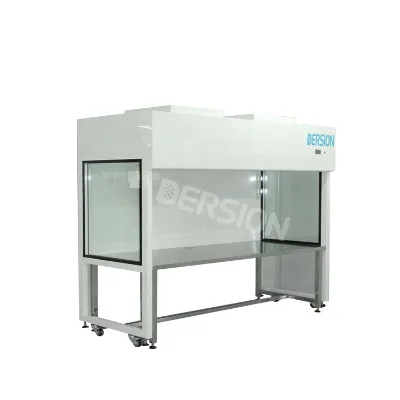
Horizontal HEPA Filter Airflow Table Laminar Air Flow Cabinet Clean Bench
$250.00 - $350.00
MOQ: 1 Pieces


Comprehensive Sourcing Guide
ISO5 HEPA Filter Clean Bench Sourcing Guide
Selecting the right laminar flow cabinet requires a clear understanding of airflow dynamics and filtration standards. The core keyword "ISO5 HEPA Filter Clean Bench" points to equipment designed to provide a particle-free work environment, typically achieving ISO Class 5 (Class 100) cleanliness. Buyers must distinguish between vertical and horizontal airflow types, as each serves different operational needs. Vertical flow benches direct air downward from the top, offering protection for the product but not the operator, while horizontal flow benches push air across the workspace. Understanding these fundamental differences is the first step in aligning equipment with specific laboratory or industrial protocols.
Procurement decisions should be driven by the intended usage environment, whether it be a hospital, research institute, or school setting. The observed market includes models tailored for single-person or two-person operations, with configurations ranging from single-side access to more complex setups. Buyers should evaluate the physical footprint and working area dimensions to ensure the unit fits within their existing laboratory infrastructure. Additionally, considering the noise levels and lighting requirements is essential for maintaining a comfortable and productive work environment for technicians who may spend extended periods at the bench.
Product Scope and Observed Listing Signals
The current market landscape for clean benches reveals a diverse range of models, with observed prices spanning from $140 to $10,000 USD. This wide variance often reflects differences in build quality, filtration efficiency, and additional features such as touch controls or specialized lighting. Minimum order quantities (MOQ) are frequently listed as low as one set, indicating that suppliers are willing to accommodate small-scale procurement needs. However, buyers should remain cautious of extremely low prices, as they may correlate with compromises in material durability or filtration performance.
Observed product attributes highlight specific technical configurations, such as the Vs-1300u vertical flow model and the Vd-850 single-person unit. These models demonstrate the availability of both vertical and horizontal air supply options, catering to different workflow requirements. Some listings specify a clean level of Class 100, which aligns with ISO 5 standards, ensuring a high degree of particulate control. Buyers should verify these claims against their specific regulatory requirements, as not all listed products may meet the stringent criteria associated with high-level cleanroom environments.
Technical Specifications to Verify
Airflow direction and velocity are critical technical parameters that must be verified before purchase. Vertical flow clean benches, such as the Vs-1300u, provide downward laminar airflow, which is ideal for protecting the sample from contamination. In contrast, horizontal flow models like the Sw-Cj-1bu direct air horizontally across the work surface. Buyers should confirm the airflow type and ensure it matches their safety and procedural needs. Additionally, verifying the working area dimensions, such as the 880650580mm specification for certain models, ensures that the equipment can accommodate the necessary tools and materials.
Filtration and electrical specifications are equally important for long-term operational success. The presence of HEPA filters is essential for achieving the claimed ISO 5 or Class 100 cleanliness levels. Buyers should inquire about the filter grade and replacement schedule to maintain consistent performance. Electrical requirements, such as the 220V/50Hz or 220V, 50-60Hz power supplies observed in listings, must be compatible with the local infrastructure. Furthermore, checking the noise levels, which range from ≤62dB to 40-60dB, helps in selecting a unit that will not disrupt the laboratory environment.
Compliance and Safety Documentation
Certification status is a primary indicator of manufacturing quality and regulatory compliance. Many suppliers list ISO 9001 and CE certifications, suggesting adherence to international quality management and safety standards. However, buyers should request copies of these certificates to verify their validity and scope. The presence of GMP (Good Manufacturing Practice) standards in some listings indicates suitability for pharmaceutical or medical device production environments. It is crucial to ensure that the certifications provided are current and issued by recognized accreditation bodies.
Safety features and operational controls also play a significant role in compliance. Some models feature touch control modes, offering precise adjustment of airflow and lighting settings. Buyers should verify the availability of safety interlocks, such as window sensors that adjust airflow when the sash is opened. Additionally, checking for compliance with local electrical safety codes is essential, especially when importing equipment from regions like Zhejiang, China. Ensuring that the product meets all relevant safety documentation requirements helps mitigate liability and ensures a safe working environment.
Cost Drivers and Commercial Terms
Pricing for clean benches is influenced by several factors, including size, airflow type, and additional features. The observed price range of $140 to $10,000 USD reflects the diversity in product capabilities and build quality. Larger models, such as those designed for two-person use, typically command higher prices due to increased material and engineering costs. Buyers should compare the cost against the specific technical specifications and certifications to ensure they are receiving value for their investment. It is also important to consider the total cost of ownership, including filter replacements and maintenance.
Commercial terms, such as MOQ and warranty provisions, vary among suppliers. While many suppliers offer an MOQ of one set, others may have different requirements for bulk orders. Warranty periods, such as the one-year warranty observed in some listings, provide a level of assurance regarding product durability. Buyers should negotiate clear terms regarding after-sales service, as some suppliers may not provide overseas support. Understanding these commercial terms helps in planning the budget and ensuring long-term support for the equipment.
Supplier Qualification and Quality Control
Supplier location and origin are key factors in assessing reliability and logistics. Many clean bench manufacturers are based in Zhejiang, China, a region known for its industrial manufacturing capabilities. Buyers should verify the supplier's production capacity and quality control processes to ensure consistent product quality. Requesting factory audits or third-party inspections can provide additional assurance of manufacturing standards. Additionally, checking the supplier's history and reputation in the market can help identify reliable partners.
Packaging and shipping methods are also important considerations for maintaining product integrity. Observed packaging options include wooden crates and export packing, which are designed to protect the equipment during transit. Buyers should ensure that the packaging is robust enough to prevent damage during shipping. Furthermore, verifying the supplier's ability to provide proper documentation, such as commercial invoices and packing lists, is essential for smooth customs clearance. Establishing a clear communication channel with the supplier helps in addressing any logistical issues promptly.
Long-Term Procurement Checks
Maintenance and filter replacement are critical for sustaining the performance of a clean bench. Buyers should establish a routine maintenance schedule that includes regular inspection of the HEPA filters and airflow velocity. Verifying the availability of replacement parts and filters from the supplier is essential to minimize downtime. Some suppliers may offer training or technical support to help users maintain the equipment properly. Developing a long-term relationship with the supplier can facilitate easier access to these services.
Continuous evaluation of the equipment's performance is necessary to ensure it continues to meet ISO 5 or Class 100 standards. Buyers should conduct periodic testing of airflow and particle counts to verify the cleanliness level. Keeping detailed records of maintenance activities and test results helps in tracking the equipment's condition over time. Additionally, staying informed about updates in industry standards and regulations ensures that the clean bench remains compliant with current requirements. Regular reviews of the procurement strategy help in adapting to changing operational needs and technological advancements.
FAQs
What is the clean level of the vertical flow clean bench?
The vertical flow clean bench achieves a Class 100 clean level, which corresponds to ISO 5 standards. This ensures a sterile environment suitable for use in schools, hospitals, and research institutes where contamination control is critical for experimental accuracy.
Can the clean bench be customized for specific needs?
Yes, customization is available for these units to meet specific operational requirements. Buyers can request tailored configurations while maintaining the core vertical air supply design and ensuring the noise level remains at or below 62 decibels for a quiet workspace.
Which certifications do the clean benches hold?
The products hold ISO 9001 certification and comply with GMP standards for quality management. Some models also feature ISOControl modes and CE certification, ensuring they meet international safety and quality benchmarks for industrial and laboratory applications.
How is the air supply configured in these units?
Air supply is available in both vertical and horizontal flow configurations depending on the model selected. Vertical flow models like the Vs-1300u provide downward airflow, while horizontal options like the Sw-Cj-1bu offer side-to-side protection for different workflow needs.
What is the warranty period for the clean bench?
The standard warranty period provided for these units is one year. This coverage applies to manufacturing defects and ensures reliability, though buyers should note that overseas after-sales service is not provided for these specific models.
What are the dimensions of the single person model?
The single person model, identified as Vd-850, has overall dimensions of 850 by 530 by 850 millimeters. This compact size fits well in smaller laboratories while providing a working area of 880 by 650 by 580 millimeters for efficient operations.
How much noise does the clean bench generate?
The noise level is maintained at 62 decibels or lower for most vertical flow models. Some industrial variants operate between 40 and 60 decibels, ensuring a quiet environment that does not disturb sensitive research or hospital procedures during extended use.