Source ISO4064 Civil Volumetric Water Meter for residential, commercial, and industrial use
Compare 30 verified options for the ISO4064 Civil Volumetric Water Meter designed for civil applications. Buyers can evaluate specifications including DN15 to DN50 sizes, ISO 4064 Class C certification, and customization support for OEM and ODM needs.
Key considerations
Products List


High Accurate Easy Installation Mechanical Flow Volumetric Water Meter
$15.00 - $30.00
MOQ: 500 Pieces


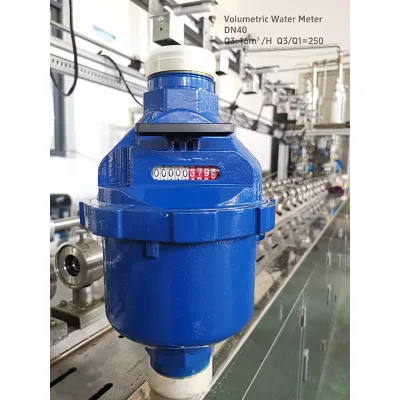


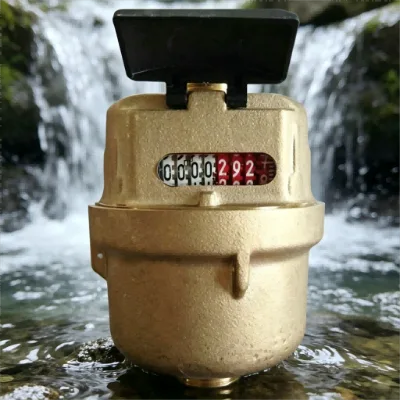

Comprehensive Sourcing Guide
Strategic Sourcing Guide for ISO 4064 Civil Volumetric Water Meters
Understanding the Core Technology and Classification
The foundation of a successful procurement strategy for civil volumetric water meters begins with a precise understanding of the underlying technology and the specific classification mandated by international standards. The core keyword, "ISO 4064 civil volumetric water meter," points to a specific subset of measurement devices designed for residential and general civil applications where accuracy and durability are paramount. Volumetric meters operate on the principle of measuring the physical volume of water passing through the device, distinguishing them from velocity-based meters that infer flow rates. In the context of the supplied data, the principle is explicitly identified as "Volumetric Meter," ensuring that the measurement mechanism relies on the displacement or rotation of internal components to tally the exact volume consumed.
A critical aspect of this classification is the accuracy class. The ISO 4064 standard, which governs these devices, categorizes meters based on their performance across different flow rates. The provided facts highlight a specific classification of "Class C" for the product attributes. This designation is significant for civil applications, as it dictates the permissible error limits during testing. Buyers must recognize that Class C meters are engineered to meet specific accuracy thresholds that balance cost-efficiency with the need for reliable billing data in municipal and residential networks. The standard also references a "Ratio Range" of R80, which indicates the meter's ability to measure accurately from a minimum flow rate up to a maximum flow rate, covering a wide spectrum of usage patterns typical in civil settings.
The physical construction of these meters is equally vital. The observed product attributes indicate a "Traditional" structure, often utilizing materials such as "Brass" and "Plastic" or "Brass/Nylon" for the body. This combination offers a balance between mechanical strength and corrosion resistance. The connection type is frequently specified as "Thread" with a "Bsp" (British Standard Pipe) thread end type, which is a common standard for civil plumbing infrastructure. Furthermore, the installation orientation is a key technical variable; while some models support "Vertical" installation, others are designed for "Horizontal" mounting. Procurement teams must verify the specific orientation requirements of their local infrastructure before placing orders, as installing a horizontal-only meter in a vertical pipe can lead to premature failure or inaccurate readings.
Compliance Verification and Certification Protocols
Navigating the regulatory landscape for water meters requires rigorous verification of compliance documents. The ISO 4064 standard is the primary benchmark for these devices, and the supplied facts confirm the presence of "ISO4064" certification and the specific standard "ISO 4064 Class C." However, buyers must exercise caution and not assume that every listed product automatically satisfies every variation of this standard. The data shows conflicting or varying references, such as "ISO 4064:1993" alongside general "ISO4064" mentions. This variance suggests that different suppliers may be referencing different versions or interpretations of the standard.
When evaluating potential suppliers, the primary objective is to verify that the specific model being purchased holds a valid, current certification from an accredited body. The presence of a "Certificate: ISO4064" in the product attributes is a strong indicator, but it must be cross-referenced with the actual test reports. Buyers should request the original certificate of conformity, ensuring it explicitly states the meter class (e.g., Class C) and the specific standard version. Relying solely on the product description without demanding physical proof of certification is a significant risk in B2B procurement. Additionally, while some background data mentions "CE" certification, this should be treated as a secondary verification point rather than a primary driver, as the ISO 4064 standard is the definitive technical requirement for water meter accuracy in many jurisdictions.
The verification process should also extend to the "Protection Class" of the meter. The data indicates an "IP68" rating for certain models, which implies a high level of protection against dust and water immersion. For civil applications, especially those involving wet environments or potential flooding, confirming that the meter's protection class matches the environmental conditions is essential. A meter with an IP68 rating offers superior longevity in harsh conditions compared to standard models, but this feature must be explicitly confirmed in the purchase order to avoid receiving a lower-rated product.
Cost Drivers and Pricing Dynamics
The pricing of ISO 4064 civil volumetric water meters is influenced by a complex interplay of technical specifications, material costs, and customization requirements. The observed price range in the market data spans from $0.50 to $3,039.60, a variance that reflects the diversity of the product portfolio. At the lower end of the spectrum, prices likely correspond to basic models with standard specifications, such as the "DN15" nominal diameter and "Plastic" or "Brass" bodies. These units typically feature "Digital" or "Digital and Analogue" counter instructions and are designed for high-volume, low-complexity applications.
Conversely, the higher price points are driven by advanced features and customization. The data highlights "Customized Support" including "OEM" and "ODM" capabilities, which inherently increase the cost due to the engineering and tooling required. Models with "Custom-Made" flow rates, "Customized" nominal diameters (DN), or specialized materials like "Nylon" bodies will command a premium. The "Ratio Range" is another cost driver; meters offering a wider range, such as "R80/R100/R160/R200," provide greater accuracy across varying flow conditions and are priced higher than standard R80 models.
The "Medium Pressure" rating, specified as "General Water Meter" with a "Pn10" pressure rating, also influences cost. Meters designed to withstand higher pressures or specific pressure loss requirements, such as the noted "Pn0.63" or a pressure loss value of "63," may involve more robust internal mechanisms. Additionally, the "Product Packing" method, ranging from "Cardboard Box" to "Wooden and Carton Packaging," adds to the final cost, particularly for international shipments where robust packaging is necessary to prevent damage. Buyers should analyze their specific needs against these cost drivers to avoid over-specifying. For standard civil applications, a basic DN15 to DN25 model with standard packing may suffice, whereas large-scale infrastructure projects might justify the investment in custom-branded, high-performance units.
Typical Applications and Installation Environments
The application scope for ISO 4064 civil volumetric water meters is broad, covering both residential and light industrial sectors. The supplied facts explicitly categorize the application as "Civil" and "Industrial," indicating versatility. In civil settings, these meters are typically installed in water supply networks for residential buildings, apartment complexes, and municipal distribution systems. The "Cold Water" medium temperature specification confirms their suitability for standard potable water distribution, where the water temperature does not exceed the limits of the internal components.
The "Work Environment" is described as "Dry Water Meter," suggesting that these units are primarily designed for indoor or sheltered installations where the meter register is protected from direct water exposure. This distinction is crucial for installation planning. While the body of the meter may be submerged or exposed to moisture, the counter mechanism, whether "Digital" or "Analogue," requires a dry environment to function correctly and maintain accuracy. For applications requiring outdoor installation or exposure to the elements, buyers must verify if the specific model offers the necessary protection or if additional housing is required.
Installation orientation is another critical factor for application success. The data presents both "Vertical" and "Horizontal" installation options. Civil infrastructure often dictates the orientation based on the pipe layout. In vertical risers, a meter designed for vertical installation is mandatory to ensure the internal measuring element operates correctly. Similarly, in horizontal piping runs, a horizontal-mount meter is required. Selecting the wrong orientation can lead to mechanical binding, inaccurate readings, or complete device failure. The "Thread End Type" of "Bsp" is standard for these applications, facilitating easy integration into existing civil plumbing systems without the need for complex adapters.
Supplier Evaluation and Quality Assurance
Evaluating suppliers for ISO 4064 water meters requires a focus on their ability to deliver consistent quality and adhere to the specified standards. The "Brand Name" "Cland" appears in the data, but buyers should not limit their search to a single entity. Instead, the evaluation should focus on the supplier's track record in producing meters that meet the "ISO 4064 Class C" standard. The presence of "Customized Support" for "OEM" and "ODM" indicates that the supplier has the capacity for private labeling and custom engineering, which is a positive sign of manufacturing maturity.
Quality assurance processes should be a central part of the supplier selection criteria. Buyers should inquire about the supplier's internal testing protocols to ensure that every meter leaving the factory meets the "High Performance" feature claim. The "Material" composition, whether "Plastic," "Brass," or "Brass/Nylon," must be consistent with the order specifications to ensure durability and resistance to corrosion. The "Standard" production sizes listed, such as "15mm, 20mm, 25mm," should be verified against the actual inventory to ensure availability.
The "Product Packing" method is also an indicator of supplier professionalism. Suppliers offering "Wooden and Carton Packaging" demonstrate a commitment to protecting the product during transit, which is essential for maintaining the integrity of the delicate internal mechanisms. In contrast, basic "Cardboard Box" packaging may be sufficient for domestic shipments but could be risky for international logistics. Buyers should also verify the "Location" of the supplier, with "China" being the noted origin. While this is a major manufacturing hub, buyers must ensure that the specific factory has the necessary quality control infrastructure to meet international standards.
Long-Term Procurement and Lifecycle Management
Long-term procurement considerations for water meters extend beyond the initial purchase price to include installation, maintenance, and replacement costs. The "Nominal Diameter" range of "15-50mm" and "DN15~DN25" provides flexibility for various pipe sizes, but buyers should plan for future scalability. As civil infrastructure evolves, the need for larger diameter meters or specialized models may arise. Suppliers offering "Customized" DN options can support this growth, reducing the need for multiple vendor relationships.
The "Counter Instructions" being "Digital" or "Digital and Analogue" suggests a trend toward modernization. Digital displays offer easier reading and potential for remote data collection, which can reduce operational costs over the meter's lifecycle. However, the transition to digital systems requires compatibility with existing data management infrastructure. Buyers should assess whether the chosen meter's output format aligns with their long-term data strategy.
Maintenance is another critical factor. The "Traditional" structure of these meters implies mechanical components that may require periodic inspection or replacement. The "Protection Class" of IP68 offers some assurance against environmental damage, but regular maintenance schedules should be established to ensure continued accuracy. The "Pressure Loss" specifications, such as "Pn0.63" or "63," should be monitored to ensure the meter does not create excessive resistance in the pipeline, which could impact system efficiency over time.
In conclusion, sourcing ISO 4064 civil volumetric water meters requires a balanced approach that weighs technical specifications, compliance, cost, and long-term value. By carefully verifying the "Class C" certification, understanding the installation requirements, and selecting suppliers with robust quality assurance, buyers can secure reliable metering solutions that meet the demands of modern civil water management. The data provided offers a solid foundation for making informed decisions, but continuous verification of product attributes against actual market offerings remains essential for successful procurement.
FAQs
What certification do these meters hold?
These meters hold ISO4064 certification, specifically meeting ISO 4064 Class C standards. This ensures accuracy for civil applications with a ratio range of R80. Buyers must verify the specific certificate version and request original test reports before purchase.
How are these meters installed?
Installation orientation varies by model, with options for both vertical and horizontal mounting. Users must select the correct orientation based on their pipe layout to ensure accurate readings. The connection type is typically a Bsp thread end.
Which materials are used for the body?
The body is constructed from Brass, Plastic, or a Brass/Nylon combination. These materials balance mechanical strength with corrosion resistance for civil water supply networks. Customized material options are also available for specific project requirements.
Can I request custom flow rates?
Yes, custom-made flow rates are available through OEM and ODM support. This allows suppliers to tailor the meter to specific project needs. Buyers should confirm customization capabilities and lead times before placing large orders.
What is the nominal diameter range?
The nominal diameter ranges from DN15 to DN25, with some models extending to DN50. Specific models like DN15 and DN25 are standard sizes. Customized diameters are also offered to meet unique infrastructure specifications.
How is the counter displayed?
The counter instruction is available in both Digital and Analogue formats. Some models feature a dry dial register to protect the mechanism. Buyers should verify the display type required for their specific billing or monitoring systems.
What is the protection class rating?
Certain models offer an IP68 protection class rating for high dust and water immersion resistance. This is crucial for harsh environments or potential flooding scenarios. Standard models may have lower ratings, so verification is essential.