Source ISO9001 Worm Gear Pinion Gears for Marine, Motor, Machinery
Compare 30 verified listings for ISO9001 Worm Gear Pinion Gears suitable for marine, motor, and machinery applications. Buyers can evaluate customization options, manufacturing methods, and material specifications to find the right components for their needs.
Key considerations
Products List


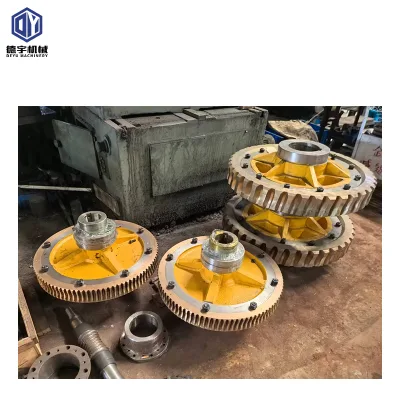


Best Price Custom Industrial Worm Gear Set Worm Shaft Drive Pinion Worm Gears
$7.00 - $15.00
MOQ: 200 Pieces


Comprehensive Sourcing Guide
Strategic Sourcing Guide for ISO 9001 Compliant Worm Gear Pinion Gears
Understanding the Technical Landscape of Worm and Spur Gear Systems
When sourcing specialized transmission components like worm gear pinions, buyers must first distinguish between the specific gear types and their manufacturing origins. The market data indicates a diverse range of configurations available from Chinese manufacturing hubs, specifically originating from regions such as Zhejiang and Sichuan. A critical technical distinction lies in the gear type itself. While the core search term focuses on worm gears, the available product attributes reveal a significant presence of spur gears and bevel gears within the same supplier ecosystem. For instance, specific listings identify the gear type as "Worm And Wormwheel," while others explicitly categorize products as "Spur Gear" or "Bevel Gear." This variation suggests that suppliers often operate as comprehensive gear manufacturers rather than specialists in a single topology.
The material composition is another fundamental technical parameter. The observed data confirms that "Stainless Steel" is a primary material offering, alongside other steel variants such as C45 and general steel compositions. This material diversity allows for customization based on environmental requirements, such as corrosion resistance for marine applications or high-strength needs for heavy machinery. Furthermore, the manufacturing method varies significantly between "Rolling Gear" and "Sintered Gear" processes. Rolling typically implies a cold-forming technique that enhances grain structure and strength, whereas sintering is a powder metallurgy process often used for complex geometries or specific material efficiencies. Buyers must verify which process aligns with their specific load and durability requirements, as the choice directly impacts the final hardness and fatigue life of the component.
Compliance Verification and Certification Standards
In the context of industrial procurement, the mention of ISO 9001 serves as a baseline for quality management systems rather than a product-specific performance guarantee. The provided facts list "ISO9001:2008" as a specific certification observed in the market, alongside broader references to "CE," "SGS," and "ISO." It is crucial for buyers to understand that while a supplier may claim adherence to ISO 9001 standards, the specific version (such as the 2008 iteration) may differ from the current 2015 standard. Therefore, verification of the active certification status is a mandatory step before finalizing any contract. The presence of "CE" and "SGS" marks indicates that the products may meet specific European safety and general safety standards, but these should be treated as observations of the supplier's portfolio rather than universal guarantees for every unit ordered.
The standardization of the gears themselves is equally important. The data indicates that products are available in both "Standard" and "Nonstandard" configurations. This flexibility is vital for custom machinery applications where off-the-shelf components do not fit. Buyers should explicitly confirm whether the required gear dimensions, tooth profiles, and pitch standards align with international norms or if a fully custom design is necessary. Additionally, the "Trade Mark" is listed as "OEM ODM," confirming that suppliers are equipped to handle private labeling and original design manufacturing. This implies that the certification and quality control processes must be robust enough to support custom specifications without compromising the integrity of the ISO 9001 management system.
Cost Drivers and Production Economics
The pricing structure for worm gear pinions and related components is highly variable, with observed market ranges spanning from $0.01 to $5,000 USD. This wide disparity is not indicative of quality differences alone but is driven by several complex factors including material grade, gear size, manufacturing complexity, and order volume. The minimum order quantity (MOQ) ranges from 1 to 10,000 units, suggesting that the cost per unit is heavily dependent on the scale of the purchase. Small batch orders or single-unit prototypes will naturally incur a higher unit cost compared to high-volume production runs.
Material selection is a primary cost driver. Stainless steel components generally command a higher price point than carbon steel variants like C45 due to the raw material costs and the additional processing required for corrosion resistance. Similarly, the choice between rolling and sintering methods affects the final cost. Rolling gears often require more expensive tooling but offer superior mechanical properties, while sintered gears might be more cost-effective for specific high-volume, lower-load applications. The "Hardness" of the tooth surface, noted as "Hardened Tooth Surface" in some listings, also adds to the processing cost, as it requires additional heat treatment steps. Buyers must balance these technical requirements against their budget constraints, ensuring that they do not over-specify materials or processes that exceed the operational demands of their machinery.
Application Scope and Operational Requirements
The versatility of these gear components is evident in their listed applications, which span "Marine," "Machinery," "Motorcycle," "Electric Cars," "Motor," "Agricultural Machinery," and "Toy" industries. This broad applicability underscores the need for precise specification matching. For marine applications, the corrosion resistance provided by stainless steel is a critical factor, whereas for agricultural machinery, the focus might be on durability and resistance to shock loads. The "Manipulate Way" is identified as "Robotics," indicating that these gears are suitable for automated systems where precision and repeatability are paramount.
The "Gear Position" is another critical application factor, with data showing both "Internal Gear" and "External Gear" configurations available. The selection between internal and external gearing depends entirely on the spatial constraints and mechanical design of the host machine. For instance, internal gears are often used in planetary gear systems to achieve compact designs, while external gears are standard in open transmission setups. The "Teeth Number" is listed as ranging from 12 to 64 or customized, which directly influences the gear ratio and torque transmission capabilities. Buyers must calculate the required gear ratio based on their motor speed and desired output torque to select the correct tooth count.
Supplier Evaluation and Manufacturing Capabilities
Evaluating a potential supplier requires a deep dive into their manufacturing infrastructure and quality control protocols. The data highlights that suppliers possess "12 Sets" of CNC Machining Centers, indicating a moderate to high level of automation and precision capability. This equipment is essential for producing gears with tight tolerances, such as the "The Best Tolrance" of 0.0005 mentioned in the specifications. However, buyers should verify if this tolerance applies to all product lines or only to specific high-precision models. The "Surface Roughness" is specified as "Ra0.8-1.6," which is a standard range for functional gears, but this should be confirmed for every order to ensure smooth operation and reduced wear.
The "Lead Time" for production is observed to be between 25 and 30 days, which is a critical factor for supply chain planning. This timeframe includes the time for raw material procurement, machining, heat treatment, and final inspection. Buyers should account for this lead time when scheduling production runs, especially for custom orders that may require additional time for design validation and tooling setup. The "Inspection" process is described as "100% Before Packing," which suggests a rigorous quality assurance protocol. However, buyers should request specific inspection reports or certificates of conformity to validate this claim, as the presence of a 100% inspection policy does not guarantee the absence of defects in every single batch.
Quality Control and Long-Term Procurement Strategy
Ensuring long-term reliability involves more than just initial quality checks; it requires a strategic approach to procurement and relationship management. The "Warranty" period observed is 6 months, which is a standard timeframe for industrial components. This warranty period highlights the importance of the initial quality control phase. Buyers should ensure that the warranty terms clearly define the scope of coverage, including whether it covers manufacturing defects, material failures, or both. The "Product Features" are listed as "High Qualities," but this is a general attribute that must be substantiated by test data and performance history.
Packaging is another often-overlooked aspect of quality control. The data shows a variety of packaging options, including "Neutral Packing," "Carton," "Pallet," and "Wooden Case." For international shipping, especially to regions with varying humidity levels, the choice of packaging is critical to prevent corrosion and physical damage. The "Changes Way" is listed as "Mixed," suggesting that suppliers can handle mixed orders or varied product lines, which offers flexibility for buyers with diverse component needs. However, this also requires clear communication to ensure that different product types are packaged and labeled correctly to avoid confusion during the receiving process.
Final Procurement Considerations and Verification Steps
To conclude the sourcing process, buyers must adopt a verification-first mindset. While the market offers a wide array of options with attributes like "Customized Color," "Customized Packing," and "Design Software" support via Solidworks, these features should be treated as capabilities rather than guarantees of performance. The "Standard or Nonstandard" classification is a key decision point; buyers must clearly define their requirements to avoid receiving non-compliant parts. The "Original" location is consistently listed as China, with specific ports like Qingdao, which influences logistics and shipping costs.
Ultimately, the success of sourcing ISO 9001 compliant worm gear pinions depends on the buyer's ability to navigate the complexity of the available data. By focusing on technical specifications, verifying certifications, understanding cost drivers, and evaluating supplier capabilities, buyers can make informed decisions that align with their operational needs. The presence of diverse manufacturing methods, materials, and applications offers significant opportunities for optimization, but it also demands rigorous due diligence. Buyers should prioritize clear communication of their specific requirements, request detailed technical data sheets, and establish robust quality assurance protocols to ensure that the final components meet the exacting standards of their machinery. This disciplined approach will mitigate risks and secure a reliable supply chain for critical transmission components.
FAQs
What certifications do these worm gear pinion gears hold?
Products are certified with ISO9001:2008, CE, and SGS marks. Buyers must verify the active certification status as the 2008 version may differ from current 2015 standards.
Which manufacturing methods are available for these gears?
Available methods include Rolling Gear and Sintered Gear processes. Rolling enhances grain structure while sintering suits complex geometries, directly impacting final hardness and fatigue life.
Can I customize the gear specifications and packaging?
Yes, customization is available for gear models, colors, and packing types like wooden cases or cartons. Suppliers support OEM and ODM requests with neutral or client-specific packaging options.
What is the typical lead time for production?
The standard lead time ranges from 25 to 30 days. This duration covers raw material procurement, machining, heat treatment, and a 100% inspection process before packing.
Which materials are used for these gear components?
Primary materials include Stainless Steel, C45, and general steel variants. Stainless steel offers corrosion resistance for marine use, while other steels suit heavy machinery applications.
How are the gear teeth numbers and tolerances defined?
Teeth numbers range from 12 to 64 or can be customized. The best tolerance observed is 0.0005, with surface roughness typically between Ra0.8 and 1.6 for smooth operation.