Source Joystick Control Hydraulic Valve for Tractor, Industrial, and Safety Systems
Find 30 Joystick Control Hydraulic Valve options for tractor, industrial, and safety applications. Compare specifications including flow control, pressure regulating, and pilot-operated types from suppliers in China with lead times of 15-30 days.
Key considerations
Products List


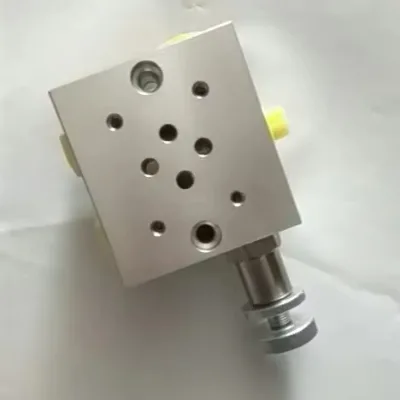


Advanced Hydraulic Control Valve for Optimal Performance and Durability
$28.00 - $32.00
MOQ: 50 Pieces


Comprehensive Sourcing Guide
Strategic Sourcing Guide for Joystick Control Hydraulic Valves
Understanding the Technical Landscape of Hydraulic Control Systems
When sourcing joystick control hydraulic valves, buyers must first navigate the diverse technical specifications that define performance in industrial and agricultural settings. The core functionality of these components often centers on flow control and pressure regulation, ensuring that hydraulic systems operate with precision under varying load conditions. In the current market, products are frequently categorized by their actuation method, with manual control being a prevalent configuration for joystick-operated units. This manual actuation allows operators to directly influence the hydraulic circuit, translating physical lever movements into precise fluid dynamics.
The operational architecture of these valves varies significantly. Some units are designed as pilot-operated types, which utilize a small amount of hydraulic pressure to control a larger flow, offering enhanced sensitivity and stability. Conversely, directly operated types rely on the direct force of the actuator, providing a more immediate response suitable for specific high-speed applications. The installation method is another critical technical differentiator. Buyers will encounter valves designed for superposition mounting, which allows for compact stacking of multiple functions, as well as those intended for plate or cover plate installation, which offer flexibility in system integration.
Material composition plays a pivotal role in the durability and application suitability of the valve. While steel is a common material choice for its strength and resistance to high pressures, aluminum variants are also available, often selected for applications where weight reduction is a priority without sacrificing structural integrity. The connection mode is typically standardized, with internal thread configurations being a frequent specification to ensure secure and leak-free integration into existing hydraulic manifolds. Furthermore, the flow rate is a defining characteristic; for instance, specific models may be rated for a flow rate of 45 liters per minute, a figure that must align with the pump capacity and system requirements of the target machinery.
Compliance, Certification, and Standard Verification
In the realm of industrial procurement, verifying compliance and certification is not merely a formality but a critical risk mitigation strategy. While the specific certification status of every listed product cannot be universally assumed, buyers should prioritize suppliers who can demonstrate adherence to recognized quality management standards. The presence of ISO certification is a strong indicator of a supplier's commitment to consistent quality control processes. However, it is essential to distinguish between general ISO standards and specific industry certifications. For example, while ISO 9001 is a widely recognized benchmark for quality management, specific hydraulic applications may require adherence to fluid power standards such as ISO 4406, which governs the cleanliness of hydraulic fluids and system components.
Buyers must also scrutinize the origin and manufacturing standards of the product. Products originating from regions like China, specifically from manufacturing hubs such as Changzhou or Shandong, often carry specific standard designations. It is crucial to verify if the product meets the "Standard" designation or if it adheres to more specialized requirements, such as those tailored for heavy-duty usage ranging from 36 to 80 tons. The "Standard" label may imply compliance with general industrial norms, but for specialized applications, buyers should request documentation confirming that the valve meets the specific load and pressure requirements of their machinery.
Furthermore, the certification landscape includes various market-specific requirements. Some suppliers may list certifications that align with international trade standards, facilitating export to regions in South America, North America, Eastern Europe, and Southeast Asia. However, the absence of a specific certification in a product listing does not necessarily indicate non-compliance, but it does necessitate a deeper inquiry. Buyers should explicitly request proof of certification for the specific batch or model they intend to purchase, rather than relying on general marketing claims. The verification process should include checking for valid ISO/TS documentation, which may be relevant for automotive or high-precision industrial applications, ensuring that the valve meets the rigorous safety and performance criteria required for the intended deployment.
Cost Drivers and Pricing Structure Analysis
The pricing structure for joystick control hydraulic valves is influenced by a complex interplay of factors, including material costs, manufacturing complexity, and customization requirements. The observed price range in the market is extensive, spanning from approximately 8 USD to nearly 100,000 USD. This vast disparity highlights the importance of understanding the specific value drivers behind each price point. Lower-priced units typically represent standard, off-the-shelf models with minimal customization, often produced in high volumes to achieve economies of scale. These units are generally suitable for general industrial usage where specific performance tolerances are less critical.
Conversely, higher-priced valves often incorporate advanced features such as specialized materials, custom actuation mechanisms, or tailored flow rates. The cost is also driven by the level of customization available. Suppliers offering customization options for packaging, such as neutral packing, color boxes, or export wood cases, may charge a premium for these services. Additionally, the inclusion of specific certifications or adherence to niche standards can increase the unit cost. Buyers should be aware that the "High Quality" designation often correlates with a higher price, reflecting the use of superior materials like high-grade steel or aluminum alloys and more rigorous testing protocols.
The Minimum Order Quantity (MOQ) is another significant cost driver. The market shows an MOQ range from 1 to 100 units. Suppliers with an MOQ of 1 offer flexibility for small-scale projects or prototyping but may have higher per-unit costs due to the lack of bulk production efficiencies. In contrast, suppliers requiring an MOQ of 100 units typically offer more competitive pricing per unit, making them ideal for large-scale industrial deployments. Buyers must balance their immediate budget constraints with their long-term volume needs. Understanding the lead time, which can range from 15 to 30 days, is also essential for cost planning, as expedited shipping or rush orders may incur additional charges.
Typical Applications and Industry Use Cases
Joystick control hydraulic valves are integral to a wide array of industrial and agricultural applications, where precise control of heavy machinery is paramount. The primary application sector identified in the market is industrial usage, where these valves are employed in various machinery requiring robust and reliable hydraulic control. The specific design of the valve, such as the pilot-operated or directly operated types, determines its suitability for different tasks. For instance, pilot-operated valves are often preferred in applications requiring smooth and precise movement, such as in construction equipment or heavy manufacturing machinery.
A significant portion of the market is dedicated to agricultural applications, particularly for tractors. In this sector, the valve must withstand harsh operating conditions and provide reliable performance over extended periods. The "Safety" usage attribute underscores the critical role these valves play in preventing accidents and ensuring operator safety. Valves designed for tractor applications often feature specific flow rates and pressure ratings that match the hydraulic systems of agricultural machinery, ensuring efficient operation during tasks like plowing, harvesting, and lifting.
The versatility of these valves extends to specialized industrial sectors as well. Some models are specifically engineered for usage in machinery with tonnage ratings ranging from 36 to 80 tons, indicating their application in heavy-duty equipment such as excavators, cranes, and presses. The "Cover Plate" and "Plate" installation types are particularly useful in modular hydraulic systems where space is limited and multiple functions need to be integrated into a compact footprint. The ability to customize the packing and the product itself allows manufacturers to tailor the valve to the specific needs of their machinery, whether it be for a unique industrial process or a specialized agricultural implement.
Supplier Evaluation and Selection Criteria
Selecting the right supplier for joystick control hydraulic valves requires a comprehensive evaluation of their capabilities, reliability, and market presence. Buyers should prioritize suppliers who demonstrate a clear understanding of the technical specifications and can provide detailed product data. The presence of a showroom location, even if listed as "Other," can be an indicator of the supplier's engagement with the market, though it is not a definitive measure of quality. More importantly, buyers should assess the supplier's ability to provide customization services, as this often reflects their flexibility and capacity to meet unique project requirements.
The origin of the product is a critical factor in supplier evaluation. Suppliers based in regions like China, particularly in manufacturing hubs such as Changzhou and Shandong, are known for their extensive production capabilities. However, buyers must verify the specific standards and quality control measures implemented by these suppliers. The "High Quality" attribute should be backed by tangible evidence, such as test reports or quality assurance documentation. Additionally, the supplier's warranty terms, such as a 3-month warranty, provide insight into their confidence in the product's durability and their commitment to customer support.
Logistics and shipping capabilities are also essential considerations. The "Type of Shipping" by sea is a common method for international trade, but buyers should evaluate the supplier's experience with export logistics, including packaging standards like strong wooden cartons or export wood cases. These packaging methods are crucial for protecting the valves during transit, especially given the precision nature of the components. Furthermore, the supplier's ability to handle different market regions, from South America to Western Europe, indicates a robust distribution network and an understanding of international trade regulations.
Quality Control and Long-Term Procurement Considerations
Ensuring the long-term reliability of joystick control hydraulic valves requires a rigorous approach to quality control and procurement planning. Buyers should implement a multi-stage quality verification process that includes pre-shipment inspections, material verification, and performance testing. The "New" condition of the products is a baseline requirement, but buyers must go further to ensure that the valves meet the specific performance criteria of their application. This includes verifying the flow rate, pressure ratings, and material integrity against the stated specifications.
Long-term procurement considerations involve establishing a strategic relationship with suppliers who can provide consistent quality and support. The availability of customization options, such as neutral packing or color boxes, allows buyers to maintain brand consistency and meet specific regulatory requirements. Additionally, the lead time of 15 to 30 days should be factored into the supply chain planning to avoid production delays. Buyers should also consider the total cost of ownership, which includes not only the purchase price but also maintenance, replacement, and potential downtime costs.
The warranty period, typically 3 months in the current market, serves as a critical safety net for buyers. However, it is essential to understand the terms and conditions of the warranty, including what is covered and what constitutes a valid claim. Buyers should also evaluate the supplier's after-sales support, including their ability to provide technical assistance and spare parts. A supplier with a strong track record in multiple global markets, including North America, Europe, and Asia, is more likely to offer reliable long-term support. By focusing on these quality control and procurement strategies, buyers can ensure the successful integration of joystick control hydraulic valves into their operations, minimizing risks and maximizing performance.
FAQs
What actuation method do these valves use?
These valves primarily use manual control actuation. This allows operators to directly influence the hydraulic circuit through physical lever movements, translating input into precise fluid dynamics for industrial and tractor applications.
Which installation types are available for these valves?
Available installation types include superposition, plate, and cover plate mounting. Superposition allows compact stacking of functions, while plate and cover plate options offer flexibility for integrating multiple functions into a compact system footprint.
Can I find valves with specific flow rates?
Yes, specific models are rated for a flow rate of 45 liters per minute. This capacity must align with the pump capacity and system requirements of the target machinery to ensure efficient operation under varying load conditions.
What materials are used to manufacture these valves?
Manufacturers commonly use steel and aluminum for construction. Steel provides strength and resistance to high pressures, while aluminum variants are selected for applications where weight reduction is a priority without sacrificing structural integrity.
What is the typical lead time for these products?
The typical lead time ranges from 15 to 30 days. This duration accounts for manufacturing and preparation, though expedited shipping or rush orders may incur additional charges depending on the supplier's capacity and location.
Are customization options available for packaging?
Customization options are available for packaging, including neutral packing, color boxes, and export wood cases. Suppliers offering these tailored services may charge a premium to accommodate specific project requirements or branding needs.