Source Truck Storage Aluminum Ute Tray for Locking, Waterproof, and Outdoor Use
Explore 12 listings for Truck Storage Aluminum Ute Tray options featuring waterproof, shockproof, and lockable designs. Buyers can compare specifications including aluminum construction, customization availability, and various certifications like TUV and ISO9001 to find suitable solutions for heavy-duty applications.
Key considerations
Products List


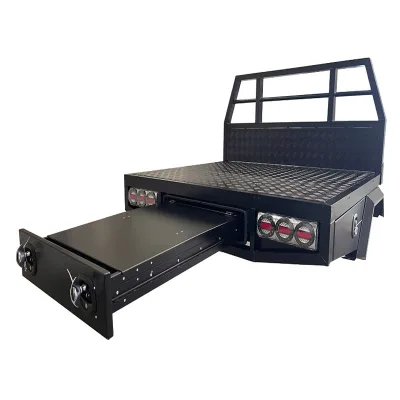
Aluminum Tool Box Tray Back Ute Canopy for Sale Aluminum Storage Box
$200.00 - $1000.00
MOQ: 10 Pieces




Comprehensive Sourcing Guide
Strategic Sourcing Guide for Truck Storage Aluminum Ute Trays
The global demand for durable, lightweight, and versatile truck storage solutions has driven significant innovation in the aluminum ute tray market. For procurement professionals, sourcing these components requires a nuanced understanding of material science, manufacturing standards, and supply chain logistics. The core keyword "Truck Storage Aluminum Ute Tray" encompasses a diverse range of products, from heavy-duty tool boxes to full canopy systems and custom trays designed for specific vehicle models. This guide provides a disciplined approach to evaluating suppliers and specifications, ensuring that procurement decisions are grounded in verified facts and industry best practices rather than marketing assertions.
Technical Specifications and Material Composition
When evaluating aluminum ute trays, the primary technical differentiator is the material composition and structural integrity. The supplied data indicates that aluminum is the predominant material used, specifically noted as "Aluminium" or "Aluminum" in various product listings. This material choice is critical for balancing weight reduction with load-bearing capacity, a necessity for commercial and utility vehicles. The trays often feature a "Double Deck" configuration, which maximizes storage volume by creating two distinct levels for organizing tools and equipment.
Structural specifications vary significantly based on the intended application. Some units are designed with a "4x4 dual cab aluminum/steel ute tray" configuration, suggesting a hybrid approach where aluminum is used for the tray bed while steel may reinforce specific stress points. The surface finishing process is another vital technical aspect; "Powder Coated" surfaces are commonly observed, providing enhanced corrosion resistance and aesthetic durability. Additionally, the manufacturing process often involves "Fully Seam Welded" construction, which ensures a watertight and robust structure capable of withstanding the rigors of transport and heavy loading.
The dimensions and capacity of these units are equally important. Observed data points to a "Medium Capacity" classification, suitable for general utility purposes rather than extreme industrial hauling. Specific model specifications, such as "prod_model: 013" or "prod_model: 001," indicate that buyers must verify exact dimensions against their vehicle chassis. The "Length: 1800" specification suggests a standard sizing metric that may apply to certain models, but buyers should confirm that the physical footprint aligns with their fleet requirements. Furthermore, the "Single gross weight" of 6.000 kg for certain packaged units highlights the importance of verifying the actual weight of the tray to ensure it does not exceed the vehicle's payload limits.
Compliance, Certification, and Safety Standards
In the B2B procurement of automotive accessories, compliance with international standards is non-negotiable. The supplied facts reveal a mix of certifications and standards that buyers must verify on a per-supplier basis. Notable certifications mentioned include "TUV" and "GS," which are recognized marks of safety and quality in the European and global markets. Additionally, manufacturing standards such as "ISO9001: 2015 & TS16949: 2016" and "ISO9001: 2008 & TS16949: 2002" are referenced. These standards indicate a commitment to quality management systems and specific automotive industry requirements, though the specific version (2008 vs. 2015) may vary between suppliers and product lines.
Buyers must exercise caution when interpreting these standards. While the presence of "ISO9001" is a strong indicator of a quality management system, it does not guarantee that every specific product batch meets the highest safety thresholds without further testing. The "prod_standard: 1800" mentioned in the data is ambiguous without context and should be treated as a reference code rather than a universal safety metric. Similarly, the "Australia Design" attribute suggests that some products are engineered to meet Australian vehicle standards, which are among the most stringent globally. However, this design origin does not automatically imply compliance with local regulations in other regions, such as the United States or the European Union.
Safety features are also integral to the product design. The inclusion of "Trailer Locks" as a component and "Lockable T-Lock" mechanisms highlights the importance of security in truck storage solutions. These locking systems are essential for protecting valuable cargo and tools. Buyers should verify that the locking mechanisms are compatible with their existing security protocols and that the materials used for the locks are resistant to tampering and corrosion. The "Waterproof" and "Shockproof" attributes observed in the product data further underscore the need for rigorous testing to ensure that the storage units can protect contents from environmental hazards and impact during transit.
Cost Drivers and Pricing Dynamics
The pricing of aluminum ute trays is influenced by a complex array of factors, including material costs, manufacturing complexity, and supply chain logistics. The observed price range in the market spans from 19 USD to 1520.47 USD, a wide disparity that reflects the diversity of product offerings. Lower-priced items may correspond to smaller accessories or basic models with minimal customization, while higher-priced units likely represent fully customized, heavy-duty trays with advanced features such as integrated lighting, specialized locking systems, or complex welding requirements.
Material costs play a significant role in the final price. Aluminum prices are subject to global market fluctuations, and the thickness and grade of the aluminum used can drastically affect the cost. The "Heavy Duty" classification often commands a premium due to the increased material usage and reinforced construction. Additionally, the "Customization: Available" attribute indicates that bespoke designs will incur higher costs compared to standard off-the-shelf models. Buyers should anticipate that features such as "Powder Coated" finishes, "Fully Seam Welded" construction, and specific "OEM Design and Specifications" will add to the base price.
Supply chain factors also impact pricing. The "Supply Ability: 1500 Piece/Pieces Per Mon" suggests that some suppliers have significant production capacity, which can lead to economies of scale and potentially lower unit costs for large orders. However, the "MOQ: 5 Pieces" and a broader range of "1-30" indicate that minimum order quantities vary widely. Suppliers with lower MOQs may charge a premium per unit to cover setup and administrative costs. The "Best Price in China" claim observed in the data should be treated as a marketing statement rather than a guaranteed benchmark, as prices are highly competitive and dependent on the specific negotiation and order volume.
Typical Applications and Functional Versatility
Aluminum ute trays are designed for a wide spectrum of applications, ranging from construction and agriculture to emergency services and general logistics. The "Multi-Purpose Usage" attribute confirms their adaptability across different industries. For construction professionals, the "Shockproof" and "Waterproof" features are essential for protecting sensitive tools and equipment from harsh job site conditions. The "Double Deck" design allows for efficient organization, separating heavy machinery from smaller hand tools, thereby improving workflow efficiency.
In the agricultural sector, the "Outdoor" room space requirement and robust construction make these trays ideal for transporting livestock feed, tools, and spare parts. The "Easy Fitting" feature is particularly valuable in this context, as it minimizes downtime during installation. For emergency services and utility companies, the "Lockable T-Lock" and "Trailer Locks" provide the necessary security for high-value equipment. The "Carbon Brush" attribute, while seemingly out of place for a tray, may indicate compatibility with specific electrical systems or components within the vehicle, suggesting a level of integration that goes beyond simple storage.
The "Automation Equipment" application mentioned in the data points to a niche use case where aluminum trays may be integrated into automated systems or robotic platforms. This highlights the versatility of the material and the potential for custom engineering. The "Aluminum Track" keyword further suggests that these trays can be part of a larger modular system, allowing for the attachment of various accessories and tools. Buyers should assess their specific operational needs to determine which functional attributes are most critical for their use case.
Supplier Evaluation and Manufacturing Capabilities
Selecting the right supplier is a critical step in the procurement process. The supplied data indicates that the "place of origin" is primarily "Zhejiang, China," a region known for its manufacturing capabilities. However, buyers should not rely solely on the country of origin when evaluating suppliers. Instead, they should focus on the supplier's "customized support" capabilities, which include "OEM, ODM, OBM" services. This indicates that the supplier can accommodate various levels of customization, from simple branding to full design and manufacturing.
The "Advantage: One Stop Shop Aluminium Manufacturing" suggests that some suppliers offer end-to-end services, from raw material sourcing to final assembly. This can streamline the procurement process and reduce the risk of supply chain disruptions. However, buyers must verify the actual scope of these services to ensure that the supplier can meet their specific quality and timeline requirements. The "Brand name: Alunov" is mentioned, but buyers should not assume that this is the only or the best brand available. Instead, they should evaluate the brand's reputation, customer reviews, and track record in the market.
Production capacity is another key factor. The "Supply Ability: 1500 Piece/Pieces Per Mon" provides a baseline for understanding the supplier's volume capabilities. However, buyers should also inquire about lead times, especially for custom orders. The "Pallet" packing method and "Seaworthy Packaging" indicate that the supplier is prepared for international shipping, but buyers should verify the packaging standards to ensure that the products arrive in pristine condition. The "Payment Terms: 30% Deposit" is a common practice, but buyers should negotiate terms that protect their interests and ensure that the supplier is committed to delivering the order.
Quality Control and Long-Term Procurement Considerations
Ensuring consistent quality is paramount in the procurement of aluminum ute trays. The "Surface: Plate" and "Surface finishing: Powder Coated" attributes highlight the importance of surface treatment in preventing corrosion and extending the product's lifespan. Buyers should request samples or detailed specifications to verify the quality of the powder coating and the thickness of the aluminum plate. The "Fully Seam Welded" construction is a strong indicator of structural integrity, but buyers should also request test results or certifications to confirm that the welding meets the required standards.
Long-term procurement considerations involve more than just the initial purchase price. Buyers should evaluate the durability and maintenance requirements of the product. The "Waterproof" and "Shockproof" features are essential for long-term reliability, but buyers should also consider the ease of repair and the availability of replacement parts. The "Customization: Available" attribute suggests that suppliers can adapt to changing needs, but buyers should ensure that the customization process is efficient and cost-effective.
Finally, buyers should consider the environmental impact of their procurement decisions. Aluminum is a highly recyclable material, and sourcing from suppliers who adhere to "ISO9001" and "TS16949" standards can help ensure that the manufacturing process is environmentally responsible. The "Australia Design" attribute may also indicate a focus on sustainability and efficiency, as Australian standards often prioritize these factors. By taking a holistic approach to procurement, buyers can secure high-quality aluminum ute trays that meet their operational needs while supporting long-term business goals.
FAQs
What materials are used for truck storage aluminum ute trays?
These trays are primarily constructed from aluminum or aluminium to ensure durability and weight reduction. Some models may feature hybrid designs with steel reinforcement for specific stress points while maintaining a lightweight profile for efficient transport.
Can I customize the design of my Truck Storage Aluminum Ute Tray?
Yes, customization is available for most models to meet specific operational needs. Buyers can request OEM, ODM, or OBM services, allowing for tailored dimensions, finishes, and features like powder coating or specific locking mechanisms.
Which certifications should I look for in a supplier?
Reputable suppliers often hold ISO9001 and TS16949 certifications to ensure quality management standards. Additional safety marks like TUV and GS may also be present, indicating compliance with rigorous international safety and manufacturing protocols.
How is the surface of the aluminum tray finished?
The surface is typically powder coated to provide enhanced corrosion resistance and aesthetic durability. This finishing process is applied over a plate surface to protect the aluminum structure from environmental wear during heavy-duty use.
What is the minimum order quantity for these trays?
Minimum order quantities vary, with some suppliers requiring as few as 5 pieces while others may set limits up to 30. Buyers should verify specific MOQs as they depend on the model and customization level requested.
Are these trays suitable for outdoor use?
Yes, they are designed for outdoor room space requirements with waterproof and shockproof functions. This ensures that tools and equipment remain protected from the elements and impact during transport in various weather conditions.