Source Kevlar Cord Rubber V Belt for Mining Textile Food
Compare 30 listings of Kevlar Cord Rubber V Belt designed for agricultural machinery, mining equipment, and textile applications. These wrapped rubber belts feature high tensile strength and resistance to heat, oil, and wear for reliable power transmission.
Key considerations
Products List


Kevlar Belt Supplier Rubber V Belt Transmission Part for Harvester Drive Belt
$0.50 - $10.00
MOQ: 100 Pieces


Abrasion Resistance Power Transmission Polyester Tension Cord Rubber V Belt
$0.30 - $0.50
MOQ: 500 Meters


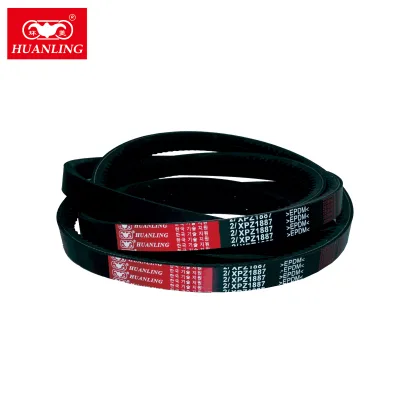


Comprehensive Sourcing Guide
Kevlar Cord Rubber V Belt Sourcing Guide
Product Scope and Observed Listing Signals
The market for wrapped rubber V belts featuring Kevlar cord reinforcement presents a distinct category of power transmission components designed for high-stress industrial environments. Based on observed listing signals, these products are primarily categorized as wrapped rubber V belts, with specific model designations such as SPA, SPB, SPC, 3V, 5V, and 8V, alongside older metric standards like HA through HO and SB/SC series. The core material composition typically involves a blend of polyester and Kevlar cords embedded within a rubber matrix, a combination selected to maximize tensile strength while minimizing elongation under load. Buyers should note that while the term "V belt" is dominant, some listings may also reference wrapped rubber belts or conveyor belts, indicating a broader application scope that includes both power transmission and material handling.
Observed product attributes highlight a strong emphasis on durability and environmental resistance, with features frequently cited as wear-resistant, heat-resistant, flame-resistant, and oil-resistant. The presence of Kevlar and polyester cords is a critical differentiator, offering almost no elongation compared to standard polyester-only belts, which ensures consistent speed ratios and reduces maintenance frequency. Listings often indicate that these belts are manufactured in Henan, China, and are available in standard or non-standard configurations, with customization services offered to meet specific machinery requirements. The observed price range is broad, spanning from $0.05 to $100, reflecting the variance in belt length, cross-section size, and order volume, while minimum order quantities (MOQs) typically range from 1 to 2,000 pieces, allowing for both sample testing and bulk procurement.
Technical Specifications to Verify
When evaluating technical specifications, the first priority is verifying the cross-section profile and length compatibility with existing drive systems. The observed models include a wide array of profiles, from the narrower 3V, 5V, and 8V sections to the broader SPA, SPB, and SPC series, as well as the HA through HO and 9J metric equivalents. Buyers must confirm that the selected model matches the sheave groove dimensions precisely, as mismatches can lead to slippage, excessive heat generation, and premature failure. Additionally, the standard lengths observed in listings range from 480mm to 20,000mm, with some products adhering to specific dimensional standards like 406080, which may refer to packaging or specific belt dimensions rather than the belt itself. It is essential to request detailed dimensional drawings or catalog references to ensure the physical belt fits the intended pulley system without modification.
The internal construction and material properties are equally critical for ensuring long-term performance. The use of Kevlar and polyester cords is a key technical feature, providing high tensile strength and minimal elongation, which is vital for maintaining tension in high-speed or high-torque applications. Buyers should verify the raw material composition, ensuring that the rubber compound offers the necessary resistance to heat, oil, acid, alkali, and corrosion, as these properties are frequently advertised but must be validated against the specific operating environment. Furthermore, the production process, often involving drum vulcanizing or molding machines, influences the belt's structural integrity and wrap quality. Confirming that the belt is a "wrapped" type is important, as the fabric wrap protects the cord body from abrasion and moisture, extending service life in harsh conditions.
Compliance and Safety Documentation
Safety and compliance in power transmission components primarily revolve around the material's resistance to hazardous conditions and the manufacturer's adherence to quality management systems. While specific certification statuses like ISO9001 are mentioned in background data, buyers should not assume all suppliers hold these certifications without verification. Instead, procurement teams should request current certificates of conformity and quality management system audits to ensure the manufacturing facility maintains consistent production standards. The presence of flame-retardant and anti-static features in some listings suggests that certain belts are suitable for environments where spark ignition or static discharge poses a risk, such as in mining or chemical processing. Buyers must verify that the material safety data sheets (MSDS) and product specifications explicitly state compliance with relevant safety standards for these specific hazards.
Documentation should also cover the belt's performance under extreme conditions, particularly regarding temperature and chemical exposure. Since the observed features include high temperature-resistance, acid-resistance, and oil-resistance, buyers should ask for test reports or material certifications that quantify these limits. For instance, knowing the maximum operating temperature and the specific types of oils or chemicals the rubber compound can withstand is crucial for preventing degradation. Additionally, if the belt is intended for use in food machinery or medical applications, buyers must ensure that the rubber compound is non-toxic and meets relevant food-grade or sanitary standards, although the observed applications lean heavily toward industrial machinery. Clear documentation of the belt's origin, material composition, and performance limits is essential for risk management and regulatory compliance.
Cost Drivers and Commercial Terms
The cost of Kevlar cord rubber V belts is influenced by several factors, including the raw material costs of Kevlar and rubber, the complexity of the cross-section, and the order volume. The observed price range of $0.05 to $100 reflects the diversity of products, with smaller, shorter belts or those with simpler profiles costing less, while larger, custom-length belts with premium Kevlar reinforcement command higher prices. Minimum order quantities (MOQs) ranging from 1 to 2,000 pieces allow for flexibility, but buyers should be aware that larger orders often result in better unit pricing. It is important to clarify whether the quoted price includes packaging, such as woven bags, cartons, or pallets, as improper packaging can lead to damage during transit, especially for longer belts.
Commercial terms also encompass customization and sample availability, which can impact the total cost of procurement. Many suppliers offer free OEM services and free samples, which can be valuable for testing compatibility and quality before committing to a large order. However, buyers should confirm if there are any hidden costs associated with custom mold creation or special packaging requirements. The observed packing standards, such as 20 pieces per carton or specific pallet configurations, should be aligned with the buyer's logistics capabilities to avoid additional handling fees. Additionally, understanding the lead times and production capacity of the supplier is crucial for maintaining inventory levels, although specific lead time data is not provided in the observed listings. Clear communication regarding payment terms, shipping responsibilities, and warranty policies is essential to avoid unexpected expenses.
Supplier Qualification and Quality Control
Qualifying suppliers for Kevlar cord rubber V belts requires a thorough assessment of their manufacturing capabilities and quality control processes. The observed production machinery, including drum vulcanizing and molding machines, indicates a level of industrial capability, but buyers should verify the age and maintenance status of this equipment to ensure consistent product quality. Suppliers that offer free OEM services and customization are likely to have flexible production lines, but this flexibility must be balanced with strict quality control measures to prevent defects. Buyers should request information about the supplier's quality assurance protocols, including in-process inspections and final product testing, to ensure that the belts meet the specified tensile strength and dimensional tolerances.
The origin of the products, primarily Henan, China, suggests a concentration of manufacturing expertise in this region, but buyers should not rely solely on geographic location as a proxy for quality. Instead, they should conduct due diligence on the supplier's reputation, past performance, and customer feedback. The low replacement rate advertised for some products is a positive indicator of durability, but buyers should seek references or case studies from other industrial clients to validate this claim. Additionally, verifying the supplier's ability to provide consistent supply, especially for custom orders, is important for long-term procurement stability. Buyers should also assess the supplier's responsiveness to technical queries and their willingness to provide detailed product documentation, as these factors are indicative of a reliable partnership.
Long-Term Procurement Checks
Long-term procurement of Kevlar cord rubber V belts involves ongoing monitoring of product performance and supplier reliability. Buyers should establish a system for tracking belt lifespan, failure modes, and maintenance costs in their specific applications to evaluate the true value of the Kevlar-reinforced belts. The observed applications, which include agricultural machinery, mining equipment, textile machinery, and food machinery, present diverse operating conditions that can affect belt wear. By comparing the performance of Kevlar cord belts against standard polyester belts, buyers can quantify the benefits of reduced elongation and higher tensile strength, justifying the potentially higher initial cost. Regular audits of the supplier's quality control processes and material sourcing can help ensure that the product quality remains consistent over time.
Furthermore, buyers should maintain open communication with suppliers to stay informed about any changes in material composition, manufacturing processes, or product standards. The availability of free samples and customization services suggests that suppliers are responsive to market needs, but buyers should proactively request updates on new product developments or improved formulations. It is also important to review the supplier's compliance with any evolving regulatory standards, particularly regarding environmental and safety regulations. By maintaining a strategic relationship with qualified suppliers and continuously evaluating product performance, buyers can optimize their power transmission systems, reduce downtime, and achieve long-term cost savings.
FAQs
What materials are used in the belt?
The belt is constructed from rubber with Kevlar and Polyester cords. This combination provides high tensile strength and almost no elongation under load, ensuring durability for heavy-duty applications.
Which models are available for purchase?
Available models include SPA, SPB, SPC, 3V, 5V, 8V, and various HB, HC, HD series. These specifications cover a wide range of power transmission needs for different machinery types.
Can I request custom packaging options?
Yes, customization is available for packaging requirements. Products are typically packed in plastic bags, woven bags, or cartons, with options for palletized shipping to meet specific logistics needs.
How is the belt resistant to environmental factors?
The belt features high temperature, cold, oil, acid, and alkali resistance. It is also designed to be wear-resistant, flame-retardant, and anti-static for safe operation in diverse industrial environments.
What is the origin of the product?
The product originates from Henan, China. This location is a known manufacturing hub for rubber belts and industrial machinery components, ensuring consistent production capabilities.
Is free OEM service provided?
Yes, free OEM service is available for buyers. This allows clients to customize the product branding or specifications without incurring additional service fees during the manufacturing process.