Source Key Locking Thread Inserts for Machinery, Rocket, Shipping
Compare 30 Key Locking Thread Inserts from verified suppliers in China. Options include stainless steel and carbon steel variants with ISO certifications, available in sizes from M2 to M12 for machinery, medical, and shipping applications.
Key considerations
Products List


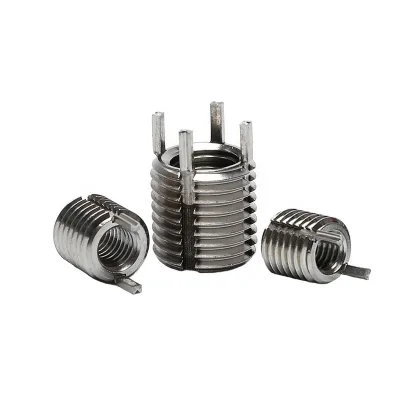
High Strength Keyserts Easy Install High Cycle Life Key Locking Inserts
$0.42 - $0.45
MOQ: 1000 Pieces

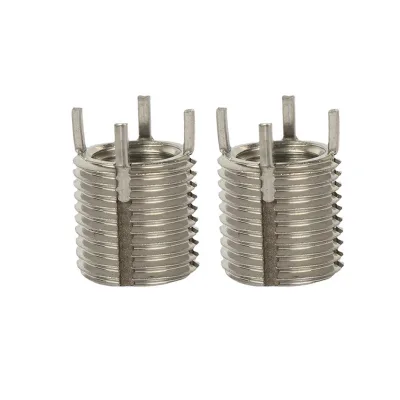
Key Locking Thread Insert with 304 Stainless Steel Insert Heavy Duty Type
$0.42 - $0.45
MOQ: 1000 Pieces


Comprehensive Sourcing Guide
Strategic Sourcing Guide for Key Locking Thread Inserts
Navigating the global market for Key Locking Thread Inserts requires a disciplined approach that balances technical precision with supply chain reliability. These components, often referred to as Keen Locking Thread Inserts, serve as critical fastening solutions in environments where vibration, thermal cycling, or high stress could compromise standard threaded connections. For procurement professionals, the primary challenge lies in distinguishing between generic fasteners and specialized locking mechanisms that meet rigorous engineering standards. The following guide outlines the essential parameters for sourcing these components effectively, drawing on observed market data and technical requirements.
Technical Specifications and Material Selection
The foundation of a successful procurement strategy begins with a precise definition of technical specifications. The market offers a diverse range of materials, including Stainless Steel, Carbon Steel, Aluminum, and general Steel variants. The choice of material is not merely a cost decision but a functional requirement driven by the operating environment. For applications involving high corrosion resistance, such as in chemical or marine shipping contexts, Stainless Steel is the preferred baseline. Conversely, for heavy industry applications where cost-efficiency is paramount and corrosion is less of a concern, Carbon Steel may be selected, often requiring additional surface treatments.
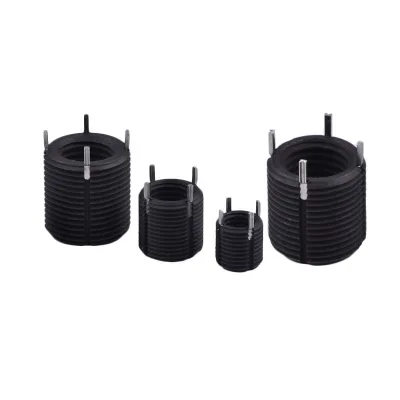
Surface finishing plays a pivotal role in the longevity and performance of these inserts. Observed market data indicates that Nickel Plating and Zinc Plating are common surface treatments, designed to enhance corrosion resistance and reduce friction during installation. Some products also feature polishing or colorful finishes, which may serve aesthetic purposes or indicate specific coating types. The thread specification is equally critical; buyers must verify whether the product adheres to Metric or Unified (Inch) standards. Specific model numbers observed in the market, such as EA-M25, EA-M6, EA-M8, and L5010, suggest a wide range of available sizes, typically spanning from M2 to M12. The rotation direction is another vital technical parameter, with Right Rotation being a standard configuration for most applications. However, verifying the specific thread pitch and diameter against the host material's requirements is essential to ensure a secure fit.
Compliance, Certification, and Regulatory Standards
In the B2B sector, compliance is non-negotiable. When sourcing Key Locking Thread Inserts, buyers must rigorously verify that suppliers adhere to recognized international standards. The most frequently observed certifications in the current market landscape include ISO and RoHS. These certifications indicate that the manufacturing process meets quality management benchmarks and restricts the use of hazardous substances, respectively. Some suppliers may also hold CE certification, which is particularly relevant for products intended for the European market.
It is important to note that certification status is not uniform across all listed products. While some entries explicitly list ISO, RoHS, and CE, others may only reference ISO. Procurement teams should not assume that every product in a catalog carries the same level of compliance. Instead, the verification process must involve requesting current certificates of conformity for the specific batch or model being ordered. Additionally, the standard "Follow Drawing Spec" quality control method suggests that many manufacturers prioritize custom engineering drawings over generic standards. This approach requires the buyer to provide detailed technical drawings to ensure the final product matches the exact design intent, particularly for custom applications.
Cost Drivers and Pricing Dynamics
Understanding the cost structure of Key Locking Thread Inserts is essential for budgeting and negotiation. The observed price range in the market spans from $0.01 to $5.00 USD per unit. This wide variance is influenced by several factors, including material composition, surface treatment complexity, and order volume. Stainless Steel and Nickel Plated variants generally command a higher price point compared to Carbon Steel with Zinc Plating. Furthermore, the level of customization significantly impacts cost. Products labeled as "Customized" or those requiring specific model numbers like EA-M25 may incur higher unit costs due to the specialized tooling or smaller production runs involved.
Minimum Order Quantity (MOQ) is another critical cost driver. The market data reveals an MOQ range from 1 to 2000 units. Buyers seeking to minimize inventory costs can often source small quantities, with some suppliers offering samples or low-volume orders starting at just one unit. However, larger orders typically unlock better pricing tiers. The packaging method also plays a role in logistics costs; products are commonly packed in Plastic Bags, PE Bags, or combinations with Carton Cases. Bulk packaging standards, such as 100 pieces per bag, can streamline shipping and reduce handling time, indirectly affecting the total landed cost.
Typical Applications and Usage Scenarios
Key Locking Thread Inserts are versatile components designed for a broad spectrum of industries. The observed usage data highlights applications in Machinery, Building, Medical, Rocket, Shipping, and Chemical sectors. In the machinery and heavy industry sectors, these inserts provide the necessary durability to withstand constant vibration and mechanical stress. The "Durable" and "High Precision" attributes listed for these products make them ideal for critical assembly points where failure is not an option.
The medical and rocket industries demand even higher standards of reliability and material purity. For medical equipment, the use of Stainless Steel and adherence to strict hygiene and corrosion resistance standards are paramount. Similarly, in aerospace applications like rocketry, the ability of the insert to maintain integrity under extreme thermal and pressure conditions is crucial. The "Rust Anti" and "Easy to Use" advantages suggest that these inserts are designed for ease of installation and long-term performance in harsh environments. Buyers should match the specific application requirements with the product's stated advantages to ensure compatibility. For instance, a chemical processing plant would prioritize the "Rust Anti" feature and the material's resistance to corrosive agents.
Supplier Evaluation and Lead Time Management
Selecting the right supplier involves more than just comparing prices; it requires an assessment of logistical capabilities and reliability. The observed delivery methods include major international couriers such as DHL, UPS, TNT, FedEx, and EMS, as well as Ocean and Air freight options. This variety indicates that suppliers are equipped to handle both urgent, small-batch deliveries and large, cost-effective bulk shipments. The typical delivery time is reported as within 3-7 working days for many standard orders, which is a significant advantage for projects with tight schedules.
However, lead times can vary based on the level of customization. While standard items like the EA-M6 or L808 models may be readily available, custom orders might require additional production time. Buyers should verify the specific lead time for their required model before finalizing the purchase. Additionally, the origin of the products, primarily from Guangdong and Shenzhen in China, suggests a mature manufacturing ecosystem with access to advanced production facilities. When evaluating suppliers, procurement teams should confirm the "Quality Control" processes, ensuring that the "Follow Drawing Spec" protocol is strictly enforced. This ensures that the final product matches the engineering drawings provided by the buyer, minimizing the risk of fitment issues.
Quality Control and Long-Term Procurement Considerations
Maintaining quality over the long term requires a proactive approach to supplier management and quality assurance. The warranty period for these products is typically observed as 6 months, which serves as a baseline for performance expectations. However, relying solely on the warranty is insufficient; buyers should implement their own incoming quality inspection protocols. This includes verifying the "High Precision" claims through dimensional checks and ensuring that the "Surface Finishing" meets the specified requirements for corrosion resistance.
For long-term procurement, establishing a relationship with suppliers who offer sample availability is beneficial. The ability to test samples before committing to large orders allows buyers to validate the product's performance in real-world conditions. Furthermore, buyers should consider the "Advantage" attributes such as "Easy to Use" and "Durable" as key performance indicators for future orders. If a specific model, such as the L5010 or Sandum, proves reliable in initial trials, it may be worth securing a long-term supply agreement to ensure consistent availability and pricing.
Comparative Overview of Product Attributes
To facilitate decision-making, the following table summarizes the key attributes observed in the market for Key Locking Thread Inserts. This comparison helps buyers quickly identify products that align with their specific technical and logistical needs.
| Attribute Category | Observed Options | Strategic Implication |
|---|---|---|
| Material | Stainless Steel, Carbon Steel, Aluminum, Steel | Select based on corrosion resistance and load requirements. |
| Surface Finish | Nickel Plated, Zinc Plated, Polishing, Colorful | Critical for environmental durability and friction reduction. |
| Certification | ISO, RoHS, CE | Essential for regulatory compliance in medical, aerospace, and EU markets. |
| Size/Model | M2-M12, EA-M25, EA-M6, L5010, Sandum | Verify specific model numbers against engineering drawings. |
| Thread Standard | Metric, Inch, Unified | Must match the host component's thread specifications. |
| MOQ Range | 1 to 2000 Units | Flexibility allows for both prototyping and bulk production. |
| Lead Time | 3-7 Working Days (Standard) | Verify for custom orders; critical for project scheduling. |
| Warranty | 6 Months | Standard baseline; negotiate extended terms for high-volume contracts. |
By adhering to these guidelines and maintaining a focus on verified facts rather than marketing claims, procurement professionals can secure high-quality Key Locking Thread Inserts that meet the demanding requirements of modern engineering applications. The combination of rigorous technical verification, compliance checks, and strategic supplier evaluation ensures a robust supply chain capable of supporting diverse industrial needs.
FAQs
What certifications do Key Locking Thread Inserts typically have?
Most products hold ISO and RoHS certifications, with some also featuring CE marks. Buyers should verify specific certificates for each batch, as not all listed items share identical compliance status. Quality control often follows drawing specifications rather than generic standards.
Which materials are used for manufacturing these inserts?
Available materials include Stainless Steel, Carbon Steel, Aluminum, and general Steel variants. Stainless Steel is preferred for corrosion resistance in chemical or marine environments, while Carbon Steel is often selected for heavy industry applications where cost efficiency is prioritized.
How long is the delivery time for standard orders?
Standard delivery times are typically within 3 to 7 working days for many items. Lead times may vary for custom orders requiring specific tooling, so buyers should confirm the timeline for their specific model before finalizing the purchase to ensure project scheduling.
Can I order samples before committing to a large purchase?
Samples are available for most key locking thread insert models to validate performance. This allows buyers to test durability and precision before placing bulk orders, which helps mitigate risks associated with fitment issues or material incompatibility in critical applications.
What is the minimum order quantity for these products?
The minimum order quantity ranges from 1 to 2000 units depending on the supplier. Small quantities are suitable for prototyping, while larger orders often unlock better pricing tiers. Packaging standards like 100 pieces per bag can also influence logistics costs.
Which surface finishes are commonly applied to these inserts?
Common surface treatments include Nickel Plating, Zinc Plating, Polishing, and Colorful finishes. These treatments enhance corrosion resistance and reduce friction during installation, with Nickel and Zinc plating being particularly effective for harsh industrial environments requiring long-term durability.