Source Kids Fashion Egg Eraser for School Office and Gifts
Explore 30 listings of Kids Fashion Egg Eraser options suitable for school supplies, office use, and promotional gifts. Buyers can compare customization, materials, and pricing to find the right supplier for their needs.
Key considerations
Products List

Promotional School Supply Egg Egg Eraser Fashion School Eraser (GW003-1)
$0.20 - $0.30
MOQ: 20000 Pieces

Promotional Greenwill Funny Egg Eraser Fashion School Eraser (GW003-1)
$0.10 - $0.30
MOQ: 20000 Pieces

Creative Easter Egg Eraser Fashion School Reward Prize Eraser (GW003-1)
$0.16 - $0.26
MOQ: 20000 Pieces

Hot Sales Gift Eraser Greenwill Egg Egg Eraser Fashion School Eraser (GW003-1)
$0.20 - $0.30
MOQ: 20000 Pieces

Hot Sales Easter Fun Greenwill Colorful Egg Fashion School Eraser (GW003-1)
$0.16 - $0.26
MOQ: 20000 Pieces

Promotion Greenwill Kids Favor Food Pattern Eraser Gift Eraser (GW041)
$0.37 - $0.47
MOQ: 20000 Pieces


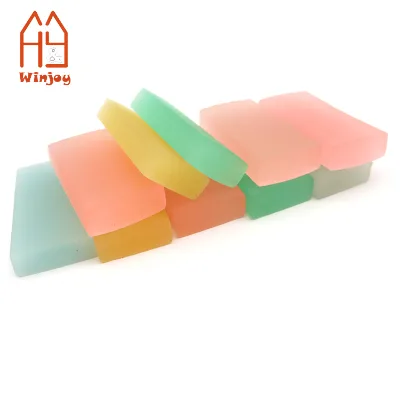
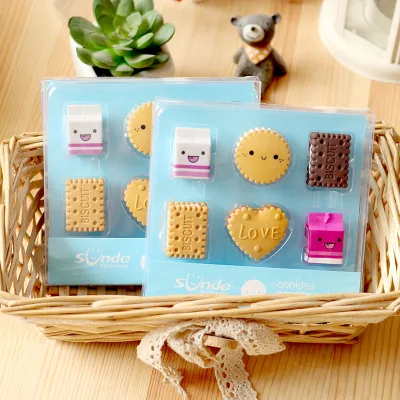
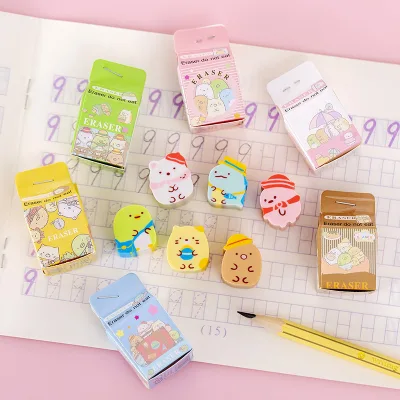
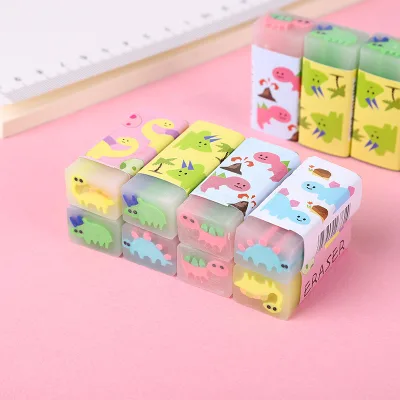


Comprehensive Sourcing Guide
Strategic Sourcing Guide for Kids Fashion Egg Erasers
Navigating the B2B market for novelty stationery items requires a precise understanding of product attributes, supply chain logistics, and compliance frameworks. The "Kids Fashion Egg Eraser" represents a specific niche within the broader promotional and educational stationery sector. This guide synthesizes available product data and industry standards to assist procurement professionals in identifying viable suppliers and managing the acquisition of these items. The focus remains on factual observations derived from current market listings and established procurement principles, avoiding speculative claims or unverified performance metrics.
Understanding Product Attributes and Design Variations
The foundation of sourcing any stationery item lies in defining the exact product specifications. For the "Kids Fashion Egg Eraser," the market presents a diverse range of configurations rather than a single standardized unit. Based on observed product data, these items are primarily categorized as rubber erasers, often featuring specific design elements such as cartoon characters, animal shapes, or generic egg forms. The material composition is consistently identified as rubber, which is a standard for erasing performance, though specific formulations may vary by manufacturer.
A critical observation in the current market is the variability in physical dimensions. Listings indicate sizes ranging from approximately 3.9 cm by 2.1 cm by 1 cm to larger formats measuring 4.2 cm by 2.7 cm by 1.7 cm. Weight specifications also fluctuate, with observed data points including 15.5 grams and 24 grams. This variance suggests that "egg eraser" is a descriptive category rather than a rigid specification. Buyers must verify the exact dimensions and weight required for their specific packaging or promotional needs.
Furthermore, the aesthetic customization options are extensive. The market supports "ODM Design" and "Customer Logo" printing, allowing brands to tailor the visual identity of the product. Color options are frequently listed as "Multiple Colors" or "Multi Color," with specific instances noting case colors like yellow or green. The shape is predominantly rectangular in some listings, while others emphasize the "egg" or "cartoon" form factor. This diversity requires buyers to clearly communicate their design requirements to potential suppliers to ensure the final product aligns with the "fashion" aspect of the keyword.
Technical Specifications and Functional Requirements
When evaluating the technical aspects of these erasers, functionality is paramount. The primary function is explicitly stated as "Erasing," suitable for office, school, and general stationery supplies. The hardness of the rubber is a key performance indicator; observed data points to a "Soft" hardness classification, which is generally preferred for children's stationery to prevent damage to paper surfaces.
The structural design also varies significantly. Some products are noted as "Not Replaceable," indicating a solid rubber block, while others may feature different internal structures. The "Double-Headed" attribute is observed as "Without Double-Headed" in specific listings, suggesting that the standard egg eraser is a single-sided tool. However, buyers should remain vigilant, as the market for dual-ended erasers exists in the broader stationery category.
Packaging is another technical consideration that impacts logistics and retail presentation. Observed packaging types include "Display," "Carton," and "Box." The choice of packaging influences the unit cost and the suitability for different distribution channels. For instance, "Display" packaging is ideal for retail counters, while "Carton" packaging is more efficient for bulk shipping. The "prod_model" identifiers, such as GW003-1, GW041, and DH-1004, serve as unique references for these variations, though they are internal to specific suppliers.
Compliance, Safety, and Certification Verification
Safety is a non-negotiable aspect of sourcing products for children. The market data explicitly mentions "Eco Friendly Eraser" and "Style: Eco-Environmental" as key attributes. These claims suggest that suppliers are positioning their products to meet modern environmental and safety expectations. However, buyers must treat these as observations rather than guaranteed certifications without third-party validation.
While background knowledge often references standards like GOTS or OEKO-TEX, the supplied product data does not confirm that every listed item holds these specific certifications. Therefore, procurement teams must verify the actual certification status of the specific batch or model they intend to purchase. The "HS Code" 4016920000 is a standard classification for rubber articles, which aids in customs clearance but does not inherently guarantee safety compliance.
Buyers should request specific test reports to confirm that the rubber material is free from harmful substances such as phthalates or heavy metals, which are common concerns in children's products. The "Safety" attribute in the data is a strong indicator of intent, but it must be backed by documented evidence. Relying solely on marketing terms like "Eco Friendly" without verifying the underlying material safety data sheets (MSDS) or third-party test results poses a compliance risk.
Cost Drivers and Pricing Dynamics
The pricing structure for kids fashion egg erasers is influenced by several factors, including customization, volume, and material costs. The observed price range in the market is notably low, spanning from $0.01 to $0.90 USD per unit. This wide range reflects the difference between standard, unbranded items and highly customized, premium designs.
The Minimum Order Quantity (MOQ) is a significant cost driver. Data indicates an MOQ range from 10 units to 20,000 units, with a specific high-volume listing citing an MOQ of 10,000 pieces. This suggests that unit costs are highly sensitive to order volume. Smaller orders may incur higher per-unit costs due to setup fees for logo printing and molding. Conversely, large orders can leverage economies of scale to reduce the unit price.
Customization is a primary factor in cost escalation. The availability of "Customized" designs and "Customer Logo" printing adds value but also increases the complexity of the production process. Suppliers offering "OEM" and "ODM" services will typically charge a premium for design work and tooling. Buyers should anticipate that the final price will be a function of the complexity of the "egg" shape, the number of colors used, and the specific printing requirements.
Supplier Evaluation and Sourcing Strategy
Evaluating suppliers for this product category requires a focus on their capability to handle customization and maintain consistent quality. The "prod_origin" is listed as "China," with specific mentions of "Jiangsu, China" as a manufacturing hub. This region is known for its robust stationery industry, offering a concentration of suppliers with the necessary infrastructure for rubber molding and printing.
When assessing potential partners, buyers should look for suppliers who demonstrate flexibility in "Delivery Time," with many stating "Delivery in Time as Agreed." This indicates a willingness to negotiate timelines based on order specifics. The "Quantity" attribute is often listed as "Open to Discuss," suggesting that suppliers are open to negotiating order sizes, though the MOQ constraints must be respected.
A critical evaluation point is the supplier's ability to manage the "Quantity" and "MOQ" effectively. For buyers seeking to test the market, finding a supplier with a lower MOQ (e.g., 10-100 units) is essential. For established brands, securing a partner capable of handling volumes up to 20,000 units is necessary to ensure supply chain stability. The "Logo Printing" capability is also a key differentiator; suppliers must have the technical capacity to apply logos accurately without compromising the structural integrity of the eraser.
Quality Control and Performance Verification
Ensuring the quality of kids fashion egg erasers involves rigorous testing of both the material and the finished product. The "Eraser Type" varies from "3D" to "Cartoon" and "Animal," each requiring different quality checks. For 3D or cartoon-shaped erasers, the molding process must be precise to ensure that the details are sharp and the shape is consistent across the batch.
Quality control should also focus on the erasing performance. The "Function" is defined as "Erasing," but the efficiency of this function depends on the rubber hardness and composition. Buyers should request samples to test the erasing capability on standard paper types to ensure that the eraser removes graphite cleanly without smudging or tearing the paper. The "Hardness: Soft" observation suggests a gentle touch, but this must be verified to ensure it does not crumble excessively during use.
Packaging integrity is another quality metric. Whether the product is shipped in "Display," "Carton," or "Box" packaging, the packaging must protect the erasers from damage during transit. For items with specific colors or printed logos, the packaging should prevent color transfer or logo smudging. The "Standard" attribute is noted as "customized," meaning that buyers should define their own quality standards for dimensions, weight, and visual appearance to ensure consistency.
Long-Term Procurement and Market Considerations
Sourcing kids fashion egg erasers is not just a one-time transaction but part of a long-term supply chain strategy. The "Application" of these items spans "Office School Stationery Supplies" and "Kids Promotional Gift," indicating a versatile market. This versatility allows buyers to pivot their procurement strategy based on seasonal trends or promotional campaigns.
The "Style" of the product, described as "Eco-Environmental," aligns with growing consumer demand for sustainable products. As environmental regulations tighten and consumer awareness increases, suppliers who can provide verifiable eco-friendly materials will have a competitive advantage. Buyers should consider the long-term viability of their suppliers in adapting to these trends.
Furthermore, the "Design" aspect of the product, particularly the "ODM Design" capability, allows for continuous innovation. Buyers should work with suppliers who can offer new designs and variations to keep the product line fresh and appealing to children. The "Color" options, ranging from "Multiple Colors" to specific case colors, provide opportunities for brand differentiation.
In conclusion, sourcing kids fashion egg erasers requires a balanced approach that considers technical specifications, compliance, cost, and supplier capabilities. By focusing on verified data and maintaining rigorous quality control, buyers can secure a reliable supply of high-quality, safe, and attractive stationery items. The market offers significant flexibility in terms of customization and volume, making it an attractive option for both small promotional campaigns and large-scale retail distribution.
FAQs
What materials are used for kids fashion egg erasers?
These erasers are primarily made of rubber, as observed in product listings. The material is described as eco-friendly and soft, suitable for children's use in schools and offices without damaging paper surfaces.
Can buyers customize the logo and design of these erasers?
Yes, customization is available for customer logos and ODM designs. Suppliers offer options for multiple colors and specific shapes like cartoons or animals, allowing brands to tailor the product for promotional gifts.
What is the typical minimum order quantity for these erasers?
The minimum order quantity ranges from 10 to 20,000 pieces depending on the supplier. Some listings specify an MOQ of 10,000 pieces, while others remain open to discussion for smaller trial orders.
How are these erasers packaged for shipping and display?
Packaging options include display boxes, cartons, and individual boxes. The choice of packaging affects logistics and retail presentation, with carton packaging being efficient for bulk shipping and display packaging for retail counters.
Where are these rubber erasers manufactured?
The products originate from China, with specific manufacturing hubs noted in Jiangsu. This region is known for its robust stationery industry and offers suppliers capable of handling rubber molding and printing services.
What are the standard dimensions and weight of these erasers?
Dimensions vary, with observed sizes ranging from 3.9 by 2.1 by 1 cm to 4.2 by 2.7 by 1.7 cm. Weights are observed at 15.5 grams and 24 grams, indicating the category is descriptive rather than rigidly standardized.
Are these erasers safe for children and eco-friendly?
Products are marketed as eco-friendly erasers with soft hardness to ensure safety. While labeled as eco-friendly, buyers should verify specific test reports to confirm the absence of harmful substances like phthalates or heavy metals.