Source Large Screen Virtual Cycling Bike for Parks, Malls, and Resorts
Explore 30 listings for the Large Screen Virtual Cycling Bike designed for commercial amusement parks, shopping malls, and resort hotels. Buyers can compare specifications, pricing, and customization options to find the ideal unit for indoor or outdoor use.
Key considerations
Products List


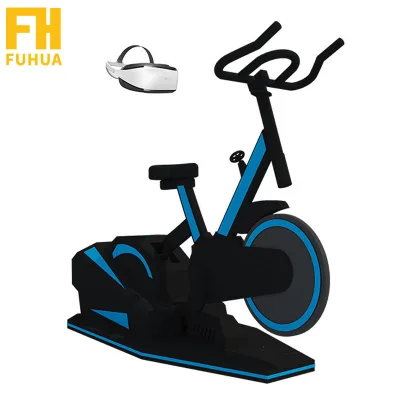


Good Quality Gym Sports Cycle Cycling Simulator with Big Screen Projection
$8500.00 - $8800.00
MOQ: 1 Sets


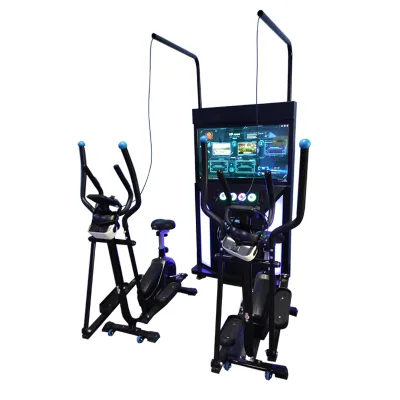

Comprehensive Sourcing Guide
Large Screen Virtual Cycling Bike Sourcing Guide
The Large Screen Virtual Cycling Bike represents a convergence of fitness technology and immersive entertainment, designed primarily for commercial venues such as indoor amusement parks, shopping malls, resort hotels, and educational play areas. These units transform traditional stationary cycling into an interactive experience by integrating high-resolution displays with virtual reality (VR) environments, allowing users to navigate simulated landscapes while exercising. The target demographic spans all ages, making these machines versatile assets for family-oriented entertainment centers and public recreational spaces. Procurement decisions for this category require a nuanced understanding of both the mechanical durability required for high-traffic usage and the technical specifications necessary to deliver a seamless digital experience.
Buyers must distinguish between standard fitness equipment and specialized VR cycling rigs, as the latter often involves significantly higher power consumption, complex packaging, and specialized installation requirements. The observed market includes products ranging from basic track bicycles to advanced VR units with 360-degree fields of view, indicating a broad spectrum of technological maturity. Sourcing guides must account for these variations, as the operational environment—whether a quiet gym or a bustling commercial arcade—dictates the necessary robustness of the frame, the intensity of the interactive features, and the level of customer support required. Understanding these distinctions is critical for aligning product selection with the specific operational goals of the purchasing entity.
Product Scope and Observed Listing Signals
The current market landscape for large screen virtual cycling bikes exhibits a wide variance in specifications, with observed prices ranging from $30 to $28,800 USD and minimum order quantities (MOQs) spanning from 1 to 200 units. This disparity reflects the difference between simple pedal-based exercise equipment and fully integrated VR systems that may include heavy-duty frames, powerful motors, and complex software interfaces. Buyers should note that products labeled as "VR bikes" often carry substantial weight, with some units weighing up to 180 kg and single gross weights reaching 250 kg, necessitating careful logistics planning and potentially specialized freight solutions. The presence of both "New" condition items and various customization options suggests a mature supply chain capable of tailoring products to specific brand identities or functional requirements.
Observations indicate that manufacturers offer significant customization capabilities, including logo printing, color variations such as blue or orange, and tailored game times, which are essential for branding in commercial settings. The product origin data points to key manufacturing hubs in China, specifically Jiangsu, Xingtai City in Hebei Province, and Guangdong, each potentially offering different advantages in terms of supply chain efficiency and component sourcing. While some listings describe the product as a "Track Bicycle" with specific wheel diameters like 27 inches or 20 inches, others focus on the interactive aspects, such as 360-degree field of view and popular science interactive features. Procurement teams must carefully cross-reference these attributes to ensure the selected unit meets the physical space constraints and user experience expectations of their intended deployment location.
Technical Specifications to Verify
When evaluating technical specifications, the frame material and construction quality are paramount, with aluminum alloy and steel being common choices for ensuring durability under heavy use. The fork material, often specified as steel, must be verified for its ability to withstand the dynamic loads generated during intense virtual cycling sessions. Additionally, the wheel size and diameter, which may vary between 16, 20, or 27 inches depending on the model, directly impact the stability and realism of the riding experience. Buyers should verify whether the unit includes a rear derailleur set or operates without one, as this affects the mechanical complexity and maintenance requirements. The saddle shell material, whether imitation leather or genuine leather, also plays a role in user comfort and long-term wear resistance, particularly in high-traffic commercial environments.
The electronic and interactive components require rigorous scrutiny, particularly for VR-specific models. Key specifications to verify include the power rating, which can be as high as 1500W for advanced units, and the voltage requirements, typically 220V, to ensure compatibility with local infrastructure. The single package size, which may reach dimensions of 200x80x180 cm, has significant implications for shipping costs and warehouse storage. Furthermore, the field of view, often advertised as 360 degrees, and the game time duration, which can be customized or fixed at intervals like 6 minutes, define the core user experience. Buyers must confirm the compatibility of the interactive features, such as popular science content, with the intended software ecosystem and ensure that the hardware can support the necessary data processing and display refresh rates.
Compliance and Safety Documentation
Compliance with international standards is a critical prerequisite for sourcing large screen virtual cycling bikes, particularly for commercial deployment. Certifications such as CE, RoHS, and ISO are frequently cited, indicating adherence to European safety, environmental, and quality management standards. Additionally, specific product standards like ISO9001 and SGS, or CCC for certain markets, provide assurance regarding manufacturing consistency and product safety. Buyers must request valid certification documents for each model, verifying that the certificates are current and cover the specific product variants being purchased. The absence of proper documentation can lead to regulatory hurdles, especially when importing goods into regions with strict safety and environmental regulations.
Safety documentation should also encompass detailed user manuals, warning labels, and maintenance guidelines that comply with local occupational health and safety laws. For interactive VR units, it is essential to verify that the software and hardware interfaces do not pose risks such as motion sickness or physical injury, particularly for younger users or individuals with pre-existing conditions. The inclusion of safety features, such as secure footrests made from alloy or plastic suitable for small feet, and robust mudguards, contributes to the overall safety profile. Buyers should ensure that the supplier provides comprehensive safety data sheets and that the product design minimizes pinch points and electrical hazards, thereby reducing liability risks for the end-user.
Cost Drivers and Commercial Terms
The cost structure of large screen virtual cycling bikes is influenced by several key factors, including the complexity of the VR integration, the quality of materials used in the frame and components, and the level of customization required. High-end models with 360-degree displays and powerful motors command premium prices, while simpler track bicycles remain more affordable. The observed price range of $30 to $28,800 USD highlights the importance of defining clear functional requirements before engaging with suppliers to avoid overpaying for unnecessary features or under-specifying for demanding use cases. Buyers should also consider the total cost of ownership, including shipping, installation, and ongoing maintenance, rather than focusing solely on the initial purchase price.
Commercial terms such as MOQ, lead times, and payment conditions vary significantly among suppliers and must be negotiated based on the scale of the procurement. The MOQ range of 1 to 200 units allows for flexibility, enabling both small-scale pilots and large-scale deployments. However, buyers should be aware that higher customization levels, such as logo printing or specific color schemes, may increase the MOQ or extend lead times. Packaging methods, whether wooden crates or cartons, also impact shipping costs and product protection during transit. Clear agreements on warranty periods, spare parts availability, and technical support are essential to mitigate operational risks and ensure long-term satisfaction with the procurement.
Supplier Qualification and Quality Control
Supplier qualification is a critical step in mitigating procurement risks, requiring a thorough assessment of the manufacturer’s capabilities, reputation, and quality management systems. Buyers should verify the supplier’s production capacity, facility conditions, and history of exporting to target markets. The presence of certifications like ISO9001 and SGS suggests a commitment to quality control, but buyers should conduct additional due diligence, such as requesting factory audit reports or third-party inspection results. Engaging with suppliers from established manufacturing hubs like Guangdong or Hebei Province can provide access to experienced manufacturers with robust supply chains, but it is essential to validate their specific expertise in VR cycling technology.
Quality control measures should be integrated into the procurement process, including pre-shipment inspections and sample testing. Buyers should request detailed product specifications and performance data to verify that the units meet the agreed-upon standards. For VR bikes, this may involve testing the display quality, interactive responsiveness, and mechanical stability under load. Establishing clear acceptance criteria and inspection protocols helps ensure that the delivered products are free from defects and perform as expected. Additionally, suppliers offering OEM and ODM services should be evaluated for their ability to maintain consistency and quality across customized orders, ensuring that brand integrity is preserved.
Long-Term Procurement Checks
Long-term procurement success depends on establishing strong relationships with suppliers who can provide ongoing support, updates, and maintenance services. Buyers should prioritize suppliers who offer comprehensive after-sales support, including technical assistance, software updates, and availability of spare parts. The interactive nature of VR cycling bikes means that software compatibility and content updates are crucial for maintaining user engagement over time. Suppliers who can provide regular content updates or allow for custom content integration add significant value to the procurement, ensuring that the equipment remains relevant and attractive to users.
Regular performance monitoring and feedback loops are essential for identifying potential issues early and addressing them proactively. Buyers should establish key performance indicators (KPIs) for equipment uptime, user satisfaction, and maintenance frequency to evaluate the long-term value of the procurement. Periodic reviews of supplier performance, including delivery reliability, product quality, and customer service responsiveness, help maintain high standards and drive continuous improvement. By focusing on these long-term checks, buyers can ensure that their investment in large screen virtual cycling bikes delivers sustained benefits and supports the operational goals of their commercial venues.
FAQs
What certifications do the large screen virtual cycling bikes have?
The products hold CE, RoHS, and ISO certifications. Some models also meet ISO9001 and SGS standards, while others comply with CCC requirements. These certifications ensure safety and quality for commercial and recreational use.
Can I customize the logo and color of the bike?
Yes, customization is available for both logo printing and color selection. Buyers can choose from options like Blue or Orange, or request a customized color scheme. OEM and ODM services are provided to meet specific branding needs.
What is the typical price range for these virtual cycling bikes?
The observed price range spans from 30 to 28800 USD depending on the model and specifications. Pricing varies based on features such as the VR system, power output, and whether the unit is a standard bicycle or a specialized amusement park ride.
Which wheel sizes are available for the bicycle models?
Available wheel sizes include 16 inches, 20 inches, and 27 inches. The specific size depends on the model type, ranging from small children's bikes to larger track bicycles designed for various age groups and usage scenarios.
How is the product packed for shipping?
Packaging options include wooden crates, cartons, or single items per carton. The specific packing method depends on the product type and size, ensuring safe transport for heavy units like the 180KG VR bike or standard bicycles.
What is the minimum order quantity for these bikes?
The minimum order quantity ranges from 1 to 200 units based on the supplier and product type. Buyers can often source single items or place larger orders depending on their specific business requirements and the supplier's capacity.
Where are these virtual cycling bikes manufactured?
Products originate from locations including Jiangsu, Xingtai City in Hebei Province, and Guangdong in China. These regions are known for manufacturing diverse bicycle types and specialized VR amusement equipment for global distribution.