Source Laser Cutting Fume Filtration System for Welding Soldering Lasering
Compare 18 Laser Cutting Fume Filtration System units from Chinese manufacturers. These automatic dry collectors feature ISO and CE certifications with filtration areas ranging from 52 to 78 square meters for welding, soldering, and lasering positions.
Key considerations
Products List


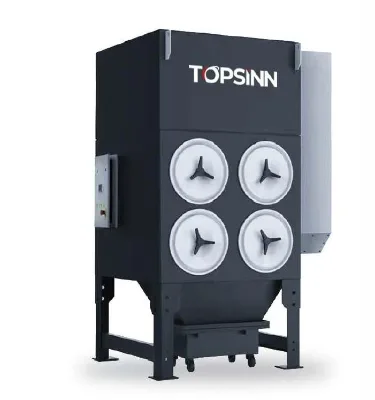
Advanced Laser Cutting Fume Extraction System with High-Efficiency Filtration
$3800.00 - $4000.00
MOQ: 1 Pieces



Comprehensive Sourcing Guide
Laser Cutting Fume Filtration System Sourcing Guide
Selecting the right Laser Cutting Fume Filtration System requires a careful balance of airflow capacity, filtration efficiency, and operational compatibility with your specific manufacturing environment. These systems are engineered to capture hazardous particulates, smoke, and gases generated during welding, soldering, and laser processing operations. The primary objective is to maintain a safe breathing zone for operators while ensuring that exhaust air meets local environmental and workplace safety regulations. Buyers must evaluate whether a centralized ducted system or a mobile, standalone unit best fits their facility layout and production volume.
The market offers a diverse range of configurations, from compact trolley-type units suitable for single workstations to larger, high-capacity systems designed for heavy industrial use. Key differentiators include the filtration medium, such as chemical synthetic fibers or metal fibers, and the cleaning mechanism, which can range from manual to fully automatic pulse-jet cleaning. Understanding these technical distinctions is critical for making an informed procurement decision that aligns with both immediate operational needs and long-term maintenance budgets.
Product Scope and Observed Listing Signals
Current market listings indicate a price range of approximately $150 to $12,000 USD, reflecting the significant variance in system capacity, automation level, and filtration technology. The minimum order quantity (MOQ) is consistently observed at one unit, suggesting that suppliers are accustomed to handling individual procurement orders rather than requiring bulk commitments. This flexibility allows buyers to pilot a system in a specific welding or laser cutting position before scaling up to full-facility deployment. The wide price spread underscores the importance of matching specific technical requirements to the appropriate tier of equipment.
Observed product attributes reveal a strong emphasis on automation and ease of maintenance. Many listed systems feature automatic operation with full-automatic cleaning cycles, which are essential for maintaining filtration efficiency without interrupting production workflows. Installation methods vary between horizontal and vertical configurations, allowing for integration into different workshop layouts. Furthermore, the presence of customization options indicates that suppliers can tailor certain aspects of the system, such as power supply or physical dimensions, to accommodate specific site conditions or existing electrical infrastructure.
Technical Specifications to Verify
Airflow capacity and filtration accuracy are the most critical performance metrics for any fume extraction system. Buyers should verify the air volume, which may range from 4,500 to 6,500 cubic meters per hour, depending on the number of laser sources or welding stations being served. The filtration accuracy is typically rated at 99.99% for particles as small as 0.3 microns, ensuring that fine metallic and synthetic particulates are effectively captured. It is essential to confirm that the total filtration area, which can range from 52 to 78 square meters, is sufficient to handle the dust load generated by your specific production intensity.
Power requirements and voltage compatibility must be strictly verified to ensure seamless integration with your facility’s electrical grid. Listed systems often support multiple voltage inputs, including 220V, 380V, 400V, and 415V, with power ratings commonly at 5.5kW or 7.5kW. Additionally, the physical dimensions and weight of the unit, which can range from 420kg to 585kg, impact installation logistics and floor space planning. Buyers should also check the noise level, which is typically around 72 decibels, to ensure it complies with workplace noise regulations and does not disrupt other operations.
Compliance and Safety Documentation
Certification status is a primary indicator of a system’s adherence to international safety and quality standards. Many suppliers provide systems certified under ISO and CE standards, which are widely recognized for ensuring manufacturing quality and electrical safety. For systems targeting specific regional markets, additional certifications such as RoHS may be present, indicating compliance with restrictions on hazardous substances. Buyers must request and verify these certificates to ensure that the equipment meets the legal requirements for operation in their specific country or region.
Documentation should also include detailed technical manuals and safety data sheets that outline proper operation, maintenance, and filter replacement procedures. The condition of the equipment is typically listed as "New," but buyers should confirm that all safety interlocks, emergency stop buttons, and monitoring sensors are functional and certified. For systems featuring PLC control, verify that the interface is user-friendly and that diagnostic codes are clearly defined to facilitate quick troubleshooting by maintenance staff.
Cost Drivers and Commercial Terms
The total cost of ownership is influenced by several factors beyond the initial purchase price, including energy consumption, filter replacement frequency, and maintenance complexity. Systems with higher filtration areas and automatic cleaning mechanisms may have a higher upfront cost but can offer significant savings in labor and downtime over time. Buyers should evaluate the power consumption relative to the airflow output to determine the most energy-efficient option for their specific application. Additionally, the type of filter medium, such as chemical synthetic fiber or metal fiber, can affect the lifespan and cost of consumables.
Commercial terms often include specific packaging requirements, such as export packaging or wooden cases, to protect the equipment during transit. These packaging methods can impact shipping costs and handling procedures, so buyers should coordinate with their logistics providers to ensure proper unloading and installation. Lead times and payment terms should be clearly negotiated, especially for customized orders or systems requiring specific voltage configurations. Understanding these commercial nuances helps in accurately budgeting for the project and avoiding unexpected expenses.
Supplier Qualification and Quality Control
Supplier verification should focus on their manufacturing capabilities, quality control processes, and after-sales support. Given that the origin of many systems is China, including specific hubs like Shanghai, buyers should assess the supplier’s track record in exporting similar equipment. Requesting references from other international clients can provide insights into the reliability of the product and the responsiveness of the supplier’s technical support team. It is also advisable to verify the supplier’s ability to provide customized solutions, as this indicates a higher level of engineering capability.
Quality control measures should include pre-shipment inspections and testing of key components, such as the motor, fan, and filtration cartridges. Buyers should inquire about the warranty period and the availability of spare parts, particularly for high-wear items like filters and seals. For systems with PLC controls, ensure that the supplier provides comprehensive training or detailed documentation for software updates and system diagnostics. Establishing a clear communication channel for technical support is crucial for minimizing downtime in the event of a malfunction.
Long-Term Procurement Checks
Regular maintenance and filter replacement are essential for sustaining the performance of a Laser Cutting Fume Filtration System. Buyers should establish a preventive maintenance schedule that includes checking the integrity of the filter cartridges, cleaning the dust hopper, and inspecting the fan and motor for wear. The cleaning method, whether manual or automatic, will dictate the frequency and complexity of these maintenance tasks. Keeping a log of filter changes and system performance metrics can help identify potential issues before they lead to costly repairs or production delays.
As production volumes increase or new laser cutting technologies are introduced, the existing filtration system may need to be upgraded or expanded. Buyers should consider the scalability of the system and the availability of additional filtration modules or ducting components. Monitoring changes in air quality and operator health can also serve as an indicator of the system’s effectiveness. By staying proactive in maintenance and planning for future capacity needs, buyers can ensure a safe and efficient working environment for years to come.
FAQs
What customization options are available for these systems?
Customization is available for these filter cartridge dust collectors to meet specific needs. Buyers can request tailored solutions while the standard models offer horizontal or vertical installation methods depending on the factory layout requirements.
Which certifications do these filtration systems hold?
These systems hold ISO and CE certifications, with some models also featuring RoHS compliance. These certifications ensure the equipment meets international safety and quality standards for industrial applications like welding and laser cutting.
How is the dust collected and cleaned in these units?
The dust collecting method is dry, utilizing automatic full cleaning cycles for efficiency. The filtration accuracy reaches 99.99% with a filter size of 0.3um, ensuring high purity air output for the workspace.
Can these systems operate with different voltage standards?
Yes, the systems support multiple voltage standards including 380V, 400V, 415V, and 220V. This flexibility allows the equipment to be deployed in various regions without requiring additional voltage conversion infrastructure.
What is the filtration area capacity for the standard models?
The filtration area varies by model, with options ranging from 52 square meters to 78 square meters. Larger models like the JG06 provide increased surface area for handling higher dust volumes in industrial settings.
How are these units packaged for export shipping?
Export packaging is standard, with some models using wooden cases for extra protection. Customized packing options are also available to ensure the equipment arrives safely at the destination without damage during transit.