Source Laser Cutting Macor Ceramic Tube for Electronics Aerospace Industrial
Compare 30 listings for Laser Cutting Macor Ceramic Tube from verified suppliers in China. Evaluate specifications like temperature resistance, chemical resistance, and custom sizes for electrical insulation and industrial applications.
Key considerations
Products List
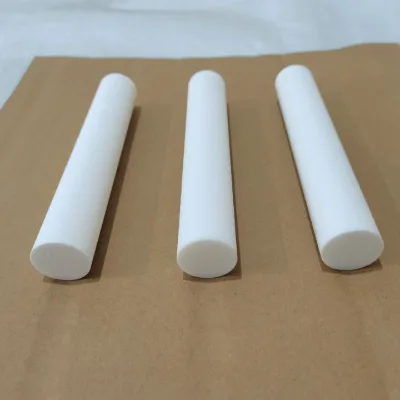
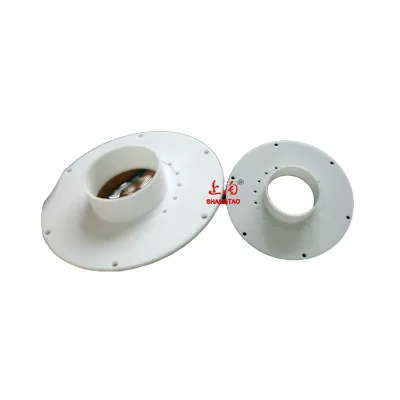


for Semiconductor Used Zero Porosity Macor Tube Machinable Glass Ceramic Pipe
$850.00 - $900.00
MOQ: 1 Pieces


Comprehensive Sourcing Guide
Strategic Sourcing Guide for Laser Cutting Macor Ceramic Tubes
The procurement of laser-cut Macor ceramic tubes represents a specialized intersection of advanced material science and precision manufacturing. Macor, a brand name often synonymous with machinable glass ceramic, offers unique properties that distinguish it from traditional ceramics. For buyers investigating this core keyword, the focus must shift from generic ceramic sourcing to a nuanced evaluation of material compatibility with laser processing, specific application requirements, and the rigorous verification of supplier capabilities. This guide provides a structured framework for evaluating potential suppliers and defining technical parameters without relying on unverified market assumptions.
Material Composition and Laser Processing Compatibility
The foundation of any successful procurement strategy for this component lies in understanding the material itself. The supplied data identifies the material as "Machinable Glass Ceramic" or "Machinable Ceramic," with specific references to "Macor Machinable Glass Ceramic." This material is distinct from standard alumina or zirconia ceramics due to its ability to be machined using standard metalworking tools, yet it retains high thermal and electrical insulation properties. The observed density for these materials is recorded at 3.25g/cm3, a critical figure for weight-sensitive applications in aerospace or electronics.
When the core keyword specifies "laser cutting," buyers must exercise caution regarding the manufacturing process. The provided facts list "Cutting" as a general processing service alongside bending, welding, and punching. However, the specific finish quality is noted as Ra0.4, indicating a high degree of surface smoothness. While laser cutting can achieve this finish, the thermal properties of Macor must be considered. The material exhibits a "High Expansion" thermal coefficient and a temperature resistance of up to 1500℃. These attributes suggest that while the material can withstand extreme heat, the laser cutting process itself must be controlled to prevent micro-cracking or thermal shock that could compromise the structural integrity of the tube. Buyers should verify that the supplier's laser parameters are optimized for glass ceramics to maintain the Ra0.4 finish without inducing stress fractures.
Technical Specifications and Geometric Constraints
Precision is paramount when sourcing ceramic tubes. The product data highlights that the "Size" is customizable, and the "Shape" can be an "Open tube" or "One end closed." This flexibility allows for tailored solutions in industrial and electrical insulation contexts. The "Model Number" varies, with examples like GT-MR001, GT-MR002, and HBR, indicating that buyers must rely on specific model numbers rather than generic descriptions to ensure consistency.
The physical dimensions are critical for integration. One observed specification lists a "Length" of 1 inch, while the "Single package size" is recorded as 200x3.5x1.8 cm. This discrepancy between the product length and package dimensions suggests that tubes are often supplied in bundles or require specific packaging to prevent breakage. The "Single gross weight" is noted as 20.000 kg per package, which is a significant factor in logistics planning and shipping cost calculations.
Buyers must also consider the "Compressive Strength," which is listed as 488MPa. This high strength value is essential for applications involving mechanical load or high-pressure environments. The "Chemical Resistance" is explicitly stated as "Acid and Alkali Resistant," making these tubes suitable for harsh chemical processing environments. When defining the technical requirements, procurement teams should request specific dimensional tolerances and verify if the "Customizable" size option allows for the precise inner and outer diameters required for the intended assembly.
Compliance, Certification, and Quality Assurance Protocols
In the realm of industrial ceramics, compliance is not merely a formality but a safety requirement. The supplied context mentions a "Strict Quality test one by one" as the testing method. This implies a 100% inspection rate, which is a high standard for quality assurance. Buyers should verify if this testing includes non-destructive testing (NDT) methods such as ultrasonic inspection or visual inspection under magnification to detect surface defects that could lead to failure under thermal cycling.
Regarding certifications, the provided text does not explicitly list third-party certifications like ISO 9001 or specific industry standards for the Macor tubes. While a low-confidence background note mentions "IEC 17025," this should not be assumed as a current certification status for any specific supplier without direct verification. Instead, buyers should request evidence of quality management systems and ask for test reports that validate the material properties, such as the 1500℃ temperature resistance and 488MPa compressive strength.
The "Product Standard" is listed as "Customized" or "Standard or customized." This indicates that there may not be a universal industry standard governing every dimension or property. Consequently, the buyer's technical drawing and specification sheet become the governing standard. It is imperative to include clauses in the purchase agreement that define the acceptance criteria based on the agreed-upon custom standard, ensuring that the supplier cannot substitute a lower-grade material or a less precise manufacturing process.
Cost Drivers and Supply Chain Dynamics
Understanding the cost structure of Macor ceramic tubes is essential for budgeting. The observed price range in the market data spans from 0.1 to 55,000 USD, a vast disparity that reflects the difference between simple, small-batch items and complex, large-scale custom orders. The "Minimum Order Quantity" (MOQ) ranges from 1 to 45 units, suggesting that suppliers are flexible for prototyping but may have higher thresholds for mass production.
Several factors drive the final cost. First, the "Machinable Glass Ceramic" material itself is more expensive than standard ceramics due to its unique composition and processing difficulty. Second, the "Laser Cutting" process, if required, adds a layer of technological cost compared to standard grinding. Third, the "Packaging Details" are extensive, involving "Internal foam+corrugated board +External standard export wooden cases." This robust packaging is necessary due to the fragility of the ceramic and the "Single gross weight" of 20kg per package, significantly impacting shipping costs.
The "Supply Ability" is noted as 100,000 pieces per month for thread ceramic tubes. This high capacity suggests that suppliers can handle large volume orders, but buyers should confirm if this capacity applies to custom laser-cut geometries or only to standard stock items. Lead times are not explicitly provided in the data, so procurement teams must treat this as a variable to be negotiated, especially for custom models like GT-MR001 or GT-MR002.
Supplier Evaluation and Geographic Considerations
Geographic location plays a role in logistics and communication. The data indicates a primary "Place of Origin" in "Shanghai, China," with some references to "Jiangsu/China." Both regions are major manufacturing hubs in China, known for advanced machinery and ceramic processing. The "Port of dispatch" is listed as "Shanghai," which is a major global shipping hub, facilitating efficient export logistics.
When evaluating suppliers, buyers should look for evidence of the specific processing services listed: "Bending, Welding, Cutting, Punching, Decoiling, Moulding." A supplier capable of offering a full suite of these services is more likely to have the integrated equipment necessary for complex laser cutting and finishing. The "Finish" quality of Ra0.4 is a tangible metric to include in the supplier evaluation checklist.
Buyers should also assess the supplier's ability to handle "Your LOGO" printing, which indicates a level of customization and branding capability. The availability of "Samples" is a crucial factor in the evaluation process. A supplier that readily provides samples allows the buyer to verify the material quality, the precision of the laser cut, and the surface finish before committing to a larger order. The "Brand Name" SHANGTAO is mentioned, but buyers should not limit their search to this specific brand, as the material properties are the primary concern.
Typical Applications and Long-Term Procurement Strategy
The versatility of Macor ceramic tubes is evident in their listed applications: "Industrial Ceramic," "Electrical Insulation," "Electronics," "Architectural," and "Aerospace." The "Usage" is primarily "Insulation," leveraging the material's high dielectric strength and thermal stability. In the aerospace sector, the combination of high compressive strength (488MPa) and high temperature resistance (1500℃) makes these tubes ideal for engine components or thermal shielding. In electronics, the "Easy Processing" advantage allows for the creation of complex insulators that can be integrated directly into circuit assemblies.
For long-term procurement, buyers should consider the "Transparency" of the material, which is "Opaque." This is a standard property for Macor but must be confirmed if optical transparency is a requirement for a specific niche application. The "Color" is consistently "White," which can be a factor in thermal management or aesthetic requirements.
To ensure a sustainable supply chain, buyers should establish a relationship with suppliers who demonstrate a commitment to "Strict Quality test one by one." This approach minimizes the risk of field failures and reduces the total cost of ownership. Additionally, given the "Customizable" nature of the product, maintaining a clear digital record of the approved drawings and specifications for models like GT-MR001 is essential for future re-orders. This ensures that the "One end closed" or "Open tube" configurations remain consistent over time.
Conclusion
Sourcing laser-cut Macor ceramic tubes requires a meticulous approach that balances material science with manufacturing precision. The available data confirms that these components are highly customizable, with robust mechanical and thermal properties suitable for demanding industrial, aerospace, and electronic applications. Buyers must prioritize suppliers who can demonstrate the specific processing capabilities required for laser cutting while maintaining the Ra0.4 finish and 488MPa compressive strength. By focusing on verified technical specifications, rigorous quality testing protocols, and clear communication regarding custom standards, procurement teams can secure a reliable supply of high-performance ceramic tubes that meet the exacting demands of modern engineering. The vast price range and flexible MOQs offer opportunities for both prototyping and mass production, provided that the logistical and quality aspects are managed with the same rigor as the technical specifications.
FAQs
Can I customize the size and shape of the ceramic tube?
Yes, the size is customizable and the shape can be an open tube or one end closed. This flexibility allows for tailored solutions in industrial and electrical insulation contexts without requiring standard dimensions.
What is the maximum temperature resistance for these tubes?
The tubes can withstand temperatures up to 1500℃. This high thermal stability makes them suitable for demanding applications in aerospace and electronics where extreme heat resistance is required for insulation.
How is the surface finish quality ensured for laser cutting?
The finish quality is specified as Ra0.4, indicating a high degree of surface smoothness. Buyers should verify that the supplier's laser parameters are optimized to maintain this finish without inducing stress fractures.
What is the compressive strength of the machinable glass ceramic?
The compressive strength is listed as 488MPa. This high strength value is essential for applications involving mechanical load or high-pressure environments where structural integrity under stress is critical.
Do you offer samples for quality verification before bulk orders?
Samples are available for buyers to verify material quality and precision. This allows procurement teams to inspect the laser cut and surface finish before committing to larger production runs.
What packaging details are used for shipping these ceramic tubes?
Packaging includes internal foam, corrugated board, and external standard export wooden cases. This robust method is necessary to prevent breakage due to the fragility of the ceramic and the heavy package weight.
Can the product be printed with my company logo?
Yes, the product supports printable logos for branding purposes. This customization option allows buyers to add their specific branding to the ceramic tubes for industrial or commercial identification.