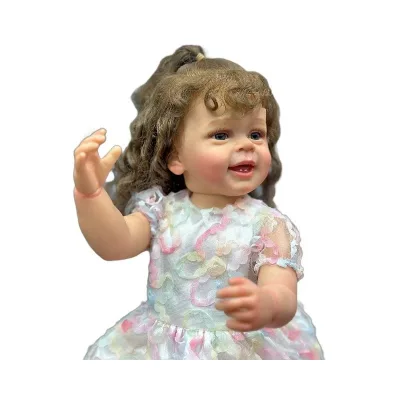
Source Lifelike Silicone Reborn Baby Doll for gifts, education, and collection
Explore 30 options for the Lifelike Silicone Reborn Baby Doll designed for early childhood education, companionship, and gifting. Buyers can compare customization features, sizes, and certifications across multiple models to find the right fit.
Key considerations
Products List


Wholesale 14 Inch Newborn Baby Doll Toys Lifelike Reborn Doll Kids Reborn Baby Dolls
$4.92 - $5.83
MOQ: 120 Pieces


Wholesale Kids 12 Inch Newborn Baby Doll Toys Lifelike Reborn Baby Doll Reborn Doll
$5.35 - $6.34
MOQ: 160 Pieces




Comprehensive Sourcing Guide
Strategic Sourcing Guide for Lifelike Silicone Reborn Baby Dolls
The global market for lifelike silicone reborn baby dolls has evolved from a niche collector's hobby into a significant segment of the premium toy and collectible industry. For B2B buyers, sourcing these products requires a nuanced understanding of material science, regulatory compliance, and supply chain dynamics. The core keyword "Lifelike Silicone Reborn Baby Doll" implies a specific set of attributes: high-fidelity realism, the use of silicone or rubber-based materials, and a focus on tactile authenticity. This guide synthesizes available product data and industry standards to provide a disciplined framework for procurement professionals navigating this complex category.
Material Composition and Technical Specifications
The defining characteristic of a true reborn doll is its material composition. Unlike traditional vinyl or plastic dolls, lifelike versions rely heavily on silicone rubber and natural rubber to achieve a skin-like texture and weight. The supplied data confirms that "Silicone Rubber" and "Natural Rubber" are primary materials, with "EVA" (Ethylene-Vinyl Acetate) also appearing in specific product lines. The presence of "Liquid Rubber" as a form factor suggests that some manufacturers utilize a casting process rather than injection molding, which is critical for achieving the desired softness and translucency.
Buyers must scrutinize the specific material grades used. The data indicates that the "Raw Material" is often sourced as "Natural Rubber," which contributes to the eco-friendly perception of the product. However, the distinction between "Silicone Rubber" and "EVA" is vital for the end-user experience. Silicone offers superior temperature retention and a more realistic feel, whereas EVA is often used for durability in younger age groups. The "Form" of the material, described as "Liquid Rubber," implies a two-part mixing process that allows for custom coloring and texture adjustments.
Size specifications vary significantly across the supply base. The observed data lists standards ranging from "4inch, 5inch" to "10inch," "22inch 55cm," and general size categories like "Small" or "20-59cm." This variance dictates the complexity of the molding process and the amount of raw material required per unit. For a procurement strategy, it is essential to align the target size with the intended application, whether for infant companionship or older child play. The "Product Name" variations, such as "Reborn Baby Doll" and "Bonecas Reborn," indicate a global market presence, necessitating packaging and labeling strategies that respect local language requirements.
Regulatory Compliance and Certification Standards
In the toy industry, particularly for products intended for children, regulatory compliance is non-negotiable. The supplied facts explicitly mention "CE" and "CPC, CE" certifications. The CE mark indicates conformity with health, safety, and environmental protection standards for products sold within the European Economic Area. The CPC (Children's Product Certificate) is a specific requirement for products sold in the United States, verifying that the item meets all applicable consumer product safety rules.
Buyers must verify that the certification applies to the specific product model and material batch. The data lists "YB976," "YB01," "YB91," and other model numbers, suggesting that certification may not be universal across all SKUs. A common pitfall in sourcing is assuming that a supplier's general certification covers every product in their catalog. Procurement teams should request test reports that specifically reference the model number and the material composition (e.g., silicone or EVA).
Furthermore, the "Toy Department" is listed as "Kids," and the "Age Range" varies from "All Ages" to "8 to 13 Years." This discrepancy requires careful verification of safety standards. Products marketed for "All Ages" must undergo rigorous testing for small parts, chemical migration, and flammability to ensure safety for infants, while those targeted at older children may have different regulatory thresholds. The "Style" is noted as "European & American," which often implies adherence to both EU and US safety protocols, but this must be validated through documentation rather than assumption.
Cost Drivers and Pricing Dynamics
The pricing structure for lifelike silicone dolls is influenced by several distinct factors. The observed price range in the market is broad, spanning from $1 to $120 USD. This wide variance is not arbitrary; it reflects differences in material quality, craftsmanship, and customization levels. High-end dolls utilizing pure silicone rubber with "Handmade" eyelashes and "Planting Hair" command prices at the upper end of the spectrum. Conversely, dolls made with EVA or simpler construction methods fall into the lower price brackets.
Material costs are a primary driver. "Silicone Rubber" is generally more expensive than "EVA" or standard vinyl. Additionally, the labor intensity of the "Handmade" features, such as eyelashes and hair planting, significantly increases the unit cost. The data indicates that "Customization" is available, which includes "Skin Color: Customized" and "Color: Adjustable." Customization inherently adds to the cost due to the need for smaller production runs, specialized mixing of liquid rubber, and additional quality control steps.
The "MOQ" (Minimum Order Quantity) is another critical cost factor. The observed MOQ range is 1 to 999, with a specific data point of "100PCS." While some suppliers offer low MOQs to attract new buyers, higher volumes typically unlock better unit pricing. Buyers should be aware that the "Sample" availability is noted as "Avaiable" (Available), which is a standard practice but should be factored into the initial budget. The "prod_packing" options, ranging from "Color Box" to "Gift Box" and "Polybag," also impact the final landed cost, as premium packaging adds material and assembly expenses.
Typical Applications and Market Segmentation
Understanding the application of these dolls is essential for matching the right product to the right market channel. The data highlights several distinct use cases. The "Function" is listed as "Children Gift" and "Accompany," suggesting a dual market: one for gifting and one for emotional support or companionship. The "Early Childhood Education Function" attribute points to a specific niche where dolls are used as educational tools for developmental play, teaching empathy and caregiving skills.
The "Age Range" data provides further segmentation. Products targeting "8 to 13 Years" are likely positioned as collectibles or advanced play items, while those marked "All Ages" are designed for broader appeal, including infants and toddlers. The "Type" is explicitly "Reborn Dolls," which differentiates them from standard fashion dolls or action figures. The "Style" being "Educational Toy" in some listings reinforces the pedagogical angle, while "European & American" styles cater to aesthetic preferences in Western markets.
Buyers should also consider the "Application" of the raw materials. The mention of "Mold Making Silicone Rubber" suggests that some suppliers may offer a hybrid service, providing both the finished doll and the materials for custom mold creation. This is relevant for buyers looking to create bespoke product lines or private label offerings. The "Color" options, including "Nude" and "Adjustable," allow for a wide range of skin tones, which is a growing demand in the inclusive toy market.
Supplier Evaluation and Quality Assurance
Evaluating suppliers for silicone reborn dolls requires a focus on technical capability and quality consistency. The "prod_origin" is listed as "China," which is a major manufacturing hub for this category. However, the location alone does not guarantee quality. Buyers must assess the supplier's ability to handle "Liquid Rubber" and "Silicone Rubber" safely and consistently. The "Form" of the material implies a chemical process that requires strict control over mixing ratios and curing times.
Quality control should focus on the "Handmade" aspects. The "Eyelashes" are described as "Handmade," which introduces variability. A robust QC protocol must include visual inspections to ensure that eyelashes are securely attached and evenly distributed. Similarly, "Planting Hair" requires verification of hair density and anchoring strength to prevent shedding during play. The "Product Name" consistency across different models (e.g., "Reborn Baby Doll" vs. "Bonecas Reborn") indicates the need for clear labeling standards to avoid confusion in the supply chain.
The "Sample" availability is a key indicator of supplier reliability. A supplier that readily provides samples demonstrates confidence in their product quality. Buyers should use these samples to test for material flexibility, odor, and color accuracy. The "prod_packing" options, such as "Gift Box" or "Polybag," should be inspected for durability and protection of the delicate doll during transit.
Long-Term Procurement Considerations
Sourcing lifelike silicone dolls is not a one-time transaction but a relationship built on trust and consistency. The "Customization" capability is a long-term asset for buyers looking to differentiate their brand. The ability to adjust "Skin Color" and "Color" allows for market responsiveness to trends and regional preferences. However, this flexibility requires a stable supply chain to ensure that custom batches meet the same quality standards as standard SKUs.
Buyers should also consider the "Standard" specifications, such as "10inch" or "22inch 55cm." Maintaining consistent sizing across product lines is crucial for brand identity. Deviations in size can lead to customer dissatisfaction and returns. The "prod_standard" of "452013cm" for packaging dimensions is another area where consistency matters for logistics and shelf space optimization.
Finally, the "Certification" status must be maintained over time. As regulations evolve, suppliers must adapt their testing and documentation. A supplier that proactively updates their "CE" and "CPC" certifications demonstrates a commitment to compliance and long-term viability. Buyers should establish a schedule for regular audits and re-verification of these documents to ensure ongoing compliance. By focusing on these strategic elements, procurement professionals can build a resilient supply chain for lifelike silicone reborn baby dolls that meets the high expectations of the modern market.
Comparative Analysis of Product Attributes
To assist in decision-making, the following table summarizes key attributes observed in the product data, highlighting the variations buyers must navigate.
| Attribute Category | Observed Values | Procurement Implication |
|---|---|---|
| Material | Silicone Rubber, Natural Rubber, EVA, Liquid Rubber | Silicone/Natural Rubber for premium feel; EVA for durability/cost. |
| Size Standards | 4inch, 5inch, 10inch, 22inch (55cm), 20-59cm | Align size with target age group and shipping cost constraints. |
| Certification | CE, CPC, CE | Verify specific model coverage; essential for EU and US markets. |
| Customization | Skin Color, Color, Customization Available | Enables brand differentiation but increases MOQ and lead time. |
| Packing | Color Box, Gift Box, Polybag | Premium packaging increases unit cost but enhances gifting appeal. |
| Age Range | All Ages, 8 to 13 Years | Dictates safety testing requirements and marketing strategy. |
| MOQ | 1 to 999 (Specific: 100PCS) | Lower MOQs allow testing; higher volumes reduce unit cost. |
| Features | Handmade Eyelashes, Planting Hair, Washable | Labor-intensive features require strict QC for consistency. |
This comparative view underscores the complexity of the category. A buyer cannot simply select a "doll"; they must specify the material, size, certification, and customization level to ensure the product meets their specific business requirements. The interplay between these factors determines the final cost, marketability, and safety of the product. By adhering to these structured evaluation criteria, buyers can mitigate risks and secure high-quality lifelike silicone reborn baby dolls that satisfy both regulatory standards and consumer expectations.
FAQs
What materials are used for lifelike silicone reborn baby dolls?
These dolls primarily use silicone rubber and natural rubber to achieve a realistic skin texture. Some models also incorporate EVA plastic for durability, while liquid rubber forms are used for custom casting processes.
Which certifications apply to these dolls for international sales?
Products often carry CE and CPC certifications to meet safety standards in Europe and the United States. Buyers must verify that these certifications cover specific model numbers like YB976 or NCSS504 before purchasing.
Can buyers customize the skin color of the dolls?
Yes, customization is available for skin color and overall color adjustments using liquid rubber forms. This feature allows for adjustable tones but may require specific production runs and higher minimum order quantities.
What is the typical minimum order quantity for these products?
The minimum order quantity can range from 1 to 999 pieces, with a specific observed requirement of 100 pieces for some models. Buyers should confirm the exact MOQ for their selected model before placing an order.
How are the hair and eyelashes constructed on these dolls?
The dolls feature planting hair and handmade eyelashes to enhance their lifelike appearance. These details are crafted manually, which adds to the product value and requires careful quality control during inspection.
What packaging options are available for these baby dolls?
Packaging options include color boxes, gift boxes, and polybags depending on the specific product line. The choice of packaging affects the final cost and must be selected based on the intended market presentation.