Source Light Emperador Brown Marble Slab for Countertops, Floors, Walls
Compare 30 listings for Light Emperador Brown Marble Slab from Chinese suppliers. Options include polished tiles and custom slabs with thicknesses from 16mm to 20mm for various stone applications.
Key considerations
Products List


Oriental Brown Marble Chinese Emperador Dark Marble Slab for Tiles or Countertops
$15.50 - $19.00
MOQ: 400 Square Meters

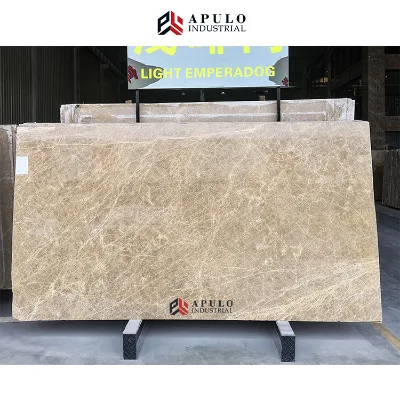

Light Emperador Marble /Brown Marble Slabs/Light Brown Marble for Flooring Tile
$15.00 - $50.00
MOQ: 200 Square Meters


Emperador Dark Marble Slabs/Brown Marble for Flooring Tile Wall Cladding Countertop Basin Sink
$10.00 - $80.00
MOQ: 200 Square Meters


Natural Stone Scream Beige Light Emperador Brown Marble for Slabs/Tiles//Floor
$15.00 - $30.00
MOQ: 30 Pieces

Sinotopstone Natural Emperador Light Brown Marble Slab Price for Sale
$20.00 - $50.00
MOQ: 500 Square Meters

Factory Price Marbre Marmol Marmer Emperador Light Marble Floor Slab
$20.00 - $50.00
MOQ: 500 Square Meters
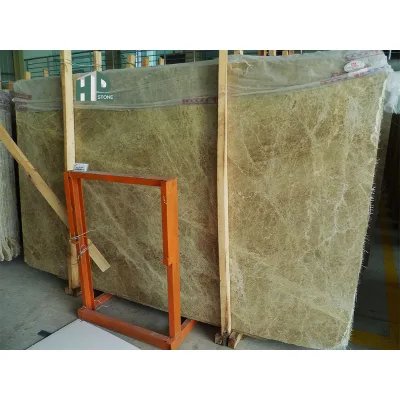
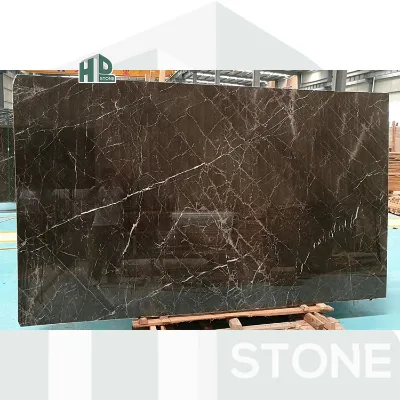
Comprehensive Sourcing Guide
Strategic Sourcing Guide for Light Emperador Brown Marble Slabs
Understanding the Product Profile and Variability
When sourcing Light Emperador brown marble slabs, buyers must first recognize that this material exists within a spectrum of natural stone variations rather than as a single, uniform commodity. The core keyword often encompasses several distinct product lines, including "Dark Brown Emperador" and "Light Emperador," which are chemically and visually distinct despite sharing a common trade name. The supplied data indicates that the "Light Emperador" variety is frequently classified under the dolomite or calcite types, with specific product models such as "China Light Emperador Marble" and "LSTM699" appearing in market listings.
A critical observation for procurement teams is the inconsistency in product attributes across different suppliers. For instance, while one listing describes the stone form as a "Big Slab" with a thickness of 20mm, another entry for a similar product specifies a "Tile" form with a thickness of 16mm or 18mm. The density also varies, with recorded values of 2.7 g/cm³ for darker variants and 2.6 g/cm³ for lighter iterations. This variability underscores the necessity for buyers to verify the specific geological classification and physical dimensions before finalizing an order. The color profile is generally described as brown or grey, but the intensity can shift significantly between the "Dark" and "Light" designations. Therefore, the initial sourcing phase must prioritize confirming whether the specific batch matches the intended aesthetic and structural requirements of the project.
Technical Specifications and Dimensional Standards
The technical specifications for Light Emperador marble are not monolithic and require careful verification against project blueprints. The data reveals a range of standard sizes, with common dimensions including 600x600mm, 600x300mm, and custom cut-to-size options. Thickness is a particularly variable parameter, with observed values ranging from 15mm to 30mm, though 16mm, 18mm, and 20mm are the most frequently cited figures in the current market data. Buyers should note that a "Standard Size" entry lists a range of 15/18/20/30mm, suggesting that while 18mm is a common default, thicker slabs are available for heavy-duty applications.
Surface finishing is another critical technical aspect. The available finishes include polished, honed, flamed, bushhammered, sandblasted, and tumbled options. The "Polished" finish is the most commonly observed in the provided data, often associated with the 600x600mm format. However, for flooring applications in high-traffic areas, a honed or flamed finish might be preferable to reduce slip hazards. Edge processing is typically listed as "Flat," but this should be confirmed for specific edge profiles like bullnose or bevels if required by the design. The material is consistently identified as "Natural Marble" or "Natural Stone," which implies inherent porosity and the need for appropriate sealing in wet environments. Buyers must ensure that the technical data sheet provided by the supplier aligns with the specific thickness and finish required for the intended application, whether it be a countertop, wall cladding, or flooring.
Compliance, Certification, and Quality Grading
In the realm of natural stone procurement, compliance and quality grading are paramount, yet the data presents a mix of specific claims and general standards. The supplied information frequently references "A Grade" or "Quality: A Grade" as the standard for Light Emperador marble. This grading typically indicates a stone with minimal visible defects, consistent coloration, and high structural integrity. However, buyers should not assume that all listed products automatically meet international certification standards without explicit verification. While "CE" and "ISO9001" are mentioned in the background context, these should be treated as potential attributes rather than guaranteed facts for every supplier.
When evaluating compliance, procurement teams must request specific test reports and certification documents directly from the supplier. The "Standard Size" and "Product Standard" entries in the data often refer to internal grading or dimensional tolerances rather than international regulatory compliance. For instance, a product listed with a standard of "600x600x18 polished" describes a dimensional and finish specification, not a safety or environmental certification. Buyers should verify if the supplier holds valid CE marking for export to Europe or ISO certifications for quality management systems. Additionally, the origin is consistently listed as "China," which is a major production hub for this stone type. While this does not preclude high quality, it necessitates a rigorous check of the supplier's ability to meet the specific regulatory requirements of the destination market, particularly regarding formaldehyde emissions or heavy metal content if the stone is used in indoor residential settings.
Cost Drivers and Procurement Economics
The economics of sourcing Light Emperador marble are influenced by several distinct factors, including material form, thickness, and order volume. The observed Minimum Order Quantity (MOQ) ranges widely, from as low as 100 square meters to as high as 530 square meters, with a specific entry noting an MOQ of 500 square meters. This variation suggests that pricing structures are highly dependent on the scale of the purchase. Smaller orders may incur higher per-unit costs or be subject to different shipping terms compared to bulk purchases that fill a container.
Price is another significant driver, with observed listings ranging from $10 to $100 USD. However, this wide range likely reflects differences in thickness, finish, and whether the product is sold as a raw slab or a finished tile. The "Big Slab" form typically commands a different price point than pre-cut "Tiles" or "Cut-to-Size" pieces. Furthermore, the "Delivery Time" is noted as 25 days in some contexts, which impacts the overall cost of capital and project scheduling. Buyers should also consider the packing requirements, which are listed as "Wooden Packing," "Wooden Crates," or "Fumigated Wooden Crates." The cost of specialized, sea-worthy packaging is often factored into the final price and should be clarified in the Incoterms. Customization is available, which introduces variable costs for non-standard sizes or unique edge profiles. Understanding these cost drivers allows buyers to negotiate more effectively and budget accurately for the total landed cost of the material.
Typical Applications and Performance Considerations
The versatility of Light Emperador marble makes it suitable for a wide array of applications, as evidenced by the repeated mentions of "Countertop," "Floor," "Wall," "Stairs," and "Flooring" in the product data. The specific application dictates the required technical specifications. For instance, countertops often require a thickness of 20mm or more to withstand the weight of kitchen appliances and daily use, whereas wall tiles can be thinner, such as 16mm or 18mm. The "Usage" field explicitly lists "Countertop/Wall Tile/Flooring," confirming its broad utility.
However, the performance of the stone in these applications depends heavily on the finish and the inherent properties of the material. The density values of 2.6 to 2.7 g/cm³ indicate a relatively heavy stone, which is beneficial for flooring stability but requires robust structural support. The "Natural" technics and "Calcite" or "Dolomite" composition mean the stone is susceptible to etching from acidic substances, particularly in kitchen countertop applications. Buyers must ensure that the chosen finish, such as "Polished" or "Honed," aligns with the maintenance capabilities of the end-user. For high-traffic flooring, a "Flamed" or "Bushhammered" finish might be more appropriate to provide slip resistance. The "Sample: Free" attribute mentioned in the data is a valuable resource for buyers to test the stone's performance in their specific environment before committing to a large order.
Supplier Evaluation and Quality Control Protocols
Evaluating suppliers for Light Emperador marble requires a multi-faceted approach that goes beyond price comparison. The data highlights several critical evaluation points, including the "Product Model" (e.g., "China Dark brown emperador" vs. "Light Emperador"), the "Origin" (China), and the "Packing" method. A reputable supplier should be able to provide a detailed product model number that corresponds to the specific batch of stone, ensuring consistency in color and veining. The "A Grade" designation should be backed by visual inspection criteria, as natural stone grading can be subjective.
Quality control protocols should be established before production begins. Buyers should verify the "Standard Size" tolerances and request a pre-shipment inspection report. The "Wooden Packing" and "Fumigated Wooden Crates" are essential for protecting the stone during international transit, and the supplier must demonstrate adherence to these packing standards to prevent breakage. The "Delivery Time" of 25 days should be treated as a baseline, with clear penalties for delays. Additionally, the availability of free samples allows buyers to verify the "Color" (Brown or Grey) and "Density" claims firsthand. It is crucial to confirm that the "Surface Finishing" process, whether polished or honed, is consistent across the entire order, as variations in finish can lead to a patchy appearance in the final installation.
Long-Term Procurement and Maintenance Strategy
Sourcing natural stone is a long-term investment that requires consideration of maintenance and lifecycle costs. The "Light Emperador" variety, being a calcite or dolomite-based stone, requires regular sealing to prevent staining and etching. Buyers should factor in the cost of maintenance products and the frequency of resealing when calculating the total cost of ownership. The "Customization: Available" feature offers flexibility for future projects, allowing buyers to maintain a consistent aesthetic across different locations by ordering matching batches later.
Furthermore, the "Standard Size" and "Cut-to-Size" options provide flexibility for future renovations or expansions. Buyers should maintain a relationship with a supplier who can provide consistent stock for future orders, as natural stone can vary significantly between quarry blocks. The "Sample: Free" policy is an excellent tool for building this relationship, allowing for the creation of a master sample that serves as the benchmark for all future deliveries. By understanding the specific technical attributes, such as the 2.6-2.7 g/cm³ density and the 16-20mm thickness range, buyers can plan for the appropriate structural support and installation methods, ensuring the longevity and aesthetic appeal of the Light Emperador marble in their projects.
FAQs
What thickness options are available for light emperador brown marble slabs?
Thickness options range from 15mm to 30mm, with 16mm, 18mm, and 20mm being the most common sizes. Buyers should verify specific project requirements as dimensions vary between tile and slab forms.
Which surface finishes can be applied to light emperador brown marble?
Available finishes include polished, honed, flamed, bushhammered, sandblasted, and tumbled options. The polished finish is frequently observed, but other textures may be selected for specific slip-resistance needs.
Can I order custom sizes for light emperador brown marble projects?
Yes, customization is available for cut-to-size requirements and unique dimensions. Buyers must confirm specific cut specifications with the supplier to ensure the final product matches the project blueprint.
What is the typical delivery time for light emperador brown marble orders?
The standard delivery time is approximately 25 days from order confirmation. This duration may vary based on the order volume, specific customization requests, and current production capacity at the factory.
How is light emperador brown marble packed for international shipping?
The stone is typically packed in wooden crates, fumigated wooden crates, or sea-worthy wooden packing. This robust packaging ensures protection against damage during long-distance transit and handling.
What is the minimum order quantity for light emperador brown marble slabs?
Minimum order quantities vary by supplier, ranging from 100 square meters to 530 square meters. Some listings specify a standard MOQ of 500 square meters for bulk procurement.
Which applications are suitable for light emperador brown marble tiles?
This material is suitable for countertops, flooring, wall cladding, and stairs. The specific application dictates the required thickness and finish to ensure durability and safety in the intended environment.