Source Linear Pet Bottle Unscrambler for Seasoning, Rice, and Oil
Compare 30 listings for the Linear Pet Bottle Unscrambler designed for seasoning, rice, and oil packaging. These pneumatic machines handle rigid bottles with heights from 80 to 240mm and diameters up to 100mm.
Key considerations
Products List


High Speed Pet Bottle Rotary Unscrambler for Mineral Water Filling Line
$17000.00 - $36000.00
MOQ: 1 Sets


Automatic High Speed Pet Round Bottle Sorting Unscrambler for Plastic Bottle
$10000.00 - $30000.00
MOQ: 1 Pieces

High Capacity Full Automatic Bottle Unscrambler for Plastic Bottle
$10000.00 - $30000.00
MOQ: 1 Pieces


Fully Automatic High Speed Rotary Pet Plastic Bottle Feeder Unscrambling Machine Unscrambler
$80000.00 - $85000.00
MOQ: 1 Pieces


Low Cost Full Automatic Plastic Bottle Unscramber/Pet Bottle Unscrambler
$7500.00 - $8000.00
MOQ: 1 Pieces


Automatic High Speed Round Square Bottle Unscrambler, Jar Unscrambler
$15000.00 - $45000.00
MOQ: 1 Pieces


Full Automatic Beverage Pet Bottle Unscrambler for Drinks Packing Machine
$10000.00 - $50000.00
MOQ: 1 Sets



Comprehensive Sourcing Guide
Strategic Sourcing Guide for Linear PET Bottle Unscramblers
Understanding the Core Technology and Operational Scope
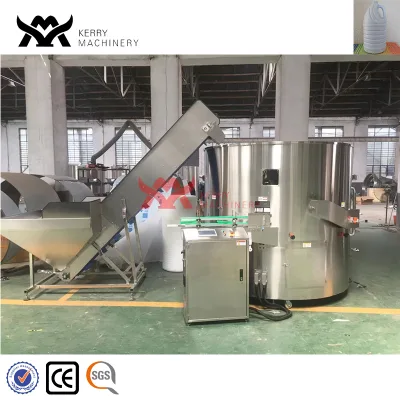
The Linear Pet Bottle Unscrambler represents a critical component in modern automated packaging lines, specifically designed to orient and feed bottles efficiently into subsequent filling and capping stages. Unlike rotary systems that rely on complex mechanical indexing, linear unscramblers utilize a straight-line conveyor approach to manage bottle flow. This configuration is particularly advantageous for facilities requiring a compact footprint or those integrating with existing linear production layouts. The observed market data indicates that these machines often operate as part of a broader "Packaging Production Line" where the primary function is the "Packaging of Export Products."
The operational mechanism typically relies on a "Pneumatic" driven type, utilizing compressed air to manipulate bottle orientation. This method offers a smooth, non-contact handling process that minimizes the risk of damaging the bottle surface, a crucial factor when dealing with transparent PET materials. The system is engineered to handle a specific range of bottle dimensions, with observed specifications indicating an applicable bottle diameter between 45mm and 90mm, and a height range of 80mm to 240mm. Some advanced models in the sector extend this capability to accommodate body diameters up to 100mm. The machine's rhythm is defined as a "Flow Production Line," ensuring a continuous and steady supply of bottles to the filling station.
The power requirements for these units are generally moderate, with observed power ratings around 2 Kw to 3 Kw, operating on standard AC power sources such as 220V or 380V at 50Hz. The air pressure requirement is critical for pneumatic operation, typically necessitating a stable supply between 0.5 and 0.7 MPa. Buyers must ensure their facility's compressed air infrastructure can maintain this pressure consistently to avoid production bottlenecks. The physical weight of these machines is substantial, with observed models weighing approximately 1250kg, indicating a need for a reinforced factory floor and careful logistics planning during installation.
Technical Specifications and Dimensional Compatibility
When evaluating a Linear Pet Bottle Unscrambler, precise dimensional compatibility is the first technical hurdle to clear. The machine must physically accept the bottles used in your production process. The data suggests that the "Bottle-Elevator Dimension" for these units can be quite large, with specific models measuring 2200mm in length, 1000mm in width, and 1900mm in height. These dimensions are vital for warehouse planning and factory floor layout. Additionally, the overall machine standard dimensions observed in the market can reach up to 2600mm by 1450mm by 1370mm, depending on the specific model configuration.
The transmission type is another key technical specification. The observed "Flexible" transmission type suggests that the machine can adapt to slight variations in bottle size or shape without requiring a complete mechanical overhaul. This flexibility is essential for manufacturers who run multiple product lines or frequently change packaging SKUs. The "Automatic Production Line" classification indicates that the unscrambler is designed to integrate seamlessly with other automated equipment, such as filling machines and cappers, creating a cohesive "Assembly" workflow.
Speed is a defining characteristic of the unscrambler's efficiency. The observed speed range is listed as "Less Than 120bpm" (bottles per minute). While this may seem modest compared to high-speed rotary systems, it is often sufficient for medium-volume production runs or for lines where the bottleneck lies in the filling or capping stages rather than the unscrambling phase. The "Work Rate" of 3kw further confirms the energy consumption profile, which buyers should factor into their total cost of ownership calculations. The "Rigid Package" nature of the bottles being processed implies that the machine is optimized for standard PET containers rather than flexible pouches or soft tubes.
Compliance, Certification, and Material Standards
In the B2B procurement of industrial machinery, compliance with international standards is non-negotiable. The observed market data highlights that reputable suppliers for these machines often provide certifications such as ISO, SGS, and CE. These certifications serve as third-party validations of the machine's safety, quality management systems, and adherence to European and global safety directives. The "ISO" certification indicates that the manufacturer follows international quality management standards, while "CE" marking is mandatory for products sold within the European Economic Area, ensuring the machine meets health, safety, and environmental protection requirements.
The material composition of the machine is equally critical for longevity and hygiene, especially for applications involving food, beverages, and cosmetics. The observed data specifies that the primary construction material is "SUS 304" stainless steel. This grade of stainless steel is widely recognized for its corrosion resistance and ease of cleaning, making it ideal for environments where hygiene is paramount, such as the "Packaging of Goods" for "Seasoning, Rice, Flour, Snack, Fish, Meat, Vegetable, Fruit, Tea, Drinks, Dairy Products, Hair Care Products, Skin Care Products, Cosmetics, Oil, Cleaning, Detergent."
Buyers must verify that the "SUS 304" designation applies to all critical contact parts, including the bottle elevator and conveyor belts. The "Condition" of the machine is typically listed as "New," but procurement contracts should explicitly define what constitutes a new unit, including the absence of prior usage and the presence of original manufacturer packaging. The "Wooden Packing Suitable for Exporting" or "Wooden Case" mentioned in the specifications refers to the shipping container, which must be compliant with international phytosanitary standards to prevent the spread of pests during international transit.
Cost Drivers and Pricing Dynamics
The pricing landscape for linear PET bottle unscramblers is highly variable, influenced by a complex matrix of factors. The observed listed price range in the market spans from 1 USD to 85,000 USD. This vast disparity does not necessarily reflect a difference in the core unscrambling technology but rather the scope of the offering, which can range from standalone units to fully integrated "Packaging Production Lines." A unit priced at the lower end of the spectrum is likely a basic linear unscrambler with minimal automation features, while a unit at the higher end may include advanced PLC controls, integrated vision systems, and custom engineering for specific bottle shapes.
The "Customization" availability is a significant cost driver. The observed data confirms that customization is available, allowing buyers to tailor the machine to specific production needs. However, custom engineering invariably increases the unit price and the lead time. The "MOQ" (Minimum Order Quantity) is observed to be very low, ranging from 1 to 2 units, which suggests that these machines are often treated as capital equipment rather than consumable goods. This low MOQ flexibility is beneficial for small to medium-sized enterprises looking to automate their packaging lines without committing to massive bulk orders.
Other cost drivers include the "Key Electricity" components. The data notes the use of "Import International Brand" electrical components. Sourcing high-quality motors, sensors, and control systems from international brands increases the initial capital expenditure but reduces the risk of downtime and maintenance costs over the machine's lifecycle. The "Weight" of 1250kg also impacts shipping and installation costs, as heavier machinery requires specialized lifting equipment and potentially reinforced flooring. Buyers should request a detailed breakdown of costs to understand the proportion of the price attributed to the frame, the pneumatic system, the electrical components, and the labor for assembly and testing.
Typical Applications and Production Scope
The versatility of the Linear Pet Bottle Unscrambler is evident in its broad "Application" scope. The observed data lists a wide array of industries, including "Seasoning, Rice, Flour, Snack, Fish, Meat, Vegetable, Fruit, Tea, Drinks, Dairy Products, Hair Care Products, Skin Care Products, Cosmetics, Oil, Cleaning, Detergent." This indicates that the machine is not limited to a single sector but is a universal solution for the "Packaging of Goods" across diverse categories. The "Circulation Function" is identified as "Outer Packing," suggesting that the unscrambler is often the first step in the packaging line where the product is prepared for filling and subsequent labeling or boxing.
The "Production Scope" is described as "Parts Production Line," which implies that the machine is capable of handling various parts of the packaging process, not just the unscrambling itself. The "Flexible Production" capability, linked to "Intelligent Manufacturing," suggests that these machines are increasingly being equipped with smart controls that allow for quick changeovers between different bottle types. This is particularly useful for manufacturers who produce multiple SKUs or run seasonal production cycles.
The "Mode of Operation" is defined as "Packaging of Export Products," highlighting the machine's suitability for manufacturers targeting international markets. The "Wooden Packing" ensures that the machine is protected during long-distance shipping, which is essential for "Export" operations. The "Applicable Bottle" specification notes "Different Bottle" compatibility, reinforcing the machine's adaptability to various container shapes and sizes within the specified diameter and height ranges.
Supplier Evaluation and Quality Control Protocols
Selecting the right supplier for a Linear Pet Bottle Unscrambler requires a rigorous evaluation process. The "prod_origin" data points to China, specifically regions like "Jiangsu" and "Wenzhou," which are known manufacturing hubs for packaging machinery. While these regions offer competitive pricing and a high density of suppliers, buyers must conduct thorough due diligence. The "Certificate" of "ISO SGS CE" should be verified directly with the issuing bodies to ensure authenticity. Buyers should also request references from other clients in similar industries to validate the supplier's track record.
Quality control should be a central part of the procurement contract. The "Condition" of the machine must be guaranteed as "New," and the "Work Rate" and "Speed" specifications must be met under actual operating conditions. Buyers should insist on a Factory Acceptance Test (FAT) where the machine is run with the buyer's specific bottles to verify the "Flow Production Line" rhythm and the "Less Than 120bpm" speed claim. The "Transmission Type" and "Pneumatic" system should be tested for reliability and consistency over a prolonged period.
The "prod_model" variations, such as "LP-200," "L-US18," "L-US," and "bu," indicate that different models may have distinct capabilities. Buyers must ensure they are evaluating the correct model for their specific needs. The "Standard" dimensions and "Capacity" ranges (2000-20000bph) should be cross-referenced with the buyer's production targets. The "Key Electricity" components should be confirmed to be from the specified "Import International Brand" to ensure longevity and compatibility with existing factory infrastructure.
Long-Term Procurement and Maintenance Considerations
Procuring a Linear Pet Bottle Unscrambler is a long-term investment that extends beyond the initial purchase price. The "Customized" nature of the machine means that spare parts availability and technical support are critical. Buyers should negotiate a comprehensive after-sales service agreement that includes the supply of spare parts, such as pneumatic valves, sensors, and conveyor belts, for a defined period. The "Wooden Case" packing is essential for export, but the internal packaging should also protect sensitive components during transit.
The "Power Source" requirements of AC220V or 380V must be compatible with the buyer's local electrical grid. If the machine is imported from a region with different voltage standards, the buyer may need to install transformers or converters, which adds to the total cost. The "Air Pressure" requirement of 0.5-0.7 MPa must be maintained consistently; therefore, investing in a high-quality air compressor and filtration system is advisable to prevent contamination and ensure smooth operation.
The "Rigid Package" nature of the bottles and the "Linear Type" operation suggest that the machine will experience wear and tear over time. Regular maintenance schedules should be established to inspect the "Bottle-Elevator," the "Transmission Type," and the "Pneumatic" system. The "Weight" of 1250kg implies that the machine is robust, but it also means that any repairs or replacements will require specialized equipment and skilled labor. Buyers should consider the total cost of ownership, including energy consumption, maintenance, and potential downtime, when making their final procurement decision.
Conclusion
The Linear Pet Bottle Unscrambler is a sophisticated piece of equipment that plays a pivotal role in the efficiency and reliability of modern packaging lines. With its ability to handle a wide range of bottle sizes and its compatibility with various industries, it offers significant flexibility for manufacturers. However, the vast price range and the complexity of technical specifications require careful evaluation. By focusing on verified certifications, material quality, and supplier reputation, buyers can secure a machine that meets their production needs and ensures long-term operational success. The integration of intelligent manufacturing features and the availability of customization options further enhance the value proposition of these machines, making them a strategic asset for any packaging operation.
FAQs
What is the typical speed of a Linear Pet Bottle Unscrambler?
The typical speed is less than 120 bottles per minute. This rate supports medium-volume production runs where the bottleneck often lies in filling or capping stages rather than the unscrambling phase itself.
Which bottle dimensions does the machine accommodate?
The machine accommodates bottle diameters between 45mm and 90mm, with some models supporting up to 100mm. The applicable bottle height ranges from 80mm to 240mm for standard rigid containers.
Can the machine be customized for different production needs?
Yes, customization is available to tailor the machine to specific production requirements. This flexibility allows for quick changeovers between different bottle types and supports intelligent manufacturing workflows.
What certifications do these machines typically hold?
Reputable machines typically hold ISO, SGS, and CE certifications. These validate adherence to international quality management standards and safety directives required for export and operation in regulated markets.
How is the machine powered and what air pressure is needed?
The machine operates on AC220V or 380V power sources at 50Hz with a power rating of 2 to 3 Kw. It requires a stable air pressure supply between 0.5 and 0.7 MPa for pneumatic operation.
What materials are used to construct the machine body?
The primary construction material is SUS 304 stainless steel. This grade ensures corrosion resistance and ease of cleaning, making it suitable for food, beverage, and cosmetic packaging applications.