Source Lithium Battery Nickel Strip Tab for EVs, ESS, and Power Tools
Explore 26 Lithium Battery Nickel Strip Tab options to compare thickness, purity, and custom dimensions. This guide helps buyers evaluate specifications for various battery applications and identify suitable suppliers for their procurement needs; compare the available evidence and request quotations based on your requirements.
Key considerations
Products List


Lithium Ion Battery Auxiliary Materials Nickel Tabs Cylinder Cell Tabs Pure Nickel Strip
$40.00 - $70.00
MOQ: 10 kilograms

Nickel Tabs Cylinder Cell Battery Tabs Pure Nickel Strip Battery Auxiliary Materials
$40.00 - $70.00
MOQ: 10 kilograms


Comprehensive Sourcing Guide
Lithium Battery Nickel Strip Tab Sourcing Guide
Procuring lithium battery nickel strip tabs requires a precise understanding of material composition and dimensional tolerances to ensure reliable electrical connections in power systems. These components serve as critical interconnects for positive or negative terminals, facilitating current flow within battery packs. Buyers must prioritize suppliers who offer pure nickel or nickel-plated steel options, as the choice between these materials significantly impacts weldability and long-term corrosion resistance. The observed market data indicates a wide range of product configurations, from simple strips to complex stamped tabs, necessitating a detailed specification sheet before initiating any commercial negotiations.
The primary function of these tabs is to provide a robust mechanical and electrical bridge between individual cells and the battery management system. In applications involving 18650 cells or other cylindrical formats, the tab geometry must align perfectly with the cell spacing to prevent stress fractures during thermal cycling. High-temperature resistance and good weldability are essential characteristics that buyers should verify, as these properties determine the integrity of the spot-welding process. By focusing on these fundamental attributes, procurement teams can avoid common pitfalls such as poor contact resistance or mechanical failure under load, ensuring the final battery assembly meets safety and performance standards.
Product Scope and Observed Listing Signals
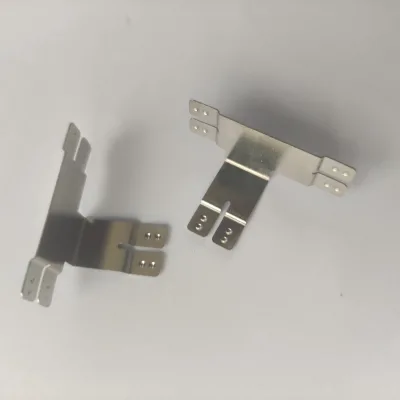
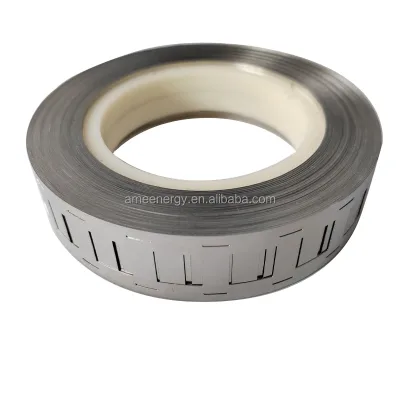
The product landscape for lithium battery nickel strip tabs includes various forms such as nickel sheets, plates, and precision-stamped tabs. Listings often specify the material as pure nickel with purity levels exceeding 99.5% or 99.95%, or as nickel-plated steel and copper-nickel alloys. This variety allows buyers to select the appropriate material based on their specific welding requirements and budget constraints. For instance, pure nickel offers superior conductivity and corrosion resistance, while nickel-plated steel may provide a cost-effective solution for applications where extreme purity is not critical. Understanding these material distinctions is the first step in narrowing down the supplier pool.
Observed listing signals also highlight specific dimensional standards and model numbers, such as BTB0521 and BTB0265, which correspond to particular thicknesses and geometries. Thicknesses range from 0.127mm to 0.2mm, with custom options available for specialized designs. The presence of specific cell spacing measurements, such as 18.5mm, indicates that suppliers cater to standardized cell formats like 18650. Buyers should note that customization is widely available, with minimum order quantities for custom designs often starting at 5,000 pieces. This flexibility allows for tailored solutions but requires careful planning to ensure that the chosen supplier can meet the specific geometric and material requirements of the project.
Technical Specifications to Verify
When evaluating technical specifications, buyers must focus on thickness, dimensions, and weight to ensure compatibility with their battery assembly process. Thickness is a critical parameter, with common values including 0.15mm and 0.2mm, but custom thicknesses are also available. The exact dimensions, such as 0.151637.2+6.5*25.5 mm, must be verified against the mechanical constraints of the battery pack. Additionally, the weight of the tab, which can vary from 0.632g to 0.79g, should be considered for applications where weight is a limiting factor. Precise verification of these parameters prevents assembly errors and ensures optimal electrical performance.
Beyond basic dimensions, buyers should verify the production mode and cell compatibility. Precision stamping is a common production method that ensures consistent geometry and edge quality, which is crucial for reliable spot welding. The tabs are designed for use with rechargeable Li-ion batteries, specifically for positive or negative terminals. Buyers should confirm that the tab design supports the specific cell format, such as 18650, and that the cell spacing matches the battery pack layout. Furthermore, the characteristic of being easy for spot welding should be validated through sample testing to ensure that the material and surface finish facilitate a strong, low-resistance connection.
Compliance and Safety Documentation
Compliance with international standards is a non-negotiable aspect of sourcing lithium battery components. Suppliers should provide documentation proving adherence to ISO9001:2015, which ensures a consistent quality management system. Additionally, certifications such as RoHS and SGS reports are essential for verifying that the materials are free from hazardous substances and meet environmental regulations. These documents serve as a baseline for quality assurance and are often required for entry into regulated markets. Buyers should request these certificates during the initial supplier evaluation to avoid potential compliance issues later in the supply chain.
Safety documentation should also include material purity certificates and test reports for electrical and mechanical properties. For pure nickel tabs, a purity level of over 99.5% or 99.95% should be confirmed through third-party testing. Buyers should also verify that the supplier follows standard GB specifications or other relevant national standards, depending on the target market. The absence of powder in the product description indicates that the tabs are solid metal pieces, which is a safety consideration for handling and storage. Ensuring that all documentation is current and verifiable helps mitigate risks associated with material defects or non-compliance.
Cost Drivers and Commercial Terms
The cost of lithium battery nickel strip tabs is influenced by material purity, thickness, and the complexity of the stamping process. Pure nickel with higher purity levels generally commands a premium price compared to nickel-plated steel. Thickness also plays a role, as thicker tabs require more material and may involve more complex manufacturing processes. Buyers should request detailed quotations that break down costs by material, processing, and packaging. Understanding these cost drivers allows for better budget planning and negotiation, ensuring that the total cost of ownership is optimized without compromising on quality.
Commercial terms, including minimum order quantities (MOQ) and lead times, are critical factors in procurement planning. Observed MOQs range from 1 to 3,000 pieces, with custom designs often requiring a minimum of 5,000 pieces. Lead times for standard products are typically 3-5 work days, but custom orders may take longer depending on the complexity of the design. Buyers should clarify these terms in the purchase agreement to avoid supply disruptions. Additionally, packaging details, such as 1,000 pieces per bag or carton packaging, should be specified to ensure proper handling and storage. Clear communication of commercial terms helps establish a stable and predictable supply relationship.
Supplier Qualification and Quality Control
Qualifying a supplier for lithium battery nickel strip tabs involves assessing their manufacturing capabilities, quality control processes, and track record. Buyers should request samples for testing to verify that the tabs meet the specified dimensions, material purity, and welding performance. The supplier's ability to perform precision stamping and maintain consistent quality across large batches is a key indicator of their reliability. Additionally, the supplier's location, such as Guangdong, China, may influence logistics and communication, so buyers should consider these factors when selecting a partner.
Quality control measures should include incoming material inspection, in-process checks, and final product testing. Suppliers should provide evidence of their quality management system, such as ISO9001:2015 certification, and be willing to share test reports for each batch. Buyers should also establish a clear protocol for handling non-conforming products, including return and replacement procedures. By implementing rigorous supplier qualification and quality control processes, buyers can minimize the risk of defects and ensure that the lithium battery nickel strip tabs meet the required performance standards.
Long-Term Procurement Checks
Establishing a long-term procurement relationship with a supplier for lithium battery nickel strip tabs requires ongoing monitoring and communication. Buyers should regularly review the supplier's performance metrics, including on-time delivery, quality consistency, and responsiveness to issues. Conducting periodic audits of the supplier's manufacturing facilities and quality control processes helps ensure that standards are maintained over time. Additionally, staying informed about changes in material costs and market trends allows for proactive adjustments to procurement strategies.
Sustainability and ethical sourcing are increasingly important considerations in long-term procurement. Buyers should verify that the supplier adheres to environmental regulations and ethical labor practices. This includes checking for certifications such as RoHS and ensuring that the supply chain is free from conflict minerals. By incorporating these checks into the procurement process, buyers can build a resilient and responsible supply chain. Regular communication and collaboration with the supplier also foster a partnership that can adapt to changing market conditions and technological advancements.
FAQs
What is the material composition of the nickel strip tabs?
The product is made from pure nickel or nickel-plated steel, with some options including copper nickel. The material purity exceeds 99.5 percent for standard grades and reaches 99.95 percent for high-purity variants. This ensures excellent conductivity and structural integrity for battery applications.
Can I customize the thickness and dimensions of the tabs?
Yes, customization is available for thickness and specific dimensions to match your battery cell requirements. Standard thickness options include 0.127mm, 0.15mm, and 0.2mm. You can request custom sizes like 0.15 by 16 by 37.2 millimeters plus additional features for specific cell spacing needs.
What is the minimum order quantity for these nickel strips?
The standard minimum order quantity is 1000 pieces for most product models. However, some customized orders may require a minimum of 5000 pieces. This MOQ ensures efficient production runs while maintaining cost-effectiveness for bulk buyers in the electronics manufacturing sector.
How long does it take to receive an order after placement?
The typical lead time for production and delivery is three to five working days. This fast turnaround supports urgent manufacturing schedules for battery assembly lines. Expedited shipping options may be available depending on the specific supplier capacity and current order volume at the time of purchase.
Which certifications do these nickel strip manufacturers hold?
Manufacturers typically hold ISO9001:2015, RoHS, and SGS certifications to ensure quality and safety compliance. These certifications verify that the production processes meet international standards for environmental safety and product reliability. Buyers can trust these credentials when sourcing components for consumer electronics and power storage systems.
Are these nickel tabs suitable for spot welding applications?
Yes, the tabs are specifically designed for easy spot welding due to their high weldability characteristics. The material properties allow for strong, reliable connections between battery cells without excessive heat damage. This feature makes them ideal for assembling lithium-ion battery packs in various electronic devices.
What is the origin location of these nickel strip products?
The products originate from Guangdong, China, a major hub for battery component manufacturing. This location provides access to a robust supply chain and advanced precision stamping facilities. Buyers can expect consistent quality and competitive pricing due to the concentration of specialized factories in this region.