Source Submersible COB LED Strip for Aquariums, Fountains, and Pools
Find and compare 29 Submersible COB LED Strip options for aquatic and wet environments. Evaluate specifications such as IP ratings, voltage compatibility, and color temperatures to select the right lighting solution for your project needs.
Key considerations
Products List


Non-Waterproof High Density Addressable Single Color Flexible COB LED Strip
$3.00 - $3.60
MOQ: 50 Meters


High Density IP65 Waterproof 24V Stripe LED Single Color 480LED/M COB LED Light Strip
$2.20 - $2.64
MOQ: 50 Meters


DC24V COB LED Strip White Color Outdoor and Indoor 480LEDs LED Light Strip
$2.20 - $2.59
MOQ: 50 Meters


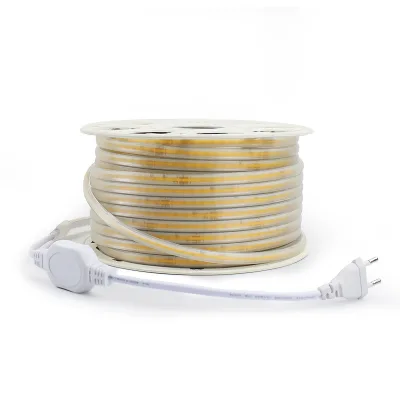
Comprehensive Sourcing Guide
Submersible COB LED Strip Sourcing Guide
The Submersible COB LED Strip market presents a specialized segment where high-density light sources are engineered for continuous operation in wet environments, though the supplied data indicates a mix of waterproof ratings that require careful distinction. While the core keyword implies full submersion capability, the observed product attributes reveal a spectrum of protection levels, ranging from IP20 ratings suitable for dry indoor cove lighting to specific models designed for higher moisture resistance. Buyers must immediately clarify whether the intended application requires true submersion or merely splash protection, as the listed "IP20" rating indicates protection against solid objects larger than 12mm but offers no guarantee against water ingress, which is a critical distinction for any project involving pools, fountains, or outdoor landscaping.
Procurement decisions for these strips hinge on the specific voltage architecture and the resulting safety protocols required for installation. The observed listings include both AC110V/220V and DC24V variants, alongside a specific 48V COB model, each presenting different risk profiles and power distribution challenges. High-voltage AC strips often eliminate the need for external transformers but demand strict adherence to electrical codes for wet locations, whereas low-voltage DC systems offer enhanced safety but require careful planning of power injection points to prevent voltage drop over long runs. Understanding these electrical distinctions is the first step in selecting a product that aligns with the project's safety requirements and existing infrastructure.
Product Scope and Observed Listing Signals
The product scope for COB LED strips in this dataset is defined by a high degree of customization and variable physical dimensions, reflecting the diverse needs of architectural and commercial lighting projects. Buyers will encounter PCB widths ranging from 5mm to 10mm, with specific models like the PSB722C-EF-RGB Digital offering addressable capabilities, while others like the PSB362C-Digital utilize WS2811 ICs for dynamic color control. The "Changeable" emitting color attribute and the availability of RGB options suggest that these strips are not limited to static white illumination but can be programmed to create dynamic visual effects, making them suitable for entertainment venues, retail displays, and modern architectural facades where ambiance is a primary design driver.
Listing signals indicate a strong emphasis on density and light output efficiency, with LED quantities per meter varying significantly between 296 LEDs/M and 480 LEDs/M depending on the specific model and voltage. The observed "Power/M" of 10W/M and "Wattage" of 8 W/M for the 48V COB strip highlight the efficiency of the COB (Chip-on-Board) technology, which provides a seamless, uniform light distribution without the visible dotting common in traditional SMD strips. Furthermore, the "Cut/Unit" specifications, such as 50mm for standard strips and 12V-20.83mm or 24V-41.66mm for others, demonstrate that these products are designed for modular installation, allowing buyers to tailor the length of the strip to fit specific cove dimensions or linear fixtures without wasting material.
Technical Specifications to Verify
When verifying technical specifications, the primary focus must be on the luminous efficacy and the thermal management capabilities of the COB design. The observed "Lm/W" values range from 90lm/W to over 100lm/W, indicating that high-efficiency models are available, but buyers should request specific test reports to confirm these figures under actual operating conditions. The "CRI: Ra90" rating is a critical specification for applications where color accuracy is paramount, such as retail or hospitality, ensuring that the light renders colors naturally. However, since the data also lists "Color" options like 2700K, 3000K, 4000K, and 6000K, buyers must verify that the specific batch ordered matches the desired color temperature, as COB strips can sometimes exhibit slight variations in color consistency across different production runs.
Electrical compatibility and cutability are the next critical verification points, as the mismatch between voltage and cut length can lead to installation failures. The data shows distinct cut units for different voltages, such as 83.33mm for the digital addressable model and specific millimeter values for 12V and 24V systems. Buyers must ensure that the cutting points align with the internal circuitry to prevent short circuits or non-functional segments. Additionally, the "IC Type" and "IC Qty" for digital models must be verified against the controller's capacity, as the listed 20 ICs per unit for the PSB362C-Digital model implies a specific control logic that must be supported by the driving hardware to ensure smooth color transitions and addressability.
Compliance and Safety Documentation
Compliance documentation for these LED strips is a complex area where buyers must scrutinize the specific certifications listed against the intended market and application. The observed certifications include CE, RoHS, EMC, and LVD, which are standard for the European market and indicate compliance with safety, environmental, and electromagnetic compatibility directives. However, the presence of "EMC" and "LVD" alongside "CE" suggests that the products are designed to meet rigorous European standards, but buyers importing into other regions must verify if these certifications are recognized locally or if additional testing, such as UL or ETL, is required for insurance and code compliance. The "Certificate: CE RoHS" and "Certification: CE,RoHS,LVD" entries confirm that the manufacturer claims adherence to these standards, but the documentation should be reviewed to ensure they are valid and not expired.
Safety documentation must also address the specific risks associated with the "Waterproof" ratings and the "Working Voltage" of the strips. While the keyword suggests submersible capabilities, the explicit "IP20" rating in the data indicates that at least some listed products are not waterproof and should never be used in wet environments. Buyers must demand a clear distinction between the IP ratings of the specific model they are purchasing, as using an IP20 strip in a damp location could lead to immediate failure or electrical hazards. For applications requiring true submersion, the documentation must explicitly state a higher IP rating, such as IP67 or IP68, and provide test reports confirming the integrity of the silicone coating or encapsulation under pressure.
Cost Drivers and Commercial Terms
Cost drivers for submersible COB LED strips are heavily influenced by the density of the LED array, the inclusion of digital control ICs, and the complexity of the PCB construction. The observed "LED Qty/M" of 384 or 480 LEDs/M, combined with the "COB" chip type and "WS2811IC" integration, suggests that digital addressable strips will command a higher price point than standard non-addressable white strips. The "PCB Material: Cooper" and "PCB Thickness: 2oz" are also significant cost factors, as thicker copper layers improve heat dissipation and current carrying capacity, which is essential for high-power applications. Buyers should expect price variations based on these material choices, as the 2oz copper and high-density COB configuration represents a premium build quality compared to standard 1oz copper strips.
Commercial terms regarding packaging and minimum order quantities (MOQ) vary significantly across the observed listings, requiring buyers to negotiate based on their project scale. The data shows an MOQ range of 1 to 1000 units, with packaging options including "100m/Roll" for standard strips and "5m/Roll" or "20 M/Roll" for specific models. The "Packing: 100m/Roll" and "prod_packing: 443428cm" details indicate that bulk orders may be more cost-effective due to reduced packaging and shipping costs per meter. However, the "Customization: Available" attribute suggests that buyers can negotiate specific roll lengths or packaging configurations, which may impact the unit price and lead time. Buyers should clarify whether the "Carton, Neutral Packing, OEM Packing" options are included in the base price or if they incur additional charges.
Supplier Qualification and Quality Control
Supplier qualification for COB LED strips requires a deep dive into the manufacturing origin and the consistency of their quality control processes. The observed "prod_origin: Guangdong, China" and "prod_origin: China" confirm that the supply chain is concentrated in a major manufacturing hub, which offers access to a robust ecosystem of components and logistics. However, buyers must verify the supplier's specific factory audits and their ability to maintain consistent quality across different batches, especially given the "Customization: Available" nature of the products. The presence of multiple model numbers like "PSB722C-EF-RGB Digital" and "PSB362C-Digital" indicates a diverse product line, and the supplier must demonstrate the capability to manage the complexity of digital IC integration without compromising the reliability of the COB chips.
Quality control checks should focus on the consistency of the "Lm/W" output and the uniformity of the "Emitting Color" across the entire roll. Since the data lists "Color: 3000K 4000K 6000K" and "Color: 2700K 3000K 4000K 6000K," buyers must ensure that the supplier has binning processes to guarantee color consistency within a single roll and across multiple rolls. The "Warranty: 2-3 Years" and "Warranty: 3 Years" entries suggest that reputable suppliers stand behind their products, but buyers should verify the terms of the warranty, including what constitutes a defect and the process for replacement. Additionally, the "Cut/Unit" precision must be verified through sample testing to ensure that the cutting points are accurate and that the electrical connections remain intact after cutting.
Long-Term Procurement Checks
Long-term procurement checks for submersible COB LED strips must prioritize the durability of the waterproofing and the stability of the light output over time. The "Warranty: 3year" and "Warranty: 3 Year" terms indicate a manufacturer's confidence in the product's lifespan, but buyers should establish a protocol for monitoring the strips in the field to detect early signs of degradation, such as color shift or lumen depreciation. The "IP20" rating observed in some listings serves as a reminder that not all COB strips are suitable for long-term exposure to moisture, and buyers must ensure that the selected product matches the environmental conditions of the installation site to avoid premature failure. Regular inspections of the silicone coating or encapsulation are essential to maintain the integrity of the waterproofing.
Finally, buyers should plan for the long-term availability of replacement parts and compatible controllers, especially for digital addressable models. The "IC Type: Ws2811IC" and "IC Qty: 20" specifications imply that the strips rely on specific integrated circuits that may become obsolete or difficult to source in the future. Buyers should verify the supplier's commitment to maintaining component availability for at least the duration of the warranty period and beyond. The "Packing: 100m/Roll" and "Packing: 5m/Roll" options also suggest that inventory management is a key consideration, as buyers should maintain a stock of spare rolls to ensure that future repairs or expansions can be completed without waiting for new production runs.
FAQs
What certifications do these LED strips have?
The products hold CE, RoHS, EMC, and LVD certifications. These standards ensure compliance with safety and environmental regulations for international markets. Buyers can verify specific certificates for each model to meet local import requirements and quality assurance protocols.
What is the working voltage range?
The strips support AC110V/220V and DC24V inputs. Some models operate at 48V. This flexibility allows integration into various lighting systems. Ensure the power supply matches the specific voltage rating to prevent damage and maintain optimal performance during installation.
How many LEDs are in each meter?
LED density varies by model, ranging from 296 to 480 LEDs per meter. Higher density options like 384 or 480 LEDs provide brighter, more uniform illumination. Select the quantity based on the desired brightness level and application requirements for your project.
Can the strips be customized?
Customization is available for packaging and specifications. Options include neutral packing, OEM packing, and carton configurations. Buyers can request specific PCB widths or color temperatures. Contact suppliers to discuss tailored solutions that fit your brand and logistical needs.
What is the warranty period?
Warranty periods typically range from 2 to 3 years. This coverage protects against manufacturing defects and ensures product reliability. Verify the specific warranty terms with the supplier before purchase to understand the scope of support and claim procedures.
What is the color temperature range?
Available color temperatures include 2700K, 3000K, 4000K, and 6000K. Some models offer changeable or addressable single-color options. Choose the temperature that matches your ambient lighting design, ensuring consistency across your installation for a professional finish.