Source Lovely Unisex Plush Toy for Gifts, Decor, and Collectibles
Compare 30 listings of Lovely Unisex Plush Toy options featuring custom designs, various animal styles, and certifications like CE and ASTM. Buyers can review MOQs, production times, and customization features to find suitable suppliers for gifts or promotional use.
Key considerations
Products List




Comprehensive Sourcing Guide
Sourcing Strategy for Lovely Unisex Plush Toys
The global market for soft, cuddly companions continues to expand, driven by a demand for products that serve both as comforting gifts and versatile decorative items. For procurement professionals targeting the "Lovely Unisex Plush Toy" category, the sourcing landscape is defined by a high degree of customization and a wide variance in production capabilities. The observed market data indicates a product ecosystem where "Customized Plush Doll" is a primary descriptor, with specific models ranging from standing animals like hedgehogs to sitting teddy bears. Buyers must navigate a complex array of technical specifications, certification requirements, and production timelines to ensure the final product meets safety standards and commercial viability. This guide outlines the critical factors for sourcing these items, focusing on the intersection of technical attributes, regulatory compliance, and supply chain logistics.
Technical Specifications and Customization Capabilities
The foundational aspect of sourcing a plush toy lies in understanding the technical specifications that define the product's physical form and function. The market data reveals a significant divergence in production methods, with some items described as "Hand-Made" while others are the result of "Machine Production." This distinction is critical for buyers assessing quality consistency and cost structures. Hand-made items often command a premium due to the labor intensity involved, whereas machine production suggests higher scalability and uniformity.
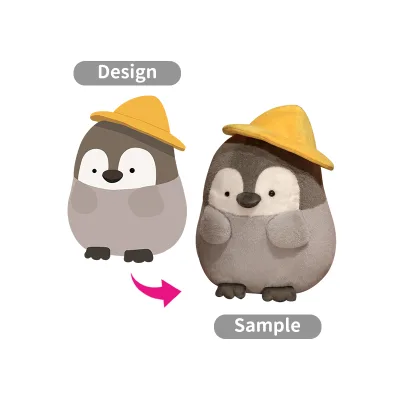
Customization is a dominant feature in this sector. The attribute "Customization: Available" is prevalent, allowing buyers to specify the "Modelling Source" as either "Custom" or specific "Animals" such as hedgehogs and teddy bears. The "Style" of the toy is equally flexible, with options for "Standing Animal" or "Sitting Animal" configurations. Furthermore, the "Weight" and "Size" are often listed as "Custom," meaning the buyer must provide precise dimensional requirements during the inquiry phase. The "Plush Length" is another variable, with some products categorized as "Short Plush Toys," which may influence the tactile experience and the amount of stuffing material required.
Packaging specifications also vary significantly across suppliers. While some products are shipped in bulk cartons containing "30-40PC/Carton," others utilize individual packaging such as "1 PCS a Ploybag" or "Boxed" units. The "Standard Package Size" for certain models is noted as "30X10X25 cm," which is vital for calculating freight costs and warehouse storage efficiency. Buyers must verify if the "Logo" application involves "Printing" or if it is attached via a "Label or Hang Tag" that can be customized. The "OEM/ODM" capability is explicitly confirmed as "Yes!" in the data, indicating that suppliers are generally equipped to handle private label requests and design modifications.
Compliance and Certification Verification
Safety and regulatory compliance are non-negotiable in the plush toy industry, particularly when targeting markets in North America and Europe. The observed data highlights a robust set of certifications that suppliers claim to possess, including "CE," "En71," "ASTM," "Cpsia," and "Reach." These certifications are essential for market access. For instance, "ASTM" and "En71" are frequently cited as the testing standards, with specific references to "ASTM/En71" tests. Additionally, the "Factory Audit" section mentions "BSCI" and "BV Audit," which are crucial for verifying the social and ethical standards of the manufacturing facility.
However, buyers must exercise caution when interpreting these claims. The data also lists "CCC" and "CE" together, and in some instances, the "Customized" attribute is marked as "Non-Customized," suggesting that not all products in a supplier's catalog may be fully customizable or compliant with every standard simultaneously. The "Certificate" section explicitly lists "BSCI&ISO9001," indicating that quality management systems are in place. To ensure compliance, buyers should request current, valid certificates for the specific product model being ordered, rather than relying on general supplier claims. The "Test" standard is noted as "Depending on the number of products," which implies that testing protocols may scale with order volume. It is imperative to verify that the "prod_standard" aligns with the destination market's legal requirements, as "standard or custom" standards are listed, requiring explicit confirmation from the supplier.
Cost Drivers and Pricing Dynamics
Understanding the cost structure of plush toys is essential for maintaining healthy profit margins. The observed price range in the market is noted as $0.5 to $9 USD, a wide spectrum that reflects differences in material quality, production complexity, and customization levels. Several factors drive these costs. First, the "Technical" method—whether "Hand-Made" or "Machine Production"—directly impacts labor costs. Second, the "Customization" of the "Modelling Source" and "Logo" application adds to the unit price. Third, the "Packing" method, whether bulk or individual "Boxed" units, influences packaging material and labor expenses.
The "MOQ" (Minimum Order Quantity) is a significant cost driver. The data shows a range from 1 to 5000 units, with specific instances of "1000" or "1,000 PCS" being common thresholds. Orders below these thresholds may incur higher per-unit costs or require a sample fee. The "Sample Time" is listed as "3-7 Working Days," which is a relatively quick turnaround for prototyping, but the "Production Time" is estimated at "About 20 Days, or According to Order Quantity." This variability means that rush orders could incur expedited shipping or production surcharges. Buyers should also consider the "Location" of the origin, which is primarily "China" with some specific mentions of "Shanghai," as logistics costs from these hubs can fluctuate based on global shipping rates.
Typical Applications and Target Demographics
The versatility of the "Lovely Unisex Plush Toy" allows for diverse applications across various market segments. The "Usage" is explicitly defined as "Gift," making these items ideal for corporate gifting, holiday promotions, and retail gift shops. The "Gender" is listed as "Unisex," broadening the potential customer base to include all children and adults regardless of gender preference. The "Age" demographic is split, with some products targeting "3-8 Years" and others for "> 8 Years," indicating that the design complexity and safety features must be tailored to the intended age group.
Specific product types, such as the "Hedgehog" and "Teddy Bear," serve as classic examples of "Standing Animal" and "Sitting Animal" styles. These designs are often used in educational settings, therapy environments, or as collectibles. The "Function" of some toys includes "Light," suggesting an electronic component that adds interactivity, while others are "Not Electric," relying solely on the soft, comfortable texture. The "Feature" of being "Soft Comfortable" is a universal selling point, appealing to consumers seeking tactile relief or companionship. Whether used as a promotional item with a custom "Customers Logo" or as a standalone retail product, the "Name" of the item, often "Customized Plush Doll," allows for branding opportunities that enhance marketing campaigns.
Supplier Evaluation and Quality Assurance
Selecting the right supplier requires a rigorous evaluation process that goes beyond the initial product listing. Buyers should prioritize suppliers who demonstrate transparency in their "Factory Audit" results, specifically looking for "BSCI" and "BV Audit" certifications. These audits provide insight into the working conditions and management systems of the factory. The "Certificate" of "ISO9001" is another strong indicator of a supplier's commitment to quality management.
Quality control (QC) should be integrated into the procurement process from the sample stage to mass production. The "Sample Time" of 3-7 days allows for a thorough review of the "Customization" details, including the "Logo" placement and "Label or Hang Tag" design. Buyers must verify that the "Technical" attributes, such as the "Hand-Made" or "Machine Production" status, match the sample quality. During production, random inspections should be conducted to ensure that the "prod_standard" remains consistent. The "Packing" process must also be monitored to prevent damage, especially for items with "Light" functions or delicate features.
Long-Term Procurement Considerations
Sourcing plush toys is not a one-time transaction but a relationship that requires long-term planning. The "Production Time" of approximately 20 days, or dependent on order quantity, necessitates accurate forecasting to avoid stockouts. Buyers should establish clear communication channels regarding the "Customization" process, as changes to the "Modelling Source" or "Style" can impact lead times. The "MOQ" flexibility, ranging from 1 to 5000, offers opportunities for small-batch testing before committing to larger orders.
Sustainability and ethical sourcing are becoming increasingly important. The presence of "BSCI" and "Reach" certifications suggests that suppliers are aware of environmental and social regulations. Buyers should inquire about the materials used in the "Plush" fabric and the stuffing to ensure they meet sustainability goals. Additionally, the "Location" of the origin, primarily "China" and "Shanghai," requires consideration of geopolitical factors and shipping logistics. Establishing a partnership with a supplier who offers "OEM/ODM" services can provide long-term flexibility, allowing the buyer to adapt to market trends and consumer preferences without changing suppliers.
Comparative Analysis of Product Attributes
To facilitate decision-making, the following table summarizes key product attributes observed in the market data, highlighting the variability that buyers must navigate.
| Attribute Category | Observed Variations | Procurement Implication |
|---|---|---|
| Production Method | Hand-Made vs. Machine Production | Impacts labor cost, consistency, and scalability. |
| Customization | Available vs. Non-Customized | Determines ability to brand and modify designs. |
| Certifications | CE, En71, ASTM, Cpsia, Reach, CCC | Essential for market access; verify specific validity. |
| MOQ | 1 to 5000 (Common: 1000) | Affects unit price and order feasibility. |
| Packaging | 30-40PC/Carton, 1PC/Polybag, Boxed | Influences shipping volume and retail presentation. |
| Target Age | 3-8 Years, > 8 Years | Dictates safety testing requirements and design complexity. |
| Origin | China, Shanghai | Determines logistics costs and lead time. |
| Function | Light vs. Not Electric | Affects material composition and testing protocols. |
In conclusion, sourcing "lovely unisex plush toys" requires a balanced approach that considers technical specifications, regulatory compliance, and supply chain logistics. By leveraging the available customization options and verifying certifications, buyers can secure high-quality products that meet diverse market needs. The wide range of prices, MOQs, and production times offers flexibility, but it also demands careful planning and rigorous supplier evaluation to ensure success in this competitive sector.
FAQs
What certifications are required for these plush toys?
Required certifications include CE, En71, ASTM, Cpsia, Reach, and CCC. Suppliers must also hold BSCI and ISO9001 certificates to ensure safety and ethical manufacturing standards for international markets.
Can I customize the logo and design of the toy?
Yes, customization is available for logos, labels, and modeling sources. Buyers can request custom animals like hedgehogs or teddy bears with specific styles such as standing or sitting configurations.
What is the minimum order quantity for these products?
The minimum order quantity ranges from 1 to 5000 units, with 1000 pieces being a common threshold. Specific orders may require 1000 PCS depending on the customization level and production method.
How long does production take for a custom order?
Production time is about 20 days or depends on the order quantity. Sample time is shorter, typically taking 3 to 7 working days for prototyping before mass production begins.
Are these toys suitable for children aged 3 to 8 years?
Yes, specific models are designed for children aged 3 to 8 years, while others target those older than 8 years. Safety tests like ASTM and En71 ensure compliance for these age groups.
What is the price range for lovely unisex plush toys?
The observed price range is between 0.5 and 9 USD per unit. Costs vary based on technical methods like hand-made versus machine production, packaging, and customization requirements.