Source LSZH FTTH Indoor Drop Cable for Aerial, Indoor, and Outdoor Use
Compare 30 listings for LSZH FTTH Indoor Drop Cable featuring options with PVC or LSZH sheaths, various core counts, and certifications like CE and RoHS. Buyers can evaluate tensile strength, operating temperatures, and packing details from suppliers in China.
Key considerations
Products List


Factory Price FTTH Fiber Drop Cable 1 2 Core Outdoor Indoor Fiber Optic Cable
$0.02 - $0.25
MOQ: 10000 Meters


1 Core 2 Core FTTH Drop Cable Fiber Optic Drop Cable FTTH Indoor Cable
$0.25 - $0.35
MOQ: 100000 Meters


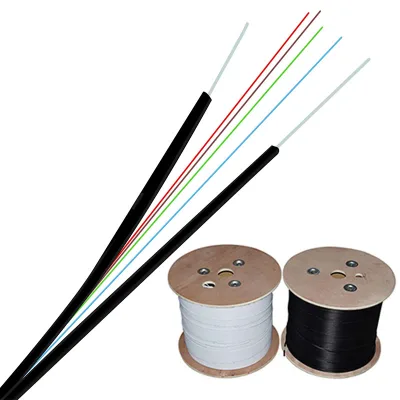

FTTH Indoor Outdoor Drop Cable 1 Core 2 Core 4 Core LSZH Jacket Fiber Cable
$0.02 - $0.03
MOQ: 10000 Meters


Comprehensive Sourcing Guide
Strategic Sourcing Guide for LSZH FTTH Indoor Drop Cables
Understanding the Technical Architecture of Indoor Drop Cables
When sourcing LSZH (Low Smoke Zero Halogen) FTTH (Fiber to the Home) indoor drop cables, buyers must first distinguish the specific technical architecture required for safe and efficient deployment. The core material composition is critical for indoor environments where fire safety regulations are stringent. The supplied product data indicates that the sheath material is frequently specified as LSZH, a polymer compound designed to emit minimal smoke and no toxic halogens when exposed to fire. This is a direct alternative to standard PVC (Polyvinyl Chloride) sheathing, which is also listed as an option in some product profiles but is generally less preferred for indoor applications due to higher toxicity risks.
The cable construction typically features a flat wire shape, which is a distinct advantage for indoor drop applications. This geometry allows the cable to be easily concealed behind baseboards, under carpets, or within wall cavities without requiring bulky conduit. The core of the cable is multicore, with observed fiber counts ranging from 1 to 48 cores, though specific drop cable models often focus on 1 to 12 cores or 2 to 48 cores to match residential and small business needs. The fiber type itself is a crucial variable; the data highlights G652D, G657A, and G657A2 as standard fiber types. G657A2 is particularly noted for its bend-insensitive properties, making it ideal for tight corners and tight-radius routing common in FTTH installations.
The connection structure is another vital technical specification. While some general fiber optic cables utilize SC connectors, specific FTTH drop cable profiles list FC-MTRJ as a connection structure. Buyers must verify the exact connector type required for their specific network termination equipment, as MTRJ (Mechanical Transfer Registered Jack) and FC (Ferrule Connector) serve different interface standards. The cable is designed for both indoor and outdoor use, often described as "The Way: Indoor/Outdoor," which implies a robust strength member, such as steel wire, to withstand the tension of aerial or direct burial segments before entering the building. The outer sheath color is typically black, providing a standard aesthetic for building infrastructure.
Compliance and Certification Verification Protocols
In the global B2B market, compliance is not merely a formality but a prerequisite for market access and liability protection. The sourcing of LSZH FTTH cables requires rigorous verification of certifications that validate both material safety and manufacturing quality. The supplied facts explicitly list CE (Conformité Européenne) and RoHS (Restriction of Hazardous Substances) as common certifications. The CE mark indicates compliance with European health, safety, and environmental protection standards, while RoHS ensures the cable is free from specific hazardous materials like lead and mercury.
Beyond these, ISO 9001 certification is frequently cited in the product data, with some entries specifying ISO 9001-2008. This certification confirms that the manufacturer operates under a quality management system that meets international standards. However, buyers should be aware that certification lists can vary between product lines. For instance, one product profile mentions SGS, TLc, and ISO 9001-2008 specifically for FTTH drop cables, while another lists CE and ISO. It is essential to request current, valid certificates for the specific batch being purchased, as certifications can expire or be specific to certain production lines.
The standard for the cable itself is another area requiring careful attention. While the data mentions "copper" as a standard in one context, this appears to be a data inconsistency for a fiber optic product. More reliable specifications point to "FTTH" as the product standard and specific fiber standards like G657A2. Buyers should verify that the product conforms to relevant international standards for fiber optic cables, such as IEC 60794 or ITU-T G.652/G.657 recommendations, rather than relying solely on the generic "FTTH" label. The operating temperature range is another critical compliance metric; the observed data specifies a range of -40 to 60 degrees Celsius. This wide range ensures the cable remains functional in extreme climates, but buyers must confirm that the specific LSZH compound used maintains its integrity within this range without becoming brittle or deforming.
Cost Drivers and Pricing Dynamics in the Market
The pricing of LSZH FTTH indoor drop cables is influenced by a complex interplay of raw material costs, manufacturing complexity, and order volume. The observed price range in the market spans from $0.01 to $60 per unit, a vast disparity that reflects differences in fiber count, cable length, and specific configuration. A single-core drop cable will naturally cost significantly less than a 48-core distribution cable, and the price per meter decreases as the order volume increases. The Minimum Order Quantity (MOQ) ranges from 1 to 100,000 units, indicating that the market accommodates both small-scale pilot projects and large-scale national rollouts.
One of the primary cost drivers is the sheath material. LSZH compounds are generally more expensive than standard PVC due to the specialized additives required to achieve low smoke and zero halogen properties. Consequently, cables with LSZH sheaths will command a premium over those with PVC covers. The data also lists "PVC/LSZH/Lsoh" as cover material options, suggesting that buyers can choose between cost-effective PVC for non-critical indoor areas and premium LSZH for high-safety zones. The fiber type also impacts cost; G657A2 bend-insensitive fibers are typically more expensive than standard G652D fibers due to the advanced manufacturing process required to enhance their bend resistance.
Additional cost factors include the connection structure and packaging. Cables pre-terminated with MTRJ or FC connectors incur higher labor and material costs compared to bare fiber cables that require on-site termination. The packaging method, such as wooden drums or iron-wooden drums, adds to the logistics cost, especially for international shipping. The data mentions "Sea Freight" as a shipping method, which is cost-effective for large volumes but requires longer lead times. Buyers should also consider the "Factory Price and Short Delivery Time" advantage mentioned in some profiles, which suggests that sourcing directly from manufacturers in China (specifically Guangdong and Hangzhou) can reduce intermediary markups. However, buyers must balance this against the potential for higher shipping costs and longer lead times associated with international freight.
Typical Applications and Deployment Scenarios
LSZH FTTH indoor drop cables are engineered for specific deployment scenarios where safety, flexibility, and space constraints are paramount. The primary application is Fiber to the Home (FTTH), where the cable runs from the building entrance point to the individual subscriber's premises. The "Indoor/Outdoor" designation in the product data indicates versatility, allowing the same cable type to be used for the aerial drop from the pole to the building exterior and then transitioned into the indoor distribution network. This eliminates the need for different cable types at the building entry, simplifying inventory management for installers.
The "Flat Wire" shape is particularly advantageous for residential installations. It allows the cable to be routed along baseboards, under carpets, or through tight wall cavities without the need for drilling or extensive conduit work. This is a significant benefit for retrofitting existing homes where structural modifications are undesirable. The cable is also suitable for "Aerial" laying, supported by a steel wire strength member that can withstand the tension of hanging the cable between poles. The fiber count options, ranging from 1 to 48 cores, support various network architectures, from simple point-to-point connections for single homes to multi-dwelling unit (MDU) deployments where a single cable serves multiple apartments.
The operating temperature range of -40 to 60 degrees Celsius ensures reliability in diverse climates, from freezing winters to hot summers. This is critical for cables that may be exposed to the elements before entering the building. The "Life" expectancy of 15 to 30 years, as noted in the product data, aligns with the long-term nature of fiber optic infrastructure. This longevity makes LSZH FTTH cables a cost-effective solution over the lifecycle of the network, reducing the need for frequent replacements. The cable is also designed for "FTTH/FTTX/Ftta" laying methods, indicating compatibility with various fiber network topologies, including Fiber to the Curb (FTTC) and Fiber to the Building (FTTB).
Supplier Evaluation and Geographic Considerations
Evaluating suppliers for LSZH FTTH cables requires a focus on geographic origin, manufacturing capacity, and quality assurance systems. The supplied data identifies China as the primary origin, with specific mentions of Guangdong and Hangzhou as key manufacturing hubs. These regions are known for their robust telecommunications infrastructure and a high concentration of fiber optic manufacturers. The company "Xingfa Transmission Equipment Co., Ltd" is listed as a potential supplier, but buyers should not rely on a single name. Instead, the focus should be on verifying the supplier's ability to meet the specific technical and certification requirements.
When evaluating a supplier, buyers should look for evidence of consistent quality control. The presence of ISO 9001 certification is a good starting point, but it should be complemented by specific product testing records. The data mentions "SGS" as a certificate for FTTH drop cables, suggesting that third-party testing is available. Buyers should request test reports for tensile strength, lateral pressure, and fire performance to ensure the cable meets the claimed specifications. The "Allowed Tensile Strength" of >10,000N and "Allowed Lateral Pressure" of >1000(N/100mm) are critical performance metrics that must be verified through independent testing.
Lead time and delivery capabilities are also essential factors. The data mentions "Short Delivery Time" as an advantage, but this should be validated against the specific order volume and shipping method. Sea freight is the primary mode of transport, which is cost-effective but slow. Buyers should confirm the supplier's ability to handle large orders, given the MOQ range of up to 100,000 units. The packaging method, such as wooden drums, should be suitable for long-distance shipping to prevent damage. Finally, buyers should verify the supplier's customization capabilities, as the data indicates that customization is available. This is crucial for projects requiring specific fiber counts, connector types, or sheath colors.
Quality Control and Long-Term Procurement Strategy
Implementing a robust quality control (QC) strategy is essential for ensuring the reliability of LSZH FTTH cables over their 15 to 30-year lifespan. The QC process should begin with the verification of raw materials, specifically the LSZH sheath compound and the optical fiber. Buyers should request material safety data sheets (MSDS) to confirm the composition of the sheath and ensure it meets the low smoke and zero halogen requirements. The fiber type, whether G652D or G657A2, must be verified against the manufacturer's specifications to ensure the correct attenuation and bend-radius characteristics.
During production, QC checks should include visual inspections for defects in the sheath and core alignment. The "Flat Wire" shape must be consistent to ensure proper installation. Mechanical tests for tensile strength and lateral pressure should be conducted on sample batches to verify that the cable can withstand the installation stresses. The data specifies a tensile strength of >10,000N and lateral pressure of >1000(N/100mm), which are high-performance benchmarks that should be met. Optical tests, such as insertion loss and return loss measurements, are also necessary to ensure the cable meets the required transmission performance.
For long-term procurement, buyers should establish a relationship with suppliers that offer consistent quality and reliable delivery. The "Factory Price and Short Delivery Time" advantage suggests that direct sourcing from manufacturers can provide better value, but it requires careful management of the supply chain. Buyers should consider diversifying their supplier base to mitigate risks associated with production delays or quality issues. Regular audits of the supplier's manufacturing facilities and quality control processes can help maintain high standards. Additionally, buyers should plan for the end-of-life disposal of the cables, ensuring that the LSZH material is handled in accordance with environmental regulations. By focusing on these quality control and long-term strategy elements, buyers can ensure a reliable and cost-effective deployment of LSZH FTTH indoor drop cables.
FAQs
What certifications are required for LSZH FTTH indoor drop cables?
Cables typically require CE and RoHS certifications for safety and environmental compliance. Some profiles also list ISO 9001 and SGS testing results to validate quality management systems and material integrity before deployment.
Which fiber types are available for these indoor drop cables?
Available fiber types include G652D, G657A, and G657A2 standards. G657A2 is preferred for bend-insensitive applications in tight corners, while G652D serves standard single-mode needs.
Can these cables be used for both indoor and outdoor applications?
Yes, the cables are designed for indoor and outdoor use with steel wire strength members. This construction allows them to withstand aerial laying and direct burial before transitioning into building interiors.
What is the operating temperature range for LSZH FTTH cables?
The cables operate effectively within a temperature range of -40 to 60 degrees Celsius. This wide range ensures reliability in extreme climates without compromising the LSZH sheath integrity.
How many fiber cores are available in these drop cables?
Fiber counts range from 1 to 48 cores depending on the specific model. Common configurations for residential drop cables often focus on 1 to 12 cores to match small business needs.
What connection structures are supported for these fiber optic cables?
Supported connection structures include SC and FC-MTRJ types. Buyers must verify the exact connector type required for their specific network termination equipment to ensure compatibility.
What is the expected lifespan of LSZH FTTH indoor drop cables?
The expected lifespan ranges from 15 to 30 years for these infrastructure cables. This longevity aligns with the long-term nature of fiber optic networks and reduces replacement frequency.