Source Luxury Glossy PVC Business Card for Finance, Medical, Games
Compare 30 Luxury Glossy PVC Business Card options with ISO standards and customizable sizes. Buyers can review factory prices, delivery times, and printing methods for identification, payment, and encryption needs.
Key considerations
Products List


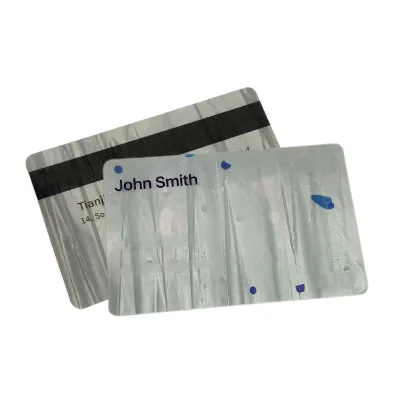


Comprehensive Sourcing Guide
Strategic Sourcing Guide for Luxury Glossy PVC Business Cards
The global B2B market for premium identification and communication tools has seen a significant shift toward durable, high-gloss PVC cards that blend aesthetic appeal with functional utility. When sourcing "luxury glossy PVC business cards," buyers must navigate a complex landscape where visual finish, material integrity, and technical functionality intersect. The term "luxury" in this context often implies a specific surface treatment, such as high-gloss lamination or specialized printing techniques, applied to a standard PVC substrate. This guide provides a disciplined, evidence-based approach to evaluating suppliers, understanding technical specifications, and ensuring that the final product meets rigorous professional standards without relying on unverified marketing claims.
Understanding Material Composition and Structural Integrity
The foundation of any high-quality business card lies in its material composition. In the current market, Polyvinyl Chloride (PVC) remains the dominant substrate due to its durability, flexibility, and resistance to environmental factors. The supplied data confirms that the standard material for these products is explicitly PVC, often adhering to international waterproofing standards. This material choice is critical for "luxury" applications because it allows for a smooth, non-porous surface that accepts high-fidelity printing and glossy finishes without warping or degrading over time.
Buyers must verify the physical dimensions of the card to ensure compatibility with standard cardholders and wallets. The industry standard size observed in high-volume production is 85.5mm by 54mm, with a thickness typically ranging between 0.76mm and 0.85mm. While some suppliers offer customized sizes, the 85.5mm54mm0.76mm specification is the most common baseline for ISO-compliant cards. The structural integrity of the card is further defined by its classification; these are often categorized as RFID cards, Memory cards, or Magnetic Stripe cards depending on the embedded technology. For a purely aesthetic "business card" application, the structural focus should remain on the printing surface and the PVC substrate's resistance to bending and tearing.
Technical Specifications and Functional Capabilities
The functional capabilities of a luxury PVC card extend beyond simple visual presentation. Many modern business cards integrate advanced features such as RFID, magnetic stripes, or contact chips to facilitate data transmission. The observed data indicates a diverse range of carrier frequencies, including both High Frequency and Low Frequency options, which dictate the card's interaction with readers. Additionally, the data transmission mode can be either parallel or serial, a technical detail that affects how data is read and written to the card's memory.
For buyers seeking a "luxury" finish, the printing technology is paramount. The market supports a wide array of printing methods, including Offset, CMYK, Silk Screen, Digital Printing, Ink Jet, Laser Printing, and Spot Printing. The "glossy" aspect is often achieved through specific printing processes or post-production lamination. The data notes that transparency is also an available option, suggesting that some luxury cards may utilize clear PVC substrates to create a modern, high-end aesthetic. Furthermore, the read-write method varies; some cards utilize Optical Character Recognition (OCR) or non-contact types, while others rely on magnetic strips with specific coercivity ratings like Hico (2750OE) or Loco (300OE).
| Feature Category | Observed Specifications | Buyer Verification Point |
|---|---|---|
| Material | PVC | Verify ISO compliance and waterproofing standards. |
| Dimensions | 85.5mm54mm0.76mm (Standard) | Confirm thickness tolerance (0.76mm vs 0.85mm). |
| Printing | Offset, CMYK, Digital, Laser | Request samples to verify color accuracy and gloss level. |
| Technology | RFID, Magnetic Stripe, Contact | Determine required frequency (High/Low) and transmission mode. |
| Environment | -20°C to +90°C | Ensure card stability for intended storage conditions. |
Compliance, Certification, and Quality Standards
In the B2B procurement of PVC cards, compliance with international standards is non-negotiable for ensuring product reliability. The supplied facts highlight that many products adhere to ISO standards, specifically regarding dimensions and general quality. The "International PVC Waterproofing Standard" is another critical benchmark that buyers should request proof of, as it ensures the card can withstand moisture and humidity without delaminating or fading.
While some background information mentions FSC certification, this should be treated with caution as it is listed as low-confidence background data. Buyers should not assume a supplier possesses FSC certification unless explicitly verified in the contract or product documentation. Instead, the primary focus should be on the ISO standard compliance for physical dimensions and the specific waterproofing ratings. The "Usage Environment" data indicates a temperature range of -20°C to +90°C, which serves as a practical benchmark for the card's thermal stability. Buyers must verify that the specific batch of cards they order can withstand the temperature extremes of their intended logistics and usage scenarios.
Cost Drivers and Pricing Dynamics
The pricing of luxury glossy PVC business cards is influenced by several distinct factors, primarily volume, customization complexity, and the chosen technology. The observed price range in the market is 0.01 to 0.6 USD per unit, a wide spectrum that reflects the difference between basic blank cards and highly customized, technologically advanced units. The "Factory Price" designation suggests that direct sourcing from manufacturers can yield significant cost advantages, but this is heavily dependent on the Minimum Order Quantity (MOQ).
The MOQ for these products typically ranges from 100 to 5000 units, with 500 pieces often cited as a standard threshold for custom orders. This volume requirement is a primary cost driver; smaller orders may incur higher per-unit costs due to setup fees for printing and encoding. Additionally, the choice of printing method impacts the final price. While Offset and CMYK are standard, specialized techniques like Laser Printing or Spot Printing may carry a premium. The packaging configuration also plays a role; standard packing is often 250 pieces per inner box with 20 boxes per carton, but custom packaging requests can alter the logistics cost. Buyers should negotiate based on the total landed cost, including shipping, rather than just the unit price, especially given the "Factory Price" nature of the market.
Supplier Evaluation and Operational Reliability
Selecting a reliable supplier is critical for ensuring consistency in luxury product delivery. The data indicates that many suppliers have a business history of 16 years and possess numerous overseas clients, suggesting a level of maturity and experience in the export market. However, buyers must look beyond these general claims and verify specific operational metrics. The "Delivery" time is noted as "in 7 Days After Payment," which is a standard lead time for many manufacturers, but this should be confirmed for each specific order, as customization can extend this timeline.
Payment terms are typically structured as T/T (Telegraphic Transfer), a standard practice in international trade. Buyers should ensure that the payment terms are clearly defined in the purchase agreement to mitigate financial risk. The "Samples" are often available for free, which is a valuable tool for evaluating the "luxury" quality of the glossy finish before committing to a large order. When evaluating a supplier, buyers should request physical samples to test the gloss level, color vibrancy, and card flexibility. The supplier's ability to provide "Customizable" models, as noted in the data, is also a key indicator of their flexibility and capacity to meet unique branding requirements.
Quality Control and Long-Term Procurement Strategy
Implementing a robust quality control (QC) strategy is essential for maintaining the "luxury" status of the product. The "Read-Write Method" and "Data Transmission Mode" must be tested to ensure that any embedded technology functions correctly. For magnetic stripe cards, the coercivity (Hico vs. Loco) must be verified to ensure compatibility with existing readers. The "Structure" of the card, whether it is a Memory Card, RFID Card, or Printing Card, must be consistent across the entire batch to prevent functional failures.
Long-term procurement considerations include the stability of the supply chain and the ability to scale. The "Foreign Trade Experience" of the supplier is a strong indicator of their ability to handle international logistics and customs requirements. Buyers should establish a relationship with suppliers who can consistently meet the ISO standards and waterproofing requirements over multiple production runs. The "Usage" of these cards often extends to Finance, Medical Insurance, and Electronic Game Card applications, which implies that the cards must be durable enough for frequent handling.
To ensure long-term success, buyers should maintain a clear specification document that outlines the exact requirements for gloss level, dimensions, and technology. Regular audits of the supplier's production process can help identify potential issues before they impact the final product. By focusing on verified standards and observable product attributes, buyers can secure a reliable supply of high-quality luxury PVC business cards that meet the demanding expectations of the B2B market.
FAQs
What material is used for luxury glossy PVC business cards?
The cards are made from PVC, which offers durability and flexibility. This material supports high-gloss finishes and adheres to international waterproofing standards for long-term use.
Can I get custom sizes for these business cards?
Yes, customization is available including specific dimensions. While the standard size is 85.5mm by 54mm, buyers can request customized sizes to fit unique branding requirements.
What is the typical lead time for production?
Production is completed in 7 days after payment is received. This fast turnaround applies to standard orders, though complex customization may require additional verification.
Which printing methods are supported for these cards?
Multiple printing options are available including Offset, CMYK, and Digital Printing. Buyers can also choose Silk Screen, Laser, or Ink Jet printing for specific aesthetic effects.
What is the minimum order quantity for custom cards?
The minimum order quantity typically starts at 500 pieces. However, some suppliers may accept orders as low as 100 units depending on the specific product configuration.
How do the cards handle extreme temperatures?
The cards are designed to operate in environments ranging from -20°C to +90°C. This temperature range ensures stability during storage and transport in various climates.
Are samples available before placing a bulk order?
Free samples are available for evaluation before committing to a large purchase. This allows buyers to verify the glossy finish, color accuracy, and card thickness.