Source Manual Brass Chlorine Cylinder Valve for Gas Storage
Find 30 Manual Brass Chlorine Cylinder Valve options from verified Chinese manufacturers. Buyers can compare specifications like nominal pressure, outlet threads, and customization support to select the right valve for industrial gas applications.
Key considerations
Products List




Comprehensive Sourcing Guide
Strategic Sourcing Guide for Manual Brass Chlorine Cylinder Valves
Procuring industrial components for hazardous media requires a disciplined approach that balances technical precision with rigorous supplier vetting. When searching for a Manual Brass Chlorine Cylinder Valve, buyers must navigate a complex landscape of material compatibility, pressure ratings, and certification requirements. The following guide synthesizes available market data and industry standards to provide a comprehensive framework for sourcing these critical safety components. This analysis focuses on the specific attributes observed in current listings while applying necessary caution regarding media compatibility, as chlorine presents unique chemical challenges compared to the general gas products often listed.
Technical Specifications and Material Compatibility
The foundation of a successful procurement strategy lies in verifying the technical specifications against the intended application. Based on observed market data, manual brass valves are frequently characterized by specific connection modes and pressure ratings. A common configuration observed in the supply chain features an internal thread connection mode, which is essential for ensuring a secure fit within the cylinder assembly. The nominal diameter for these units often ranges between 4mm and 6mm, with specific models like the QF-10 and QF-T1b indicating a nominal diameter of 6mm or 5mm respectively.
Material composition is a critical differentiator. The primary material identified in the current market is brass, which offers a balance of machinability and corrosion resistance. However, the suitability of brass for chlorine service must be rigorously verified. While brass is standard for general gas applications, chlorine is a highly reactive halogen that can cause stress corrosion cracking in certain copper alloys. Buyers must confirm that the specific brass alloy used meets the chemical resistance requirements for chlorine, rather than assuming standard brass grades are sufficient.
Pressure ratings observed in the data vary significantly. Some listings indicate a nominal pressure of 2MPa, while others specify a pressure level classified as "High Pressure" ranging from 10.0MPa to 100.0MPa. The outlet thread specifications also show diversity, with common formats including G3/4, W21.8X1/14-Lh, and Pz27.8. The joint thread to cylinder connection is frequently standardized, with Pz27.8 and GB8335 Pz27.8 appearing as specific connection types. When sourcing a valve for chlorine, the buyer must ensure the selected pressure rating exceeds the maximum operating pressure of the system with an appropriate safety margin, and that the thread specifications match the cylinder and regulator interface exactly.
Compliance and Certification Verification
Certification is not merely a formality but a legal and safety prerequisite for handling hazardous gases. The market data indicates the presence of GS certification and ISO material standards in various listings. The GS mark generally signifies compliance with German safety standards, which are often recognized internationally as a benchmark for product safety. Additionally, the mention of "ISOMaterial" suggests adherence to ISO standards regarding material composition and testing.
However, the presence of a certification mark on a product listing does not automatically guarantee that the specific valve is certified for chlorine service. Buyers must demand specific documentation proving that the valve has been tested and approved for the intended media. This includes verifying that the manufacturer holds valid ISO certifications for the specific product line and that the GS certification covers the chlorine application.
Furthermore, the standard "Standard" designation found in product attributes is too vague for hazardous media procurement. Buyers should verify if the product adheres to specific international standards such as ISO 4706 for gas cylinder valves or relevant national standards for chlorine handling. The absence of explicit media-specific certifications in a general listing is a red flag. Procurement teams must request third-party test reports that explicitly validate the valve's performance under chlorine exposure, including leak testing and material compatibility analysis.
Cost Drivers and Pricing Dynamics
Understanding the cost structure of manual brass valves is essential for budgeting and negotiation. The observed price range in the market spans from $0.02 to $50 USD. This wide disparity is driven by several factors, including the complexity of the valve design, the precision of the machining, the specific brass alloy grade, and the level of certification.
Low-cost units in the $0.02 to $5 range are typically generic components with minimal customization and standard pressure ratings. These may be suitable for low-pressure, non-hazardous applications but are generally unsuitable for chlorine service due to potential material incompatibility and lower safety margins. Conversely, valves priced toward the higher end of the spectrum, approaching $50, often incorporate specialized features such as high-pressure ratings (up to 100MPa), advanced sealing mechanisms, and comprehensive certification packages.
Other cost drivers include the minimum order quantity (MOQ). The observed MOQ range is extensive, from 1 unit to 50,000 units. Small batch orders may incur a higher per-unit cost due to setup fees and limited economies of scale. Conversely, large volume orders can significantly reduce the unit price but require a substantial upfront capital commitment. Payment terms also influence the effective cost; standard terms observed include a 30% TT in advance with the balance due before shipment. Buyers should negotiate these terms based on their order volume and the supplier's risk profile.
Typical Applications and Operational Constraints
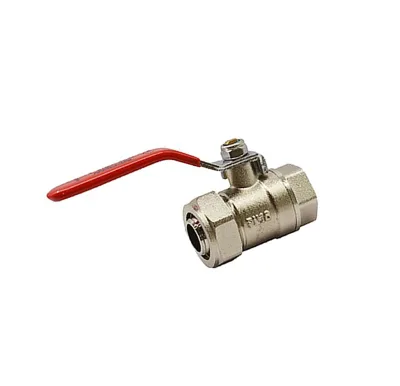
The applications for manual brass cylinder valves are diverse, ranging from general gas storage to high-purity gas delivery. The data highlights specific models designed for natural gas (QF-T1b) and high-purified gases like hydrogen (QF-99). These valves typically feature a lever structure for manual operation, allowing for quick opening and closing. The temperature rating for many of these units is listed as "Ordinary Temperature," though some are rated for "High Temperature" service.
For chlorine applications, the operational constraints are stricter. Chlorine is often stored and transported as a liquid under pressure, requiring valves that can handle both liquid and vapor phases. The "Closed" state and "Adjustable" pressure features noted in the data are relevant for controlling flow rates. However, the "High Temperature" rating observed in some listings may not be the primary concern for chlorine, which is often handled at ambient temperatures, unless the application involves heating or specific process conditions.
The media compatibility is the most critical constraint. While the listings mention suitability for "Gas" and "H2," chlorine requires a specific verification of material compatibility. The lever structure must be robust enough to withstand the torque required to open a high-pressure chlorine valve, and the internal sealing materials must resist degradation by chlorine. Buyers must ensure that the valve's design, including the joint thread to cylinder connection (e.g., Pz27.8), is compatible with the specific cylinder type used for chlorine storage.
Supplier Evaluation and Sourcing Strategy
Evaluating suppliers for hazardous gas components requires a multi-faceted approach. The origin of the products is predominantly China, with specific mentions of locations like Zhengjiang. While China is a major manufacturing hub, buyers must verify the specific capabilities of the supplier. The presence of "Customization: Available" and "Customized Support: OEM" indicates that many suppliers are willing to tailor products to specific requirements, which is valuable for specialized applications like chlorine.
When evaluating a supplier, buyers should look beyond the basic product listing. Key indicators of a reliable supplier include the ability to provide detailed technical datasheets, proof of material traceability, and a clear quality control process. The "New" condition of the products listed suggests that the market is active with fresh inventory, but buyers must ensure that the stock is not expired or stored in conditions that could compromise the integrity of the seals or the brass material.
The payment terms of 30% TT in advance are standard, but buyers should assess the supplier's financial stability and reputation. A supplier with a high MOQ of 50,000 may be less flexible for small-scale testing or pilot projects. Conversely, a supplier with an MOQ of 1 offers flexibility but may lack the capacity for large-scale industrial supply. The packaging, listed as "Box" or "Carton," should be evaluated for its ability to protect the valves during transit, especially for high-pressure units that require careful handling.
Quality Control and Long-Term Procurement
Quality control is paramount when dealing with valves that control the flow of hazardous media. The observed specifications, such as the nominal pressure of 2MPa or 20MPa, must be validated through independent testing. Buyers should implement a rigorous incoming inspection protocol that includes visual checks for casting defects, dimensional verification of threads, and pressure testing of the valve body.
Long-term procurement considerations involve establishing a relationship with a supplier who can provide consistent quality over time. The "Export Standing Packing" mentioned in the data suggests that some suppliers have established logistics for international shipping, which is beneficial for maintaining a steady supply chain. However, buyers must also consider the lead time and the potential for supply chain disruptions.
To mitigate risks, buyers should consider diversifying their supplier base and maintaining a safety stock of critical components. Regular audits of the supplier's quality management system are recommended to ensure ongoing compliance with standards. Additionally, buyers should monitor the market for changes in material availability and pricing, as fluctuations in brass prices can impact the cost of the final product.
Comparison of Observed Valve Attributes
To assist in the decision-making process, the following table summarizes the key attributes observed in the current market data for manual brass valves. This comparison highlights the variability in specifications that buyers must navigate.
| Attribute | Observation 1 | Observation 2 | Observation 3 | Observation 4 |
|---|---|---|---|---|
| Model | QF-10 | QF-T1b | QF-99 | CN8502 |
| Material | Brass | Brass | Brass | Brass |
| Nominal Diameter | 6mm | 5mm | 4mm | N/A |
| Nominal Pressure | 2MPa | 20MPa | N/A | High Pressure |
| Outlet Thread | G3/4 | 2-W21.8X1/14-Lh | W21.8X1/14-Lh | N/A |
| Connection Mode | Internal Thread | Thread | Thread | Thread |
| Structure | Lever | Lever | Lever | Lever |
| Media | Gas | Natural Gas | H2 | Gas |
| Certification | GS | ISO Material | N/A | N/A |
| Origin | China | China | China | Zhengjiang, China |
| MOQ | 1 | 1 | 1 | 1 |
This table illustrates that while the base material and connection modes are consistent, the pressure ratings and thread specifications vary significantly. For chlorine applications, the buyer must select the model that meets the specific pressure and media requirements, rather than relying on the general "Gas" classification. The presence of GS and ISO certifications in some models provides a baseline for quality, but specific media validation remains the buyer's responsibility.
In conclusion, sourcing a Manual Brass Chlorine Cylinder Valve requires a meticulous approach that prioritizes material compatibility, pressure ratings, and certification validity. By carefully analyzing the technical specifications, verifying supplier credentials, and implementing robust quality control measures, buyers can secure reliable components that ensure safety and operational efficiency in their gas handling systems. The variability in the market data underscores the need for due diligence, ensuring that the selected valve is not just a generic component, but a purpose-built solution for the demanding environment of chlorine service.
FAQs
What certification is required for manual brass chlorine cylinder valves?
GS certification and ISO material standards are commonly observed in the market. Buyers must verify that these certifications explicitly cover chlorine service, as standard marks may not guarantee compatibility with this reactive halogen.
How is the nominal diameter specified for these brass valves?
Nominal diameters typically range from 4mm to 6mm, with specific models like QF-10 featuring 6mm and QF-T1b featuring 5mm. Selecting the correct diameter is critical for ensuring a proper fit with the cylinder assembly.
Which outlet thread types are available for manual brass valves?
Common outlet threads include G3/4, W21.8X1/14-Lh, and 2-W21.8X1/14-Lh. It is essential to match the thread specification exactly to the cylinder and regulator interface to prevent leaks and ensure safety.
Can these valves handle high pressure ratings up to 100MPa?
Yes, some listings indicate high-pressure ratings between 10.0MPa and 100.0MPa, while others specify 2MPa or 20MPa. Buyers must ensure the selected pressure rating exceeds the maximum operating pressure with an appropriate safety margin.
What is the typical minimum order quantity for these valves?
The minimum order quantity ranges from 1 unit to 50,000 units depending on the supplier. Small batch orders may incur higher per-unit costs, while large volume orders can significantly reduce the price but require substantial upfront capital.
How does the price range vary for manual brass cylinder valves?
Prices observed in the market span from $0.02 to $50 USD. Low-cost units are typically generic components, whereas higher-priced valves often incorporate specialized features like high-pressure ratings and comprehensive certification packages.
Which payment terms are standard for sourcing these industrial components?
Standard payment terms include 30% TT in advance with the balance due before shipment. Buyers should negotiate these terms based on their order volume and the supplier's risk profile to ensure financial security.
What material composition is used for these cylinder valves?
The primary material identified is brass, which offers machinability and corrosion resistance. However, buyers must rigorously verify that the specific brass alloy meets chemical resistance requirements for chlorine to avoid stress corrosion cracking.