Source manual ceramic spice bottle for salt pepper and herbs
Compare 30 Manual Ceramic Spice Bottle for Salt and Pepper options from verified suppliers. Evaluate capacities, grinding mechanisms, and customization features to find the ideal solution for home or restaurant use.
Key considerations
Products List


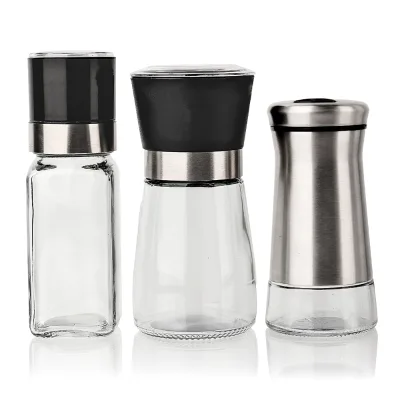


Kitchen Tools Spice Container Empty Plastic Bottle Salt and Pepper Shaker Jar
$0.26 - $0.35
MOQ: 3000 Pieces

Kitchen Plastic Spice Bottles with Shaker Lid for Salt Pepper and Seasoning
$0.24 - $0.34
MOQ: 3000 Pieces


Kitchen Herb Spice Tools Glass Seasoning Jars Pepper Chili Shaker Salt Bottle
$0.08 - $0.18
MOQ: 5000 Pieces


80ml Hot Sell Glass Spice Salt and Pepper Glass Bottle with Black Lids
$0.20 - $0.50
MOQ: 10000 Pieces

80ml Hot Sell Glass Spice Salt and Pepper Glass Bottle with White Lids
$0.20 - $0.50
MOQ: 10000 Pieces

Kitchen 100ml Clear Glass Manual Pepper Salt Grinder Small Spice Bottles
$0.30 - $0.48
MOQ: 500 Pieces

Comprehensive Sourcing Guide
Strategic Sourcing Guide for Manual Ceramic Spice Bottles
Understanding Product Specifications and Material Integrity
When sourcing manual ceramic spice bottles for salt and pepper, the primary focus must be on the intersection of material durability and functional design. The core keyword implies a vessel constructed primarily from ceramic, a material chosen for its aesthetic appeal and chemical inertness. Based on observed market data, these products are frequently categorized under specific model numbers such as IDB216 and SN-68, indicating a standardized approach to manufacturing within the industry. The physical dimensions are critical for logistics and shelf placement; observed specifications list a single package size of 20x10x10 cm, with a gross weight of approximately 1.000 kg per unit. This weight suggests a substantial ceramic body, which is essential for stability during the manual grinding process.
The operational mechanism is a defining characteristic of this category. The products are designed with a push-pull mechanism, allowing the user to control the flow of spices without the need for batteries or complex electronics. This manual operation mode aligns with the "Easy Operation" feature often cited in product descriptions. The bottles are intended for specific applications, including the milling of salt, pepper, chili, cumin, and various herbs. While some market listings mention glass or plastic alternatives, the specific requirement for a ceramic bottle necessitates a verification of the material composition to ensure the final product matches the buyer's specification. The capacity of these units varies, with observed standard volumes including 50ml, 75ml, 100ml, 120ml, and 100ml specific configurations. The shape is often square, which can optimize pallet space, though the "Special Shape and Size Need to Open The Moulds" attribute indicates that custom geometries are possible but require additional tooling investment.
Compliance, Certification, and Food Safety Standards
For any product intended for food contact, particularly those used for salt and pepper which are consumed directly, compliance with international food safety standards is non-negotiable. The supply chain for ceramic spice bottles must demonstrate adherence to rigorous testing protocols. Observed data highlights specific certifications such as LFGB (German Food and Feed Code) and FDA (US Food and Drug Administration) approval. These certifications are critical indicators that the ceramic glaze and the grinding mechanism do not leach harmful substances into the food.
Buyers must verify that the supplier can provide valid, current test reports for these specific standards. The presence of LFGB and FDA certification implies that the materials used in the ceramic body and the grinding mechanism have been tested for heavy metals and other contaminants. It is important to note that while some background data mentions CE certification, this should be treated with caution and not assumed to be a primary food safety standard for ceramic vessels unless explicitly confirmed by the supplier. The verification process should involve requesting the actual certificate documents rather than relying on marketing claims.
Furthermore, the "Recyclable" and "Eco-Friendly" features observed in the product attributes suggest a growing market demand for sustainable packaging. However, sustainability claims must be backed by the material composition. Ceramic is inherently durable and recyclable, but the grinding mechanism often includes metal or plastic components that may require separate disposal. Buyers should inquire about the separability of these components to ensure the product aligns with their corporate sustainability goals. The "Customized Accepted" attribute regarding color and logo (via silk printing, decal, or label) allows for branding, but the inks and adhesives used for these customizations must also be food-safe and compliant with the relevant regional regulations.
Cost Drivers and Economic Considerations
The economics of sourcing manual ceramic spice bottles are influenced by several distinct factors, primarily material costs, tooling, and order volume. The material cost for ceramic is generally higher than for plastic alternatives, driven by the firing process and the density of the raw materials. The observed price range in the market spans from $0.02 to $2.00 USD, a wide variance that likely reflects differences in quality, volume, and customization levels. A unit at the lower end of this spectrum may be a basic, unbranded item with standard dimensions, while a unit at the higher end likely includes custom molds, premium glazing, or complex packaging.
The Minimum Order Quantity (MOQ) is a significant cost driver. Data indicates an MOQ range of 100 to 10,000 units, with specific listings showing 500 PCS and 1,000 PCS as common thresholds. For buyers requiring custom shapes or sizes, the "Special Shape and Size Need to Open The Moulds" attribute introduces a substantial upfront cost. These mold fees are typically amortized over the order volume; therefore, a larger order reduces the per-unit cost significantly. Conversely, smaller orders of standard shapes may incur higher per-unit prices due to the lack of amortization for tooling.
Packaging costs also play a role in the final landed cost. The observed packaging methods include corrugated cartons, color boxes, display boxes, and pallet wrapping. Customized packaging, while enhancing retail appeal, adds to the unit cost. Buyers should evaluate whether the added expense of a display box or custom carton justifies the potential increase in retail sales price. Additionally, the "Hand Wash Only" care instruction suggests that the product is not dishwasher safe, which may influence the target market and the perceived value of the item.
Typical Applications and Usage Scenarios
Manual ceramic spice bottles are versatile tools designed for a variety of culinary environments. The primary application is in the home kitchen, where they serve as both functional tools and decorative elements. The "Home" and "Kitchen" occasions listed in the product attributes confirm this primary use case. The manual operation mode makes them ideal for daily cooking tasks where precise control over spice dispensing is required. The ability to mill salt, pepper, and chili directly at the table enhances the dining experience, allowing users to adjust the grind size to their preference.
Beyond the home, these bottles are suitable for restaurant and catering environments. The "Restaurant" and "Kitchen" applications indicate durability and ease of use are paramount in commercial settings. The "Easy Operation" feature ensures that staff can quickly dispense spices without complex training. The "Adjustable" nature of the grinder allows for versatility in serving different types of dishes, from fine salt for garnishing to coarse pepper for seasoning.
The product's design also supports gifting and promotional use. With options for custom logos and colors, these bottles can be branded for corporate events, weddings, or retail promotions. The "Silk printing, decal, label" options allow for high-quality branding that withstands the wear and tear of kitchen use. The "Stocked" feature mentioned in some attributes suggests that standard models are readily available for immediate shipment, which is beneficial for buyers needing quick turnaround for retail stocking or event planning.
Supplier Evaluation and Geographic Origins
Evaluating suppliers for ceramic spice bottles requires a careful assessment of their geographic location and production capabilities. The observed data points to origins in Shandong and Anhui, China, regions known for their ceramic manufacturing industries. These locations offer a mature supply chain for ceramic products, but buyers must verify the specific factory's capacity and quality control measures. The "Place of Origin" attribute is critical for logistics planning, as shipping from different regions in China can result in varying lead times and freight costs.
Supplier evaluation should focus on their ability to handle customization. The "Mould" attribute indicates that suppliers with in-house mold-making capabilities can offer more flexibility for unique product designs. Buyers should ask about the lead time for mold development, as this can significantly impact the project timeline. The "Delivery time" of 7-10 days observed in the data likely refers to production time for standard orders, but custom orders will require additional time for mold creation and testing.
Quality control is another critical factor. Buyers should request samples to verify the "Push-Pull Mechanism" functionality and the smoothness of the grinding action. The "Sample: Freely" attribute suggests that suppliers are willing to provide samples, which is a positive indicator of their confidence in their product. However, buyers should ensure that the sample provided is representative of the mass-produced items, as quality can vary between batches.
Quality Control and Long-Term Procurement Strategy
Implementing a robust quality control (QC) strategy is essential for maintaining product integrity over the long term. For ceramic spice bottles, QC should focus on several key areas: structural integrity, glaze quality, and mechanism functionality. The "Single gross weight" of 1.000 kg serves as a baseline for checking consistency; significant deviations may indicate defects in the ceramic body or the grinding mechanism. Buyers should establish acceptance criteria for weight tolerance and visual inspection for cracks or glaze imperfections.
The "Care Instructions: Hand Wash Only" highlight a potential vulnerability in the product's longevity. Buyers should ensure that the ceramic glaze is resistant to staining and that the grinding mechanism does not corrode or jam after repeated use. Testing the mechanism for smooth operation after multiple cycles is a recommended QC step. Additionally, verifying the "Recyclable" and "Eco-Friendly" claims through third-party audits can help maintain brand reputation.
For long-term procurement, building a strategic relationship with a reliable supplier is crucial. The "Customization: Available" and "Logo" options suggest that buyers may need to update branding or modify designs over time. A supplier with a flexible production line and a history of successful custom projects will be better equipped to handle these changes. Buyers should also consider the "Packing" options, ensuring that the packaging protects the ceramic bottles during transit and maintains their aesthetic appeal upon arrival.
In conclusion, sourcing manual ceramic spice bottles for salt and pepper requires a balanced approach that considers material quality, compliance, cost, and supplier capability. By focusing on the verified specifications and avoiding unconfirmed claims, buyers can make informed decisions that align with their business objectives and customer expectations. The wide range of observed attributes, from capacity to certification, provides a comprehensive framework for evaluating potential suppliers and products in this dynamic market.
FAQs
What certifications ensure food safety for ceramic spice bottles?
Products typically hold LFGB and FDA certifications to verify food safety. These standards confirm that the ceramic glaze and grinding mechanism do not leach harmful substances into salt or pepper during use.
How does the push-pull mechanism operate on these bottles?
The bottles utilize a manual push-pull mechanism for controlled dispensing. This design allows users to adjust the flow of spices like salt and pepper without needing batteries or complex electronic components.
Which customization options are available for logo and color?
Customization is available for logos via silk printing, decals, or labels. Buyers can also request customized colors, though special shapes and sizes require opening new molds for production.
What is the typical delivery time for standard orders?
The standard delivery time for production is approximately 7 to 10 days. This timeframe applies to orders meeting the minimum quantity requirements without complex custom tooling delays.
Can I order samples before committing to a bulk purchase?
Yes, free samples are available for evaluation before placing a bulk order. This allows buyers to verify the push-pull mechanism functionality and material quality prior to meeting the minimum order quantity.
What is the minimum order quantity for these ceramic bottles?
The minimum order quantity varies, with common thresholds set at 500 or 1000 pieces. Specific MOQs depend on whether the order requires standard shapes or custom mold development for unique sizes.
How are these spice bottles packaged for shipping?
Standard packaging includes corrugated cartons, color boxes, or display boxes wrapped on pallets. Customized packing options are available to protect the ceramic body and enhance retail presentation during transit.