Source Manual Feeding Autoinjector Assembly Equipment for Medical, Paper, and Glazing
Compare 30 listings for Manual Feeding Autoinjector Assembly Equipment suitable for medical, paper printed, and glazing applications. Buyers can evaluate specifications like production speed, input pressure, and customization options across different models from Chinese manufacturers.
Key considerations
Products List


China-Made Semi-Auto Autoinjector Assembly Equipment Real-Time Monitored Assembler
$165000.00 - $170000.00
MOQ: 1 Pieces

Semi-Automatic Assembly Machine for Autoinjector Assemble with 1ml/2025ml Pfs
$165000.00 - $170000.00
MOQ: 1 Pieces

Disposable Syringe Machinery Vaccine Injector Assembly Production Equipment
$3000.00 - $99000.00
MOQ: 1 set


High-Performance Plastic Injection Molding Equipment for Food Packaging
$1.00 - $111000.00
MOQ: 1 Pieces


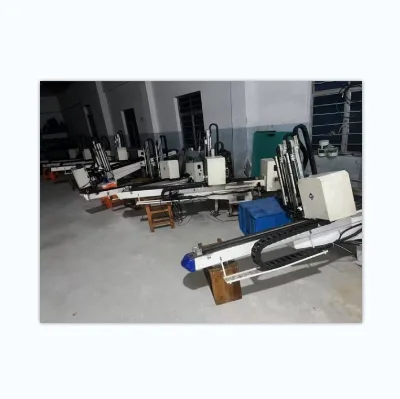


Precision Mini Injection Equipment for User-Friendly Molding Applications Machine
$3500.00 - $5000.00
MOQ: 1 Sets
Comprehensive Sourcing Guide
Strategic Sourcing Guide for Manual Feeding Autoinjector Assembly Equipment
The procurement of Manual Feeding Autoinjector Assembly Equipment represents a critical decision point for manufacturers in the medical device sector. This specialized machinery bridges the gap between fully automated high-volume lines and entirely manual assembly processes, offering a balance of operational control and cost efficiency. For buyers researching this specific category, the primary objective is to identify equipment that ensures high pass rates while maintaining the flexibility required for diverse product lines. The following guide synthesizes observed market data and technical specifications to provide a disciplined framework for evaluating potential suppliers and machinery configurations.
Technical Specifications and Operational Parameters
When evaluating Manual Feeding Autoinjector Assembly Equipment, the buyer must first scrutinize the core operational parameters that define the machine's capability. The observed market data indicates a distinct operational tempo where specific units achieve a rate of 4 pieces every 28 seconds. This metric is crucial for production planning, as it dictates the throughput capacity relative to labor input. The feeding method is explicitly defined as manual, meaning an operator is required to load the components, yet the subsequent assembly actions are often automated to ensure consistency.
A critical technical differentiator in this category is the working system. The most prevalent configuration observed utilizes a progression system, which allows for sequential processing steps without the need for complex transfer mechanisms found in fully continuous lines. This system supports a production continuity model that is described as continuous in nature, ensuring that once the cycle begins, the workflow remains steady. Furthermore, the injection dose mechanism is frequently observed as a fixed dose system, which is essential for maintaining the precise volume required for medical applications.
Viscosity constraints are another vital technical specification. The equipment is generally optimized for fluids with a viscosity of less than 20 centipoise (Cp). Buyers must verify that the specific unit they are considering can handle the rheological properties of the specific autoinjector fluid they intend to manufacture. Additionally, the needle diameter specification is a key compatibility factor, with observed standards ranging from 27g to 29g or smaller. This ensures the equipment can accommodate the fine-gauge needles typically required for patient comfort and safety in autoinjector applications.
Compliance, Certification, and Material Standards
Navigating the regulatory landscape is perhaps the most significant challenge in sourcing medical assembly equipment. While specific certification statuses for every listed unit cannot be universally asserted without direct verification, the market data highlights several relevant standards and material requirements. Buyers should look for equipment that aligns with CE marking standards, as this is a documented attribute for certain models in this category. However, the presence of a CE mark on a machine does not automatically guarantee compliance with the specific medical device regulations of the buyer's target market, such as FDA 21 CFR Part 820 in the United States or MDR in Europe.
Material standards are equally critical. The supply chain data points to the use of stainless steel materials, specifically referenced in the context of 400# grade stainless steel. This material choice is non-negotiable for medical applications due to its corrosion resistance and ease of cleaning. The equipment's construction must also meet dimensional standards, with observed specifications including dimensions such as 910mm by 1420mm by 1900mm. These physical constraints are vital for factory floor planning and integration into existing production lines.
Buyers must also consider the electrical requirements. The observed input voltage ranges from 220V to 380V, and the air pressure requirements are typically between 0.4MPa and 0.6MPa. It is imperative to verify that the facility's utility infrastructure matches these specifications before finalizing a purchase. Furthermore, the equipment's condition is a primary factor; the market predominantly offers "New" condition units, which minimizes the risk of unforeseen maintenance issues and ensures the longevity of the assembly line.
Cost Drivers and Pricing Structures
The pricing landscape for Manual Feeding Autoinjector Assembly Equipment is characterized by a wide variance, with observed listed prices ranging from 1 USD to 650,000 USD. This broad spectrum reflects the diversity in machine complexity, automation levels, and brand positioning. A unit priced at the lower end of this range may be a basic manual station with limited features, whereas a unit at the higher end likely incorporates advanced control systems, higher pass rates, and more robust construction materials.
The Minimum Order Quantity (MOQ) is another significant cost driver, with observed ranges spanning from 1 unit to 100 units. For smaller manufacturers or those testing new product lines, an MOQ of 1 is highly advantageous, allowing for capital preservation and risk mitigation. Conversely, larger enterprises may benefit from bulk purchasing agreements, though the data suggests that even high-volume orders can be accommodated with flexible MOQ structures.
Packaging and logistics also influence the total cost of ownership. The observed packing methods include pallets, wooden cases, and wooden boxes, with some units prepared for container shipping or marine transportation. These packaging requirements directly impact shipping costs and handling procedures. Buyers should factor in the cost of specialized packaging, particularly for heavy machinery, and ensure that the supplier's packing standards align with the fragility and weight of the equipment.
Typical Applications and Product Compatibility
The application scope for Manual Feeding Autoinjector Assembly Equipment is primarily focused on the medical industry. The data explicitly lists "Medical" as the application sector, indicating that these machines are designed to meet the stringent quality and safety requirements of healthcare products. The equipment is suitable for assembling specific autoinjector types, such as the 1ml and 2.25ml Ai Pen configurations. This specificity is crucial for buyers who need to ensure that the machinery is compatible with their existing product portfolio.
In addition to medical applications, some observed specifications suggest versatility in handling paper printed and paperboard materials, although the primary focus remains on medical device assembly. The glazing product type is noted as "Whole Surface Glazing," which may be relevant for packaging or secondary processing steps associated with the autoinjector units. The logo printing capability, described as "Medigrade," further underscores the equipment's suitability for high-standard medical branding and identification requirements.
The flexibility of the equipment is another key consideration. While some models are described as having "Hard" flexibility, others support multiple varieties, allowing for the production of different product types on the same line. This adaptability is essential for manufacturers who need to pivot quickly between different autoinjector models or dosage strengths without significant downtime or capital investment in new machinery.
Supplier Evaluation and Quality Control
Evaluating suppliers for this specialized equipment requires a rigorous approach to quality control and after-sales support. The observed data indicates that after-sales service is often limited, with a specific note that "No Overseas Service Provided" is a common attribute. This is a critical risk factor for international buyers. Before committing to a purchase, buyers must explicitly verify the availability of technical support, spare parts, and maintenance services in their region. Relying on the assumption that service will be available can lead to prolonged downtime and production losses.
Quality control metrics are also essential for supplier evaluation. The observed pass rate for certain units is 98%, which serves as a benchmark for performance. However, buyers should not treat this as a universal guarantee. Instead, they should request specific test results and performance data for the exact model they are considering. The electronic scale basic accuracy of 0.001g is a notable specification that highlights the precision required in the assembly process. Buyers should verify that the equipment maintains this level of accuracy under actual production conditions.
The production scores attribute, which mentions "Multiple Varieties," suggests that some suppliers offer equipment capable of handling diverse product runs. This capability is a strong indicator of a supplier's technical competence and the versatility of their machinery. Buyers should assess the supplier's track record in delivering equipment that meets these diverse requirements and their ability to provide customization options.
Long-Term Procurement Considerations
Long-term procurement planning for Manual Feeding Autoinjector Assembly Equipment involves more than just the initial purchase price. Buyers must consider the total cost of ownership, including maintenance, energy consumption, and potential upgrades. The input pressure requirement of ≥0.6MPa and the specific air pressure ranges must be sustained throughout the equipment's lifecycle, which may necessitate investments in compressed air systems or pressure regulators.
Customization is a key feature observed in the market, with "Available" customization options noted. This allows buyers to tailor the equipment to their specific production needs, such as adjusting the injection time or modifying the feeding model. However, customization can extend lead times and increase costs. Buyers should balance the need for customization with the urgency of their production requirements.
Finally, the origin of the equipment is a significant factor. The data indicates that the products originate from China, with specific mentions of Guangdong and Shanghai as production hubs. While this provides access to a robust manufacturing ecosystem, buyers must ensure that the origin does not compromise quality or compliance. Verifying the supplier's location and their adherence to international standards is essential for mitigating supply chain risks. By carefully considering these long-term factors, buyers can secure equipment that not only meets current production needs but also supports future growth and scalability.
Comparative Analysis of Equipment Attributes
To facilitate a clearer understanding of the market landscape, the following table summarizes the key attributes observed in the supply data. This comparison highlights the diversity in specifications and helps buyers identify the features most relevant to their specific operational requirements.
| Attribute Category | Observed Specification Range | Key Considerations for Buyers |
|---|---|---|
| Operational Tempo | 4PCS/28s | Verify actual throughput under load; do not assume peak speed. |
| Feeding Method | Manual | Requires operator training; assess labor costs vs. automation benefits. |
| Working System | Progression | Suitable for sequential assembly; check compatibility with existing lines. |
| Pass Rate | 98% | Request current test data; high pass rates are critical for medical compliance. |
| Injection Dose | Fixed Dose | Ensure compatibility with required dosage volumes (e.g., 1ml, 2.25ml). |
| Needle Diameter | 27g/29gtw or Smaller | Verify compatibility with specific needle gauges used in your products. |
| Material Standard | 400#/Stainless steel | Essential for corrosion resistance and hygiene in medical environments. |
| Voltage Input | 220V/380V | Confirm facility power supply matches equipment requirements. |
| Air Pressure | 0.4-0.6MPa | Ensure compressed air system can maintain stable pressure. |
| After-Sales Service | Variable (No Overseas Service noted) | Critical to verify local support availability before purchase. |
| Condition | New | Prefer new units to minimize maintenance risks and ensure longevity. |
This comparative analysis underscores the importance of detailed due diligence. While the data provides a snapshot of available attributes, the actual performance of any specific unit will depend on the supplier's quality control processes and the buyer's specific operational context. By focusing on these verified attributes and avoiding assumptions about unlisted features, buyers can make informed decisions that align with their strategic procurement goals.
FAQs
What is the operational tempo for Manual Feeding Autoinjector Assembly Equipment?
The operational tempo is 4 pieces every 28 seconds. This rate defines the throughput capacity relative to labor input for production planning.
Which feeding method is used for this assembly equipment?
The feeding method is manual, requiring an operator to load components. Subsequent assembly actions are often automated to ensure consistency.
Can the injection dose be customized on this equipment?
The injection time is customizable, but the dose mechanism is frequently observed as a fixed dose system. This ensures precise volume for medical applications.
What is the minimum order quantity for purchasing this equipment?
The minimum order quantity ranges from 1 to 100 units. Smaller manufacturers can benefit from an MOQ of 1 for risk mitigation.
Where is this Manual Feeding Autoinjector Assembly Equipment manufactured?
The equipment originates from China, with specific hubs in Guangdong and Shanghai. Buyers must verify the supplier location to mitigate supply chain risks.
What is the pass rate for the assembly process on this machine?
The observed pass rate is 98 percent. Buyers should request specific test results for the exact model to verify this performance metric.
How is the equipment typically packed for shipping?
Packaging options include pallets, wooden cases, and wooden boxes. Some units are prepared for container shipping or marine transportation.