Source Meat Sausage Maker for Burgers, Hot Dogs, and Slices
Compare 30 Meat Sausage Maker options including automatic and manual models with varying capacities and dimensions. Buyers can evaluate stainless steel construction, voltage requirements, and packing details for burger patties, hot dogs, and other meat products.
Key considerations
Products List


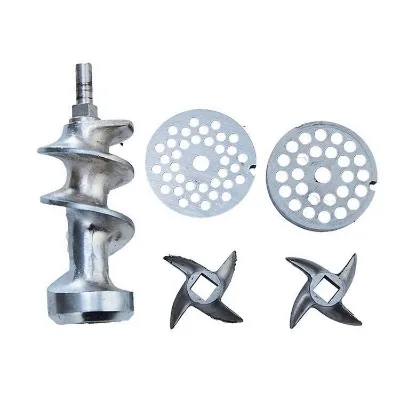


TCA SUS304 Sausage Making Machine Industrial Use Meat Mincer and Sausage Maker Commercial
$3600.00 - $26000.00
MOQ: 1 Pieces

TCA High Quality High Output Sausage Making Machine Electric Sausage Maker Mortadella Machine
$3600.00 - $26000.00
MOQ: 1 Pieces


Comprehensive Sourcing Guide
Strategic Sourcing Guide for Meat Sausage Maker Equipment
Procuring industrial Meat Sausage Maker equipment requires a rigorous approach that balances technical precision with supply chain reliability. The market offers a diverse range of machinery, from manual units suitable for artisanal production to fully automatic systems designed for high-volume industrial output. Buyers must navigate a complex landscape of specifications, certifications, and operational parameters to ensure the selected equipment aligns with their production goals. This guide outlines the critical factors for evaluating Meat Sausage Maker suppliers, focusing on the evidence-based attributes observed in current market listings.
Technical Specifications and Operational Capabilities
The primary differentiator in selecting a Meat Sausage Maker is the level of automation and the specific technical capabilities required for the production line. The market presents distinct categories based on the "Automatic Grade" of the machinery. On one end of the spectrum, there are Manual Grade units, which are often characterized by specific model identifiers such as HR-7L, HR-5L, HR-250, HR-10L, and HR-3L. These units typically feature compact dimensions, such as 310310775mm or 310310650mm, and are designed for smaller batch operations or specific customization needs.
Conversely, the industrial sector demands Automatic Grade machinery. A prime example of this category is the CXJ100 model, which boasts an overall dimension of 8606001400mm. This machine is engineered for high throughput, with a stated capacity of approximately 35 pieces per minute and a filling speed ranging from 15 to 60 times per minute. The technical specifications for such automatic units are significantly more complex. They often operate on a 380V power source with a power consumption of 0.55kw. Furthermore, these systems rely on specific pressure requirements, with air pressure needs around 6 Bar and water pressure at 2 bar. The filling pressure capability is a critical metric, with some models supporting a range of 3 to 15MPa.
The physical constraints of the product being processed also dictate the machinery choice. For instance, specific models are designed to handle a maximum diameter of 150mm, a dimension relevant for hamburger patties or large-diameter sausages. The thickness of the material being processed can vary between 6mm and 40mm. Additionally, the mesh belt width for certain conveyor-based systems is standardized at 100mm. Buyers must verify that the machine's dimensions and operational speeds match their specific product line requirements, as the gap between a 310mm wide unit and an 860mm wide industrial unit represents a fundamental shift in production scale.
Material Composition and Build Quality
The longevity and food safety compliance of a sausage maker are inextricably linked to the materials used in its construction. Stainless steel is the industry standard, and observed listings consistently highlight this material. Specific models, such as the CXJ100, are constructed from SUS304 Stainless Steel, a grade known for its corrosion resistance and suitability for food processing environments. Other listings simply denote "Stainless Steel" as the primary material.
The choice of material affects not only durability but also cleaning efficiency and regulatory compliance. SUS304 is preferred for its ability to withstand harsh cleaning chemicals and high-temperature sanitization processes without degrading. When evaluating a supplier, buyers should request detailed material certificates to confirm the grade of stainless steel used. It is essential to distinguish between general stainless steel and food-grade SUS304, as the latter offers superior resistance to rust and chemical attack. The structural integrity of the machine, including the frame and internal components, must be verified to ensure it can withstand the mechanical stresses of high-speed filling and the corrosive nature of meat products.
Compliance, Certification, and Safety Standards
In the food processing industry, regulatory compliance is non-negotiable. Sourcing guides must prioritize equipment that meets recognized safety and quality standards. Observed product listings frequently cite "CCC CE" certification, indicating compliance with Chinese Compulsory Certification and European Conformity standards. These certifications are vital for ensuring that the electrical and mechanical safety of the machine meets international requirements.
Beyond general certifications, buyers should verify specific standards related to food safety and electrical safety. The "prod_standard" attribute often lists dimensional standards, such as 310310775mm or 8606001400mm, which serve as a reference for the machine's footprint and design consistency. However, the absence of a specific safety standard number in a listing does not imply non-compliance; rather, it suggests that the buyer must explicitly request documentation. Key areas to verify include electrical safety ratings, pressure vessel certifications (for the filling pressure systems), and food-grade material certifications. The "Warranty" attribute, often listed as a "1 Year Guarantee," provides a baseline for post-purchase support, but buyers should scrutinize the terms of this guarantee to understand what components are covered and the duration of support for critical parts like motors and pumps.
Cost Drivers and Pricing Structures
The pricing of Meat Sausage Maker equipment is influenced by a complex array of factors, including automation level, material quality, and production capacity. The observed price range in the market is vast, spanning from $1 to $120,000. This significant variance reflects the difference between small-scale manual units and large-scale industrial automatic systems.
Several key drivers impact the final cost. First, the "Automatic Grade" is a primary cost determinant. Manual units, such as the HR series, generally occupy the lower end of the price spectrum due to their simpler mechanical design and lower power requirements. In contrast, automatic units like the CXJ100 command higher prices due to their advanced control systems, higher power consumption (0.55kw), and greater production capacity (35 PCS/Min). Second, the material specification plays a crucial role. Machines built with SUS304 stainless steel will typically cost more than those using standard stainless steel, reflecting the higher raw material cost and enhanced durability.
Third, the "MOQ" (Minimum Order Quantity) significantly affects the unit price and procurement strategy. Listings show MOQs ranging from 1 piece to 50 pieces. A higher MOQ, such as 50PCS for certain models, often indicates a bulk pricing structure or a requirement for custom manufacturing runs. Buyers must calculate the total cost of ownership, including the initial purchase price, shipping, and installation, rather than focusing solely on the unit price. The "Packing" specifications, such as "Honeycomb Box" or "Wooden Box," also contribute to logistics costs. A wooden box offers superior protection for heavy machinery but adds weight and volume, potentially increasing freight charges compared to a honeycomb box.
Supplier Evaluation and Origin Verification
Selecting the right supplier is as critical as selecting the right machine. The origin of the equipment is a key indicator of the manufacturing ecosystem and supply chain reliability. Observed data points to two primary manufacturing hubs: Zhejiang, China, and Zhucheng. Zhejiang is a major industrial province known for a wide variety of machinery, while Zhucheng is specifically recognized as a hub for food processing equipment, particularly meat machinery.
When evaluating suppliers, buyers should verify the "prod_origin" attribute. A supplier claiming origin in Zhucheng for a Meat Sausage Maker may have specialized expertise in this niche, whereas a Zhejiang-based supplier might offer a broader range of general food machinery. The "Feature" attribute, often described as "High Efficiency, Nice Performance," should be treated as a marketing claim that requires validation through technical data sheets or third-party testing. Buyers should request references from existing clients in similar production environments to verify these performance claims.
Furthermore, the "Customization" attribute is a vital consideration. Many listings indicate that customization is "Available" and that products are "Customized." This suggests that suppliers are willing to adapt machines to specific client needs, such as altering dimensions or integrating specific control interfaces. However, buyers must clarify the scope of customization, lead times for custom orders, and any additional costs associated with these modifications. The "Error" rate, observed as "Less Than 1%" for certain models, is another metric that should be verified through performance trials before finalizing a purchase.
Quality Control and Long-Term Procurement Considerations
Ensuring the long-term reliability of Meat Sausage Maker equipment requires a robust quality control strategy. The "Error" rate of less than 1% is a specific performance metric that indicates the precision of the filling mechanism. Buyers should demand detailed quality assurance protocols from suppliers, including factory acceptance tests (FAT) and site acceptance tests (SAT). These tests should verify the machine's ability to maintain the specified filling pressure (315MPa) and operating speed (1560 Times/Minute) under continuous load.
The "Warranty" of 1 Year Guarantee is a standard offering, but it should be complemented by a comprehensive maintenance plan. Buyers should inquire about the availability of spare parts, the lead time for replacements, and the technical support provided by the supplier. The "N.W" (Net Weight) and "G.W" (Gross Weight) of the machines, ranging from 9.8kg to 14kg for smaller units and significantly higher for industrial models, are critical for logistics planning and facility layout. Proper installation requires a stable foundation capable of supporting the machine's weight and absorbing the vibrations generated during operation.
Finally, the "Packing" method, whether "Honeycomb Box" or "Wooden Box," impacts the condition of the equipment upon arrival. Wooden boxes are generally preferred for heavy industrial machinery to prevent damage during transit. Buyers should ensure that the packing standards meet the requirements of the destination country's import regulations. By focusing on these technical, material, and logistical details, buyers can mitigate risks and secure a reliable supply of Meat Sausage Maker equipment that meets their production needs.
Comparative Analysis of Equipment Models
To facilitate decision-making, the following table summarizes the key differences between observed product models based on the provided data. This comparison highlights the trade-offs between capacity, size, and operational complexity.
| Attribute | HR Series (Manual/Compact) | CXJ100 (Automatic/Industrial) |
|---|---|---|
| Model Examples | HR-7L, HR-5L, HR-3L | CXJ100 |
| Automatic Grade | Manual | Automatic |
| Overall Dimensions | 310310775mm (approx.) | 8606001400mm |
| Power Source | Not specified (Likely Electric) | Electric (380V) |
| Power Consumption | Not specified | 0.55kw |
| Capacity | Not specified | ~35 PCS/Min |
| Filling Speed | Not specified | 15~60 Times/Minute |
| Material | Stainless Steel | SUS304 Stainless Steel |
| MOQ | 10 PCS | 50 PCS |
| Net Weight | 9.8kg - 12.3kg | Not specified (Higher) |
| Certification | CCC CE | CCC CE |
| Origin | Zhejiang, China | Zhucheng |
This comparison underscores the necessity of aligning procurement decisions with specific production volumes. The HR series offers a compact, lower-cost solution for smaller operations, while the CXJ100 represents a high-efficiency, industrial-grade solution for large-scale manufacturing. Buyers must carefully weigh these factors against their budget, space constraints, and production targets to make an informed selection.
FAQs
What materials are used for Meat Sausage Maker construction?
Stainless steel is the primary material used for construction. Specific models like the CXJ100 utilize SUS304 stainless steel for superior corrosion resistance and food safety compliance in industrial environments.
Which certification standards do these machines meet?
Many units carry CCC and CE certifications for safety compliance. These standards ensure the electrical and mechanical systems meet international requirements for food processing machinery operations.
How does the automatic grade affect production capacity?
Automatic models offer significantly higher throughput than manual units. For instance, the CXJ100 automatic machine achieves a capacity of about 35 pieces per minute compared to smaller manual batches.
Can buyers customize the dimensions of the equipment?
Yes, customization is available for many product listings. Buyers can request specific modifications to fit their production line needs, though lead times and costs may vary based on the scope.
What is the typical warranty period for this equipment?
A one-year guarantee is the standard warranty period offered. This coverage typically includes support for critical components, but specific terms should be verified with the supplier before purchase.
Which locations are known for manufacturing this machinery?
Primary manufacturing hubs include Zhejiang and Zhucheng in China. Zhucheng is particularly recognized for specialized food processing equipment, while Zhejiang offers a broader range of industrial machinery.