Source Mediterranean Style Rattan Door Panel for Home, Hotel, Villa
Compare 30 verified listings for Mediterranean Style Rattan Door Panel options tailored for residential, hospitality, and commercial interiors. Buyers can evaluate materials, finishes, and customization to find the right fit for their projects.
Key considerations
Products List


European Luxury Wooden Timber Door - Customizable Dimensions Available
$27.00 - $35.00
MOQ: 200 Pieces

Waterproof Entry Door Decorative Fiberglass Exterior Door with Panel Design
$200.00 - $500.00
MOQ: 50 Sets


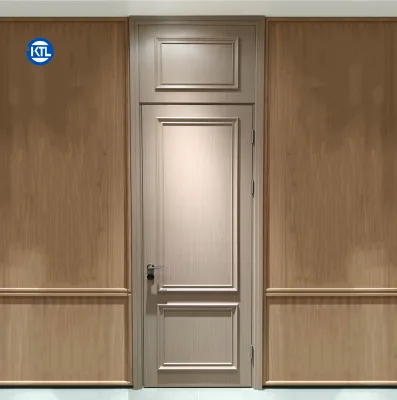


Vintage French Decorative Grille Door Panel for Elegant Cloakroom
$70.00 - $100.00
MOQ: 2 Square Meters


Comprehensive Sourcing Guide
Strategic Sourcing Guide for Mediterranean Style Rattan Door Panels
Understanding Product Attributes and Material Composition
When sourcing Mediterranean style rattan door panels, buyers must first distinguish between the aesthetic intent and the actual material composition available in the current market. The core keyword suggests a specific visual texture, yet the supplied product data indicates a diverse range of materials including timber, solid wood, MDF, and composite structures. It is critical to understand that "rattan" in a B2B context often refers to a woven texture or a specific design motif rather than the raw rattan cane itself, especially when the product specifications list materials like "Solid Wood + MDF with Primer Lacquer" or "MDF" with "Wood Grain" finishes.
The observed product attributes reveal that many available units are "Solid Wood Composite Doors" or panels with "Composited" infilling. The surface finishing options range from "Finished" to "Unfinished," and the color palettes include "Wood Grain," "Melamine," and "Deep Embossed" textures. For a Mediterranean aesthetic, the "Deep Embossed" finish or specific "Wood Grain" veneers such as Oak, Ash, or Teak are likely the most relevant to achieve the desired rustic yet refined look. Buyers should verify if the supplier offers a "Veneer Type" that mimics the woven texture of rattan, as the standard list includes "Ash/Oak/Beech/Sapele/Teak/Walnut." The absence of explicit "Rattan" material in the provided specifications suggests that the "rattan" style is achieved through the "Design" phase, where "Any Design Can Choice or Customed" options are available.
Furthermore, the product data highlights a distinction between doors "With Glass" and "Without Glass." Mediterranean styles frequently incorporate glass elements to maximize light, so buyers must confirm if the "rattan" panel design is intended for the solid wood portion or if it integrates with glass inserts. The "Opening Direction" is listed as "Inward" for some models, and the "Position" is specified as "Interior," which aligns with typical residential applications. The "Handle Position" is noted as "Left" in specific instances, but "Various Lock, Handle Can Choice" is also available, allowing for customization to match the hardware style of a Mediterranean home.
Technical Specifications and Dimensional Standards
Precision in technical specifications is paramount when ordering custom door panels to ensure they fit existing architectural frameworks. The supplied data provides specific dimensional standards that serve as a baseline for comparison. For instance, one model adheres to a standard of "2000 x 800 x 40mm," while another lists a "Normal Thickness" of "2.7mm/3mm/4.2mm." These variations indicate that thickness is a significant variable depending on the specific model, such as "U-003-UC" or "KM-033."
Buyers must also account for the "Standard" dimensions provided for other models, which include a "Length: 2050mm/2150mm" and a "Width: 620-1050mm." This wide range in width suggests that the supplier offers flexibility in sizing, which is essential for the varied openings found in Mediterranean-style architecture. The "prod_standard" for another entry lists "2032914/813/76235mm and other sizes," reinforcing the need for buyers to verify the exact cut dimensions required for their specific project.
The "Frame" is described as "Various Frame & Customed," and "Architraves" are listed as "Flat & Adjustable & Customed." This implies that the door panel is rarely sold as a standalone unit but as part of a system that includes the frame and trim. The "Hinges" are standardized at "3PCS Hinges Per Door," which is a critical specification for load-bearing capacity, especially for solid wood or composite doors. The "Packing" method varies between "Standard or Customed," "EPE Inside, Carton Outside," and "Pallet Packing," which affects how the panels are shipped and protected during transit.
Compliance, Certification, and Quality Assurance
In the B2B procurement of door panels, verifying compliance with international standards is non-negotiable for risk mitigation. The supplied product facts explicitly list several certifications, including "Ce," "ISO9001," "ISO14001," and "SGS." These certifications indicate that the manufacturer adheres to quality management systems (ISO9001), environmental management standards (ISO14001), and product safety or quality verification (SGS). The "Ce" mark suggests compliance with European safety, health, and environmental protection requirements, which is particularly relevant for buyers targeting the European market or those seeking Mediterranean-style products often associated with European design heritage.
However, buyers must exercise caution and not assume that every listed product automatically satisfies all these certifications. The data presents these certifications as attributes of specific models or general supplier capabilities. Therefore, the procurement strategy must include a direct request for valid, current certification documents for the specific model number being ordered, such as "KS-743" or "KMC-007." The "Guarantee" is listed as "One Year," which serves as a baseline warranty period. Buyers should negotiate terms that extend beyond this standard if the project requires longer-term reliability, especially given the "Composited" nature of the infilling which may have different durability profiles compared to solid wood.
Quality assurance also extends to the "Surface Finishing" process. The data notes both "Finished" and "Unfinished" options. For a Mediterranean style, the "Primer Lacquer" finish mentioned in the "Main Material" section is a key indicator of the preparation level. Buyers should verify the specific type of lacquer used, as it impacts the resistance to humidity and UV exposure, which are common factors in Mediterranean climates. The "Glue" specification mentions "EMaterial:MDF," suggesting the use of specific adhesives in the composite structure. Ensuring that these adhesives meet formaldehyde emission standards is crucial for indoor air quality compliance.
Cost Drivers and Pricing Dynamics
The pricing structure for door panels is influenced by a complex interplay of material costs, customization levels, and order volume. The observed price range in the market data spans from "2.5-500" USD, a significant variance that reflects the difference between basic unfinished panels and high-end finished, custom-designed units. The "MOQ range" of "1-3000" further illustrates that pricing is highly dependent on order quantity. For buyers seeking "Mediterranean style rattan door panels," the cost will likely be driven by the "Customization" factor.
The "Design" attribute states "Any Design Can Choice or Customed," which implies that a standard catalog design will be cheaper than a bespoke rattan texture or pattern. The "Veneer Type" is another major cost driver; selecting premium woods like "Teak" or "Walnut" will incur higher costs compared to "Ash" or "Beech." Additionally, the "Hardware" selection, ranging from "Various Lock, Handle" to specific choices, adds to the total landed cost. If the buyer requires "Prehunge" packing or specific "Pallet Packing" for large orders, logistics costs will increase.
The "Leading Time" is noted as "About 25days/500sets," which suggests a production cycle that scales with volume. Buyers should be aware that expedited orders or small batch customizations might incur premium charges or longer lead times relative to the standard cycle. The "Price Includes" attribute specifies "Door Leaf Only" for certain models, meaning the frame, architraves, and hardware are separate line items. This separation allows for cost optimization but requires careful budgeting to avoid unexpected expenses. Buyers must calculate the total cost of ownership, including the "Packing" materials and potential "Customed" frame adjustments, rather than focusing solely on the unit price of the door leaf.
Typical Applications and Installation Considerations
The application of Mediterranean style rattan door panels is primarily interior, as indicated by the "Position: Interior" attribute. These doors are well-suited for residential settings such as living rooms, bedrooms, and bathrooms where the aesthetic of natural textures and light permeability is desired. The "Design" flexibility allows for integration into various architectural styles, from traditional Mediterranean villas to modern interpretations that incorporate rustic elements.
Installation considerations are heavily influenced by the "Frame" and "Architraves" specifications. Since the "Frame" is "Various Frame & Customed," the door panel must be compatible with the specific frame profile selected. The "Architraves" being "Flat & Adjustable & Customed" suggests that the trim can be adapted to different wall thicknesses and finishes, which is common in renovation projects. The "Opening Direction" being "Inward" is a standard configuration, but buyers must confirm this aligns with the building code and spatial constraints of the installation site.
The "Glass" attribute presents a critical decision point. Models are available "With Glass" or "Without Glass." For Mediterranean interiors, which often emphasize indoor-outdoor flow and natural light, the "With Glass" option with a rattan-patterned panel or a rattan-textured frame might be preferred. However, the "Without Glass" option provides a more solid, sound-insulating barrier, suitable for private spaces like bedrooms. The "Handle Position" being "Left" in some cases requires buyers to verify the handedness of the door to ensure correct installation. The "Hinges" count of "3PCS" is standard for ensuring the door hangs correctly without sagging, but for heavier composite or solid wood doors, additional reinforcement might be necessary.
Supplier Evaluation and Long-Term Procurement Strategy
Evaluating a supplier for Mediterranean style rattan door panels requires a focus on their ability to deliver consistent quality and customization. The presence of multiple model numbers, such as "U-003-UC," "KM-033," "KS-743," and "KS-1402," indicates a diverse product line. Buyers should assess whether the supplier can consistently produce the "Deep Embossed" or "Wood Grain" finishes that define the Mediterranean aesthetic. The "Certificate" list (Ce, ISO9001, ISO14001, SGS) is a strong starting point, but buyers should request recent audit reports to ensure these certifications are active and applicable to the specific production line.
Long-term procurement considerations include the "Guarantee" period and the supplier's capacity for after-sales support. A "One Year" guarantee is standard, but for large commercial projects, buyers may need to negotiate extended warranties or service level agreements. The "Leading Time" of "About 25days/500sets" suggests a reliable production rhythm, but buyers should verify the supplier's ability to scale up for larger orders without compromising quality. The "Packing" options, including "EPE Inside, Carton Outside" and "Pallet Packing," are essential for minimizing damage during shipping. Buyers should evaluate the supplier's logistics capabilities to ensure that the "Customed" frames and "Architraves" arrive in good condition.
Finally, the "Design" flexibility is a key differentiator. Suppliers that offer "Any Design Can Choice or Customed" options are better positioned to meet the specific needs of Mediterranean style projects. Buyers should engage in a detailed design review process to ensure that the "Veneer Type" and "Surface Finishing" align with the project's aesthetic goals. By focusing on these technical and operational factors, buyers can build a sustainable supply chain that delivers high-quality, aesthetically pleasing door panels that meet the rigorous demands of the Mediterranean market.
Comparative Analysis of Product Models
To facilitate informed decision-making, the following table compares key attributes of the observed product models based on the supplied data. This comparison highlights the variations in specifications, certifications, and customization options that buyers should consider.
| Attribute | Model U-003-UC | Model KM-033 | Model KS-743 | Model KS-1402 | Model KMC-007 |
|---|---|---|---|---|---|
| Product Material | Timber | Solid Wood + MDF | Not Specified | Not Specified | Not Specified |
| Surface Finishing | Finished | Primer Lacquer | Unfinished | Not Specified | Not Specified |
| Glass Option | Without Glass | With Glass | Not Specified | Not Specified | Not Specified |
| Style | Modern Style | European Style | Not Specified | Not Specified | Not Specified |
| Standard Size | 2000 x 800 x 40mm | 2032914/813/76235mm | Not Specified | Not Specified | Not Specified |
| Certifications | Ce, ISO9001, ISO14001, SGS | Ce, ISO9001, 14001, SGS | Not Specified | Not Specified | Not Specified |
| Customization | Available | Various Design or Customed | Not Specified | Not Specified | Not Specified |
| Packing | EPE Inside, Carton Outside | Carton / Pallet / Prehunge | Not Specified | Not Specified | Not Specified |
This table underscores the importance of selecting the right model based on specific project requirements. For instance, if a buyer requires a "Finished" surface with "Timber" material, Model U-003-UC is a strong candidate. Conversely, if "European Style" and "Primer Lacquer" are required, Model KM-033 is the preferred choice. The "Glass" option varies, with KM-033 explicitly offering "With Glass," which may be crucial for the Mediterranean aesthetic. Buyers must cross-reference these attributes with their specific design briefs to ensure the selected model meets all functional and aesthetic criteria.
FAQs
What materials are used for mediterranean style rattan door panels?
These panels typically use solid wood, MDF, or solid wood composite structures. The surface finishes include wood grain, melamine, or deep embossed textures to mimic the desired aesthetic.
Can I customize the design and frame for these door panels?
Yes, customization is available for any design choice or customed options. Buyers can select various frames and architraves that are flat, adjustable, or customed to fit specific needs.
Which certifications do these door panels typically hold?
The products often carry CE, ISO9001, ISO14001, and SGS certifications. These marks indicate compliance with quality management, environmental standards, and product safety verification for international markets.
How long is the lead time for a standard order?
The standard lead time is about 25 days for 500 sets. This duration may vary depending on the specific model and the level of customization required for the order.
What is the standard thickness for these door panels?
Normal thickness options include 2.7mm, 3mm, or 4.2mm depending on the model. Some specifications also list standard dimensions like 2000 x 800 x 40mm for specific door types.
Does the price include the door frame and hardware?
The price often includes the door leaf only, excluding the frame and hardware. Buyers must separately select various locks, handles, and frames which are available as custom options.
Are these panels suitable for interior room installation?
Yes, the product position is specified as interior, making them suitable for rooms. They are designed with inward opening directions and can be finished or unfinished based on project needs.